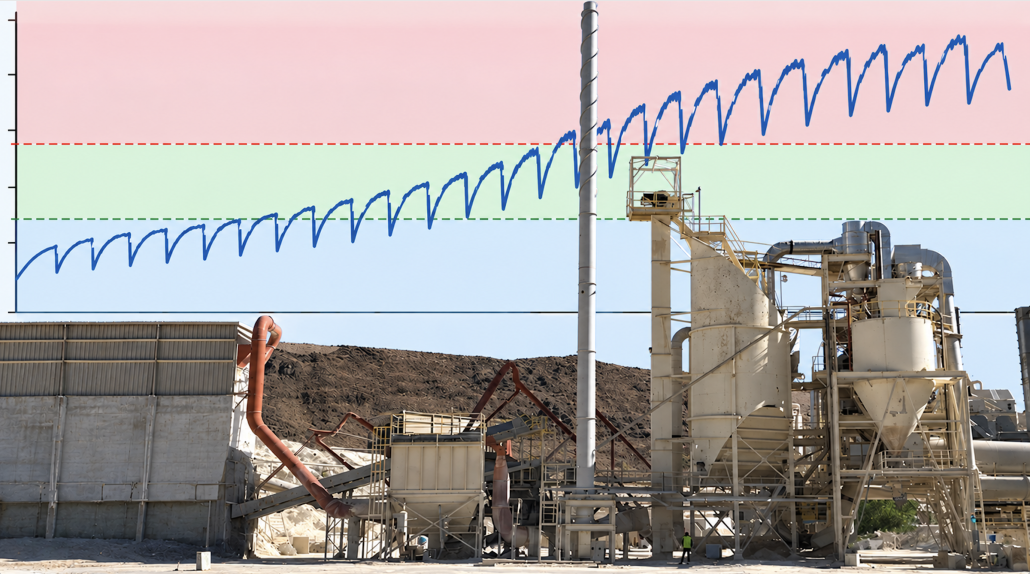
One of the quickest ways to turn a healthy dust collector into a maintenance headache is to allow moisture to enter the system. A small amount of baghouse condensation can set off a chain reaction that leads to plugged filter bags, hopper blockages, corrosion, false instrument readings, and eventually costly downtime. The frustrating part is that condensation often develops gradually, making it difficult to recognize until the dust collector is already struggling.
“We’re often called because a plant has high differential pressure or poor airflow,” says Scott Omann, Aftermarket Division Manager at Baghouse.com. “But many times those are simply the symptoms. Once we inspect the collector, we find moisture has been affecting the system for weeks or even months.”
The good news is that condensation is largely preventable. Understanding why it forms (and taking a few practical steps during design, operation, and maintenance) can dramatically improve dust collector performance and extend equipment life.
Why Does Condensation Form Inside a Baghouse?
Condensation forms whenever the temperature of the process gas or the collector surfaces falls below the dew point. At that point, moisture suspended in the air condenses into liquid water.
This usually occurs during startup and shutdown, cold weather, overnight cooling, seasonal temperature swings, or anytime outside air enters the system unexpectedly.
Many facilities think only about humidity, but moisture problems often begin with temperature. Warm process air may contain a large amount of water vapor without causing any issues. As soon as that air cools enough, however, the moisture comes out of suspension and begins collecting on filter bags, hopper walls, ductwork, and other internal surfaces.
Moisture inside a baghouse can cause dust to adhere to the filter media, creating a hardened dust cake that blinds the filters. This reduces airflow, increases differential pressure, shortens filter life, and often leads to hopper plugging, corrosion, and costly maintenance.
As moisture mixes with dust, it creates a sticky layer that becomes increasingly difficult to remove with pulse cleaning. Eventually, the filter media loses permeability, causing differential pressure to rise while airflow drops. Continued operation under these conditions often shortens filter life dramatically.
Matt Coughlin, President of Baghouse.com, explains it this way: “People sometimes assume the filters are simply worn out. In reality, the filters may have become blinded because condensation allowed the dust to cake onto the media. Replacing the filters without fixing the moisture source usually means the same problem comes back.”
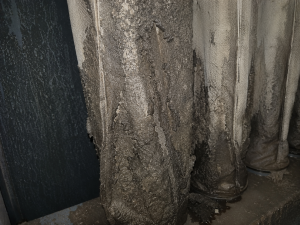
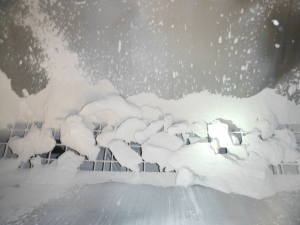
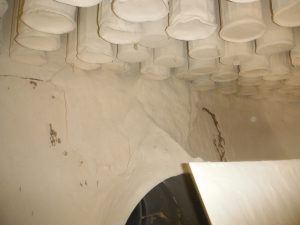
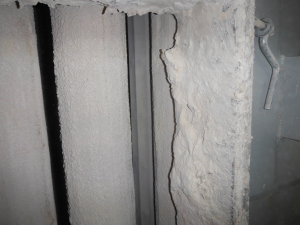
In these images, we can see damaged door gaskets allowing cold, moist air to filter in and causing dust accumulation on the walls and even in the filters.
Common Sources of Moisture in Dust Collection Systems
Every facility is different, but several moisture sources appear repeatedly during dust collection inspections.
Air Leaks
One of the most overlooked causes is infiltration of outside air through worn door seals, leaking access panels, damaged expansion joints, cracked welds, or deteriorated ductwork. Every leak allows cool, humid outside air to enter the system. As it mixes with warmer process gases, condensation can develop inside the collector. Even small leaks reduce system performance because the fan begins pulling air through the leak instead of from the process where dust should be captured.
What can you do: Inspect the collector for leaking access doors, worn gaskets, damaged expansion joints, loose inspection covers, and cracked ductwork that allows cool outside air to enter the system.
What can you do: Regularly inspect compressed air dryers, moisture separators, drain valves, and filters to ensure water is not being introduced directly onto the clean side of the filter bags. Some systems benefit from automatic purge valves or inline air filters that remove moisture before it reaches the pulse valves.
The Process Itself
Dryers, coolers, chemical processes, food manufacturing, biomass facilities, wastewater treatment, mineral processing, and many cement applications all introduce water vapor into the gas stream.
What can you do: Insulate equipment where necessary. In colder climates or high-humidity applications, insulating ductwork, hoppers, and collector walls helps minimize temperature differences that promote condensation. In some applications, hopper heaters or trace heating systems may also be appropriate.
One of the simplest rules in dust collection design is to keep process temperatures safely above the dew point.
Many engineers recommend maintaining gas temperatures approximately 15°C (27°F) above the dew point whenever possible to avoid condensation during normal operation. That margin becomes especially important during winter months or whenever equipment cycles on and off.
“If you’re operating close to the dew point, small temperature changes can create big problems,” says Dominick Dal Santo, Sales Director at Baghouse.com. “Sometimes just moving the collector closer to the process or insulating the ductwork is enough to eliminate years of moisture issues.”
What can you do: When the process air enters the dust collector at or near ambient temperature and contains significant moisture, simply insulating the ductwork may not be enough to prevent condensation. One common solution is to install a duct heater or inline process air heater upstream of the baghouse. Depending on the application, these heaters may use electricity, natural gas, steam, thermal oil, or indirect-fired heat exchangers to gently raise the gas temperature without affecting the process itself. Facilities handling outdoor air or operating in cold climates sometimes install make-up air heaters to temper incoming ventilation air before it enters the process.
Don't Ignore the Hopper
As dust falls from the filters, it contacts the cool walls of the hopper before discharging. If condensation has formed there, the dust quickly sticks, builds up, and eventually bridges across the hopper outlet. Once bridging begins, dust can no longer discharge properly. Material backs up into the collector, increases system resistance, and creates even more operating problems.
What can you do: Make sure rotary airlocks, screw conveyors, vibrators, and aeration devices are functioning properly so that collected material is removed continuously.
In particularly challenging environments, hopper heaters, heat tracing, or heated collector walls may also be used to prevent cold surfaces from dropping below the dew point, where condensation is most likely to form.
Choosing the Right Filter Media for Humid Applications
Standard polyester bags work well in many applications, but facilities handling moisture, corrosive gases, or frequent condensation may benefit from oil- and water-repellent treatments, PTFE membrane filters, acrylic media, or other specialty materials. Filter selection should always consider temperature, humidity, chemical exposure, and dust characteristics together.
Depending on the process, alternatives may include:
The correct choice depends not only on moisture but also on temperature, chemical exposure, and the dust itself. As moisture combines with acids or alkaline compounds in the gas stream, some synthetic filter materials can degrade much faster than expected.
Startup and Shutdown Procedures That Reduce Condensation
As equipment cools after shutdown, temperatures gradually pass through the dew point. Moisture then condenses inside the collector, often remaining until the next startup.
Several simple operating practices can reduce this risk:
⦿ Continue running the fan for 20–30 minutes after production stops to remove warm, moist air.
⦿ Shut off water sprays before shutdown so remaining moisture has time to evaporate.
⦿ Avoid abrupt cooling whenever possible.
⦿ During startup, allow process temperatures to stabilize before exposing the collector to high moisture loads.
These procedures are especially valuable in colder climates where overnight temperature drops are significant.
What can you do: One simple field test involves collecting dust from the collector wall, wrapping it in a paper towel, and squeezing it. If moisture or oily residue transfers to the paper towel, further investigation is warranted.
If differential pressure begins increasing unexpectedly, rust appears inside the collector, or dust starts sticking to internal surfaces, investigate immediately before a small moisture problem becomes a major maintenance issue.
The most effective strategy is to prevent condensation before it starts by maintaining process temperatures above the dew point, eliminating air leaks, keeping compressed air dry, selecting filter media suited to the application, and following proper startup and shutdown procedures. When these fundamentals are combined with regular inspections and condition monitoring, a baghouse will operate more reliably, require less maintenance, and provide years of dependable service.
Dust Collection Expert, Technical Writer & Editor at Baghouse.com
Andy Biancotti believes that knowledge is one of the best investments any company can make. As Editor and Marketing Manager at Baghouse.com, he enjoys interviewing engineers, technicians, and customers to capture the real-world lessons behind successful dust collection projects and turn them into practical resources that others can learn from. With more than two decades of experience in industrial maintenance, operations, and technical communication, his goal is simple: help people better understand their systems so they can work safer, smarter, and more efficiently.



 As dust falls from the filters, it contacts the cool walls of the hopper before discharging. If condensation has formed there, the dust quickly sticks, builds up, and eventually bridges across the hopper outlet. Once bridging begins, dust can no longer discharge properly. Material backs up into the collector, increases system resistance, and creates even more operating problems.
 What can you do: Make sure rotary airlocks, screw conveyors, vibrators, and aeration devices are functioning properly so that collected material is removed continuously.
 Standard polyester bags work well in many applications, but facilities handling moisture, corrosive gases, or frequent condensation may benefit from oil- and water-repellent treatments, PTFE membrane filters, acrylic media, or other specialty materials. Filter selection should always consider temperature, humidity, chemical exposure, and dust characteristics together.