Should I Change All My Filter Bags at Once or Just Spot Change as Needed?
—“Do I really need to replace every filter bag, or can I just change the bad ones?”
It’s a fair question. Replacing a complete set of filter bags is a significant investment, especially on large baghouses with hundreds or even thousands of filters. From a maintenance standpoint, replacing only the few bags that are leaking seems like the obvious way to save money.
In some situations, it is. In many others, however, spot-changing filters actually ends up costing considerably more over the life of the dust collector.
The key is understanding why the filters are being replaced in the first place.
Not Every Failed Filter Has Reached the End of Its Life
Before deciding how many filters to replace, the first question should be:
What caused the filter failure?
“We always try to determine whether we’re looking at an isolated failure or a system-wide issue,” says Scott Omann, Aftermarket Division Manager at Baghouse.com. “Changing filters without understanding why they failed often means we’ll be back doing the same repair a few weeks later.”
During inspections, Baghouse.com typically sees two very different situations. The first is early filter failure. This happens when one or several filters are damaged by something abnormal:
⦿ A torn bag from improper installation
⦿ A broken or rusted cage
⦿ Spark or ember damage
⦿ Abrasive wear near the inlet
⦿ Chemical attack from an upset condition
⦿ A maintenance accident during previous work
In these cases, replacing only the damaged filters usually makes perfect sense because the remaining filters may still have years of useful life left.
When the Entire Filter Set Has Aged Together
Every filter slowly accumulates fine dust deep within the media over years of operation. Unlike the dust cake on the surface, this embedded dust cannot be removed by pulse cleaning. Eventually, every filter becomes more restrictive, differential pressure gradually increases, airflow slowly decreases, and cleaning becomes less effective. At some point, the filters have simply reached the end of their useful life.
“When the entire set has aged together, replacing only the leaking bags is usually a temporary fix,” explains Matt Coughlin, President of Baghouse.com. “The new bags may solve the immediate leak, but the older bags are still restricting airflow. Before long, you’ll be chasing another failure somewhere else.”
Why Spot Changing Can Create New Problems
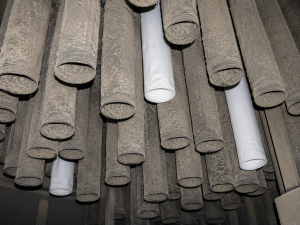
New filter bags have very low resistance, so the system will naturally try to pull more airflow through the new filters.
Many people assume every filter inside the baghouse operates independently. In reality, they’re all connected through the same fan and the same airflow. New filter bags have very low resistance, whereas older bags usually have much higher resistance because they’ve accumulated years of embedded dust. The result is that the system naturally tries to pull more airflow through the new filters.
That additional airflow often means faster dust loading, higher cleaning frequency, increased abrasion, uneven filter wear and shorter life for the replacement bags. Instead of lasting five or six years like the original set, the new filters may fail much sooner because they’re doing more of the work.
It’s similar to replacing one worn tire on a vehicle while leaving the other three nearly bald. The new tire isn’t necessarily defective…it simply ends up carrying a disproportionate share of the load.
Differential Pressure Tells an Important Part of the Story
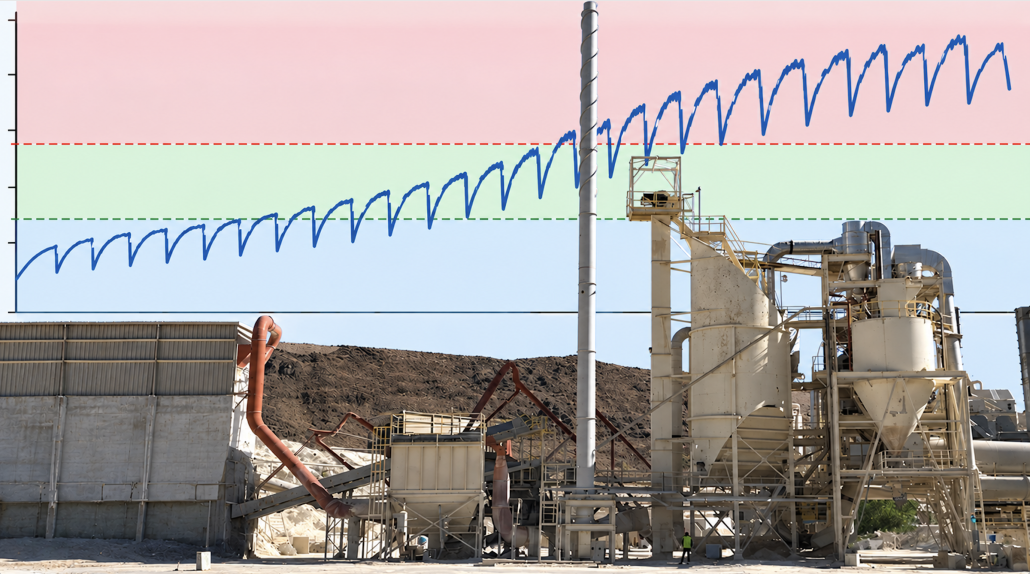
One of the easiest ways to determine whether a full changeout is approaching is by looking at the differential pressure trend. If differential pressure has steadily increased over several years and no amount of cleaning brings it back down, the filters may simply be loaded with embedded fines. Likewise, if emissions begin increasing without obvious holes in the bags, the media itself may have reached the end of its service life. These are signs that replacing only the visibly damaged filters is unlikely to restore the collector’s original performance.
There Are Times When Spot Changing Is Absolutely the Right Choice
Spot replacement is often recommended when:
⦿ A small number of bags were damaged during maintenance.
⦿ An isolated spark burned several filters.
⦿ One compartment experienced localized abrasion.
⦿ A broken cage damaged a few bags.
⦿ A foreign object entered the collector.
⦿ The remaining filters are relatively new.
In these situations, replacing only the affected filters can be the most economical decision. If you must replace only a few filters, ensure it’s less than 5% of the total filters to avoid imbalances. Mixing old and new filters can create airflow distribution problems, causing some filters to clog faster than others.
Consider the Cost of Downtime
Another factor that’s frequently overlooked is labor. Replacing ten bags today and another twenty next month may seem less expensive than replacing all 600 at once. When these costs are added together, multiple small changeouts can easily exceed the cost of one planned replacement. Many facilities schedule complete filter replacements during annual shutdowns specifically to avoid repeated interruptions throughout the year.
Don't Forget the Cages
Any cages that are bent, rusty, or have shape edges should be discarded and replaced. Filters that are installed onto damaged cages will suffer early filter failure.
Whenever filters are replaced, the cages deserve just as much attention. Rust, broken welds, bent wires, worn venturis, or sharp edges can quickly damage brand-new filters. One of the most common mistakes technicians see is installing new bags over old cages that have already reached the end of their own service life. If the cages are questionable, replacing both components together is often the better long-term investment.
Final Thoughts
Spot-changing filter bags can be an excellent maintenance strategy when dealing with isolated damage or relatively new filter sets. However, once the entire filter population begins reaching the end of its service life, replacing only the visibly damaged bags often postpones—rather than solves—the problem.
Before ordering replacement filters, take the time to understand what your dust collector is trying to tell you. In many cases, a thorough inspection can save far more than the cost of the filters themselves.
Our engineers have inspected thousands of dust collection systems across North America. If you’re unsure whether it’s time for a complete filter changeout, we’re happy to help.
Dust Collection Expert, Technical Writer & Editor at Baghouse.com
Andy Biancotti believes that knowledge is one of the best investments any company can make. As Editor and Marketing Manager at Baghouse.com, he enjoys interviewing engineers, technicians, and customers to capture the real-world lessons behind successful dust collection projects and turn them into practical resources that others can learn from. With more than two decades of experience in industrial maintenance, operations, and technical communication, his goal is simple: help people better understand their systems so they can work safer, smarter, and more efficiently.