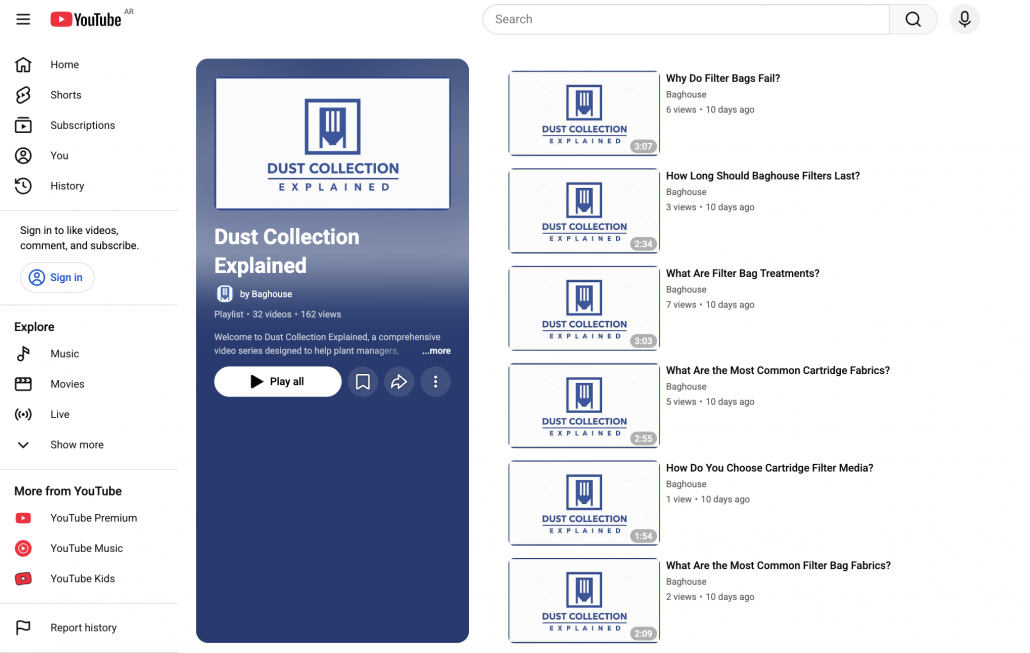
 The series covers the same questions our team hears every week during inspections, training sessions, and troubleshooting visits.
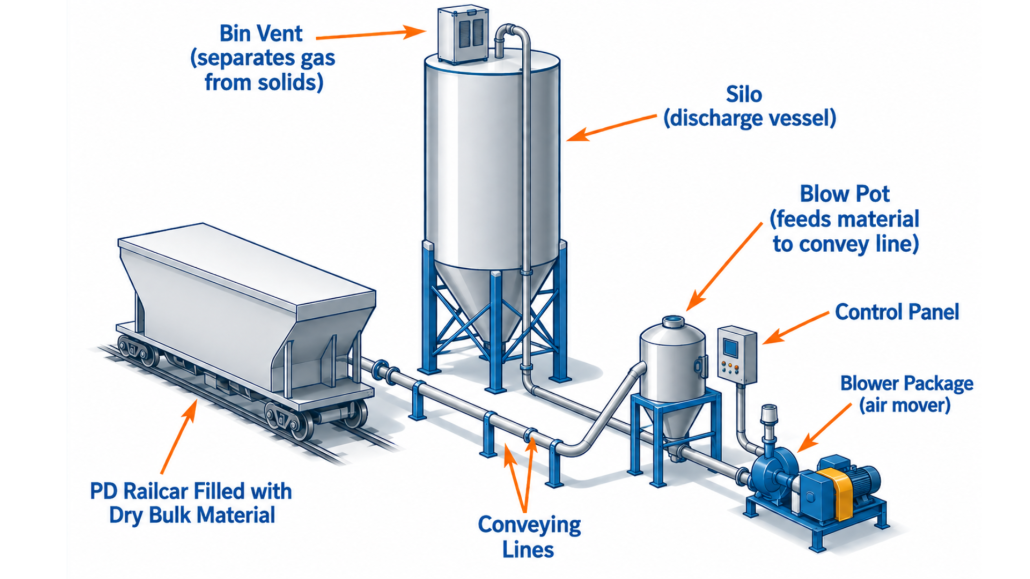
We’ll also talk about topics that are often overlooked, such as source capture, hood design, ductwork engineering, pneumatic conveying, hopper design, pulse-cleaning optimization, and troubleshooting system performance issues.
“Our goal isn’t to turn everyone into a dust collection engineer,” explains Dave Dal Santo, Dust Collection Expert. “It’s to help people understand enough about their systems that they can ask better questions, recognize warning signs earlier, and make smarter decisions.”
Each episode focuses on practical information that can be applied immediately in the field.
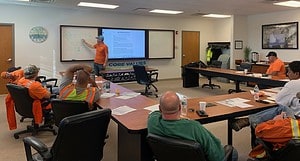
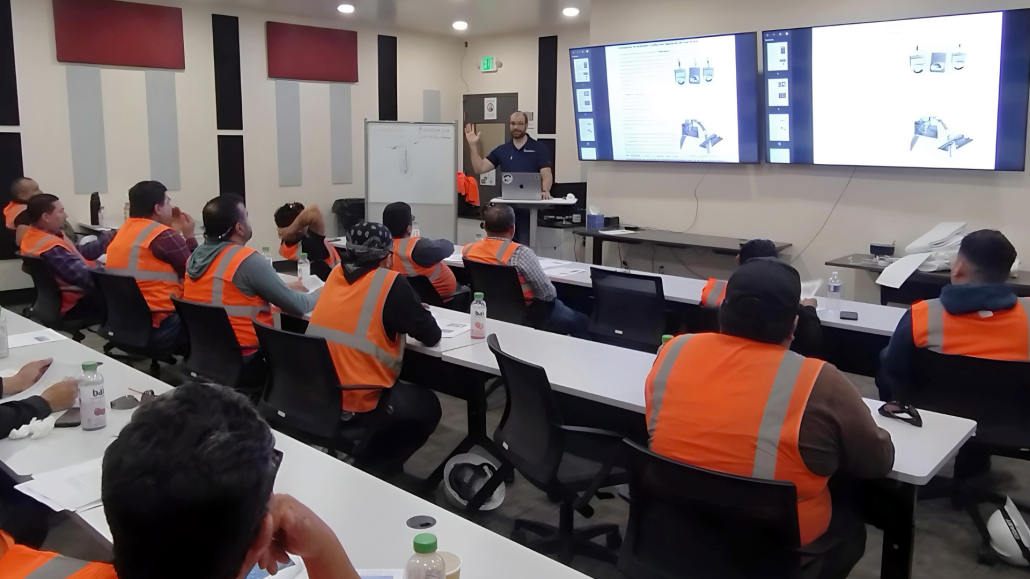
Employees from different areas benefiting from the
in-depth analysis of their systems and the most efficient maintenance routine
One of the things we’re most excited about is that this series can be beneficial for all of the departments affected by the performance of dust collectors.
Maintenance personnel can use it to better understand common failure points and improve preventive maintenance programs. Operators can learn how process changes affect airflow and system performance. Engineers can gain insights into system design and optimization. EHS professionals can strengthen their understanding of emissions control, housekeeping, and compliance.
Even experienced professionals often discover opportunities for improvement.
“We’re still learning every day,” says Matt. “Every plant has something unique going on. That’s one of the reasons dust collection is so interesting. There’s always another challenge to solve.”
There are plenty of videos online that explain dust collection theory. What makes this series different is that it’s built around real-world experience.
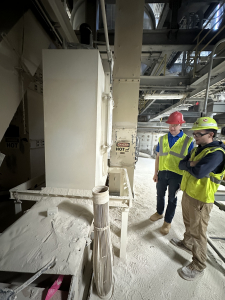
The lessons come directly from thousands of hours spent inside cement plants, mines, foundries, food facilities, woodshops, recycling operations, chemical plants, and manufacturing facilities across North America.
“We wanted to create the kind of training resource we wish every plant had access to,” says Dominick. “Something practical. Something useful. Something that helps people avoid making the same mistakes we’ve seen hundreds of times.”

Dust Collection Expert, Technical Writer & Editor at Baghouse.com
Andy Biancotti believes that knowledge is one of the best investments any company can make. As Editor and Marketing Manager at Baghouse.com, he enjoys interviewing engineers, technicians, and customers to capture the real-world lessons behind successful dust collection projects and turn them into practical resources that others can learn from. With more than two decades of experience in industrial maintenance, operations, and technical communication, his goal is simple: help people better understand their systems so they can work safer, smarter, and more efficiently.