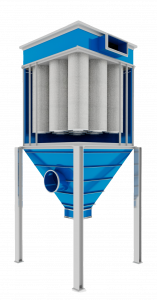
Explosion Vents and Isolation Valves

Combustible dust can be easy to underestimate because, during normal operation, nothing dramatic appears to be happening. Dust flows through the ductwork, falls into the hopper and gets discharged.

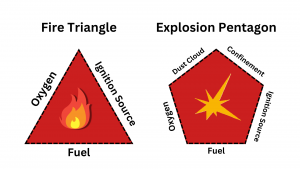
Fire triangle and explosion pentagon

Fire Triangle and Explosion pentagon

But inside that collector, several conditions needed for a deflagration can exist at the same time: combustible material, suspended dust, oxygen, confinement, and potentially an ignition source.

Eliminating every possible spark, hot particle, friction source, or electrostatic discharge from an industrial process can be difficult. 


This is where combustible dust safety accessories such as explosion vents and isolation valves become important. How do explosion vents and isolation valves reduce combustible dust risks? 

What Makes a Dust Collector an Explosion Risk?

A dust collector is designed to concentrate dust. Dust-laden air enters the collector, particulates are separated from the airstream, and collected material accumulates on the filters before eventually reaching the hopper. With combustible material, the collector can therefore contain a suspended concentration of combustible dust inside an enclosed vessel.

Potential ignition sources include sparks or embers from the production process, hot particles, friction, and static electricity. Processing, handling, and storing combustible materials inside enclosed equipment such as dust collectors, cyclones, mills, mixers, and bins can create an explosive atmosphere.

This means a combustible dust protection strategy has to answer two questions:

  • ► How can we reduce the chance of ignition?
  • ► If a deflagration occurs, what happens next? (Explosion venting and isolation address this question)

What Does an Explosion Vent Actually Do?

An explosion vent acts as an intentionally engineered pressure-relief point in the dust collector.

During normal operation, the vent remains closed. If a deflagration occurs and internal pressure reaches the vent’s designed opening pressure, the vent opens and provides a controlled path for the expanding gases, flame, and pressure.

The important distinction is that explosion venting does not prevent the initial deflagration. It reduces its consequences.

How Are Explosion Vents Sized?

The required vent area and arrangement depend on factors including:

  • ⦿ Vessel volume and geometry
  • ⦿ Vessel strength
  • ⦿ Dust characteristics, including Kst and Pmax (Values obtained with a Dust Hazard Analysis)
  • ⦿ Vent opening pressure
  • ⦿ Vent size and efficiency
  • ⦿ Length and configuration of any vent ducting

Combustible dust testing is important to know the explosibility characteristics of the material and properly evaluate the protection system.

Process changes matter as well. If production changes, throughput increases, new materials are introduced, or the dust mixture changes, the existing explosion protection should not automatically be assumed to remain appropriate.

Where Does the Explosion Go?

An explosion vent can discharge flame, pressure, hot gases, and burning material. The resulting fireball can extend a considerable distance, creating a hazard to nearby personnel and equipment. An explosion may also disturb accumulated combustible dust in the surrounding area, potentially contributing to a secondary explosion.

  • ⦿ For outdoor collectors, the vent can often be positioned so its discharge is directed toward a designated safe area.
  • ⦿ Indoor collectors require additional consideration. Depending on the application, solutions may include purpose-designed vent ducting to a safe outdoor location or flameless venting.

A flameless vent combines pressure relief with a flame-arresting element designed to control the discharge of burning material while allowing explosion pressure to be relieved.

Read article: Introduction to Combustible Dust Explosions Common to Baghouses

Why Do You Need Isolation If You Already Have Explosion Venting?

Imagine a properly vented dust collector connected to production equipment through ductwork. An explosion begins inside the collector and the explosion vent opens exactly as intended. The collector may be protected from excessive internal pressure, but it is still connected to the rest of the process. Flame and pressure can potentially propagate through interconnected ductwork toward other equipment or occupied areas. Isolation is used where a fireball or explosion could propagate to other equipment through connecting pipework.

So, explosion venting controls pressure within the protected enclosure, whereas explosion isolation helps prevent the event from propagating beyond it.

How Does an Explosion Isolation Valve Work?

An explosion isolation device creates a barrier between the explosion and connected portions of the system.

Isolation can be passive or active depending on the technology and application. Fast-acting isolation valves, for example, function as mechanical barriers against the explosion’s flame front. Other approaches can include passive isolation devices and chemical isolation systems.

The appropriate method depends on factors such as dust properties, airflow, duct arrangement, operating conditions, and the equipment being protected.

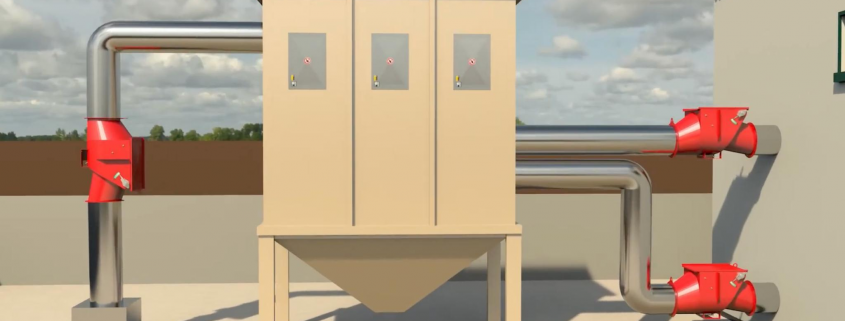
Watch an animation on how explosion vents and an isolation valve work with a dust collection system

Which Vendors Supply Complete Combustible Dust Accessory Packages for New Systems?

Baghouse.com can help evaluate your new or existing dust collection system and identify appropriate options, including explosion vents, flameless vents, isolation valves, spark detection and extinguishing systems, abort gates, controls, monitoring equipment, and other combustible dust safety accessories.

Frequently Asked Questions About Explosion Vents and Isolation Valves

An explosion vent provides a designed relief point for rapidly increasing pressure during a deflagration. When it opens, it helps keep pressure from exceeding the protected equipment’s allowable strength. It mitigates an explosion rather than preventing ignition.

No. Explosion venting is a protection method. Prevention focuses on reducing combustible conditions and controlling ignition sources. Venting is intended to reduce the consequences if a deflagration occurs.

Because they perform different functions. The vent relieves pressure from the protected enclosure, while isolation helps prevent flame and pressure from propagating through connected ductwork into other equipment or process areas.

Conventional indoor venting can create serious hazards because flame, pressure, and burning material may be discharged into the surrounding space. Depending on the application, the system may require venting to a safe outdoor location or an appropriately designed flameless vent.

Sizing depends on factors including vessel size and geometry, vessel strength, dust characteristics such as Kst and Pmax, vent opening pressure, vent efficiency, and associated vent ducting. It needs to be determined for the specific application.

Venting provides a controlled path for pressure relief. Suppression detects a developing explosion and rapidly introduces suppressant into the protected enclosure to reduce the developing pressure and effects of the explosion.

Not necessarily. Depending on the process, a complete strategy may involve venting, isolation, suppression, ignition-source control, housekeeping, monitoring, and other measures. Interconnected systems often require more than one protection method.

Start with the dust characteristics and evaluate the complete system, including the collector location, equipment strength, ductwork, connected equipment, airflow, process conditions, and potential ignition sources. From there, the appropriate combination of venting, isolation, suppression, monitoring, and other protection methods can be determined.

Diaphragm valve

Whenever a customer calls us because “the dust collector isn’t working,” our first response is usually another question: “What exactly is the system doing?.” Rather than immediately looking at the filters, start by identifying the symptom.

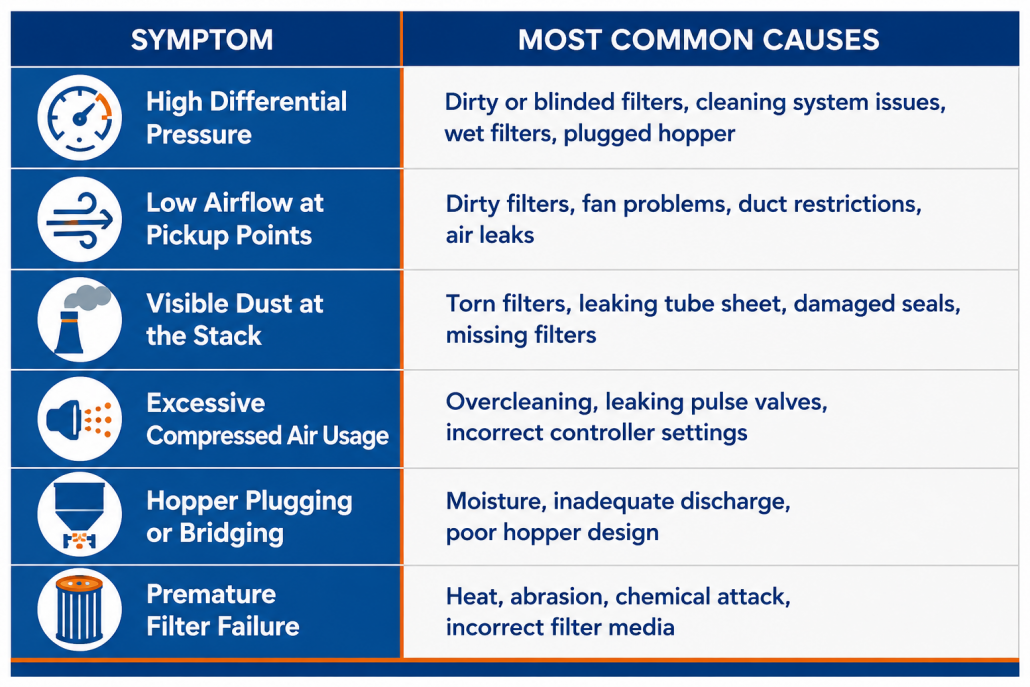
Most dust collection problems fall into one of these categories:

Troubleshooting a dust collector - Symptoms and common causes

If there is one measurement every maintenance technician should understand, it’s differential pressure.

Differential Pressure gauges

Just as blood pressure indicates the health and efficiency of the circulatory system, differential pressure provides a vital measurement of how well the dust collector is functioning.

Differential pressure (often called DP) measures the resistance to airflow across the filters. As dust accumulates on the surface of the filters, airflow becomes more difficult, causing the differential pressure to increase. After the cleaning system pulses the filters, the dust cake is partially removed and the differential pressure decreases.

This continual rise and fall is perfectly normal. In fact, a dust collector operating with some filter cake generally filters better than one with perfectly clean filters.

The important question you should ask yourself is: “How is the differential pressure changing over time?” The trend often reveals far more than a single reading ever could.

Understanding Differential Pressure Trends

The table below provides a quick reference for interpreting common differential pressure conditions.

Differential pressure troubleshooting chart showing common dust collector pressure conditions and their likely causes, including torn filters, filter aging, cleaning system issues, wet filters, and faulty pressure instrumentation.

A high differential pressure means the fan is working harder to pull air through the collector. As resistance increases, airflow usually decreases, reducing dust capture at the process equipment.

Before ordering replacement filters, work through the following 4-step checklist.

Step 1: Verify the Reading

Believe it or not, the differential pressure gauge itself is frequently the problem.

Magnehelic pressure gauge

If operators have incorrect readings it could result in damage to the system, increase emissions, or even fire and combustible dust hazards

Inspect the following:

  • ⦿ Are the pressure sensing tubes plugged with dust?
  • ⦿ Is there moisture inside the tubing?
  • ⦿ Is the differential pressure transmitter calibrated correctly?
  • ⦿ Is the Magnehelic gauge functioning normally?
  • ⦿ Are both pressure taps connected properly?

Many apparent “filter problems” disappear after cleaning the pressure sensing lines.

Step 2: Has the Cleaning System Stopped Working?

If differential pressure continues climbing even after cleaning cycles occur, inspect the cleaning system.

Depending on your collector, check:

One failed pulse valve can affect dozens of filters. Several failed valves can quickly cause differential pressure to rise throughout the entire collector.

Step 3: Are the Filters Wet?

Close-up of industrial baghouse filter bags blinded by moisture and dust buildup caused by condensation inside a dust collection system.

Moisture inside a baghouse can cause dust to adhere to the filter media, creating a hardened dust cake that blinds the filters. This reduces airflow, increases differential pressure, shortens filter life, and often leads to hopper plugging, corrosion, and costly maintenance.

When condensation forms inside a dust collector, dust begins sticking to the filter media instead of releasing during cleaning, and eventually, the filters become blinded.

Unlike ordinary dust cake, blinded filters contain embedded dust deep within the filter media. Since the cleaning system only removes dust from the surface, embedded particles remain trapped inside the fabric.

Once blinding reaches this stage, filter replacement is usually the only permanent solution. Identify why moisture entered the collector first.

Moisture common causes are:

  • ⦿ Process temperatures falling below the dew point
  • ⦿ Cold start-ups
  • ⦿ Poor insulation
  • ⦿ Ambient air entering through leaks
  • ⦿ Wet compressed air
  • ⦿ Process moisture

Step 4: Have the Filters Simply Reached the End of Their Life?

Typical signs include:

  • ⦿ Differential pressure continues increasing year after year.
  • ⦿ Cleaning pulses no longer reduce differential pressure.
  • ⦿ Airflow gradually decreases.
  • ⦿ Production begins suffering despite proper maintenance.

At this stage, replacing the filters is usually the correct decision.

Operators may notice dust escaping around hoods, material accumulating on equipment, or housekeeping becoming more difficult than usual.

Low airflow can originate anywhere between the pickup hood and the exhaust stack, which is why it’s important to troubleshoot the entire system.

Step 1: Verify That the Fan Is Operating Properly

Check the following:

  • ⦿ Is the motor operating normally?
  • ⦿ Is the motor drawing the expected amperage?
  • ⦿ Is the fan rotating in the correct direction?
  • ⦿ Has the fan speed changed?
  • ⦿ Are all drive belts properly tensioned?
  • ⦿ Is the Variable Frequency Drive (VFD), if equipped, operating at the intended speed?

It’s surprisingly common to find fans operating below their design speed because of VFD programming changes, slipping belts, incorrect pulley ratios, or motor wiring issues.

Step 2: Inspect the Fan for Wear or Material Buildup

fan blades rust corrosionFans operating in dusty environments gradually accumulate material on the impeller. This buildup creates two problems.

  • ⦿ First, it changes the shape of the fan blades, reducing efficiency.
  • ⦿ Second, it often causes the impeller to become unbalanced, producing excessive vibration that shortens bearing life and increases maintenance costs.

Inspect for:

  • ⦿ Dust buildup on the impeller
  • ⦿ Worn fan blades
  • ⦿ Corrosion
  • ⦿ Cracks
  • ⦿ Excessive vibration
  • ⦿ Bearing noise

Step 3: Look for Restrictions in the Ductwork

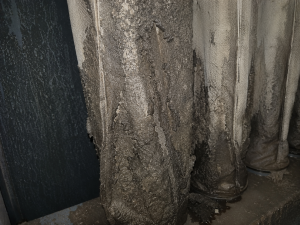
Dust build up inside a duct connected to a dust collector

Maintaining the minimum conveying velocity in the dust collection system prevents dust drop out and build up inside the ductwork

Common examples include:

  • ⦿ Product buildup inside ducts
  • ⦿ Plugged branch lines
  • ⦿ Collapsed flexible duct
  • ⦿ Closed or partially closed blast gates
  • ⦿ Damaged duct sections
  • ⦿ Excessive dust accumulation after years of operation

Even partial obstructions increase static pressure and reduce airflow at downstream pickup points. In systems handling sticky, moist, or fibrous materials, product buildup inside horizontal duct runs is especially common.

Step 4: Check for Air Leaks

Inspect:

  • ⦿ Access doors
  • ⦿ Inspection ports
  • ⦿ Expansion joints
  • ⦿ Flexible connectors
  • ⦿ Flanges
  • ⦿ Gaskets

Leaks downstream of the filters may not reduce airflow significantly, but they can affect system balance and make troubleshooting more difficult.

When duct velocity falls below the minimum conveying velocity required for the material being collected, particles begin settling inside the ductwork. This is called product dropout.

What Causes Product Dropout?

The most common causes include:

  • ⦿ Fan operating below design airflow
  • ⦿ Oversized ductwork
  • ⦿ System modifications that reduce velocity
  • ⦿ Additional pickup points added after installation
  • ⦿ Heavy or abrasive material requiring higher conveying velocity
  • ⦿ Excessive dust loading

Larger ductwork does not always improve airflow. In reality, increasing duct diameter without increasing airflow lowers air velocity. Eventually, the velocity drops below the minimum needed to keep particles suspended.

What Should You Check?

Inspect areas where dust tends to settle first:

  • ⦿ Horizontal duct runs
  • ⦿ Long-radius elbows
  • ⦿ Branch connections
  • ⦿ Low spots
  • ⦿ Dead-end sections

If material is accumulating repeatedly in the same location, the ductwork design itself may need to be evaluated.

Check the Cleaning Controller

Many older systems clean continuously on a fixed timer. This means the collector pulses whether the filters need cleaning or not. Modern clean-on-demand controllers monitor differential pressure and pulse only when necessary.

Facilities upgrading from timer-based cleaning frequently reduce compressed air usage while extending filter life.

Read article: The Importance of Correct Compressed Air Pressure in a Pulse Jet Dust Collector


Inspect Pulse Valves

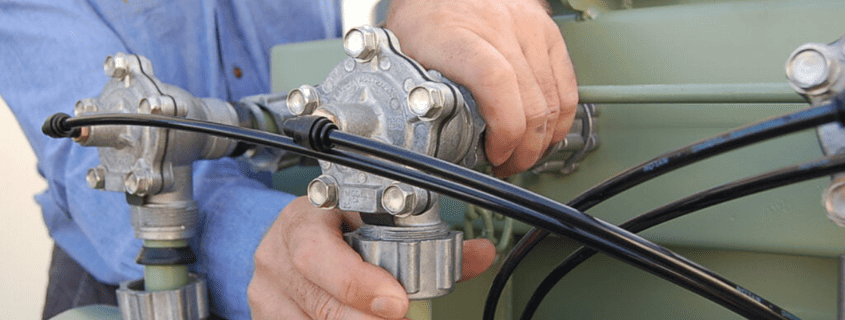
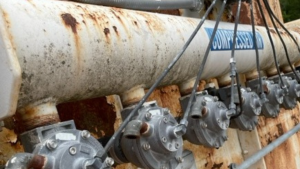
Caratula Air Headers and pulse valvesA leaking diaphragm valve may continue bleeding compressed air even when it’s not pulsing.

Symptoms include:

  • ⦿ Compressor running more often
  • ⦿ Lower manifold pressure
  • ⦿ Continuous air leakage
  • ⦿ Weak cleaning pulses

Inspect every pulse valve, diaphragm, and solenoid. One leaking valve can waste thousands of cubic feet of compressed air every day.

Verify Compressed Air Quality

Cleaning systems require clean, dry compressed air.

Moisture inside compressed air lines can:

  • ⦿ Damage solenoid valves
  • ⦿ Freeze during cold weather
  • ⦿ Cause pulse valves to malfunction
  • ⦿ Introduce water into the dust collector


What Can You Do?

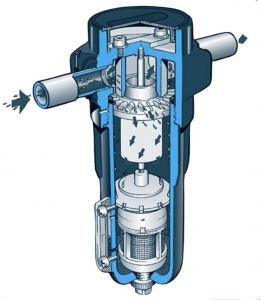
Compressed air water separator

Install a compressed air moisture trap (or water separator) to remove liquid condensation from air lines. It protects solenoid valves, diaphragm valves, and filters from rust or moisture damage.

Read article: The Importance of Dry and Clean Compressed Air in a Pulse Jet Dust Collector

○ Clean air is then discharged from the dust collector back into the environment or recirculated into the facility, completing the process.

Occasionally, small amounts of particulate may be visible during startup or process upsets; but a properly operating dust collector should not continuously release visible dust. If emissions suddenly increase, the problem should be investigated immediately.

The first step is determining whether the dust is bypassing the filters or passing through them. Those are two very different problems with very different solutions.

Step 1: Inspect the Filter Bags

Inspect several bags from different locations throughout the collector for:

  • ⦿ Holes or tears
  • ⦿ Burn marks
  • ⦿ Abrasion near the cage wires
  • ⦿ Chemical degradation
  • ⦿ Broken snap bands or clamps
  • ⦿ Improper seating in the tubesheet

If only a few bags have failed due to an isolated issue, replacing those individual filters may be appropriate. However, if filters are reaching the end of their normal service life throughout the collector, replacing the complete set is usually the better long-term solution.

Read Article: Should I Change All My Filter Bags at Once or Just Spot Change as Needed?


Step 2: Check the Tubesheet and Sealing Surfaces

Any opening around filter mounting holes, access doors, inspection hatches, or welded seams allows dirty air to bypass the filters completely.

Inspect for:

  • ⦿ Damaged filter seals
  • ⦿ Missing or improperly installed filters
  • ⦿ Worn gaskets
  • ⦿ Cracked welds
  • ⦿ Corrosion around the tubesheet
  • ⦿ Leaking access doors


Step 3: Consider Filter Blinding

Filter blinding is a normal end-of-life failure rather than a mechanical failure.

Common signs include:

  • ⦿ High differential pressure
  • ⦿ Cleaning pulses no longer reducing pressure
  • ⦿ Gradually increasing emissions
  • ⦿ Reduced airflow
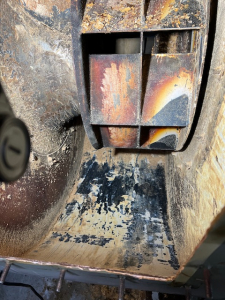
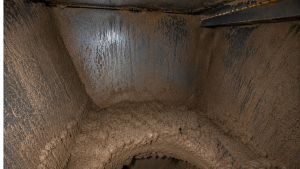
Inside view of an industrial dust collector hopper showing severe dust bridging caused by moisture and condensation, restricting material discharge.

Moisture inside a dust collector hopper can cause fine dust to become sticky and form large bridges over the hopper outlet. This prevents proper material discharge, increases differential pressure, and can eventually lead to hopper plugging, filter blinding, and reduced dust collector performance.

When warm process gas cools below its dew point, water vapor condenses inside the collector. Once water reaches the filters, dust begins sticking to the media instead of releasing during cleaning.

Common causes include:

  • ⦿ Cold startups
  • ⦿ Poor insulation
  • ⦿ Air leaks introducing cold ambient air
  • ⦿ Wet compressed air
  • ⦿ Process changes
  • ⦿ Low operating temperatures

Read article: How to Prevent Condensation in Your Baghouse

The following sections highlight the most common issues encountered with the four primary dust collector designs used in industry today.

Pulse Jet SystemPulse-Jet Dust Collectors

When troubleshooting a pulse-jet collector, the cleaning system should always be one of the first areas inspected.

Common Problems

The Filters Aren’t Cleaning Properly

A pulse-jet cleaning system depends on a short, powerful burst of compressed air. If that pulse becomes weak, filter performance declines rapidly.

Inspect:

  • ⦿ Compressed air pressure
  • ⦿ Pulse controller settings
  • ⦿ Solenoid valves
  • ⦿ Diaphragm valves
  • ⦿ Blow pipes
  • ⦿ Venturis
  • ⦿ Pulse timing
  • ⦿ Air manifold pressure

The Collector Is Pulsing Too Frequently

Excessive pulsing:

  • ⦿ Wastes compressed air
  • ⦿ Shortens filter life
  • ⦿ Increases maintenance costs
  • ⦿ Prevents a stable dust cake from forming

Whenever possible, use a differential pressure controller or clean-on-demand system instead of a fixed timer. These systems pulse only when cleaning is actually needed, reducing both compressed air consumption and unnecessary filter wear.

Compressed Air Pressure Is Too Low

Possible causes include:

  • ⦿ Air compressor problems
  • ⦿ Leaking diaphragm valves
  • ⦿ Air leaks
  • ⦿ Moisture in the compressed air system
  • ⦿ Undersized compressed air piping

Always verify compressed air pressure before assuming the filters have failed.

Read article: Troubleshooting Your Dust Collector Pulse Jet Cleaning System


Rotating Low/Medium Pressure Reverse Air Baghouse

Rotating Low/Medium Pressure Reverse Air Baghouse

Reverse-Air Dust Collectors

Reverse-air collectors clean the filters by reversing airflow rather than using compressed air. 

Common Problems

Reverse-Air Fan Isn’t Operating Properly

Inspect:

  • ⦿ Fan rotation
  • ⦿ Belt condition
  • ⦿ Bearings
  • ⦿ Motor amperage
  • ⦿ Airflow

Without adequate reverse airflow, filters cannot release accumulated dust effectively.

Isolation Dampers Fail to Seal

Reverse-air collectors depend on isolating one compartment while cleaning. If isolation dampers leak, process airflow continues passing through the filters during cleaning, reducing cleaning effectiveness.

Inspect:

  • ⦿ Damper seals
  • ⦿ Linkages
  • ⦿ Pneumatic actuators
  • ⦿ Position indicators

Read article: What is the Difference Between Medium Low-Pressure Reverse Air and Pulse-Jet Baghouses?


Shaker Dust Collectors

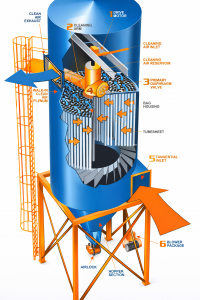
Shaker baghouse mechanism graphic

Shaker baghouse mechanism

Their cleaning system is mechanically simple but depends heavily on proper adjustment.

Common Problems

Bags Don’t Shake Properly

Inspect:

  • ⦿ Bearings
  • ⦿ Linkages
  • ⦿ Drive components
  • ⦿ Shaker motor
  • ⦿ Mechanical wear

Insufficient shaking leaves excessive dust on the filters. Excessive shaking shortens filter life.

Filter Bag Tension Is Incorrect

Shaker collectors require properly tensioned bags. Loose bags clean poorly, whereas over-tightened bags experience unnecessary mechanical stress and premature failure.


The most common style of cartridge collectors also uses pulse jet cleaning.

Vertical Cartridge Collector

Cartridge Collectors

Cartridge collectors have become increasingly popular for lighter applications, like welding, laser cutting, pharmaceutical manufacturing and food processing.

Common Problems

Pleats Become Packed with Dust

Sticky materials, moisture, or fibrous dust may become lodged between their pleats, preventing proper cleaning.

Possible causes include:

  • ⦿ High humidity
  • ⦿ Oil mist
  • ⦿ Incorrect filter media
  • ⦿ Overcleaning
  • ⦿ Inadequate compressed air pressure

Filters Load Unevenly

Uneven loading often indicates poor airflow distribution inside the collector.

Inspect:

  • ⦿ Inlet design
  • ⦿ Baffles
  • ⦿ Air distribution plates
  • ⦿ Damaged cartridges
  • ⦿ Missing gaskets
Dust collector troubleshooting cheat sheet showing common symptoms, likely causes, and first things to check for high differential pressure, low airflow, stack emissions, hopper plugging, compressed air use, energy use, and filter failure.

Facilities that achieve the best reliability are the ones that identify these small changes early, before they become expensive repairs.

Don’t immediately replace filters or adjust timer settings; approach troubleshooting methodically. Start with the symptom, verify your measurements, inspect the simplest components first, and work systematically toward the root cause. In many cases, the solution turns out to be much simpler…and far less expensive than it first appears.

Inside the Mind of a Dust Collection Expert — Interview with Scott Omann

Anyone who has spent enough time around industrial dust collection knows that is not as straightforward as replacing a few parts when things go wrong in the system. 

Inside the Mind of a Dust Collection Expert — Interview with Scott OmannThat’s where Scott Omann, Aftermarket Division Manager at Baghouse.com, comes in to help customers. With seven years at Baghouse.com and a background that includes construction, maintenance, customer service, sales, and technical training, Scott works with customers to get beyond simply identifying what they need and understand why they need it.

We sat down with Scott to talk about troubleshooting, replacement filters and parts, the importance of keeping good equipment records, what plants should consider when purchasing a new dust collector, and why aftermarket support should begin long before something breaks.

— How did you get started in the dust collection industry?

Scott: “Before I got started in the dust collection industry, I worked in a number of fields related to dust collection—construction, maintenance, areas like that.

I’ve also done a number of things regarding sales, helping customers in terms of customer service, roles like that as well. Not only related to the dust collection industry, but a few other related fields as well.”

Today, as Aftermarket Division Manager, that varied background comes in handy. 

▶ Watch his full answer below.

— What do you enjoy most about your job?

Scott: “One of the things I really enjoy about this job is the challenge of it. Through many of our customers, they have a variety of different systems, different problems that they have or that they encounter, and I really like to be able to get down into the nitty-gritty of what’s going on with their system. Again, to be able to help them diagnose their problems, to be able to offer them a real solution.”

That troubleshooting process also creates an opportunity to teach.

“One thing I like about this job as well is that we do try to educate our customers to the best of our ability to avoid future problems and to properly run their dust collection systems.”

▶ Watch his full answer below.

— Any funny or memorable experiences from your first dust collection jobs?

Scott: “I didn’t realize how backed up or plugged up a system could be.”

Scott remembers one of his first system audits at a facility manufacturing pallets and MDF products.

“The dust would just spew out of there like crazy. We did that for a number of collectors, and again, it was a very hot, a very windy day, and just all the sawdust and all the dust just stuck to us like crazy.”

Perhaps the most interesting part was that the plant didn’t necessarily consider the situation particularly unusual.

“The people at the plant didn’t think things were that bad… Not being able to see so clearly that everything is so plugged up, how do you see that this is working well?”

▶ Watch his full answer below.

— What advice would you give plant managers and maintenance teams when ordering replacement filters and parts?

Scott: “So many times, with so many layers of plant bureaucracy as to how companies are set up today, sometimes the small decisions that are made every day don’t get transferred to those who make the purchases for the plant.

Sometimes people might occasionally use the incorrect fabric for their type of application and start having problems. Instead of just assuming that we’ll provide you with whatever you want, which we can do, we want to help diagnose and understand a little bit better your system.”

When specifications aren’t available, photographs, measurements, drawings, and equipment records become extremely valuable. Even small dimensional differences matter.

“We want to make sure that, again, we don’t repeat simple mistakes from the past by giving you bags that might be just a little bit wider than really necessary. Cages that might be just a touch longer or a touch shorter than what the baghouse was originally designed for.”

▶ Watch his full answer below.

— Why is training so valuable after a dust collection system audit?

Scott: “The audits provide some of the problems that we found, how we can fix them, but the training really educates the customer as to how to prevent those problems from occurring.

It’s something that we found to be really helpful to avoid simple problems that create huge headaches down the line, not just for the dust collection system but for other things.”

▶ Watch his full answer below.

— What makes Baghouse.com different from other aftermarket suppliers?

Scott: “I think today it’s easy to find people or other companies that are interested only in some sort of transactional sale. With us, we want to make sure that we really help you as the customer. We’re not interested in just a one-time sale, a one-off thing.”

Baghouse.com has more than 40 years of dust collection experience, including designing complete systems as well as supporting the filters, cages, controls, and other components those systems require throughout their operating life.

“With the audits that we do, we are interested in understanding the problems that you’re facing and be able to fix them. With the training courses that we offer, we are really interested in helping our customers be educated.”

▶ Watch his full answer below.

— Any final advice for companies looking for a dust collection partner?

Scott: “If I had to just give some final words to any of our customers, it would probably be to think of us as your one-stop shop.”

That relationship can begin during the earliest stages of a project, with engineers helping design the system. It continues as the equipment is manufactured and installed, as modifications are made, and long after commissioning when the plant needs replacement filters, cages, electronic components, controls, or troubleshooting assistance.

“We’re not just going to sell you a piece of equipment and not help you out afterward.

When everything has been done and completed, we’re the people that you’re going to be able to call for any type of issues that you’re having, but also to be able to provide your complete bag set, your complete cage set that you need for that collector, any other types of electronic parts, controls, things like that.”

▶ Watch his full answer below.

Aftermarket Support Is More Than Replacement Parts

One theme comes through repeatedly in Scott’s interview: the best time to think about aftermarket support isn’t when you start having problems with your dust collector.

That is why Baghouse.com approaches aftermarket support as an extension of the original dust collection project.