Last updated: September 23, 2026
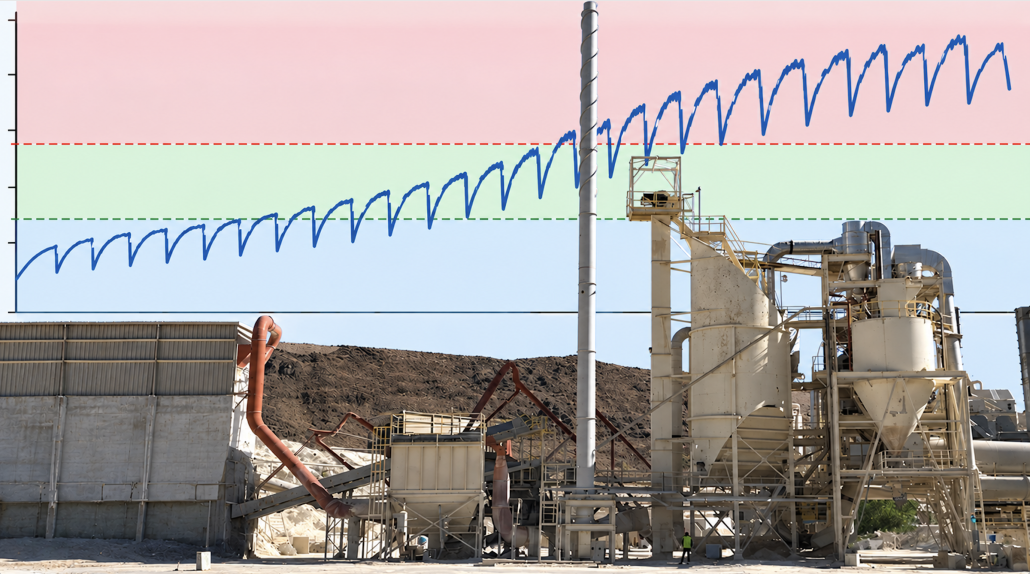
Usually, the first reaction is to blame the dust collector when a system isn’t performing as expected. Or maybe someone may blame the filters, the fan, or the pulse cleaning system. Yet one of the most common—and expensive—problems often starts much earlier, inside the ductwork.
In this article, we’ll explain:
⦿ How does duct diameter affect air velocity?
⦿ Why should conveying velocity be calculated carefully?
⦿ How does choosing the proper duct size improve efficiency, reliability, and operating costs?
Airflow and Duct Size Are Directly Connected
Every dust collection system is designed to move a certain volume of air, usually expressed as CFM (Cubic Feet per Minute). Air velocity, on the other hand, is measured in feet per minute (FPM) and describes how fast that air is traveling through the ductwork.
Both values are inseparable.
Imagine pouring the same amount of water through two different pipes. A smaller pipe forces the water to travel faster. A larger pipe allows it to move more slowly. Air behaves exactly the same way.
For a given airflow (CFM):
- ⦿ A smaller duct produces higher air velocity.
- ⦿ A larger duct produces lower air velocity.
Because of this relationship, selecting the proper duct diameter will achieve the air velocity needed to transport the material safely and efficiently.
Why Conveying Velocity Is So Important
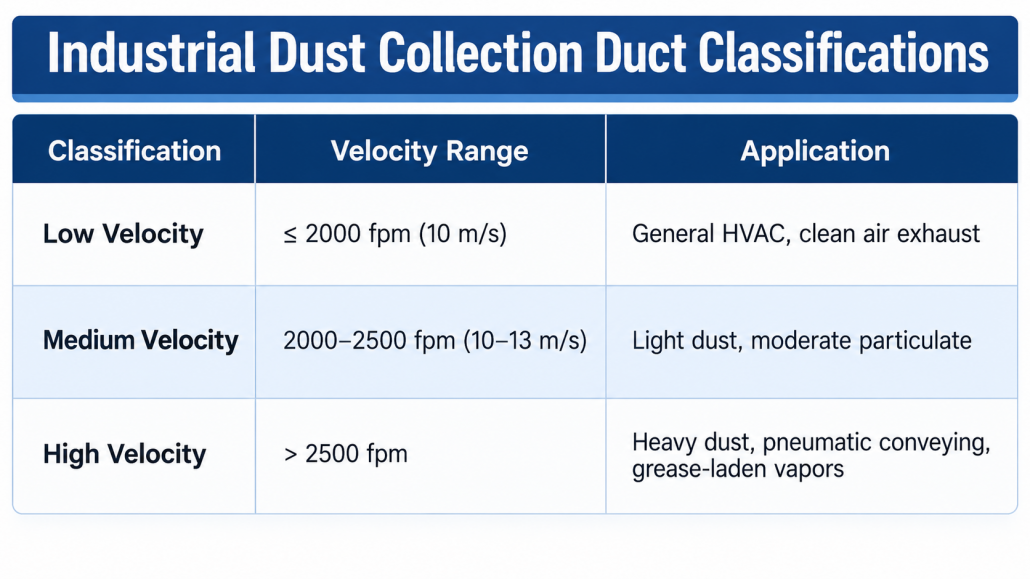
What is minimum conveying velocity? Is the air speed necessary to keep particles suspended while they travel through the duct.
Once airflow drops below that minimum, gravity begins to win. Instead of remaining suspended in the air stream, heavier particles begin settling along the bottom of horizontal duct runs. This phenomenon is commonly known as product dropout.
Eventually, the duct’s effective diameter becomes smaller, increasing resistance throughout the system. Static pressure rises, airflow decreases, dust capture at the hoods suffers, and the fan has to work harder just to move less air. In combustible dust applications, those accumulated layers can also become a significant fire and explosion hazard.
Simply put, every dust collection system should be designed so that duct velocity remains at or above the minimum conveying velocity required for the material being collected.
Every Kind of Dust Requires a Specific Velocity
Transport velocity depends largely on the characteristics of the material being conveyed.
Light materials such as weld fumes or cotton lint remain suspended at relatively low velocities, while heavier, denser, or more abrasive materials require much higher air speeds to prevent settling. Cement dust, foundry sand, and metal grinding dust, for example, require substantially greater conveying velocities than sawdust or flour.

Duct Layout Has a Major Impact on System Performance
Every elbow, branch connection, transition, and horizontal run affects how smoothly air and particulate move from point A to point B. Good duct design will help the fan move air as efficiently as possible while keeping the conveyed material suspended throughout the entire system.
The guidelines below highlight several design practices that can significantly improve system performance.

How Engineers Determine the Correct Duct Size
Rather than selecting duct diameter first, engineers typically work in the opposite direction.
The process begins by identifying:
- The required airflow (CFM) at each pickup point.
- The minimum conveying velocity needed for the material being collected.
- The duct diameter that produces that velocity at the required airflow.
Only after those values are established can engineers evaluate total pressure losses, select the fan, and optimize the entire dust collection system.
Round Ducts Usually Perform Better
Whenever practical, industrial dust collection systems use round ductwork.
Round ducts create a more uniform airflow profile with lower boundary-layer friction than rectangular ducts, allowing them to transport particulate at higher velocities while generating less turbulence and lower pressure losses. They’re also structurally stronger and generally easier to seal against air leakage.

Air Velocity Doesn't Stay Constant Forever
Factors like filters loading with dust, ductwork wearing out, dampers being adjusted, or process demands changing can cause airflow throughout the system to drift away from its original design point.
That’s why many facilities now incorporate airflow monitoring, differential pressure monitoring, or variable frequency drives that automatically maintain consistent airflow despite changing operating conditions.
Maintaining stable airflow also helps maintain stable conveying velocity, reducing both energy costs and maintenance requirements.
Duct Velocity Reference Tables
To make the process easier, we’ve created a set of duct sizing reference tables showing the air velocity produced by common duct diameters across a wide range of airflow rates. This table provides a quick way to estimate whether your ductwork is operating within the recommended conveying velocity range.

Final Thoughts
If you’re unsure whether your ductwork is correctly sized (or if you’re experiencing dust buildup, excessive wear, or poor collection performance) our engineers can help evaluate your system and recommend practical improvements before small problems become costly ones.
Frequently Asked Questions About Ductwork Design
1. What happens if air velocity is too low in a dust collection duct?
When air velocity falls below the minimum conveying velocity for the material being collected, dust begins to settle inside the ductwork… causing product dropout.
Over time, these deposits reduce the effective diameter of the duct, increasing static pressure and decreasing airflow throughout the system. As airflow drops, dust capture at the hoods becomes less effective, the fan must work harder, and maintenance costs increase.
2. Can air velocity be too high?
Yes. Higher velocities increase friction losses, requiring more fan horsepower and increasing energy consumption. They also accelerate abrasive wear on ductwork, elbows, fans, and other system components while generating additional noise.
The goal is not the highest possible velocity, but the lowest velocity that will reliably keep the material suspended.
3. How do I know what conveying velocity my material requires?
The required conveying velocity depends on the characteristics of the dust being transported, including its density, particle size, shape, and abrasiveness.
Industry references such as the ACGIH Industrial Ventilation Manual provide recommended conveying velocity ranges for hundreds of different materials and remain the primary engineering reference for duct design.
4. How are duct diameter, airflow, and air velocity related?
Airflow (CFM) is the volume of air the system must move, while air velocity (FPM) describes how fast that air travels through the duct. Once the required airflow and conveying velocity are known, engineers calculate the duct diameter that will produce that velocity.
5. Why are round ducts preferred for industrial dust collection systems?
Round ductwork produces a more uniform airflow profile and experiences lower friction losses than rectangular ductwork. This allows round ducts to maintain higher conveying velocities with less turbulence and lower pressure drop.
They’re also easier to seal, structurally stronger, and generally provide better long-term performance in high-velocity industrial dust collection applications.
6. If my dust collector isn't performing well, should I check the ductwork before replacing equipment?
Absolutely. Before investing in a new dust collector, it’s often worthwhile to evaluate the existing ductwork, verify conveying velocities, and confirm that the system is still operating as originally designed. In many cases, correcting duct-related issues can restore performance without major capital expenditures.

Dust Collection Expert, Technical Writer & Editor at Baghouse.com
Andy Biancotti believes that knowledge is one of the best investments any company can make. As Editor and Marketing Manager at Baghouse.com, he enjoys interviewing engineers, technicians, and customers to capture the real-world lessons behind successful dust collection projects and turn them into practical resources that others can learn from. With more than two decades of experience in industrial maintenance, operations, and technical communication, his goal is simple: help people better understand their systems so they can work safer, smarter, and more efficiently.