Fighting Rust and Corrosion In Dust Collectors With Ceramic Coatings

A New Approach to Protecting Dust Collection Equipment

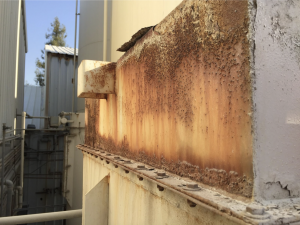
Inspection of Rust in your baghouseCorrosion is one of the most common—and expensive—problems affecting industrial dust collection systems. It can be a baghouse exposed to humid process air, a dust collector handling corrosive chemicals, or ductwork operating in harsh outdoor environments… in all these instances rust slowly eats away at equipment, shortens service life, increases maintenance costs, and can eventually lead to catastrophic failures. “Corrosion is a major industry challenge,” says Sarah Whitmore, a Reliability Engineering Supervisor at Midwestern Manufacturing Solutions.

While traditional corrosion protection has relied mostly on short-lived, physically bonded coverings of substrate surfaces such as tapes, elaborate three-part coating systems (zinc, epoxy, and urethane), and cathodic protection, these merely attempt to lengthen the time before the steel asset inevitably rusts. While these methods can be effective in many situations, they all have limitations. Paint chips. Epoxy coatings can crack. Moisture can work its way underneath damaged coatings and begin attacking the underlying steel.

At Baghouse.com, we’ve partnered with EonCoat to adopt an innovative ceramic coating technology that offers a fundamentally different approach to corrosion protection. Rather than simply creating a barrier on the surface of the metal, this technology chemically bonds with the steel itself, creating an extremely durable protective system that helps extend equipment life even in aggressive operating environments.
Why Corrosion Is Such a Serious Problem

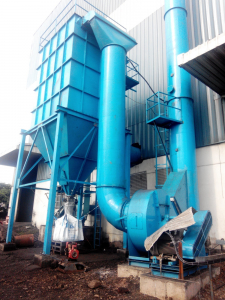
Baghouse dust collector and fanIndustrial dust collectors often operate in conditions that are ideal for corrosion, such as high humidity, condensation events, acidic gases, salt-laden air, chemical vapors, outdoor weather exposure, temperature cycling, and abrasive dust streams.

Over time, corrosion can affect virtually every component of a dust collection system:

  • ⦿ Collector housings
  • ⦿ Hoppers
  • ⦿ Ductwork
  • ⦿ Fan housings
  • ⦿ Structural supports
  • ⦿ Access doors
  • ⦿ Clean air plenums
  • ⦿ Exhaust stacks
  • ⦿ Transition sections
  • ⦿ Exterior steel structures

Once corrosion begins beneath conventional coatings, it often spreads unnoticed until visible rust, leaks, or structural deterioration appear.


Ideal Applications

Ceramic coatings can provide significant value in industries such as:

  • ⦿ Cement
  • ⦿ Mining
  • ⦿ Asphalt
  • ⦿ Biomass
  • ⦿ Food processing
  • ⦿ Grain handling
  • ⦿ Wood products
  • ⦿ Chemical processing
  • ⦿ Power generation
  • ⦿ Waste-to-energy
  • ⦿ Steel manufacturing
  • ⦿ Foundries
  • ⦿ Battery recycling
“If the coating works as well as we hope, it could help to stop or minimize corrosion and extend the longevity of a range of oil and gas assets. Since the ceramic coating takes changes in temperature, humidity, and dew point out of the equation during application, it can be reliably used in tough environmental conditions that might otherwise compromise the corrosion protection of typical coatings.”
Sarah Whitmore, Reliability Engineering Supervisor, Midwestern Manufacturing Solutions
Sarah Whitmore
Reliability Engineering Supervisor, Midwestern Manufacturing Solutions

How Do Ceramic Coatings Work?

“What caught my eye about [CBPC coating] was its unique adhesion and chemical properties,” says Sarah, who visited EonCoat facility in Fuquay-Varina, North Carolina, to view its corrosion testing lab, processes, and procedures for its CBPC coating.

“If its hard outer shell is breached or knocked off, it still has corrosion protection where traditional coatings do not. Whether its coating is aged, beaten, or banged around, it still protects the surface. If you remove the outer ceramic shell, the chemical bond with the substrate still stops corrosion at the surface.”

In contrast to typical paint polymer coatings that sit on top of the substrate, the anti-corrosion coating bonds through a chemical reaction with the substrate, and slight surface oxidation actually improves the reaction. This makes it impossible for corrosion promoters like oxygen and humidity to get behind the coating the way they can with ordinary paints. The corrosion barrier is covered by a true ceramic shell, which resists corrosion, fire, water, abrasion, chemicals, and temperatures up to 1000°F. 

As the coating reacts with the steel, it creates two complementary protective layers:

  • A corrosion-resistant passivation layer

This chemically bonded layer protects the steel itself, making it extremely difficult for oxygen, moisture, humidity, or salts to penetrate beneath the coating and initiate corrosion.

  • A dense ceramic outer shell

At the same time, a hard ceramic shell forms over the passivation layer. This outer layer provides additional resistance against water intrusion, chemical attack, impact damage, abrasion, weathering, and fire exposure.

Extremely Fast Return to Service

“With the ceramic coating for corrosion protection, we’re able to get facilities back up and running right away after spraying, sometimes in an hour,” says Michael Reynolds, Maintenance Manager at Gulf Coast Industrial Processing.

The ceramic coating can serve as both primer and topcoat in a single application, with rapid curing characteristics:

  • ⦿ Dry to the touch in approximately one minute
  • ⦿ Hard dry in about 15 minutes
  • ⦿ Equipment can often return to service in roughly one hour

For facilities where downtime is expensive, minimizing maintenance outages can provide substantial operational benefits.

“That kind of speed in getting a facility producing again can potentially save millions per day in reduced downtime. It makes sense to use the ceramic coating anywhere steel is used and may corrode, from pipelines and processing to storage.”
Michael Reynolds
Maintenance Manager, Gulf Coast Industrial Processing

Proven Performance Within an Acidic Environment

Metal Ceramic Coating

EonCoat is a true ceramic coating that delivers a tough-as-nails, corrosion resistant coating that can stand up to just about any application in the industrial or commercial sector

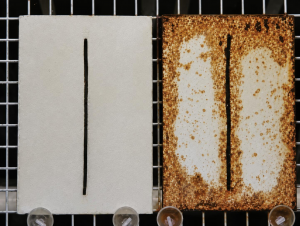
Independent corrosion testing has compared ceramic coatings against numerous conventional anti-corrosion products using accelerated salt spray and UV exposure methods designed to simulate harsh real-world environments.

Long-duration ASTM B117 salt spray testing has demonstrated performance exceeding 10,000 hours with exceptional corrosion resistance.

Baghouse.com recently had the opportunity to use ceramic coating in the retrofitting of an existing baghouse in a very challenging battery recycling application with high temperature, lots of moisture in the gas stream, as well as HCl and HF acid that was quickly eating away the interior steel of the baghouse. The coating was very promising in initial testing, and it will make the baghouses last much longer.

While every industrial application is different, these results illustrate why ceramic coatings have gained attention as an alternative approach to long-term corrosion protection.

Where Ceramic Coatings Can Be Applied in Dust Collection Systems

One of the strengths of this technology is its versatility. Ceramic coatings can be used to protect many critical dust collection components, including:

Cement plant baghouse dust collectorBaghouse housings

Exterior and interior surfaces can be protected from environmental exposure and corrosive operating conditions.

Hoppers

Hoppers frequently experience condensation and moisture accumulation that can accelerate corrosion.

Ductwork

Long duct runs exposed to changing temperatures or outdoor weather benefit from enhanced corrosion protection.

fan housing with ceramic coatingFan housings

Fans often experience abrasion and moisture simultaneously, making them excellent candidates for durable ceramic protection.

Exhaust stacks

Stacks are continually exposed to changing weather conditions and process gases that can accelerate deterioration.

Blow pipes and diaphragms with ceramic coatingStructural steel

Support legs, platforms, ladders, and walkways can all benefit from long-term corrosion resistance.

Retrofit projects

Existing equipment showing early signs of corrosion may be refurbished and protected rather than completely replaced, potentially extending service life and reducing capital expenditures.

Operational Benefits Beyond Corrosion Protection

While corrosion resistance is the primary objective, facilities often realize additional operational advantages:

  • ⦿ Extended equipment service life
  • ⦿ Reduced maintenance requirements
  • ⦿ Lower repainting costs
  • ⦿ Improved resistance to abrasion
  • ⦿ Enhanced chemical resistance
  • ⦿ Reduced downtime for repairs
  • ⦿ Better long-term asset preservation
  • ⦿ Potentially lower lifecycle ownership costs

For aging dust collection systems, protecting existing assets can often be considerably more economical than complete replacement.

How Baghouse.com Uses Ceramic Coating Technology

At Baghouse.com, our goal is to help customers maximize the life and performance of their entire dust collection system.

When corrosion threatens that investment, advanced ceramic coatings provide another tool that can be incorporated into inspection programs, refurbishment projects, and long-term maintenance planning.

Every facility has different operating conditions, dust characteristics, temperatures, and chemical exposures. Our engineering team evaluates each application individually and recommends solutions based on real operating conditions rather than one-size-fits-all assumptions.

If your baghouse, ductwork, fan, or structural steel is showing signs of rust or corrosion, it may be possible to restore and protect it rather than replace it. In many cases, proactive intervention can significantly reduce future maintenance costs while extending the useful life of your equipment.

Frequently Asked Questions About Ceramic Coatings for Industrial Dust Collectors

A ceramic coating is a chemically bonded protective layer applied to steel surfaces to protect them from corrosion, moisture, chemicals, abrasion, and harsh operating environments. Unlike conventional paints that simply sit on the surface, ceramic coatings form a chemical bond with the substrate, creating a durable barrier against rust and degradation.

Rust typically develops when moisture, condensation, acidic gases, or corrosive chemicals come into contact with exposed steel surfaces. Common causes include operating below the dew point, wet dust, outdoor exposure, process upsets, and years of normal wear and tear.

Ceramic coatings can be applied to many steel components, including baghouse housings, dirty air plenums, clean air plenums, hoppers, ductwork, fan housings, transition pieces, cyclones, structural steel, and other areas exposed to corrosion or abrasive service.

In many cases, yes. After proper surface preparation and removal of loose corrosion products, ceramic coatings can be applied to previously rusted surfaces. The required level of surface preparation depends on the condition of the equipment and the coating system being used.

Traditional paints create a mechanical film over the steel that can allow moisture and oxygen to migrate underneath if damaged. Ceramic coatings chemically bond with the substrate and create a much more durable protective barrier that is highly resistant to corrosion, chemicals, abrasion, and high temperatures.

Absolutely! Applying a ceramic coating can significantly slow further corrosion, protect structural components, reduce maintenance requirements, and extend the useful service life of existing dust collection equipment, often delaying costly replacement projects.

Yes… Many industrial ceramic coatings are specifically designed to withstand elevated temperatures, chemical exposure, abrasion, UV radiation, and other harsh environmental conditions that would quickly degrade conventional coatings.

It can. By protecting steel surfaces from corrosion and minimizing deterioration, ceramic coatings can reduce repair frequency, lower maintenance labor requirements, minimize downtime, and decrease the need for expensive structural replacements.

No. Ceramic coatings can be used both proactively and reactively. Applying them before severe corrosion develops can dramatically increase equipment longevity, while applying them to aging equipment can help stop further deterioration and restore long-term reliability.

Every application is different. The Baghouse.com team can inspect your equipment, evaluate corrosion damage, operating conditions, process temperatures, moisture exposure, and chemical environment, then recommend whether ceramic coating is the best solution or if other repairs or upgrades would provide greater long-term value.

Share this article

Related Articles

Get a quote today!