8 Reasons Your Maintenance Team Can Benefit From a Baghouse PM Program
Your in-house maintenance team probably knows your plant better than anyone. They know which equipment causes trouble, which processes are critical to production, and which problems need attention first.
But maintaining an industrial dust collection system requires specialized knowledge, and baghouse maintenance is rarely the only responsibility competing for your maintenance team’s time.
A professional preventive maintenance program doesn’t have to replace your in-house team. In many facilities, the better approach is to supplement your plant’s maintenance personnel with dust collection specialists who can periodically inspect the entire system, identify developing problems, document its condition, and help your team prioritize repairs before those problems become emergencies.
So, what does a professional baghouse preventive maintenance program provide that routine in-house maintenance may not?
In-house maintenance can work very well for routine tasks such as checking differential pressure, inspecting compressed-air systems, emptying dust containers, responding to alarms, and replacing individual components. The challenge is usually time and specialization.
Your maintenance personnel may be responsible for dozens or hundreds of pieces of equipment. When production equipment goes down, the dust collector may understandably move down the priority list as long as the fan is running and the plant doesn’t see an obvious emissions problem.
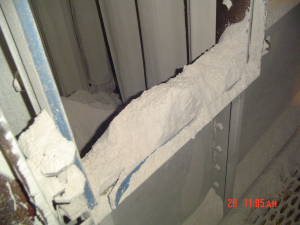
Unfortunately, a dust collection system can continue operating while its performance gradually deteriorates. Maybe the airflow decreases. Without noticing it, ducts can accumulate material and get clogged. Or maybe the differential pressure starts trending upwards, signaling filter blinding.
None of those problems necessarily causes an immediate shutdown. But several small problems occurring together can eventually become a much larger one. That’s where scheduled preventive maintenance becomes valuable.
What Does a Good Baghouse Preventive Maintenance Program Do?
A preventive maintenance program changes the approach from responding to failures to looking for the conditions that cause them.
At Baghouse.com, that means looking beyond the filter bags themselves. A dust collector operates as part of a system, and problems elsewhere can directly affect collector performance.
Here are eight practical benefits of adding a Baghouse.com PM program to your plant’s maintenance strategy:
1. Get Another Set of Experienced Eyes on Your Dust Collection System
One of the biggest advantages of bringing in an outside dust collection specialist is perspective. Your maintenance personnel see the equipment every day. That’s valuable, but it can also make gradual changes difficult to recognize. A technician who works on dust collectors across different plants and industries may recognize a failure pattern or operating condition your team hasn’t encountered before.
That experience is particularly valuable when a problem isn’t obvious. For example, high differential pressure doesn’t automatically mean the filters need replacement. Poor pickup doesn’t automatically mean you need a larger fan. Premature filter failure doesn’t automatically mean you purchased bad filters. The actual cause may be somewhere else in the system.
A professional inspection can help separate the symptom from the root cause before the plant spends money fixing the wrong thing.
2. Find Problems Before They Become Emergency Repairs
Most plants would rather schedule a repair than have the baghouse schedule it for them. Preventive maintenance allows the plant to find these issues while there’s still time to plan.
3. Reduce the Burden on an Already Busy Maintenance Department
Your maintenance personnel may be responsible for production equipment, motors, bearings, conveyors, electrical systems, compressed air, facilities, and dozens of other priorities. Even a highly capable maintenance department may simply not have enough time to perform a detailed dust collection inspection.
Specialized knowledge can also be an issue. Bringing in experienced technicians can help overcome both limited personnel availability and gaps in baghouse-specific experience. Training can then be used to strengthen the plant team’s ability to handle routine maintenance between visits.
4. Improve Safety During Specialized Maintenance
Depending on the collector and the work being performed, maintenance may involve elevated work areas, confined spaces, dirty-air plenums, internal components, compressed-air systems, heavy filters, rotating equipment, and accumulated process dust.
Using technicians familiar with industrial dust collectors can reduce the need for plant personnel who rarely perform these tasks to undertake unfamiliar work.
5. Get More Than a "Looks Good" Inspection
A professional PM visit should leave the plant with actionable information. That means documenting the condition of the equipment, identifying deficiencies, recording work performed, and making recommendations for problems that should be addressed.
Documentation also creates something extremely useful: history. If differential pressure has changed significantly since the previous inspection, that’s worth investigating. If the same group of filter bags repeatedly fails, that’s a pattern. If a component that was previously noted as worn has continued deteriorating, the plant can make a more informed decision about when to replace it.
Over time, maintenance stops being based solely on memory and starts being based on the actual condition and history of the equipment.
6. Make Compliance Problems Easier to Address and Document
When a dust collector supports an emissions-controlled process, poor performance can become an environmental compliance issue.
Preventive maintenance can help identify conditions that could eventually contribute to an emissions problem before the plant reaches that point. A damaged filter, malfunctioning cleaning system, air leak, or dust discharge problem is much easier to address during a planned maintenance window than after an emissions excursion.
7. Have a Comprehensive Dust Collection System Evaluation
When performance problems arise, the inspection should consider the complete air path:
Pickup point → ductwork → collector → filters → fan → exhaust
That system-level approach is particularly important in older facilities where production equipment and ductwork may have been modified repeatedly over the years.
8. Reduce the Risk of Unplanned Production Downtime
Consider what happens when a critical dust collector unexpectedly needs a complete filter change. The plant now has to obtain filters, schedule labor, arrange access equipment, shut down the process, remove the old filters, inspect the collector, install the replacements, and restart the system.
If declining filter condition had been identified earlier, much of that work could have been planned around production.
Preventive maintenance can’t eliminate every unexpected failure. Industrial equipment will always have surprises. But it can reduce the number of surprises caused by problems that were developing for months without being recognized.
Should You Replace Your In-House Maintenance Team With a PM Program?
No. Your in-house team is essential because they’re there every day. They can watch differential pressure, listen for abnormal noises, respond to alarms, observe visible dust, check compressed air, and recognize changes in the process.
A Baghouse.com preventive maintenance program adds something different: specialized dust collection experience, periodic in-depth inspections, system-level troubleshooting, documentation, and another set of experienced eyes on the equipment.
Your maintenance personnel handle the day-to-day health of the system. Periodic professional inspections help verify that nothing important is being overlooked and give your team a clearer picture of what needs attention next.
In-House Maintenance or a Baghouse.com PM Program? Use Both.
A strong dust collector maintenance strategy combines the plant knowledge of your in-house maintenance team with the specialized experience of technicians who work specifically with industrial dust collection equipment.
Working together makes it easier to identify developing problems, understand why they’re occurring, prioritize repairs, document equipment condition, and schedule maintenance before a manageable issue becomes an emergency.
If you’re not sure about the current condition of your dust collection system, Baghouse.com can inspect your equipment, identify maintenance priorities, troubleshoot performance problems, and help develop a preventive maintenance program based on your plant and equipment.
Director of Operations | Dust Collection Specialist | Industrial Filtration Consultant
Dominick DalSanto is an author and environmental technologies expert specializing in dust collection systems. He has nearly a decade of hands-on working experience in the industry. Dominick is the sales director and sales technical advisor for an industrial dust collection equipment manufacturer. Personally took the lead on key projects each year from sales engineer to field advisor to project manager to business relations. Born in San Bernardino County, California, and raised in Chicago, he currently resides in Buenos Aires, Argentina.
https://baghouse.com/wp-content/uploads/2026/09/In-house-Baghouse-Maintenance-vs.-Baghouse.com-PM-Program.png10801920Dominick DalSantohttps://baghouse.com/wp-content/uploads/2025/10/BH-Logo-Alt-01-300x70.pngDominick DalSanto2026-09-28 16:10:392026-10-25 21:23:30Should You Use Your In-House Maintenance Team or a Professional Baghouse PM Program?
In this second installment of our Dust Collection Explained series, we answer 20 practical questions about how dust collector filters work, how to select the right filter media, why filters fail, and how the different components of a dust collection system work together.
Whether you’re responsible for maintenance, engineering, operations, or environmental compliance, these 20 questions are a good place to start.
Blinded filters with large temporary dust cake buildup will have higher leaking
The dust cake is important because, in most surface-filtration dust collectors, it actually performs much of the filtration. As dust accumulates on a bag or cartridge, particles begin collecting on previously captured dust rather than directly on the filter fibers.
That may sound like something you would want to remove immediately, but a healthy dust cake is beneficial. Because it is more densely packed than the underlying filter media, it can help capture fine particles that might otherwise penetrate deeper into the filter.
The challenge is finding the right balance. If the dust cake becomes too thick, resistance increases and airflow through the filter decreases. But cleaning too aggressively can remove too much of the protective layer, allowing fine particles to penetrate the filter media and contribute to blinding.
The goal of filter cleaning, therefore, isn’t necessarily to make the filters perfectly clean. It’s to control the dust cake so you maintain both effective filtration and acceptable airflow.
▶ Watch the full answer below.
2. What Is a PTFE Membrane?
PTFE Membrane in Baghouse Filters
A PTFE membrane is a thin filtration layer laminated to the surface of a dust collector’s base filter media. Its extremely small pores allow it to capture fine particles at the surface instead of allowing them to penetrate deeply into the filter.
You can think of it almost like giving the filter a permanent, very fine dust cake. Instead of relying solely on the openings within the underlying felt or fabric, the membrane becomes the primary surface where particles are captured.
This distinction is important because a PTFE membrane is not the same thing as a filter made from PTFE felt. The membrane is a separate layer applied over another base material, such as polyester, aramid, or fiberglass.
▶ Watch the full answer below.
3. What Are Pleated Baghouse Filters?
Pleated baghouse filters are compact filter elements designed to replace conventional filter bags and cages while fitting into an existing baghouse configuration.
Although their pleated construction resembles a cartridge, they shouldn’t be confused with the much larger cartridges used in a cartridge dust collector. Pleated baghouse elements are designed with dimensions and mounting arrangements that allow them to fit into equipment originally designed for filter bags.
The major advantage is filter area. Folding the media into pleats allows considerably more filtration surface to fit into the same physical space. Depending on the application and filter design, a pleated conversion may double or even triple the available filter area without requiring major modifications to the collector. That can make pleated filters an attractive retrofit when an existing baghouse needs additional filtration capacity.
A pleated filter conversion may be worth considering when an existing baghouse needs additional filter area or is struggling to meet increased process demands.
Plants change over time. Production increases, additional pickup points are added, airflow requirements change, or a baghouse originally designed for one process is asked to handle more than it did when installed.
In some of these situations, installing pleated filters can increase the amount of filter media available inside the existing collector. That may help alleviate some capacity limitations without immediately replacing the entire baghouse.
However, pleated filters aren’t an automatic fix for an undersized or poorly performing system. The dust characteristics, air-to-cloth ratio, inlet loading, cleaning requirements, temperature, and reason for the original performance problem should all be evaluated first.
Selecting the right baghouse filter media comes down to five major factors: temperature, chemical conditions, dust characteristics, required collection efficiency, and cost.
Temperature is usually one of the first considerations because every filter material has an acceptable operating range. The chemistry of the gas stream matters as well. Acids, alkalis, humidity, and other process conditions can attack certain materials or change how the dust behaves.
Next, consider the dust itself. Is it fine or coarse? Abrasive? Sticky? Does it tend to agglomerate? The answers affect both filtration and cleanability.
Collection efficiency also matters, particularly when dealing with hazardous materials or applications with stringent emissions requirements. Only after those technical requirements have been established should cost become the deciding factor: choose the most economical filter that can reliably meet the application’s needs.
▶ Watch the full answer below.
6. What Are the Most Common Filter Bag Fabrics?
Polyester baghouse filter
Polyester, aramid, and fiberglass are among the most commonly used baghouse filter materials, but each serves a different operating range and application.
Polyester is a common choice for lower-temperature applications because it offers a practical combination of performance and cost. Polypropylene and acrylic may be considered where moisture or chemical conditions make polyester less suitable.
For higher-temperature applications, aramid, commonly associated with the Nomex trade name, is frequently used. Fiberglass can handle still higher temperatures but requires different handling and support considerations because of its characteristics.
Specialty materials include P84,PPS, and PTFE felt. These are typically reserved for demanding applications involving combinations of elevated temperatures, chemicals, or harsh process conditions where conventional fabrics aren’t appropriate.
Cartridge filter media should be selected according to the same basic process conditions considered for baghouse filters: temperature, chemistry, particle characteristics, collection efficiency, and cost.
The physical characteristics of the dust can be especially important with cartridges. Very fine particulate, such as welding fume, may require media with higher efficiency at small particle sizes. Abrasive or sticky dust may require a different media construction so particles can release properly during pulse cleaning.
Once the process requirements are satisfied, you can compare the available options and determine which provides the most cost-effective performance.
▶ Watch the full answer below.
8. What Are the Most Common Cartridge Filter Media?
Cartridge collectors use several different types of filter media, with 80/20 cellulose-polyester, nanofiber media, and spunbond polyester among the common options.
An 80/20 blend of cellulose and polyester is a widely used economical media. Nanofiber media builds on this basic construction by adding a fine surface layer that improves capture of smaller particles.
Spunbond polyester is stronger and more durable, making it useful for some abrasive or difficult dusts. Because it is thicker, however, it generally can’t be packed as tightly into the cartridge. Wider pleat spacing can actually be advantageous when dealing with sticky material or dust containing a mixture of fine and larger particles.
Cartridge media can also incorporate nanofiber layers, PTFE membranes, water- or oil-repellent treatments, and conductive properties depending on the application.
Filter bag treatments modify the surface or properties of the filter media to improve dust release, resist moisture or chemicals, protect the fibers, or increase filtration efficiency.
Common surface finishes include singed, glazed, and eggshell treatments. These create a smoother filter surface, making it easier for accumulated dust to release during cleaning.
Other treatments can provide hydrophobic or oleophobic properties to help repel water and oil. Acid-resistant treatments may be used in certain applications, while fiberglass filters may receive lubricating treatments to help protect the fibers during repeated cleaning cycles.
PTFE membrane is a more specialized option. Because it is a separate filtration layer laminated to the base fabric, it can improve fine-particle capture while creating a smooth surface that assists dust release.
▶ Watch the full answer below.
10. How Long Should Baghouse Filters Last?
There is no universal service life for baghouse filters. Their lifespan depends on the application, operating conditions, filter media, dust characteristics, collector design, and maintenance.
A useful first step is distinguishing between early filter failure and filters that have simply reached the end of their useful life.
Early failures usually involve conditions the filter wasn’t designed to withstand. Three important causes are excessive temperature, chemical attack, and abrasion.
High temperatures, sparks, or embers can damage filter media. Chemical attack can occur when process conditions change or condensation causes compounds in the gas stream to react with the filters. Abrasion can result from incoming dust striking the bags directly or from damaged, bent, or corroded cages rubbing against the filter media.
Even when filters aren’t damaged by an abnormal event, they eventually reach the end of their useful life as fine particles become embedded within the depth of the filter media.
During normal operation, much of the dust remains on the surface and is periodically removed by the cleaning system. Over time, however, fine particles can work their way deeper into the media and remain there.
This creates additional resistance to airflow. Differential pressure may remain high even after cleaning because removing the surface dust cake doesn’t remove particles embedded inside the filter. Increasing emissions may also occur even when there isn’t an obvious hole in the bag.
At that point, repeatedly cleaning the filters won’t restore them. They have reached the end of their useful service life and need to be replaced.
12. What Is the Difference Between Positive- and Negative-Pressure Dust Collection Systems?
The difference is primarily where the fan is located and whether it pulls air through the collector or pushes air into it.
A negative-pressure system works much like a large industrial vacuum. The fan creates suction that pulls contaminated air from the pickup points, through the ductwork and into the dust collector. After the particulate is removed, the cleaned air continues through the fan.
In a positive-pressure arrangement, the fan is positioned so that it pushes the contaminated airstream toward or into the collector.
The filtration principles inside the baghouse remain essentially the same in either arrangement, but the fan location changes the pressure conditions within the equipment and ductwork.
▶ Watch the full answer below.
13. What Does the Hopper and Airlock Actually Do?
Dust collector hoppers are used to hold the collected dust temporarily before it is discharged through the airlock.
The hopper directs collected dust toward the discharge, while the airlock allows that material to leave the collector without creating a large air leak.
Although it’s easy to think of the hopper as a storage bin, its primary job in many baghouses is more like a funnel. Dust falling from the filters moves down the sloped walls toward the discharge at the bottom.
But if the bottom of a negative-pressure baghouse were simply left open, outside air would be pulled directly into the collector. That’s where the rotary airlock comes in. As its rotor turns, pockets carry collected material through the valve while the blades maintain a seal between the collector and the outside atmosphere.
Ductwork determines how air and dust move from the pickup points to the collector, making it one of the most important parts of dust collection system design.
It’s easy to view ductwork as simply the piping that connects a machine to a baghouse. In reality, duct diameters, airflow, air velocity, branches, fittings, pressure losses, and pickup design all influence whether the system captures and transports dust effectively.
The pickup itself matters just as much. Some processes can be directly connected to ductwork, while others require a hood positioned above or around the dust source to capture airborne particulate.
When a plant has poor capture at one or more dust sources, the ductwork and pickup design should always be part of the investigation.
The sheet of metal where the filters are attached in a pulse jet baghouse is called a tubesheet.
The tubesheet is the plate where the filters are installed, and it separates the dirty-air side of the baghouse from the clean-air side.
In a typical pulse-jet baghouse, filter bags attach to openings in the tubesheet and extend into the dirty-air plenum below.
Dust-laden air remains on the dirty side while filtered air passes through the bags and enters the clean-air plenum above the tubesheet. Every filter needs to seal correctly at this boundary. If a filter isn’t seated properly, or if the tubesheet itself develops a problem, dust can potentially bypass the filtration process and enter the clean-air side.
Baghouse configurations vary, so access to the clean-air plenum may be through removable hatches, doors, or a larger walk-in enclosure. The basic function of the tubesheet remains the same.
▶ Watch the full answer below.
16. Why Shouldn't You Wash Baghouse Filters?
Cleaned filters need to be replaced more frequently, leading to more change-outs, downtime, and cleaning charges
Baghouse filter bags generally should not be washed because the felted filter media used in pulse-jet collectors is not designed to undergo conventional washing and reuse.
Modern baghouse fabrics are typically constructed from fibers formed into a felted structure, sometimes incorporating a woven support or scrim. Getting that material wet and mechanically washing it can alter or weaken its structure.
A washed filter may look reusable immediately afterward, but that doesn’t mean its original strength and filtration characteristics have been restored. The damage can show up later as premature deterioration or failure during operation and pulse cleaning.
From a maintenance perspective, saving money by washing bags can therefore become expensive if it results in additional filter failures, labor, unplanned shutdowns, or emissions problems.
Start with five questions: What is the temperature? What chemicals are present? What are the characteristics of the dust? What collection efficiency is required? And which suitable option makes economic sense?
Temperature quickly eliminates materials that cannot safely operate in the process. The gas stream must then be evaluated for moisture, corrosive compounds, and other chemicals that could attack the media.
Next comes the particulate itself. Fine, coarse, sticky, abrasive, reactive, and corrosive dusts can require very different filter characteristics.
Collection efficiency is another consideration, particularly where emissions limits or hazardous particulate require very high capture performance.
Finally, cost matters. The most expensive filter isn’t automatically the best filter for your plant. Once you’ve identified the media capable of meeting the technical requirements, you can determine which option provides the best value for the application.
18. What's the Difference Between Low-Temperature and High-Temperature Filter Fabrics?
The main difference is the temperature range the filter material can withstand without degrading, but temperature also influences cost, chemical compatibility, and available media options.
Polyester is commonly used for lower-temperature baghouse applications because it provides good overall performance at a relatively economical price.
As temperatures increase, different materials become necessary. Aramid is a common high-temperature option, while fiberglass can be used at still higher temperatures.
Specialty materials such as PPS, P84, and PTFE felt may be selected where temperature is combined with particularly demanding chemical conditions.
The important point is that the process temperature should be evaluated against the limitations of the specific filter media being considered.
19. What Are Filter Bag Treatments and Why Do They Matter?
Filter bag treatments can improve dust release, moisture or oil resistance, chemical resistance, and filtration performance without necessarily changing the underlying base fabric.
Singed and glazed finishes, for example, smooth the surface of felted media. A smoother surface makes it more difficult for dust to become deeply attached and can improve release during cleaning.
Hydrophobic and oleophobic treatments are intended to repel water and oil, while other treatments can address particular chemical or operating conditions.
PTFE membrane is different from a conventional surface treatment because it is a separate layer laminated onto the base filter material. A polyester bag with PTFE membrane is still fundamentally a polyester filter in terms of the base material’s operating limitations; the membrane adds filtration characteristics but doesn’t turn the underlying fabric into PTFE felt.
▶ Watch the full answer below.
20. What's the Difference Between Early Filter Failure and End-of-Life Failure?
Early filter failure occurs when something damages a filter before it has completed its expected service life. End-of-life failure occurs when the filter has simply reached the point where normal use has permanently reduced its performance.
Temperature excursions, chemical attack, abrasion, sparks, damaged cages, and other abnormal conditions can cause premature failure. End-of-life occurs gradually as fine particulate becomes embedded in the filter media, airflow becomes increasingly restricted, and filtration performance deteriorates.
The distinction matters because the response should be different. An early failure should trigger an investigation into what caused the damage. An end-of-life failure tells you the filter set has completed its useful service.
▶ Watch the full answer below.
An Educated Customer Makes Better Decisions
That’s the goal of our Dust Collection Explained series: to break down industrial dust collection one practical question at a time and help plant operators, maintenance teams, and engineers better understand what’s happening inside their systems.
Have another dust collection question you’d like us to answer? Contact Baghouse.com or send us your question. It may become one of the next topics in the series.
Dust Collection Expert, Technical Writer & Editor at Baghouse.com
Andy Biancotti believes that knowledge is one of the best investments any company can make. As Editor and Marketing Manager at Baghouse.com, he enjoys interviewing engineers, technicians, and customers to capture the real-world lessons behind successful dust collection projects and turn them into practical resources that others can learn from. With more than two decades of experience in industrial maintenance, operations, and technical communication, his goal is simple: help people better understand their systems so they can work safer, smarter, and more efficiently.
https://baghouse.com/wp-content/uploads/2026/06/Dust-Collection-Explained-1.png9411672Andy Biancottihttps://baghouse.com/wp-content/uploads/2025/10/BH-Logo-Alt-01-300x70.pngAndy Biancotti2026-09-25 16:04:432026-10-25 21:43:25Answers to the Most Common Industrial Dust Collection Questions — Part 2
Pneumatic conveying is used throughout cement, fly ash, food processing, chemical, minerals, plastics, and other bulk-material industries because material can be moved through enclosed piping with relatively few moving components.
Although the concept of moving material with air can be quite straightforward, the engineering behind it can get complicated quickly. Here are some of the questions we commonly receive when explaining the design, planning an expansion, or troubleshooting pneumatic conveying systems.
How Does a Pneumatic Conveying System Work?
A pneumatic conveying system moves dry bulk material through a pipeline using an air stream. Depending on the application, the air may push the material using positive pressure or pull it using vacuum.
Positive-pressure systems are commonly used when material needs to travel longer distances or at higher rates. Vacuum systems are particularly useful when collecting material from multiple pickup locations and can help contain dust because leakage tends to move inward rather than outward.
A typical pneumatic conveying system uses an air mover, conveying lines, feeding equipment, a receiving silo, and filtration equipment to move and separate dry bulk material.
At the receiving end, the material must then be separated from the conveying air. This is commonly done with a filter receiver, bin vent,baghouse,cartridge collector, or cyclone, depending on the application.
What's the Difference Between Dilute Phase and Dense Phase Conveying?
The main difference is how the material travels through the pipe.
In dilute-phase conveying, particles are generally suspended in a relatively high-velocity air stream. Typical dilute-phase gas velocities of approximately 4,000 to 8,000 fpm, although the correct velocity depends heavily on the material.
Dense-phase conveying moves a greater concentration of material at lower velocities. Depending on the design and material, it may move in plugs, slugs, dunes, or another dense-flow pattern.
Dense-phase (bulk phase) conveying is a method of pneumatic conveying that moves materials in a slow, controlled flow using high pressure and low air velocity, transporting bulk solids in dense, concentrated slugs through the pipeline.
In dilute-phase conveying, particles are generally suspended in a relatively high-velocity air stream.
An important concept here is saltation velocity. This is related to the point at which particles can no longer remain adequately suspended in horizontal conveying. The source material describes dilute/lean phase as operating above the material’s saltation velocity, while dense-phase operation occurs below it.
Dense phase can be attractive for abrasive or fragile materials because lower velocity can reduce pipeline wear and product degradation. However, not every material behaves well in dense phase. Material testing may be needed before committing to a commercial design.
What Type of Pneumatic Conveying System Should I Use?
The right pneumatic conveying system depends on the material being handled, required conveying rate, distance, available pressure, and how the material needs to enter and leave the system. As the image below shows, there are several ways to move bulk material, including suction conveyors, airslides, jet feeders, air-lock feeders, screw pumps, pressure vessels, and airlifts. Each operates within a different range of pressure, conveying distance, and material-to-air ratio.
There isn’t one conveying method that’s best for every plant. The system should be selected around the material properties and actual conveying requirements, rather than choosing a conveying technology first and trying to make the process fit it.
Common pneumatic conveying system configurations include vacuum, pressure, multi-point distribution, and suction systems, each designed around different material handling and transfer requirements.
Vacuum or suction systems are useful when material must be collected from multiple pickup points, but their available pressure limits how far they can convey. Positive-pressure systems can operate at higher pressures and are generally better suited for longer conveying distances.
For example, some positive-pressure fly ash systems can convey material over 1,000 meters and, in certain applications, up to 2,000 meters.
Different pneumatic conveying methods operate within different ranges of solids loading, pressure, conveying distance, and material transfer capacity.
How Do You Determine the Correct Conveying Line Diameter?
You need to consider the required material rate, material properties, conveying distance, vertical lift, bends, available pressure, required air volume, and the pressure loss through the complete system.
The process is often iterative. You start with an assumed pipe diameter and calculate the expected pressure drop. If the required pressure exceeds what the blower or compressor can provide, increasing the pipe diameter may reduce the pressure requirement. If pressure drop is much lower than expected, a smaller diameter may be possible. This is why simply saying, “We move 10 tons per hour, so we need a 6-inch line,” isn’t enough information to properly design a system.
How Does Pipe Diameter Affect Conveying Velocity?
For a given airflow, increasing pipe diameter reduces air velocity.
The basic relationship is:
Velocity (FPM) = Airflow (CFM) ÷ Pipe Area (ft²)
For example, suppose a system moves 1,500 CFM through a 6-inch pipe. A 6-inch pipe has an approximate cross-sectional area of 0.196 ft²:
1,500 ÷ 0.196 ≈ 7,650 FPM
If that same 1,500 CFM moves through an 8-inch pipe, with an approximate area of 0.349 ft²:
1,500 ÷ 0.349 ≈ 4,300 FPM
That’s a major velocity reduction. If velocity drops too far in a dilute-phase system, material can fall out of suspension, accumulate in the pipe, and eventually plug the line.
How Much Conveying Velocity Do I Need?
The required velocity depends on properties such as particle size, particle density, bulk density, shape, moisture, cohesiveness, and whether the material is fragile or abrasive.
You should establish the material’s saltation velocity through calculation, testing, previous experience, or work with an equipment supplier like Baghouse.com.From there, the designer establishes the pickup velocity and evaluates how velocity changes along the pipeline.
The goal is to provide enough velocity for stable conveying without using substantially more velocity than the application requires.
Why Does My Pneumatic Conveying Line Plug?
Plugging often means the balance between material feed, conveying air, velocity, and pressure has been lost. Possible causes include insufficient air volume, feeding material faster than the system was designed to handle, a change in material properties, excessive vertical lift, poor piping geometry, or a restriction in the line.
Dense-phase systems have additional considerations. For example, certain material characteristics or piping arrangements can create large, relatively impermeable slugs that the conveying air cannot move effectively. Back-to-back elbows and problematic vertical transitions can contribute to these conditions.
When a previously reliable system begins plugging, ask an important question first: “What changed?” Production rate, material, moisture, feeder speed, air supply, pipe routing, or downstream equipment may have changed even though the conveying line itself looks the same.
Why Is My Pneumatic Conveying Pipe Wearing Out So Quickly?
Check the velocity. Abrasive material repeatedly striking pipe walls, particularly at elbows and changes in direction, can cause severe wear. Additionally, wear increases very rapidly as velocity increases, which is why lowering conveying velocity can dramatically improve pipeline life.
Pipe diameter can sometimes be stepped up farther along the conveying line to control increasing velocity as conveying air expands.
For dilute-phase conveying, allow roughly 6–10 pipe diameters around a step and avoid a diameter increase immediately after a change in direction. A vertical section is preferable when practical.
For especially abrasive products, elbow design and wear-resistant components may also be necessary.
A spherical vortex chamber protruding from the elbow diverts part of the flow where it forms a loosely packed mass that slowly rotates in the direction of flow, gently deflecting particles around the bend.
Can a Rotary Airlock Reduce Pneumatic Conveying Capacity?
Yes. A rotary airlock needs to introduce or discharge material while maintaining a pressure differential, but some air leakage is inevitable.
Higher differential pressure increases leakage through the clearances, while increasing rotor speed can increase the dynamic component. That leakage matters when sizing the blower. Air returning through the rotary valve can represent airflow that is no longer available for conveying. You should account for the resulting SCFM when determining the required pressure-blower capacity.
Can I Use Inclined Piping Instead of the Horizontal/Vertical Combination?
In general, the recommendation is to try to maintain horizontal and vertically upward convey lines wherever possible. If there is a situation where an inclined line is necessary, it can be addressed by more experienced system designers.
As a general guide, if the angle of the incline is less than 15 degrees from the horizontal or from the vertical, the line is treated as being horizontal or vertical. As the angle of incline approaches 45 degrees, additional pressure drops are included and the velocity profile in the inclined section is more scrutinized. The preference would be to have sloping upward lines be included towards the end of the system rather than early in the system to have the benefit of the higher velocity at that location.
How Does the Dust Collector Affect Pneumatic Conveying?
At the destination, the conveying air has to separate from the transported material and pass through the filtration system. Filter resistance, filter area, dust loading, inlet arrangement, cleaning performance, and pressure drop therefore matter to the pneumatic system.
Baghouses are commonly used as pneumatic receivers. If the receiver is undersized or the filters become heavily loaded, resistance increases. That changes the pressure conditions the conveying system must operate against.
This is why we evaluate the pneumatic conveying system and dust collector together, particularly when troubleshooting capacity problems or designing a new system.
What Information Is Needed to Design or Troubleshoot a Pneumatic Conveying System?
Before changing a blower, pipe size, or feeder speed, gather the basic operating information:
⦿ History of plugging, wear, or product degradation
For difficult materials, physical testing can be extremely valuable. Modern pneumatic-conveying test facilities evaluate complete conveying behavior, rotary-valve performance, product degradation, pipe configurations, temperature effects, and other application-specific variables before final system design.
Can an Existing Pneumatic Conveying System Be Upgraded for More Capacity?
Often, yes, but the existing bottleneck needs to be identified first. Increasing blower speed may provide additional air, but that also changes conveying velocity and pressure conditions. Increasing rotary-valve speed may increase material feed while also increasing air leakage. Increasing pipe diameter lowers velocity but can create conveying problems if taken too far.
Sometimes the solution is a larger blower. In other applications, two blowers can operate in parallel. Other systems may benefit from stepped piping, airlock repairs, rerouting problematic pipe sections, modifying the receiver, or increasing filtration capacity, for example, with pleated filters.
Need Help With a Pneumatic Conveying System?
Baghouse.com designs and supplies pneumatic conveying systems for industrial dust collection and bulk-material applications. We can evaluate the material, conveying rate, airflow, pressure requirements, pipe routing, blower, rotary airlocks, receiving collector, filters, and discharge equipment as one complete system.
Get in contact with us if you are designing a new pneumatic conveying system or troubleshooting an existing one. We would be happy to help!
President | Dust Collection Engineer | Industrial Air Pollution Control Specialist
Matt Coughlin is an engineer, and dust collection expert specializing in industrial filtration systems, air pollution control, and process ventilation. Matt has helped design, troubleshoot, and optimize hundreds of dust collection systems across a wide range of industries, including cement, mining, food processing, woodworking, metals, power generation, chemical manufacturing, and bulk material handling. Born and raised in Southern California, Matt continues to work closely with industrial facilities around the world, helping companies improve their dust collection performance through engineering expertise, practical solutions, and long-term technical support.
Our Dust Collection Explained series was created to answer these questions in practical terms. This first collection covers the fundamentals: what the different types of dust collectors do, how baghouses and filters work, how to select filter media, how dust collection fits into material handling systems, and what operators should monitor to keep their equipment performing properly.
Whether you’re responsible for maintenance, engineering, operations, or environmental compliance, these 20 questions are a good place to start.
1. What Are the Different Types of Dust Collectors and Where Are They Used?
Industrial dust collectors can generally be divided into mechanical collectors, specialty collectors, and fabric-filter collectors, with several different designs within each category.
► Mechanical collectors, such as cyclones and knockout boxes, separate particles without filter media. They’re commonly used as pre-cleaners or where removing the bulk of the material is the main objective. Specialty systems include equipment such as wet collectors, scrubbers, and electrostatic precipitators, which are used for applications with particular process requirements.
► Fabric-filter collectors include baghouses and cartridge collectors. Among baghouses, the cleaning method creates another distinction: shaker, reverse-air, pulse-jet, and medium-pressure rotating-arm systems. Pulse-jet baghouses have become especially common because they can clean their filters with compressed air while the collector remains online.
► Cartridge collectors use the same general principle of surface filtration but pack considerably more filter area into a smaller physical space, making them useful for certain lower-dust-loading applications.
▶ Watch the full answer below.
2. Why Are Pleated Filters Sometimes Better Than Filter Bags?
Investing in pleated filter elements can give you lower operating differential pressure, better filtration efficiency, and longer service life
Pleated filter elements can provide significantly more filter area in the same space as conventional filter bags, which can make them an effective retrofit for some existing baghouses.
A pleated baghouse filter shouldn’t be confused with the much larger cartridges used in a cartridge dust collector. Pleated elements are designed with dimensions and mounting arrangements that allow them to fit into a baghouse originally designed for conventional bags.
Because the media is folded into pleats, more filter surface can fit into the available space. In some applications, a conversion can double or even triple the available filter area without modifying the collector itself. That can be particularly useful when an existing baghouse is struggling with increased airflow demands or no longer has enough filtration capacity for the process.
3. What Are Mechanical Dust Collectors and How Do They Work?
Mechanical dust collectors remove particles from an airstream without using filter media. Cyclones are the most familiar example, but the category also includes knockout boxes, classifiers, and other mechanical separators.
Instead of filtering the air, these devices manipulate its velocity or direction. The air may spin, slow down, change direction abruptly, or strike an internal surface. Particles with enough mass and momentum separate from the moving air and drop out.
Today, mechanical collectors are commonly installed upstream of a baghouse. Removing much of the heavier material before it reaches the filters can reduce the dust loading on the baghouse and help protect the filters.
Mechanical separation can also be useful when a process needs to separate particular particle sizes. Similar principles are used in some spark traps and spark arrestors to help prevent larger burning particles from reaching downstream filtration equipment.
▶ Watch the full answer below.
4. What Are the Main Components of an Industrial Dust Collection System?
The full system normally includes pickup points or hoods, ductwork, the dust collector, filters, a fan, dust-discharge equipment, controls, and an exhaust or return-air arrangement.
Diagram showing dust collection system from the dust pickup to the fan on the clean side of the ductwork
Dust first needs to be captured where it is generated. Branch ducts carry that contaminated air into a main duct and toward the collector. Inside a typical baghouse, dirty air enters the dirty-air plenum and passes through the filters. The tubesheet separates the dirty and clean sides of the collector.
Filtered air then travels through the outlet toward the fan and eventually to an exhaust stack or, in certain systems, back into the building. The hopper beneath the filters receives collected dust, while a rotary airlock, valve, or other discharge device removes it without leaving the collector open to outside air.
There is no single lifespan that applies to every baghouse filter. Filter life depends on the dust, process conditions, filter media, collector design, cleaning system, airflow, temperature, chemical exposure, and maintenance.
It helps to separate filter problems into two categories: premature failure and normal end-of-life failure.
► Premature failure occurs when a filter encounters conditions it wasn’t designed to withstand. Three major causes are excessive temperature, chemical attack, and abrasion. Hot gases or sparks can damage media; moisture and process chemistry can attack the fibers; and abrasive dust or damaged cages can physically wear holes through the filters.
► Normal end-of-life is different. Fine particles gradually penetrate deeper into the filter media and cannot be completely removed by normal cleaning. Eventually, airflow becomes restricted, differential pressure remains elevated even after cleaning, and emissions may begin increasing even when there isn’t an obvious hole. At that point, the filters have reached the end of their useful life and need replacement.
▶ Watch the full answer below.
6. Why Do Baghouse Filters Eventually Need to Be Replaced?
Even when nothing goes wrong with the process, baghouse filters cannot be cleaned indefinitely.
During normal operation, dust accumulates on the surface of the filter and forms a dust cake. The cleaning system periodically removes much of that surface cake. But over thousands of cleaning cycles, some fine particles work their way deeper into the filter media.
Once those particles become embedded in the depth of the material, the normal cleaning cycle can’t remove them.
The result is often increasing differential pressure and decreasing airflow. Even after the filters are cleaned, the pressure drop no longer returns to its previous level because the embedded material is still restricting the path through the media. Increasing particulate emissions can also become another indication that the filters are reaching the end of their useful life.
▶ Watch the full answer below.
7. What Are the Main Types of Baghouse Filter Cleaning Systems?
The four cleaning systems commonly encountered in baghouses are shaker, reverse-air, pulse-jet, and medium-pressure rotating-arm cleaning systems.
► Shaker baghouses mechanically shake the filters to break the dust cake loose. Airflow generally needs to be stopped in the compartment being cleaned, which is one reason this older design is now primarily found on legacy equipment.
► Reverse-air baghouses also isolate a compartment, but use a separate fan to reverse airflow and partially collapse the bags. This breaks the accumulated dust cake loose. These systems are generally associated with very large installations.
► Pulse-jet systems use compressed air to clean rows of filters without taking the collector offline. The pulse causes the bag to expand and snap back against its supporting cage, fracturing the dust cake.
► Rotating-arm systems use a lower-pressure cleaning airflow delivered through a rotating mechanism above the filters and are suited to certain applications where a gentler cleaning action is appropriate.
▶ Watch the full answer below.
8. How Do I Install a Snap-Band Filter Bag Correctly?
A snap-band filter bag needs to be fully seated in the tubesheet so the groove between the beads captures the edge of the tubesheet and creates a proper seal.
The pressure from the band pushing against the sides of the hole (when aligned correctly) forms an airtight seal.
To install it, carefully flex the snap band into a kidney shape without permanently kinking the internal metal band. Position the groove at the tubesheet and gradually work the snap band into place. As it seats, the band should “snap” into the opening.
There’s also a simple check once you’re finished: try to rotate the bag. A properly installed snap-band bag should be tight and should not freely spin in the tubesheet. The cage can then be installed inside the bag and seated correctly.
▶ Watch the full answer below.
9. What Is a Cyclone Dust Collector and How Does It Work?
A cyclone is a mechanical dust separator that removes particles without using filters. Dust-laden air enters the cyclone and is forced into a spinning motion. As the airstream changes direction, particles move toward the outer wall, lose velocity, and fall out of the air.
Cyclones are frequently used as pre-filters ahead of baghouses. By removing larger or heavier particles first, the cyclone reduces the amount of material the downstream filters need to handle.
They can also serve a process function. In mining and cement applications, for example, a cyclone can be sized to separate a particular range of particle sizes. Material within that range can be recovered or returned to the process while finer particles continue downstream.
▶ Watch the full answer below.
10. What Is a Baghouse Dust Collector?
A baghouse dust collector is an industrial filtration system that removes particulate matter from an airstream using fabric filter bags.
Dust-laden air enters the collector and passes through the filters. Dust remains on the dirty side while filtered air passes through the media and exits the collector. As dust accumulates, the filters are periodically cleaned so collected material can fall into the hopper below.
Baghouses are used across a wide range of industrial processes because they can handle applications ranging from relatively small dust sources to very large dust loads and air volumes.
There are several baghouse configurations, and the cleaning system can vary, but the basic objective remains the same: separate particulate from the process airstream so the collected material remains in the system while filtered air exits.
▶ Watch the full answer below.
11. How Do I Choose the Right Filter Media for a Baghouse?
Choosing baghouse filter media starts with the actual conditions inside the collector, especially temperature, chemistry, moisture, dust characteristics, and required filtration performance.
Polyester is commonly used for lower-temperature applications because it is economical and widely applicable. When temperatures increase, aramid materials such as Nomex may be considered. At still higher temperatures, materials such as fiberglass may be required, although these media can require additional care and appropriate cage construction.
Temperature isn’t the only concern. Chemical exposure, moisture, humidity, acidic or alkaline conditions, particle characteristics, and required collection efficiency can change the appropriate selection.
Filter treatments can further tailor the media to the application. These may include acid-resistant finishes, hydrophobic or oleophobic treatments to repel moisture and oils, or a PTFE membrane laminated to the filter surface.
Cartridge collectors are particularly useful when you need to filter a relatively large volume of air without an extremely heavy incoming dust load.
Instead of long filter bags, these collectors use pleated cartridges that pack a large amount of filter area into a relatively compact space. A single cartridge can contain considerably more media than a conventional bag because the media is folded into pleats. That makes cartridge collectors compact and, in the right application, cost-effective.
The tradeoff is that packing so much media into a small space can make the cartridges more difficult to clean when dust loading becomes heavy. For that reason, they aren’t necessarily the best choice for every high-dust-load process.
▶ Watch the full answer below.
13. What Are Pleated Filters?
Pleated filter elements are compact pleated filters designed to fit into a baghouse in place of conventional filter bags and cages.
They combine an important advantage of cartridge filtration with the basic configuration of a baghouse. Because the filter media is pleated, considerably more surface area can fit into a shorter element than would normally be available with a conventional bag.
This makes pleated elements particularly interesting as a retrofit option. In some applications, an existing baghouse may need additional filter area but replacing or enlarging the entire collector isn’t practical. Installing pleated elements can increase the available filtration area within the existing housing.
Pleated elements are not the right solution for every dust. The additional media is packed more tightly than a conventional bag, so dust loading and cleanability need to be considered before making the conversion.
▶ Watch the full answer below.
14. What Is a Bin Vent Dust Collector?
A bin vent is a compact dust collector installed on a silo, bin, or other vessel to filter displaced air while keeping the conveyed material inside.
Bin vent
Consider what happens when material is pneumatically conveyed into a silo. As new material and conveying air enter, the air already inside the silo has to go somewhere. Simply sealing the vessel isn’t an option because pressure would build. The bin vent provides that escape path.
As displaced air moves through the bin vent, the filters capture entrained dust while filtered air exits. The collected material can then be cleaned from the filters and returned directly to the vessel below.
Bin vents use many of the same basic components found in other baghouse-style collectors, including filters, cleaning mechanisms, and controllers. What changes is the arrangement and application. Rather than using a conventional hopper and separate fan arrangement, the collector is commonly mounted directly on top of the equipment it is venting.
▶ Watch the full answer below.
15. Why Is Dust Collection Important for Material Conveying Systems?
Every time bulk material is transferred, dropped, conveyed, loaded, or unloaded, there is an opportunity for dust to become airborne. That’s why material conveying and dust collection need to be considered together.
Industrial plants may use belt conveyors, bucket elevators, screw conveyors, or pneumatic conveying systems. Pneumatic conveying adds another challenge because air is intentionally used to transport the material through piping. That conveying air eventually has to be separated from the product.
Depending on the application, the dust collection equipment may take the form of a bin vent, a filter receiver, or another collector connected to the transfer point.
Mechanical conveying creates its own dust-control needs. Belt-to-belt transfers, bucket elevators, discharge points, loading stations, and similar locations can all release fugitive dust if they’re not properly captured.
A plant can therefore have a perfectly functional central baghouse and still experience a dusty facility if the individual material-transfer points aren’t adequately captured.
▶ Watch the full answer below.
16. How Do I Monitor My Dust Collector's Performance?
Start with differential pressure. Every dust collector should have a reliable way to measure the pressure difference across the filters because this reading is one of the most useful indicators of filter and system behavior.
Remote differential-pressure transmitters can be especially useful on collectors that are difficult to access, such as bin vents mounted high on silos.
Other useful measurements can include particulate emissions, compressed-air consumption, pulse-valve operation, dust discharge, fan vibration, fan RPM, and process temperature.
▶ Watch the full answer below.
17. What Are the Most Important Dust Collection System Design Considerations?
► Capture hoods should be located close to the point where dust is generated.
► Ductwork is equally important. In fact, a large portion of dust collection system engineering goes into determining duct sizes, routing, airflow, pressure losses, branches, and pickup requirements.
► Filter media selection must then account for temperature, moisture, chemical composition, particle size, dust loading, and other process conditions.
▶ Watch the full answer below.
18. How Do Dust Collector Controls Work?
On a standard pulse-jet collector, the cleaning controller determines when the pulse valves fire. A basic timer controller may activate them at fixed intervals, while a clean-on-demand controller can initiate cleaning based on differential pressure.
A more complete control panel may operate the fan, rotary airlock, screw conveyor, and other equipment. Larger systems can include VFDs for fan motors and other components.
Smart control systems and remote monitoringadd another layer by collecting operating data such as temperature, differential pressure, and process flow and transmitting that information for remote monitoring or alarms.
▶ Watch the full answer below.
19. What Is Depth Filtration?
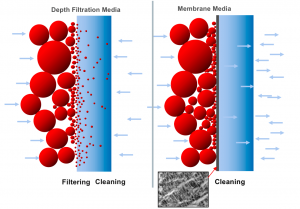
Depth filtration captures particles within multiple layers or throughout the depth of the filter media rather than primarily building a removable dust layer on its surface.
As air moves through the material, it follows increasingly small passages. Air molecules can continue through these paths while particles become trapped within the media.
This method can be extremely effective at capturing very small particles. The drawback for high-dust industrial applications is what happens after those particles accumulate. Once a depth filter becomes loaded, the trapped material generally can’t simply be pulsed off the surface. The filter eventually becomes restricted and must be replaced.
That’s a major limitation in industrial dust collection processes that continuously generate large quantities of particulate.
▶ Watch the full answer below.
20. What Is Surface Filtration?
Surface filtration captures dust primarily at the surface of the filter media, allowing the accumulated material to be periodically removed so the filter can continue operating.
Blinded filters with large temporary dust cake buildup will have higher leaking
A baghouse filter may use a layer of felted or woven media such as polyester or aramid. Air can pass through the openings in the material while larger particles are captured at the surface.
Dust accumulating on the surface forms a dust cake. Incoming particles then encounter this layer of previously collected material, which becomes an important part of the filtration process.
That dust cake can’t be allowed to grow indefinitely because resistance to airflow will continue increasing. The cleaning system periodically removes part of it, allowing airflow to recover.
This ability to collect dust, clean the surface, and repeat the cycle thousands of times is one of the reasons surface filtration is so useful for industrial dust collection.
▶ Watch the full answer below.
An Educated Customer Makes Better Decisions
Have another dust collection question you’d like us to answer? Contact Baghouse.com or send us your question. It may become one of the next topics in the series.
Dust Collection Expert, Technical Writer & Editor at Baghouse.com
Andy Biancotti believes that knowledge is one of the best investments any company can make. As Editor and Marketing Manager at Baghouse.com, he enjoys interviewing engineers, technicians, and customers to capture the real-world lessons behind successful dust collection projects and turn them into practical resources that others can learn from. With more than two decades of experience in industrial maintenance, operations, and technical communication, his goal is simple: help people better understand their systems so they can work safer, smarter, and more efficiently.
https://baghouse.com/wp-content/uploads/2026/06/Dust-Collection-Explained-1.png9411672Andy Biancottihttps://baghouse.com/wp-content/uploads/2025/10/BH-Logo-Alt-01-300x70.pngAndy Biancotti2026-09-24 10:51:462026-10-06 00:28:19Answers to the Most Common Industrial Dust Collection Questions — Part 1
A normal differential-pressure reading does not guarantee that your dust collection system has adequate airflow. Differential pressure primarily tells you the resistance across the filters. Poor airflow can still result from fan performance, duct restrictions, closed dampers, system imbalance, air leaks, process modifications, or even an inaccurate DP reading. CFM needs to be measured independently.
Sometimes we receive a call from one of our customers because dust isn’t being captured at the hoods. We ask about differential pressure and hear: “DP looks great. We’re only running around 3 inches.” That’s useful information, but now we need to know how much air is actually moving through the system.
How Can DP Be Normal When CFM Is Low?
DP across the collector tells us how much resistance the air encounters as it passes through the filters. In general, loaded filters create more resistance.
But imagine that the fan is moving substantially less air than it should. Less air passing through the filters can also produce a relatively low pressure drop. So a reading that looks like “clean filters” may actually coexist with insufficient system airflow.
“What's your differential pressure?” is one of the first questions I ask. But if the complaint is poor pickup, I also want airflow measurements. You can't diagnose the entire system from the DP gauge.”
When DP appears reasonable but capture is poor, we would investigate several areas:
Could the Fan Be the Problem?
Yes, and this is where static-pressure measurements become valuable. A fan doesn’t simply “make 20,000 CFM.” It produces airflow according to the resistance of the system and its fan curve.
If the system resistance has increased because of duct modifications, buildup, new equipment, additional fittings, or other restrictions, the fan operating point can shift, and actual CFM can fall. Check fan RPM, rotation, belts or coupling, VFD frequency, motor current, inlet/outlet conditions, and actual static pressure.
This graphic shows how a dust collector fan’s airflow changes as the resistance in the system changes. The most important point is where the black Static Pressure curve and the blue System Resistance curve cross. That intersection is the fan’s actual operating point. In this example, the fan is operating at about 60,000 ACFM and 9 in. w.g. of static pressure.
The four curves show different things:
⦿ Black – Static Pressure: How much pressure the fan can produce at different airflow rates. As airflow increases beyond a certain point, the fan’s available static pressure decreases.
⦿ Blue – System Resistance: How much resistance the dust collection system creates at different airflow rates. As you try to move more air through ducts, filters, hoods, elbows, and other components, resistance increases rapidly.
⦿ Green – Shaft Power: Approximately how much power the fan requires at each airflow. At the operating point shown, it is around 120 HP.
⦿ Orange – Static Efficiency: How efficiently the fan is operating. At the operating point, the graph indicates an efficiency of roughly 70%.
A fan does not automatically deliver its rated CFM. Its actual airflow depends on the resistance of the entire dust collection system.
Could the Ductwork Be Restricting Airflow?
We have inspected systems where the collector received most of the attention while the real problem was several hundred feet upstream.
Look for dust accumulation, crushed or damaged duct, partially closed dampers, sharp transitions, poor branch entries, excessive flexible duct, and modifications made since the original system was balanced.
Adding branches is especially important. Changing one branch can affect airflow in the others, and adding new dust sources to an existing system can reduce air volume and duct velocity in the original branches.
What Should I Measure?
If you’re troubleshooting this condition, get three pieces of information together:
Collector DP + actual airflow + system static pressure.
Then compare them with the system’s original design or commissioning data.
For example, suppose a system was designed for 20,000 CFM at 10 in. w.g. total static pressure. Today the collector DP is a comfortable 3 in. w.g., but field testing shows only 14,500 CFM. Changing the filters because the pickup is poor probably isn’t where we’d start. We’d find out why 5,500 CFM is missing.
Make Sure the DP Reading Is Real
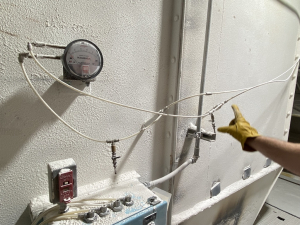
Plugged sensing lines can produce misleading readings.
Finally, verify the instrument. Plugged sensing lines, moisture, disconnected tubing, reversed high/low connections, a bad gauge, or incorrect transmitter/PLC scaling can all produce misleading readings.
If the number doesn’t make sense compared with what you’re seeing in the plant, verify it with a known-good differential-pressure instrument before making maintenance decisions. We usually recommend to have a good spare differential pressure gauge for this purpose.
If your DP looks normal but the dust isn’t being captured, Baghouse.com can measure the actual airflow and pressures throughout the system and help identify where the performance is being lost.
1. Does low differential pressure mean my filters are good?
Not necessarily. Low DP means there is relatively low measured resistance between the dirty and clean sides of the collector, but the airflow through the filters also affects that reading.
If the fan is moving substantially less air than it should, filter differential pressure may look comfortably low even though the system isn’t capturing enough dust. That’s why we like to evaluate DP together with actual CFM rather than using DP alone to judge filter condition.
2. Can clogged ductwork cause low CFM without high collector DP?
Yes. Collector DP measures pressure loss across the collector at its sensing locations, so a major restriction upstream in the duct network may reduce the amount of air that ever reaches the collector.
Dust buildup, a partially closed damper, damaged duct, or a restricted branch can therefore produce poor airflow at a hood while collector DP remains fairly normal. Static-pressure measurements at several points in the duct system can help locate where the restriction occurs.
3. Can adding pickup points reduce airflow at existing hoods?
Yes. If the fan cannot provide the additional CFM required by the new pickup points, the available airflow will be redistributed through the duct network.
Existing hoods, particularly those on more restrictive or distant branches, may lose capture velocity. This is why adding another machine to a dust collection system should include an airflow review rather than simply cutting a new connection into the existing main duct.
4. Should I replace filters if DP is normal but suction is poor?
Usually, we would investigate the airflow problem before ordering filters. Check actual CFM, fan RPM and rotation, VFD frequency, system static pressure, dampers, duct restrictions, and recent system modifications. Also verify that the DP gauge and sensing lines are working correctly. If the filters are physically damaged, blinded, contaminated, or otherwise failing, replacement may still be appropriate, but poor suction by itself doesn’t prove that the filters are responsible.
5. How do I know if the fan is producing enough CFM?
Measure actual airflow and static pressure while the system is operating under normal production conditions, then compare those measurements with the fan curve and original design requirements.
Also verify fan RPM, rotation, motor current, belt condition, VFD frequency, and inlet/outlet conditions. If a fan designed to deliver 20,000 CFM is currently moving only 14,500 CFM, the next step is to determine why its operating point has changed rather than assuming the collector needs more filter area.
6. Can a VFD cause low airflow?
Yes. Fan speed has a major effect on airflow. If a VFD was installed, reprogrammed, placed in manual mode, or limited to a lower maximum frequency, the fan may be operating below its intended RPM. During troubleshooting, check the actual VFD output frequency and fan RPM rather than assuming that 100% on the operator display represents the original design speed.
7. What if the DP gauge never changes?
A DP reading that stays almost perfectly fixed through different production or cleaning conditions deserves investigation. Check the dirty- and clean-side pressure taps for blockage, inspect the sensing tubing for dust, moisture, kinks, leaks, or disconnections, and verify that the high and low connections are installed correctly.
For electronic transmitters, also check zero, range, wiring, and PLC scaling. Comparing the installed instrument against a known-good handheld differential-pressure gauge or manometer is one of the quickest ways to determine whether the reading can be trusted.
President | Dust Collection Engineer | Industrial Air Pollution Control Specialist
Matt Coughlin is an engineer, and dust collection expert specializing in industrial filtration systems, air pollution control, and process ventilation. Matt has helped design, troubleshoot, and optimize hundreds of dust collection systems across a wide range of industries, including cement, mining, food processing, woodworking, metals, power generation, chemical manufacturing, and bulk material handling. Born and raised in Southern California, Matt continues to work closely with industrial facilities around the world, helping companies improve their dust collection performance through engineering expertise, practical solutions, and long-term technical support.
https://baghouse.com/wp-content/uploads/2024/09/Screenshot-2024-09-16-at-11.53.02 AM.png13242366Matt Coughlinhttps://baghouse.com/wp-content/uploads/2025/10/BH-Logo-Alt-01-300x70.pngMatt Coughlin2026-09-08 12:56:182026-09-23 14:18:53Why Does My Dust Collection System Have Good Differential Pressure but Poor Airflow?
A good industrial dust collection system RFQ should clearly define the process, required airflow, dust characteristics, pickup points, ductwork, temperature, available space, material discharge, combustible dust requirements, controls, installation scope, and project goals. The more clearly these requirements are defined, the easier it becomes for suppliers to propose comparable systems and for your team to evaluate the true value of each quote.
An RFQ does not need to contain a finished dust collection system design. In fact, many facilities begin the quoting process without knowing exactly what collector, fan, duct size, or filter media they need.
What the RFQ does need to do is give qualified suppliers enough information to understand the application, identify what still needs to be engineered, and clearly define who is responsible for each part of the project.
Start With the Process and What You Are Trying to Accomplish
Often, we receive an RFQ that begins with something like: “We need a 20,000 CFM baghouse. Please quote.” That may be enough to start a conversation, but it is usually not enough to obtain a meaningful project quote. Beware of sales reps that give you a quote for a dust collector out of a catalog without knowing exactly what you need.
A good dust collection system provider would ask you…Why 20,000 CFM? Where does that air need to be collected? How many pickup points operate simultaneously? What material is being collected? What temperature will enter the collector? Who is supplying the ductwork, fan, controls, discharge equipment, structural support, installation, and commissioning?
A dust collector is only one component of a larger dust collection system. Your RFQ should therefore describe the process and the problem you are trying to solve, rather than simply requesting a particular piece of equipment.
What Information Should You Include in a Dust Collection RFQ?
You don’t necessarily need every answer before contacting a dust collection supplier. But the following information provides an excellent starting point.
A qualified supplier can help determine missing engineering information, but the RFQ should make it clear which items still need to be determined.
▶️ Watch the complete explanation on how to develop your dust collection scope and RFQ as an end user.
1. What Process Is Producing the Dust?
Start by explaining the application.
For example:
⦿ Limestone crushing and conveying
⦿ Laser cutting
⦿ Aluminum grinding
⦿ Cement transfer
⦿ Grain handling
⦿ Welding
⦿ Woodworking
⦿ Powder mixing
⦿ Bag dumping
⦿ Sandblasting
Describe what the equipment does, what material is processed, how many hours per day it operates, and whether production is continuous or intermittent. Photos, process drawings, equipment layouts, and short videos can be extremely useful.
The supplier needs to understand where the dust comes from before deciding how to collect it.
2. What Dust Are You Collecting?
Some types of fine powders or sticky materials tend to clog filters much faster than dry, free-flowing dust
At minimum, identify the material being collected. When available, provide information about particle characteristics, moisture, abrasiveness, bulk density, chemical properties, temperature, and whether the material is sticky or hygroscopic.
These factors can affect collector selection, filter media, air-to-cloth ratio, duct velocity, inlet design, hopper geometry, discharge equipment, and construction materials.
For an existing system, sending a used filter sample or dust sample can sometimes provide valuable additional information.
Ideally, the project should identify the required airflow at each pickup point and which pickup points operate simultaneously.
For example:
Pickup Point
Required Airflow
Simultaneous?
Crusher
4,500 CFM
Yes
Transfer Point 1
2,000 CFM
Yes
Transfer Point 2
2,000 CFM
Yes
Bagging Station
1,500 CFM
Intermittent
Those values help the designer determine total system airflow and begin laying out the duct network.
If you don’t know the required airflow, state that clearly and ask the supplier to include hood and airflow calculations in its engineering scope.
How Do You Size a Collector for a New Application?
Collector sizing generally begins by determining the required CFM. From there, the required filter area can be estimated using an appropriate air-to-cloth ratio, followed by selection of the collector configuration based on the dust and process conditions.
▶️ Watch: How to Size a Collector for a New Application
4. Should the RFQ Include Hoods and Pickup-Point Design?
A system can have an excellent dust collector and still perform poorly if the dust isn’t captured at its source.
Specify whether the owner will provide the hood design, or the dust collection supplier is responsible for designing the capture points. If the supplier is responsible, provide equipment drawings, photographs, dimensions, process information, and information about operator access or other restrictions.
5. Who Is Responsible for the Ductwork?
Your RFQ should explicitly state whether the project involves existing ductwork, new ductwork, or a combination of both.
For existing systems, provide drawings when available, but don’t automatically assume old drawings represent the system as it exists today. Plants frequently modify ductwork over the years. For new systems, define who will perform the layout and engineering.
A professional design package (like the one offered by the team at Baghouse.com) may include a CFM summary, duct sizes, system static-pressure calculations, routing, and CAD drawings.
▶️ Watch: How to Get Help Laying Out Your Ductwork, Hoods, and Fans
6. What Should Be Specified Regarding the Fan?
The RFQ should define (or require the supplier to calculate) the required airflow at the total system static pressure. That pressure includes resistance from the hoods, ductwork, fittings, collector, filters, and other system components.
Specify requirements such as:
⦿ Required CFM
⦿ Calculated system static pressure
⦿ Fan arrangement
⦿ Motor voltage
⦿ Motor efficiency requirements
⦿ VFD requirements
⦿ Outdoor or indoor location
⦿ Temperature
⦿ Material or abrasion requirements
⦿ Noise requirements, if applicable
This allows the fan to be evaluated at its actual operating point rather than simply by nominal horsepower or fan size.
7. What Temperature Will the Collector See?
Include both the normal operating temperature and the expected maximum temperature. Also describe unusual conditions such as startup, shutdown, process upsets, or temperature spikes.
Temperature can influence filter media, seals, insulation, collector construction, corrosion potential, and other components.
▶️ Watch: What Is the Maximum Temperature That Filter Bags Can Sustain?
8. What Should the RFQ Say About Combustible Dust?
If the material may be combustible, this needs to be identified before the collector is designed and quoted.
Provide available dust testing data, including relevant Kst and Pmax values, along with any completed Dust Hazard Analysis (DHA)or other process-safety information.
Do not leave combustible dust protection as a vague line item saying: “Include explosion protection as required.” Instead, establish who is responsible for determining the required protection strategy and which equipment is included in each proposal.
▶️ Watch: How Can We Equip Dust Collectors That Handle Explosive Dust?
9. How Will Collected Material Be Discharged?
The material is often discharged from the collector directly into some kind of container placed directly under the airlock. This may be a steel drum, bin hopper or bulk bag (super sack) as shown in this image.
The RFQ should describe what happens after the dust reaches the hopper.
Options may include:
⦿ Drums
⦿ Rotary airlocks
⦿ Screw conveyors
⦿ Double-dump valves
⦿ Pneumatic conveying
⦿ Bulk bags
⦿ Existing process equipment
Also specify whether the discharge equipment operates continuously or intermittently and where the material ultimately needs to go.
10. What Controls and Monitoring Should Be Included?
Controls are another area where two quotes that initially look similar can contain very different scopes.
For some applications, emissions monitoring may also be required by the facility’s air permit or may provide valuable maintenance information.
▶️ Watch: Why Do You Need Continuous Dust Emissions Monitoring?
11. What Installation Scope Should the RFQ Define?
Clearly define whether you want equipment only, equipment plus engineering, equipment and installation, or a turnkey dust collection system.
If installation is included, establish responsibility for items such as equipment setting, ductwork installation, structural steel, electrical work, compressed-air piping, crane and rigging, demolition, roof penetrations, insulation, controls integration, startup, balancing, commissioning, and training.
Real-world procurement specifications often go much further than simply naming collector capacity. For example, recent industrial dust-collector solicitations have explicitly defined equipment capacity, electrical and compressed-air utilities, environmental conditions, testing, documentation, warranties, installation and final acceptance. (govtribe.com)
12. What Drawings and Documentation Should You Request?
Depending on the project, request items such as:
⦿ General arrangement drawings
⦿ Equipment data sheets
⦿ Ductwork drawings
⦿ Fan performance information
⦿ Electrical schematics
⦿ Control diagrams
⦿ Filter specifications
⦿ Replacement-parts lists
⦿ Operation and maintenance manuals
⦿ Startup procedures
⦿ Recommended maintenance schedules
⦿ Warranty documentation
Industrial dust-collector specifications can explicitly require operation, maintenance and repair manuals containing mechanical and electrical schematics, wiring diagrams and recommended consumable spare-parts lists.
Define the required submittals in the RFQ so suppliers include them in their scope and schedule.
13. Should Commissioning and Performance Verification Be Included?
For a complete system, we strongly recommend defining how performance will be verified after installation.
Depending on the project, commissioning may include measurements of: Airflow at pickup points, duct velocity, system static pressure, collector differential pressure, fan operation, cleaning-system performance, system balance, controls and alarms.
Establishing these values also gives the maintenance team something extremely valuable: a baseline. Six months or five years later, you can compare current operation against the conditions documented when the system was commissioned.
14. What Spare Parts Should Be Included in the RFQ?
Ask each supplier to provide a recommended critical spare-parts list and identify normal lead times.
Spare parts are easy to overlook during a capital project because the immediate objective is getting the system installed. But the first time a diaphragm valve, solenoid, differential-pressure instrument, rotary-airlock component, or filter fails, the maintenance team will care a lot about what is sitting on the shelf.
▶️ Watch: How to Manage Your Critical Spare Parts and Avoid Downtime.
How Should You Compare Dust Collection System Quotes?
Don’t compare dust collection proposals based only on the price. Two quotes for what appears to be the same project may actually represent completely different systems.
Suppose:
Vendor A: $185,000 Vendor B: $230,000
Vendor A appears $45,000 cheaper. But then you discover Vendor B includes engineered ductwork, a larger filter area, appropriate filter media, a VFD, explosion isolation, commissioning, controls integration, startup assistance, drawings, and critical spare parts.
Vendor A excluded several of those items. You aren’t comparing $185,000 versus $230,000 anymore. You’re comparing two different scopes.
Create a Bid Comparison Matrix
Before selecting a supplier, put the major requirements side by side.
▶️ Watch: How Knowing Your System Leads to Better Quotes and Not Just the Lowest Price
What Are the Most Common Dust Collection RFQ Mistakes?
Leaving important decisions undefined and assuming every supplier will interpret the project the same way.
Other common problems include requesting a collector before determining required airflow, providing total CFM without individual pickup requirements, relying on outdated drawings, failing to identify combustible dust, omitting installation responsibilities, failing to specify discharge equipment, ignoring controls and monitoring, and comparing proposals solely on purchase price.
Writing such a restrictive specification that qualified suppliers cannot improve the design.
Define your performance requirements, site limitations, safety requirements, interfaces, deliverables, and project objectives clearly. But unless there is a specific reason for a particular design, allow experienced suppliers to recommend the best technical solution.
A Better RFQ Produces a Better Dust Collection Project
Clearly defining the process, airflow, pickup points, dust characteristics, system layout, safety requirements, utilities, controls, installation responsibilities, commissioning, documentation, and project objectives allows qualified suppliers to develop proposals around the same requirements.
Baghouse.com has been working for more than 40 years with plant managers, engineers, project managers, and maintenance teams to develop dust collection project scopes and provide complete equipment and installation packages. We can assist you too.
Frequently Asked Questions About a Request For a Quote (RFQ)
1. What information does a dust collector supplier need to provide a quote?
A supplier typically needs information about the process, dust characteristics, required airflow, pickup points, operating temperature, ductwork, available space, material discharge, utilities, combustible dust characteristics, controls, installation scope, and project schedule. If some information is unknown, the RFQ should identify what the supplier is expected to determine.
2. What if I don't know the CFM required for my dust collection system?
You can still request a proposal. Provide information about the process, equipment, dust-generation points, operating conditions, and which pickup points operate simultaneously. The RFQ can then specify that the dust collection supplier is responsible for determining the required airflow and documenting the design basis.
3. Should ductwork be included in a dust collector RFQ?
The RFQ should at least define who is responsible for the ductwork. If the supplier is responsible, specify whether the scope includes system layout, airflow calculations, duct sizing, static-pressure calculations, fabrication, installation, and balancing.
4. Should installation and commissioning be included in the RFQ?
If these services are required, they should be clearly identified. Installation scope can include equipment setting, ductwork, structural work, controls coordination, compressed air, startup, and other site work. Commissioning should define how airflow, duct velocity, differential pressure, fan performance, controls, and other critical operating parameters will be verified.
5. How should I compare quotes from different dust collector suppliers?
Compare the technical scope before comparing price. Review airflow, filter area and media, fan selection, ductwork, controls, combustible dust protection, installation, commissioning, documentation, spare parts, exclusions, warranty, and support. Two proposals with different scopes should not be treated as equivalent simply because both include a dust collector.
6. What combustible dust information should be included in an RFQ?
Identify whether the dust is known or suspected to be combustible and provide available test data, including relevant Kst and Pmax values, along with any existing Dust Hazard Analysis. The RFQ should also clearly establish responsibility for determining and supplying the required fire and explosion protection.
7. What spare parts should be included with a new dust collector?
Ask the supplier for a recommended critical spare-parts list based on the equipment supplied. Depending on the system, this may include filters, diaphragm kits, solenoids, valves, differential-pressure instruments, sensors, rotary-airlock components, and other items that could cause significant downtime if unavailable.
Director of Operations | Dust Collection Specialist | Industrial Filtration Consultant
Dominick DalSanto is an author and environmental technologies expert specializing in dust collection systems. He has nearly a decade of hands-on working experience in the industry. Dominick is the sales director and sales technical advisor for an industrial dust collection equipment manufacturer. Personally took the lead on key projects each year from sales engineer to field advisor to project manager to business relations. Born in San Bernardino County, California, and raised in Chicago, he currently resides in Buenos Aires, Argentina.
https://baghouse.com/wp-content/uploads/2026/09/What-Information-Should-You-Include-in-a-Dust-Collection-RFQ.png13062322Dominick DalSantohttps://baghouse.com/wp-content/uploads/2025/10/BH-Logo-Alt-01-300x70.pngDominick DalSanto2026-09-07 13:36:082026-09-16 10:56:11What Should Be Included in an Industrial Dust Collection System RFQ?


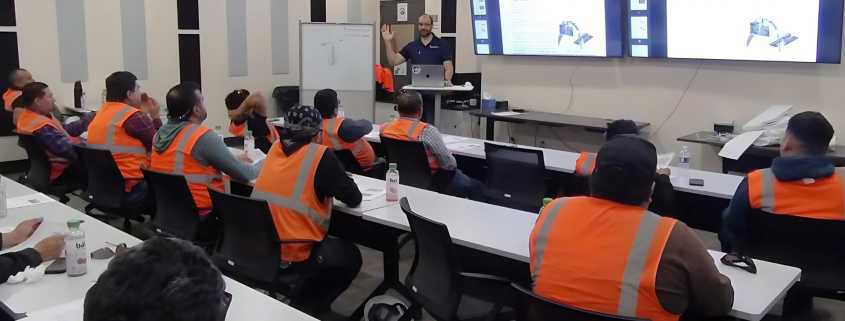

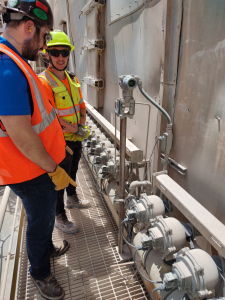 One of the biggest advantages of bringing in an outside dust collection specialist is perspective. Your maintenance personnel see the equipment every day. That’s valuable, but it can also make gradual changes difficult to recognize. A technician who works on dust collectors across different plants and industries may recognize a failure pattern or operating condition your team hasn’t encountered before.


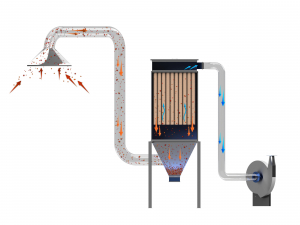




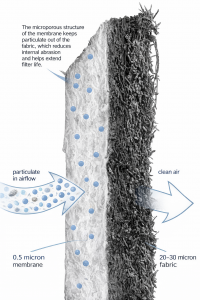

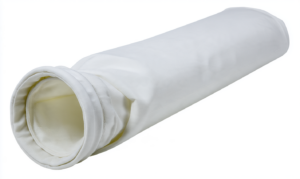
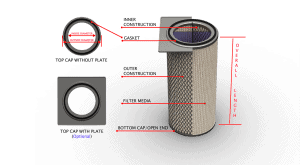
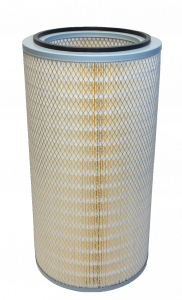 An 80/20 blend of cellulose and polyester is a widely used economical media. Nanofiber media builds on this basic construction by adding a fine surface layer that improves capture of smaller particles.
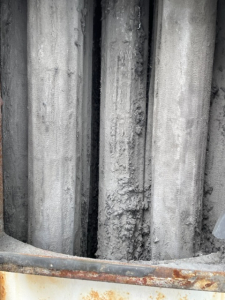 Even when filters aren’t damaged by an abnormal event, they eventually reach the end of their useful life as fine particles become embedded within the depth of the filter media.
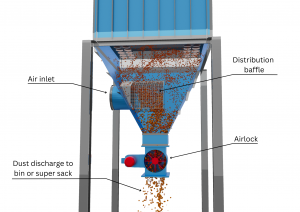
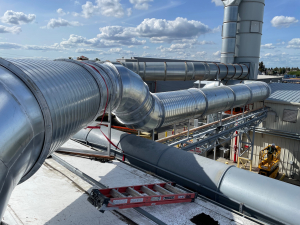
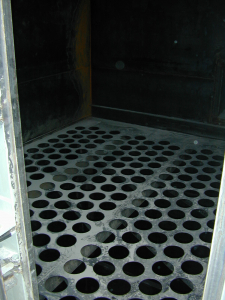
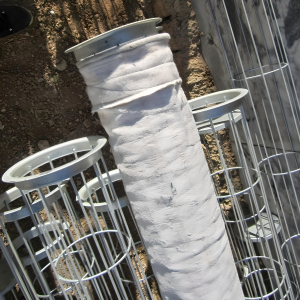
 The main difference is the temperature range the filter material can withstand without degrading, but temperature also influences cost, chemical compatibility, and available media options.

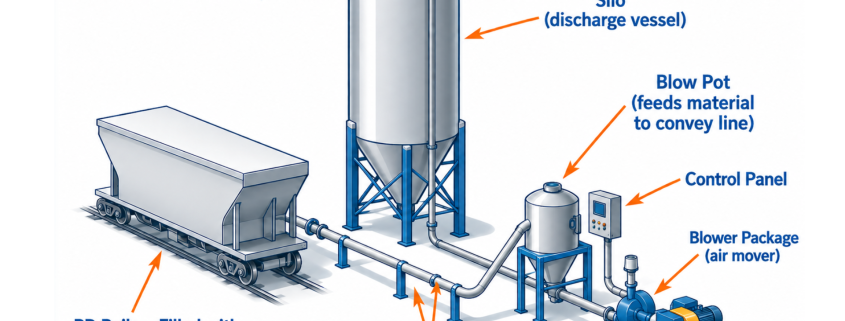

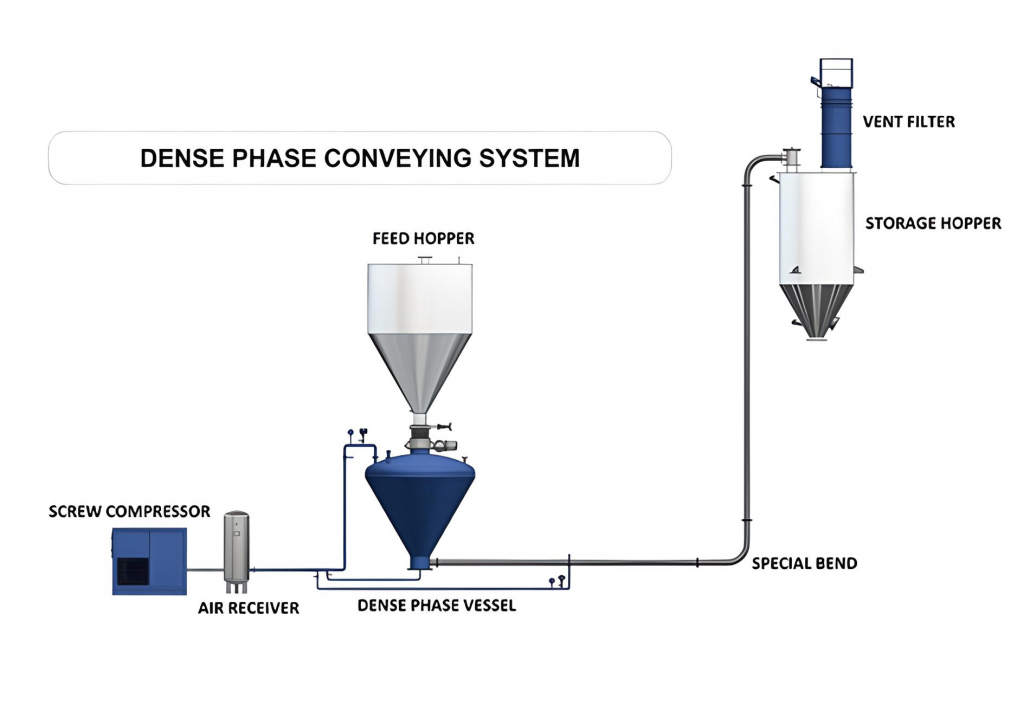


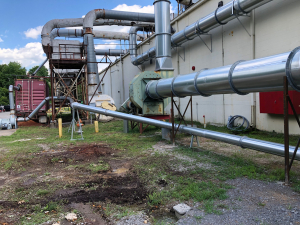 In general, the recommendation is to try to maintain horizontal and vertically upward convey lines wherever possible. If there is a situation where an inclined line is necessary, it can be addressed by more experienced system designers.


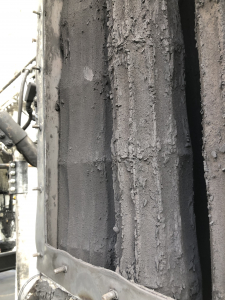 During normal operation, dust accumulates on the surface of the filter and forms a dust cake. The cleaning system periodically removes much of that surface cake. But over thousands of cleaning cycles, some fine particles work their way deeper into the filter media.
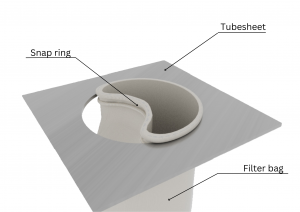
 A
 Dust-laden air enters the collector and passes through the filters. Dust remains on the dirty side while filtered air passes through the media and exits the collector. As dust accumulates, the filters are periodically cleaned so collected material can fall into the hopper below.
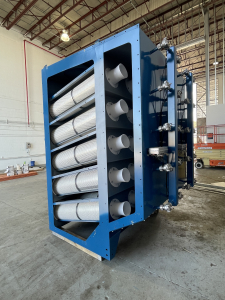
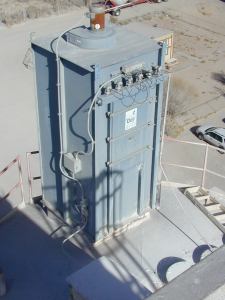
 Industrial plants may use belt conveyors, bucket elevators, screw conveyors, or pneumatic conveying systems. Pneumatic conveying adds another challenge because air is intentionally used to transport the material through piping. That conveying air eventually has to be separated from the product.
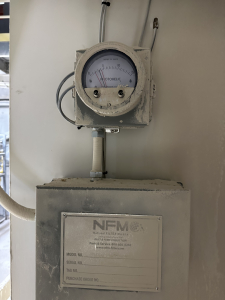
 On a standard pulse-jet collector, the