
4 Common Production Changes That Affect Baghouse Operation

A new production line gets installed, a different material is introduced, or operating hours are extended. Everyone focuses on getting the equipment running, but what about the baghouse?

It’s always good to remember that dust collection systems are designed around specific operating conditions. When those conditions change, the baghouse may no longer be able to keep up with the demands of the facility.

We’ve seen plants struggle with poor airflow, premature filter failures, and increased emissions simply because their production processes changed while their dust collection systems stayed the same.

Here are four common changes that can affect baghouse performance and what you should consider before making them.

1. Expanding Production or Adding New Equipment

Maybe the plant added another production line, installed a larger machine, or increased output to meet growing demand. The existing baghouse was working fine before, so the natural assumption is that it can handle a little more dust. However, every dust collection system is designed to handle a certain volume of air, measured in cubic feet per minute (CFM). Adding new equipment often means adding more capture points, which increases the total airflow required.

For example, imagine a baghouse designed to handle 20,000 CFM. The facility adds two new machines that each require 3,000 CFM of dust collection. Suddenly, the system needs 26,000 CFM to provide the same level of dust capture at every machine. If the fan can’t provide the additional airflow, suction may decrease throughout the system. Dust that was previously captured at the source may begin escaping into the facility.

Even if the fan can deliver more air, the baghouse itself may not have enough filter area to handle the increased volume. This can raise the air-to-cloth ratio, increase differential pressure, and shorten filter life.

Related articles:

What should you do?

Before connecting new equipment to an existing dust collector, calculate the additional airflow requirements and compare them with the system’s actual capacity.

Sometimes, adjustments to the fan, ductwork, or filtration area can accommodate the expansion. Other times, adding a separate collector or replacing the existing system is the better long-term solution.

Ductwork diagram new process
"Just because there's room to connect another duct doesn't mean the fan can handle another 5,000 CFM. Before expanding, a brief call with a dust collection expert may help you calculate accurately how much airflow you're actually getting and how much the new equipment will require."

2. Changes to Air Permits or Emissions Requirements

A facility may receive an updated air permit with stricter particulate emissions limits, new monitoring requirements, or different operating conditions. The baghouse might still be operating exactly as it was designed, but that doesn’t necessarily mean it meets the facility’s current permit requirements.

For example, a dust collector that previously met its emissions limits using standard polyester filter bags might need higher-efficiency filter media to achieve a lower particulate emissions limit. In other cases, the facility may need additional monitoring equipment, such as a particulate emissions detector, to identify potential filter leaks.

It’s also important to understand that a low differential pressure reading doesn’t guarantee low emissions. A baghouse can show normal operating pressure while damaged filters, leaking seals, or improperly installed bags allow dust to pass through.

Another situation occurs when production increases beyond the operating conditions authorized by the existing permit. Even if the dust collector can physically handle the additional airflow, the facility may need to review its permit before making the change.

Related article: How Do Baghouse Dust Collection Systems Help Facilities Stay in Air Quality Compliance?

What should you do?

Whenever your air permit changes, review the requirements with your environmental team and determine whether the existing dust collection system can meet them. This may involve evaluating filter media, inspecting the system for leaks, upgrading monitoring equipment, or making other modifications.

3. Changing Fuels, Raw Materials, or Finished Products

Different materials produce dust with very different characteristics. Particle size, moisture content, chemical composition, abrasiveness, and operating temperature all influence how a dust collector performs.

Consider a facility that switches to a different fuel source. The resulting exhaust gases may contain more moisture, operate at a different temperature, or introduce chemical compounds that weren’t present before. Those changes can affect the filter media.

For example, polyester filters can perform well in many industrial applications, but prolonged exposure to elevated temperatures and moisture can cause hydrolysis, weakening the fibers and shortening filter life. A different fuel might also produce finer or stickier particles, making the dust more difficult to remove during pulse cleaning.

The same issue can occur when a manufacturer changes products. A facility that previously handled relatively coarse, free-flowing dust may begin producing a much finer powder. The existing filter media might not be the best choice for capturing or releasing that material.

And if the new product generates combustible dust, the implications go beyond filtration performance. The facility may need to reevaluate its Dust Hazard Analysis (DHA) and review its fire and explosion protection systems.

What should you do?

Before changing fuels or materials, evaluate how the new process will affect the dust and gas stream entering the collector. Pay particular attention to temperature, moisture, particle characteristics, chemical compatibility, and combustibility.

In some cases, selecting a different filter media or adjusting the cleaning system may be enough. In others, more substantial changes to the dust collection system may be necessary.

"Even a small change in particle size, moisture, or chemical composition can completely change how the dust behaves inside the baghouse. We've seen filters that lasted years in one application start plugging in months after a process change."

4. Changing Production Schedules or Recirculating Filtered Air

Two operational changes that often get overlooked are extending production hours and changing what happens to the filtered air leaving the baghouse. Both can have a significant impact on how the system should be operated and maintained.

Running Longer Hours With Less Downtime

Imagine a facility that originally operated five days a week, eight hours per day. The maintenance team had evenings and weekends available to inspect the baghouse, replace worn components, and address problems before production resumed. Now the plant moves to two or three shifts, operating six or seven days a week. The dust collector is running much more often, but the maintenance schedule hasn’t changed. Filters accumulate operating hours faster, pulse valves cycle more frequently, and fans, bearings, and dust discharge equipment experience additional wear.

At the same time, there are fewer opportunities to shut down the system for inspections and repairs. A maintenance program based on the old production schedule may no longer be adequate. Rather than relying entirely on calendar-based maintenance, facilities should begin tracking operating hours, differential pressure trends, pulse-cleaning performance, and other indicators of equipment condition.

It’s also worth reviewing critical spare-parts inventory. When production runs continuously, waiting several days for a replacement pulse valve or filter cage can become a costly problem.

Related article: Baghouse Preventive Maintenance vs. In-House Maintenance

Recirculating Filtered Air to Reduce Heating Costs

Another change we see, especially in colder climates, is the decision to return filtered air from the dust collector back into the building. If a facility is exhausting thousands of cubic feet of heated indoor air every minute, replacing and reheating that air can be expensive during winter.
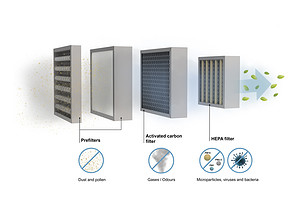
Different stages of a HEPA after filter

HEPA after-filter serves as a powerful ally when searching for cleaner indoor air quality, particularly in industrial settings

Recirculating properly filtered air may reduce heating costs, but it introduces additional safety and design considerations. A dust collector originally designed to exhaust outdoors may not provide the level of filtration, monitoring, or safeguards needed for indoor air recirculation. Depending on the dust being collected, the facility may need higher-efficiency filtration, HEPA after-filters, particulate monitoring, or automatic diversion systems.

Facilities handling combustible or hazardous dust must also consider whether recirculation is permitted and what additional protective measures are required.

What should you do?

Before recirculating filtered air, have the system evaluated to confirm that the proposed arrangement meets applicable safety, ventilation, and environmental requirements.


Comparison table showing four production changes that affect baghouse performance, their impact on dust collection systems, and recommended solutions.

The Bottom Line: Your Baghouse Needs to Keep Up With Your Facility

Production changes are a normal part of running a successful industrial facility. Equipment gets upgraded, output increases, materials change, and operating schedules evolve. But your dust collection system needs to evolve along with everything else.

The key is to include dust collection in the planning process whenever significant production changes are being considered.

At Baghouse.com, we help facilities evaluate existing dust collection systems, troubleshoot performance problems, and determine whether upgrades or modifications are needed.

Planning changes at your facility? We’ll be happy to help you evaluate your dust collection system before small changes turn into expensive problems.

Share this article

Related Articles

Get a quote today!