If your facility has a DustVent collector, downdraft bench, or oil mist collector, you may be wondering who can still provide the correct filters, replacement parts, technical information, and field service. The good news is that many DustVent systems can continue operating reliably for years with the right maintenance and support—and Baghouse.com can help you identify your equipment, solve performance problems, and decide when repair, upgrading, or replacement makes the most sense.
Baghouse.com is DustVent’s exclusive service partner and can assist with on-site inspections, maintenance, repairs, filters, replacement parts, equipment upgrades, and complete collector replacement.
How Can You Identify Your DustVent Collector?
The first step is to locate the equipment identification plate. Record the DustVent serial number, model number, electrical information, and any other visible specifications.
The serial number is particularly important because it can connect the collector to its original engineering records. These drawings may help identify the original equipment configuration, filter arrangement, components, and replacement-part requirements.
If the identification plate is missing or unreadable, collect:
- Photographs of the complete collector
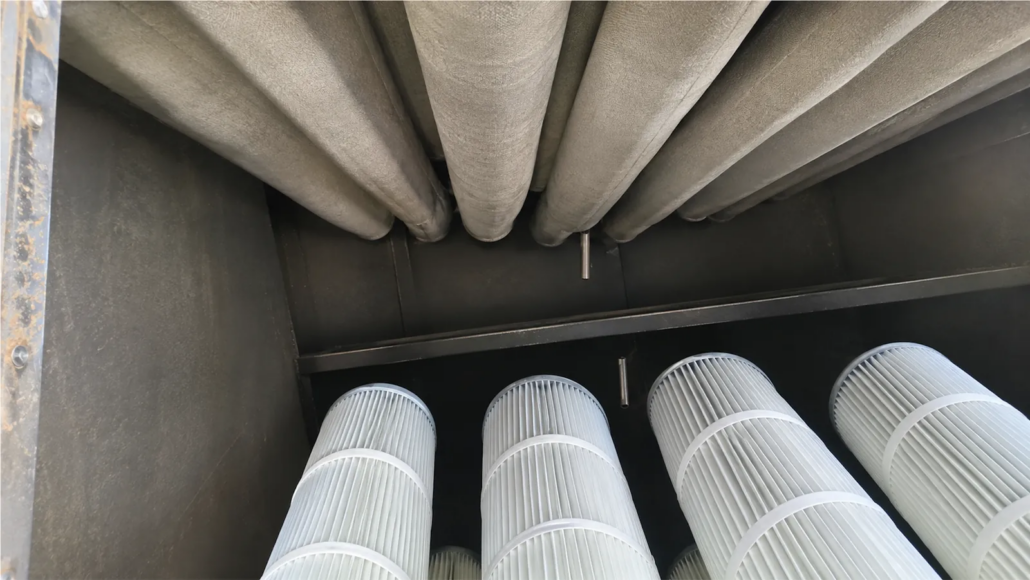
- Photographs of the filters and internal components
- Filter dimensions and construction
- Fan and motor information
- Control-panel information
- Duct inlet and outlet dimensions
- Equipment location and process application
- Type of dust or mist being collected
- Current airflow and differential pressure, if known
The program can assist with:
What Maintenance Helps a DustVent Collector Last Longer?
Check Ductwork and Connections
Inspect ductwork for accumulated material, corrosion, abrasion, loose connections, damaged flexible hose, and air leaks.
Dust buildup inside the duct reduces the available area and can lower airflow at the pickup point. In oil mist applications, inspect ducts and drainage points for liquid accumulation that may restrict airflow or leak into the work area.
Check Airflow and Capture Performance
Poor capture at a machine, hood, or downdraft bench may be caused by restricted filters, plugged ductwork, a damaged fan, slipping belts, closed dampers, air leaks, or changes to the process.
Compare the current airflow with previous readings or the system’s original design conditions. If the fan is running but capture has declined, increasing the fan speed may temporarily hide the problem without correcting its cause.
Monitor Differential Pressure
A gradual increase may indicate normal dust loading, aging filters, ineffective cleaning, moisture, or excessive airflow.
Very low differential pressure can also be a warning sign when it occurs with visible emissions or dust in the clean-air section. In that situation, air may be passing through a damaged filter, failed seal, or opening between the dirty-air and clean-air sides.
Trends are more useful than isolated readings. Record differential pressure under similar production conditions so your team can recognize meaningful changes.
Maintain Dust or Liquid Discharge
For dry collectors, check that the hopper and discharge equipment remove material consistently. A collector hopper should not be used as long-term dust storage.
For oil mist collectors, inspect the drainage system and confirm that collected liquid can leave the unit as designed. Blocked or improperly configured drains can allow oil to accumulate inside the collector and affect filtration performance.
Inspect Filters and Seals
Filter performance depends on the correct media, dimensions, installation, and sealing arrangement. If filters repeatedly fail in the same location, inspect the surrounding equipment before installing another replacement. The cause may be a sharp edge, damaged support component, poor airflow distribution, excessive inlet velocity, or localized abrasion.
Inspect the Fan and Drive Components
Check the fan wheel, housing, motor, bearings, belts, guards, dampers, and vibration. Gradually increasing vibration or motor amperage can indicate material buildup, imbalance, bearing deterioration, misalignment, or increased system resistance. Correcting the problem early may prevent damage to the fan wheel, shaft, and housing.
When Should You Consider Replacing a DustVent Collector?
Replacement should be considered when the existing equipment can no longer meet the process requirements safely, reliably, or economically.
The Structure Has Significant Corrosion or Damage
Surface rust may be repairable, but deep corrosion, reduced metal thickness, damaged supports, leaking seams, or deterioration around access doors and hoppers requires closer evaluation.
If repairs would involve replacing large sections of the housing or supporting structure, a new collector may provide better long-term value.
The Collector No Longer Has Enough Capacity
Production processes change. New machines, pickup points, or higher production rates increase the required airflow and dust loading.
Before connecting additional equipment, evaluate:
⦿ Required CFM at every pickup
⦿ Total system airflow
⦿ Duct conveying velocity
⦿ System static pressure
⦿ Fan performance curve
⦿ Filter area
⦿ Air-to-cloth ratio
⦿ Can velocity
⦿ Interstitial velocity
Adding another duct branch does not create additional airflow. It divides the available airflow unless the fan and collector can support the increased demand.
Repairs Are Becoming Frequent
Repeated filter failures, fan repairs, air leaks, corrosion, and control problems can make an older collector expensive to operate.
Compare the annual cost of parts, labor, production interruptions, and emergency service with the estimated cost and benefits of a replacement system. A lower purchase price for another repair does not always represent the lowest total operating cost.
Parts Require Extensive Modification
Historical drawings and serial-number records can make many DustVent components identifiable. However, replacement may be more practical if essential parts are no longer available, require extensive custom fabrication, or cannot be installed without major structural changes.
The Application Has Changed
A collector designed for one material or process may not be suitable for a different dust, mist, temperature, moisture level, chemical exposure, or production rate.
The collector should be reevaluated whenever the process changes. This is especially important when the new material may be combustible, corrosive, abrasive, sticky, toxic, or temperature-sensitive.
Necessary Safety Upgrades Are Not Practical
Older equipment may require modifications to accommodate current facility requirements, process hazards, monitoring systems, fire protection, explosion protection, or air-return arrangements.
If the required upgrades cannot be installed effectively because of the collector’s construction, location, or condition, replacement may be the safer and more economical option.

How Can Baghouse.com Help DustVent Owners?
Baghouse.com can support DustVent cyclone collectors, fabric collectors, downdraft benches, oil mist collectors, and other legacy equipment. If you own DustVent equipment, begin by sending us the serial number, photographs, process information, and a description of the problem.

Dust Collection Expert, Technical Writer & Editor at Baghouse.com
Andy Biancotti believes that knowledge is one of the best investments any company can make. As Editor and Marketing Manager at Baghouse.com, he enjoys interviewing engineers, technicians, and customers to capture the real-world lessons behind successful dust collection projects and turn them into practical resources that others can learn from. With more than two decades of experience in industrial maintenance, operations, and technical communication, his goal is simple: help people better understand their systems so they can work safer, smarter, and more efficiently.