
Metal foundry

A lead smelting facility has been ordered by the EPA to upgrade its existing pollution control technology, including its dust collection systems, and review operational procedures regarding environmental issues. 

Arecibo, Puerto Rico – A lead smelting facility in the Commonwealth of Puerto Rico has been served with an order from the U.S. Environmental Protection Agency to reduce air and water pollution caused by its operations. The Battery Recycling Company, Inc. from Arecibo, Puerto Rico, is being forced to upgrade its existing facilities’ pollution control technologies, including a dust collection system used for the collection of highly toxic lead dust.

The Battery Recycling Company, a secondary lead smelter, recycles used motor vehicle batteries and produces approximately 60 tons of lead per day.

Inspectors found fault with reporting policies, and operation and maintenance of the facilities dust collection system. After stressing that the company needs to improve its handling of the toxic substances it processes to protect  workers, their families, and the surrounding area, EPA Regional Administrator Judith A. Enck said: “The EPA legal action requires the Battery Recycling Company to improve its operations to protect people’s health and the environment. Our work is not done. EPA’s evaluation of the company’s compliance with federal environmental laws is active and ongoing.”

The plant which is regulated by both the Puerto Rico Environmental Quality Board (EQB), and the EPA, has been ordered to improve monitoring and reporting operations in addition to taking preventative actions and making operational improvements. The company was cited by the EPA and the EQB for having installed and tested new pollution control equipment on two of its furnaces in both 2007 and 2010 without notification. These points are significant because operational and physical changes occurred which increased the amount of pollution the facility generates. In addition, the inspectors found that the leak detection system in place to alert plant personnel of a of potentially devastating fugitive lead emissions was not fully operational. The inspectors also that the main rotary air lock on one of the dust collection system was not functioning at full capacity and was allowing lead dust to escape into the atmosphere.

Lead is a toxic metal that can cause damage to a child’s ability to learn and a range of health damage in adults.  Lead exposure can have serious, long-term health consequences in adults and children. Even at low levels, lead in children can cause I.Q. deficiencies, reading and learning disabilities, impaired hearing, reduced attention spans, hyperactivity and other behavior problems. Lead exposure can also cause health problems in pregnant women and harm fetuses.

The company has been ordered to ensure the proper operation of its leak detection system at all times to prevent fugitive lead dust emissions. Daily particulate readings must take place at each of the dust collection system’s Baghouses, and be recorded to ensure the facility is complying with all applicable air regulations concerning lead and other substances released into the air. Additionally, they must provide results from 2010 performance tests conducted to assess the efficiency of the facility’s pollution control systems on two of its furnaces to the EPA, and update its existing pollution control models and send these for review with the EPA.


About the Author

| Dominick DalSanto is an Author & Environmental Technologies Expert, specializing in Dust Collection Systems. With nearly a decade of hands-on working experience in the industry, Dominick’s knowledge of the industry goes beyond a mere classroom education. He is currently serving as Online Marketing Director & Content Manager at Baghouse.com. His articles have been published not only on Baghouse.com , but also on other industry related blogs and sites. In his spare time, Dominick writes about travel and life abroad for various travel sites and blogs.


Leak testing powder
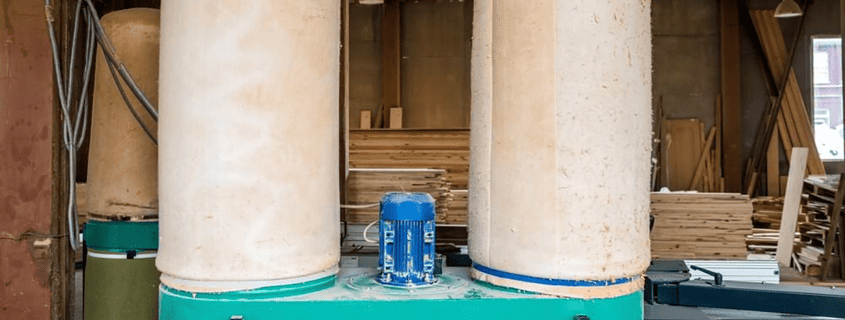
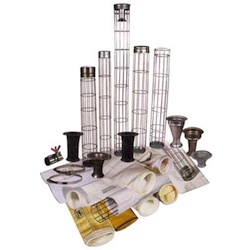
Filter Bags

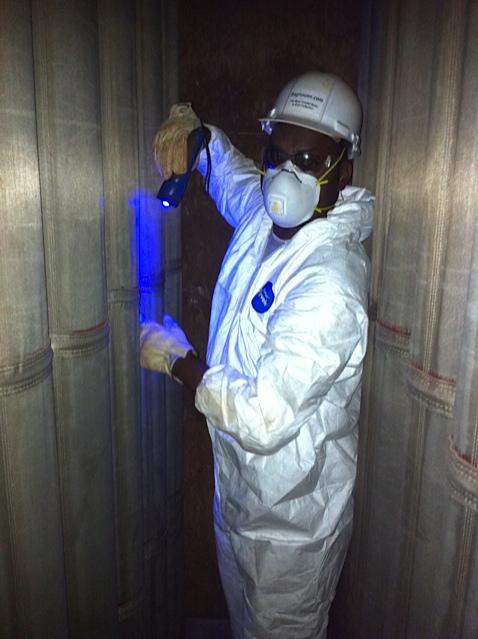
Leak testing being performed in a Baghouse

By Dominick DalSanto
Environmental Technologies Expert & Author
Baghouse.com

Why Periodic Leak Testing of Filter Bags is Vital

Operating a dust collection system with leaking filter bags defeats its sole intended purpose. A few leaking filter bags or even one within a collector/system can result in a substantial emissions increase. Leak testing of your Baghouse filter bags needs to be a regular part of any maintenance program to ensure system efficiency, and maintain compliance with emissions/safety regulations and avoid the fines and/or safety hazards that come with it.

All filter bags will eventually wear all out and need to be replaced. Baghouse maintenance programs should include periodic leak testing to ensure a few or even one faulty bag does not reduce the operating efficiency of the entire system. On occasion, a defective filter will fail early and need to be replaced. In other instances there may be a temporary or unanticipated event that can cause of premature failure of Baghouse filter bags. Once identified these should be investigated to ensure the incident does not occur again, and determine the extent of the damage done to the system. Examples may include: abrasion, thermal durability, and chemical attack.

  • Abrasion from several different sources often leads to excessive wear (and therefore premature failure) of the filter bags. The most obvious is caused by excessive particulate loads in the gas stream. This may have been caused by the unexpected failure, or shutdown/maintenance of a pre-filter (such as a cyclone, or air scrubber for NOx and SOx). Poor design may also lead to particulate laden air striking the filters in certain spots more than others such as near the cuff, or dirty-air inlet. Other sources of abrasion damage include: improperly installed filters that rub against each other, and excessive cleaning cycles.
  • Degradation of the filter bags’ Thermal Durability may also be a potential cause of early failure. When operating temperatures that rise above the designed limits of the fabric, whether for short or long term, filters will begin to degrade and eventually fail. Changes in the plant process, fuel source, maintenance shutdowns of other systems, etc…may result in temperature spikes that will irreparably damage Baghouse filters.
  • Chemical attacks can also result in bag failure. These can occur when gas stream characteristics are not taken into consideration when selecting the filter fabric and/or treatments/finishes. Other times unexpected changes occur in the gas stream that cause changes in the composition of the gas. Operating temperatures may also fluctuate,  dropping below the dew point allowing condensation of the chemicals on the fabric.

Filter Bag Leak Testing – How it is Done

To perform a standard leak test several things need to be done before the actual test can take place. First, since testing requires temporary isolation from the facility process, and shutdown, you must determine the best time for each unit and/or compartment to be tested. Second, safety measures for plant personnel must be taken into account when estimating total down time. Units must be given sufficient time for cooling, atmospheric testing to check for harmful gases, and personnel assigned to perform both the test and fulfill any and all safety regulations regarding confined space entry (both OSHA, and In-house). Once the preliminary steps have been taken, the actual testing can begin.

Filter Bags - Leak Testing

A vital part of any Baghouse system maintenance plan is regular leak testing of the filter bags.

First, florescent leak detection powder is added upstream of the unit such as at a maintenance access in the ductwork. Then after sufficient time has past for the powder to work its way through the system, the unit is shutdown. Once it is possible, a technician will enter into the unit with a UV light source i.e. a black light to examine the filter bags for leaks. The powder fluoresces under the UV light, thereby making it easy for the technician to see even the smallest of holes. The technician makes note of any faulty filters, which can then be replaced.

Regular Maintenance is Key to Getting the Highest Efficiency from Your Baghouse

Baghouse systems are the most efficient, and cost effective solution for particulate matter control in industrial settings – but only if they are maintained properly. A vital part of any Baghouse system maintenance program is regular leak testing of the filter bags. By conducting this and other maintenance tasks, your Baghouse system will operate smoothly, and provide the best of results.

Looking for Leak Testing Services?

Baghouse.com has the expertize to locate and remedy leaks in not only your filters, but also duct work, collector housing, and more. To learn more about Baghouse.com leak testing services and leak testing supplies or receive a free quote on Baghouse leak testing please contact us for a free quote.

Filter fabric

Dust Collection BagsTired of endlessly searching the internet for the right dust collection bags for your Baghouse only to be frustrated at a lack of results? Looking for someone who can help you make sense of the near endless filter bag options available for your dust collector? If so, then you have finally arrived at your final destination. Baghouse.com is the only place you need for your dust collection products and services.


Better Dust Collection Bags & Better Services with Baghouse.com

Firstly, we can source any kind of bags for your dust collection system that you may need. Secondly, our sales staff backed up by our team of trained engineers has the expertize needed to provide you not with “possibilities” but with real solutions to your dust collection needs. Thirdly, Baghouse.com maintains one of the industry’s finest field support teams. These trained and experienced construction professionals are able to handle anything from consulting and routine maintenance, to full turn-key installation and troubleshooting of your dust collection system. And finally, since Baghouse.com offers total solutions to dust collection needs, we are able to offer all of these services and products at highly competitive rates compared to many other firms.

How to Receive a Free Quote For Dust Collection Bags or Services

To receive a free Baghouse.com quote for dust collection bags, dust collector accessories, or dust collector services is easy. For a quote on dust collector bags we will need you to provide us with some information about your bags. First, what kind of bags you are looking for, such as cartridges, bags, or pleated. Second, we need to know the dimensions you need, flat width, diameter, length. Third, tell us what material you need, (e.g. polyester, PTFE, etc…) any finish (or treatment) and any special construction such as support rings, top and bottom construction, etc. Finally, tell us how many you need, and when they need to be delivered by, and we will begin working on your quote right away.

If you are not sure about the details, you can always mail us a sample bag from your plant. Once we receive it we can figure out all the specs we need to give you a quote.

Perhaps you know what kind of bags you have in your Baghouse, but you think there might be advantages to switching to a different kind. We can also make recommendations for you based on the exact process you are running. Once we know the characteristics of your process, temperature, moisture, acidity/alkalinity, dust load, and CFM we will be able to make recommendations to you for the best filter for your dust collection system.

Here is a list of some of our most popular dust collection bag fabrics and finishes/treatments and Baghouse services. For more information please contact us by email, or call us at 800 351 6200.

Dust Collection Filter Bags & Cartridges

Filters Fabrics

  • Aramid
  • Acrylic
  • Conex®
  • Fiberglass
  • Gortex®
  • Huyglass®
  • Nomex®
  • Polyester
  • Polypropylene
  • P-84
  • Remedia®
  • Ryton®
  • Teflon®

*Other Specialty Fabric Available

Filter Treatments

  • Acrylic Coating
  • Flame Retardant
  • Fibertaxis®
  • Glazed
  • Oleophobic
  • Portex®
  • ePTFE Membrane (Teflon®)
  • Silicon
  • Singed
  • Tetratex®

Services

Dust Collector Repairs

Pulse-Jet Conversions

Tubesheet/Cell Plate Repairs

Filter Replacement

Maintenance Programs

System Installation

Technical Advisor

Leak Testing

Filter fabric

Dust Filter

By Dominick DalSanto
Environmental Technologies Expert & Author
Baghouse.com

Electrostatic precipitators, wet/dry-air scrubbers, and Baghouse technologies all vie for the title of the best available dust filter technology. Some people will say that depending on who you ask, you will hear a wide range of different answers. But the truth remains that in most cases, Baghouse technology is the best solution for dust collection needs on several different levels, initial investment, reliability, efficiency, and operating costs/benefits. Yes, Baghouse with its filter bags can rightly be called the ultimate dust filter.

Don’t take our word for it, see what other industry experts have to say about the advantages of Baghouse technology vs. ESP technology:

“In my practice I tend to use ESP’s primarily for smaller (under 10,000 CFM) smoke and oil mist applications. Baghouse dust collector filters are much less expensive and simpler to operate and maintain for large applications. They are also very versatile because of the wide variety of filter media available…ESP can only hold a relatively small amount of collected particulate on it’s plates before it becomes inefficient or even inoperative…” – Sales & Customer Service Professional for a Major APC Firm

“Both control devices have their merits and shortfalls. If the air stream contains a sticky substance, i.e. that seen in some OSB mills and fiberglass manufacturing facilities, then a wet ESP is the preferred control device. The same can be said if the exhaust stream temperature is greater than 600-deg F. On the down-side, although a wet ESP can handle challenging applications, dealing with the effluent can be a real challenge, both from both a practical and an environmental standpoint. Baghouses are easier to maintain and operate than a wet or dry ESP. If the production process can accommodate it, a bag allows for easy reuse/recycling of the captured particulate (compared to a wet ESP). – VP of Field Services Division of a Industrial Steel Fabrication Company Specializing in Pollution Controls Technology

“We service both devices on a daily basis. Keep in mind that the esp parts, (cells,ionizers) are VERY expensive. And from my experience, not very durable.” – Environmental Services Professional with a Industrial Environmental Technology and Maintenance Firm

Only in a limited applications are there potential benefits to using an ESP over a fabric collector. Add to that the generally higher cost of EPS maintenance and installation, and we have plenty of reasons to  give the award of the ultimate dust filter to the Baghouse over the electrostatic precipitator.


Systemic View of Dust Collector Systems Maintenance

By Dominick DalSanto
Baghouse Technologies Expert & Author
http://www.Baghouse.com

When examining the performance of any component of your facility’s dust collection systems, it is vital to take into consideration the interaction between the various elements of the entire system. Problems such as bag failure, may be a symptom of a intake problem earlier in the system. Only by understanding the impact various parts of dust collection systems have on each other, can you effectively troubleshoot problems as they arise.

Let’s look at just a few common situations that may at first glance confound and confuse due to a lack of apparent causes within the specific component.

Baghouse Corrosion

Problem: The Baghouse is experiencing is corroding rapidly without any clear cause.

At first, the most likely cause might appear to be a design/installation problem leading to increased exposure to the elements. Indeed this very often is the leading cause of dust collector erosion. However what if you determine there exists no major flaws in the installation and setup of your Baghouse? Taking a more holistic view of your system often will lead you to the cause and eventual solution to your problem.

Systemic erosion can occur within dust collector systems when gas stream conditions change to include more corrosive elements. For instance, at a coal-fired power plant, has the plant switched to a different coal mixture that produces higher amount of sulfides that in turn can lead to higher concentrations of highly corrosive sulfuric acid within the dust collector? Treatment systems before the Baghouse, such as a air scrubber, could be malfunctioning leading to increased amounts of corrosive compounds being transported to other parts of the dust collector system. Or perhaps maintenance has been performed on the pulse-jet cleaning system, such as installing new lines, valves, etc…and due to improper installation and/or calibration they are condensing water leading causing your moisture source.

Premature Bag Failure

Problem: Filter bags are failing without any apparent reason.

Early or premature bag failure is often a good indicator that any of your dust collector systems are not being operated correctly, within recommended parameters. Regrettably many times inferior bag manufacturing methods on the part of shady bag suppliers/manufacturers lead to substandard products being used, that can not endure the riggers of everyday use in an industrial setting.

However should these theories not be proved true, other causes must be examined. Particulate loads may have increased substantially (increased production rates, change of process/fuel, malfunction of pre-filters [e.g. cyclones], etc…), or cleaning cycle frequency/efficiency might have changed/been affected, leading to increased strain on your dust collector system. Additionally, to meet new mercury emission regulations technology such as activated carbon sprayers located upstream of  your Baghouse may be having a larger impact than calculated. Or changes in maintenance procedures may have unexpected consequences on the service life of the filters.

Holistic Approach Needed for your Dust Collector Systems

In both of the proceeding examples, while initially the most obvious cause of a problem should be investigated first, often times, a taking a wider look at all of the ways in which your dust collector systems interact with each other is needed in order to located the root cause of your problem. Problems in one part of your system will often lead to systemic issues. To ensure this does not happen, maintenance personnel must remain vigilante to even seemingly insignificant fluctuations in operating parameters as these can cause maintenance issues in other parts of the system.