Dust collectors can discharge collected material in several different ways, depending on the process, dust characteristics, safety requirements, and whether explosion isolation is needed. The most common dust collector discharge systems include rotary airlocks (rotary valves), double dump valves, screw conveyors, bulk bag or super sack discharge, slide gates and knife gates, and dense phase or pneumatic conveying discharge. But there is yet another option: drum and bin collection systems. Today, we will expand on this very simple, cost-effective, and commonly used method.
A Simple and Reliable Approach to Explosion Isolation
The Raptor Drum Explosion Tested Drum Kit is designed to act as an extension of the dust collector while providing passive explosion isolation. Its design is intentionally simple. It does not require wiring, motors, starters, chains, wipers, or routine mechanical maintenance. Because there are no moving parts, reliability is increased and long-term operating costs are reduced.
Understanding the Role of the Drum Kit in Explosion Protection
It is important to understand how drum kits fit into an overall combustible dust protection strategy. A drum kit is not designed to contain the full pressure of a deflagration on its own. Instead, it must be used alongside properly designed explosion mitigation equipment such as explosion vents or suppression systems. These systems are responsible for relieving or controlling the pressure and flame effects generated during a deflagration event. The drum kit is intended to withstand the reduced pressure that remains after those protections have done their job.
In the event of a dust explosion, the Raptor Drum is engineered to withstand internal pressures of up to 7 psi. It prevents flame from escaping through the dust collector discharge, helping stop an explosion from propagating downstream. This makes it a cost-effective alternative to rotary airlocks, explosion isolation valves, and other discharge devices that are used to meet NFPA 660 requirements for ST-1 combustible dusts.
Design Considerations for Proper Installation
When installing a drum kit, system design considerations are critical. The added volume of the drum and the additional height below the dust collector must be accounted for when sizing explosion vents or suppression systems. Flame stretching effects and reduced pressure limits should be evaluated using the guidance provided in NFPA 660. Proper design ensures the drum kit performs as intended during both normal operation and an abnormal event.
Day-to-day Operation of a Drum Kit
From an operational standpoint, the Raptor Drum system is designed to be straightforward and ergonomic. A hydraulic drum lift is used to raise a standard 55-gallon drum into position beneath the collector. Before operating the dust collector, the drum must be securely clamped to the lid using the supplied locking mechanism to ensure a tight seal. The slide gate must be open during normal operation, the locking collar must be properly tightened, and the drum lid must be fully clamped to prevent leaks.
Safety Practices During Operation
Safe operation is essential. Operators should wear appropriate safety shoes and protective gloves when using the hydraulic lift. The lift should only be used on a firm, level surface and should never be overloaded. It is not intended to be used as a lifting platform or step, and care must be taken to keep hands and feet clear during operation. The surrounding work area should always be checked for overhead obstructions or other hazards.
Compatibility and Retrofit Options
Raptor Drum kits can be used with a wide range of dust collectors that are designed to discharge into a drum. They can also be retrofitted to replace non-compliant drums, flex hose arrangements, airlocks, or other discharge devices on both new and existing systems. Available discharge sizes include 10, 12, 14, 16, and 18 inches, allowing the drum kit to be matched to many common collector configurations.
A standard Raptor Drum kit includes the slide gate, sliding coupler, drum lid with handles, drum lid clamp, bonding wire, drum, and drum dolly. While the standard drum does not include handles, custom drum options may be available upon request. For proper fit and performance, collar overlap dimensions must be followed carefully during installation.
Drum Kit Installation Instructions
Raptor Drum Frequently Asked Questions
— Can the Raptor Drum be used with other dust collectors?
Yes. The Raptor Drum can be used with any dust collector that is designed to discharge into a drum underneath the unit.
— Can the Raptor Drum be retrofitted to existing collectors?
Yes. The Raptor Drum can replace non NFPA compliant drums, rotary airlocks, and flex hose arrangements on both new and existing dust collectors.
— What is included as part of the Raptor Drum?
The standard kit includes a slide gate, sliding coupler, drum lid with handles, drum lid clamp, bonding wire, and drum.
— What discharge sizes are available?
Raptor Drum kits are available in 10, 12, 14, 16, and 18 inch discharge sizes.
— Are there any handles on the drum?
The standard drum does not include handles. Custom drum options with handles may be available upon request.
— What is the maximum KST the Raptor Drum can handle?
The Raptor Drum can be used with ST 1 class dusts up to 185 KST.
— How much should the collar overlap the slide gate of the Raptor Drum?
The collar should overlap the drum cover by 2 3/8 inches.
— How much should the collar overlap the lid of the Raptor Drum?
The collar should overlap the drum cover by 2 7/8 inches.
When selected, designed, and installed correctly, drum kits like the Raptor Drum provide a practical and reliable way to collect dust while supporting explosion isolation goals. They simplify maintenance, improve safety, and help facilities meet combustible dust protection requirements without adding unnecessary complexity to the dust collection system.
Dust Collection Expert, Technical Writer & Editor at Baghouse.com
Andy Biancotti believes that knowledge is one of the best investments any company can make. As Editor and Marketing Manager at Baghouse.com, he enjoys interviewing engineers, technicians, and customers to capture the real-world lessons behind successful dust collection projects and turn them into practical resources that others can learn from. With more than two decades of experience in industrial maintenance, operations, and technical communication, his goal is simple: help people better understand their systems so they can work safer, smarter, and more efficiently.
https://baghouse.com/wp-content/uploads/2026/01/Raptor-Drum-Kit.png10801920Andy Biancottihttps://baghouse.com/wp-content/uploads/2025/10/BH-Logo-Alt-01-300x70.pngAndy Biancotti2026-01-26 01:33:312026-06-19 18:32:17How Does a Drum Kit Improve Explosion Isolation at the Discharge Point?
In most facilities, dust collectors discharge their air outside the building. But in certain situations, bringing that air back inside can be a smart move, as long as it’s done correctly and safely. Recirculating air isn’t for every plant, but when it’s appropriate, it can save money, simplify regulatory challenges, and prevent headaches with neighbors.
As Dominick Dal Santo, Dust Collection Expert at Baghouse.com, said: “Recirculating air can be a big win, but only if the system is engineered with safety front and center.”
Below, we break down the three biggest reasons facilities choose to recirculate air, followed by the safety considerations every engineer should understand.
1— Significant Savings on Heating and Cooling
For many plants, energy is one of the largest operating costs. When conditioned air is continuously pulled out of the building through the dust collector and replaced with cold or hot outside air, HVAC systems work overtime.
By working to maximize the efficiency of the entire process, plant operators can at times drastically reduce the amount of energy needed to operate the system
By recirculating air from the dust collector (especially from a large system) you can save thousands. For example, recirculating air from a 10,000 CFM collector, heating it to 70°F when outdoor air is 10°F, can save about $1,600 per month.
Scott Omann, Aftermarket Division Manager at Baghouse.com, puts it simply: “Why pay to heat or cool air just to immediately throw it outside? Recirculation lets you keep what you’ve already paid for.”
High-ceiling facilities benefit even more, since hot air naturally rises. Many plants draw air from the ceiling level and return it near the floor, improving comfort and reducing heating costs.
2— Avoiding the Regulatory Burdens of Outdoor Emissions
Emissions permitting through state agencies or the EPA can involve applications, stack testing, and long review timelines. Some facilities reduce or avoid these requirements by not emitting anything outside at all.
When air is recirculated indoors, oversight often shifts from environmental regulations to OSHA indoor air quality rules. But that doesn’t mean plants get a free pass.
OSHA may require: testing indoor air quality, establishing an 8-hour time-weighted average (TWA) exposure and proving contaminant levels stay below required thresholds. Some jurisdictions still require a permit even if the air stays inside, so local rules must be reviewed carefully.
Dominick notes: “Recirculation can simplify the emissions side, but OSHA fills that gap. It doesn’t mean less responsibility, it’s just a different kind of responsibility.”
3— Reducing Complaints From Nearby Neighbors
Even minor emissions can lead to conflicts with neighbors, public complaints, or media attention. Recirculating air keeps all dust inside the facility, helping plants avoid odor complaints, visible emissions concerns, accusations of environmental harm and legal or regulatory escalation. For plants located close to residential or commercial areas, this can be a major advantage.
However... RECIRCULATION REQUIRES CAUTION
Despite the benefits, plants must understand the engineering risks before returning filtered air indoors.
Combustible Dust Requirements
New NFPA Combustible Dust Standards 2025
NFPA standards such as NFPA 654 set strict rules for dust collectors handling combustible dusts. Some materials (like aluminum dust) may only be safely handled by systems located outdoors and exhausted into the atmosphere.
If you’re considering recirculation for your facility, talk with a dust collection expert. A proper evaluation ensures the system is safe, compliant, and optimized for performance.
How to Return the Air Back Into the Facility?
To keep the system balanced and save energy, the return air should ideally be sent back to the same areas where it was originally exhausted. A common design mistake is exhausting air from one room and supplying it to a different area, which can create unwanted negative pressure in one space and positive pressure in another.
A properly designed recirculation system does more than reduce energy costs, it can also improve worker comfort. For example, in a facility with multiple welding stations, the system may use a single main duct with adjustable diffusers at each workstation. These diffusers allow workers to control the airflow much like a personal fan, directing air toward or away from their work area as needed.
There are two main ways to configure return air systems.
The first is a general ventilation system with zone return, commonly used in colder climates. This approach captures warm air near the ceiling and redistributes it back into the work area, helping recover heat. It is also useful when the process does not allow for source capture hoods. The drawback is that general ventilation systems require much higher airflow, which means larger fans and filters, higher equipment costs, and increased operating expenses.
The second option is a source capture system with zone return. In this setup, hoods are installed directly at each workstation to capture contaminants at the source. This design is more efficient because it requires lower airflow, smaller fans, and fewer filters. However, it is only suitable for processes that remain in fixed locations and cannot be used for mobile or changing operations.
At the end of the day, recirculating dust collector air is one of those decisions that looks simple on paper but really comes down to the details. When it’s engineered correctly, it can lower energy costs, improve comfort, and remove a lot of friction around emissions and neighbor concerns. When it’s rushed or treated as a shortcut, it can create serious safety and compliance problems. That’s why there’s no one-size-fits-all answer. Every material, process, and facility layout matters. If you’re even thinking about recirculation, it’s worth having a real conversation with someone who’s designed these systems before—someone who can walk your plant, ask the hard questions, and help you decide if recirculation truly makes sense for your operation.
Scott Omann specializes in replacement filters, filter cages, valves, ductwork components, and aftermarket parts for industrial dust collection systems. In addition, Scott has participated in numerous on-site dust collection inspections, system audits, and maintenance training programs throughout the United States. His combination of technical product knowledge and field experience provides customers with practical guidance for keeping their dust collection systems operating at peak performance.
https://baghouse.com/wp-content/uploads/2025/12/Recirculating-Dust-Collector-Air.png10801920Scott Omannhttps://baghouse.com/wp-content/uploads/2025/10/BH-Logo-Alt-01-300x70.pngScott Omann2026-01-19 20:56:162026-06-30 22:33:14Recirculating Dust Collector Air: When It Makes Sense (and How to Do It Safely)
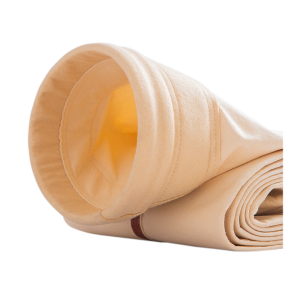
In industries with extreme temperatures, aggressive chemical environments, or fine particulate matter, standard polyester or acrylic filters may not perform effectively or last long.
That’s where exotic materials like PPS, P84, Aramid, Fiberglass, Ceramic, and specialized finishes come in.
At Baghouse.com, we help facilities choose the right filter media based on their specific process conditions, not just for compliance, but for long-term performance, safety, and cost savings. Below is an overview of advanced bag materials and finishes designed for the toughest dust collection challenges.
PPS (Polyphenylene Sulfide) Filter Bags
PPS filter media is valued for its balance of thermal stability, chemical resistance, and non-flammability.
Also known under trade names like Torcon® and Procon®, PPS filter media is valued for its balance of thermal stability, chemical resistance, and non-flammability. PPS performs reliably in high-temperature pulse-jet applications such as coal-fired boilers, municipal solid waste (MSW) and waste-to-energy (WTE) boilers, smelters, and calciners.
PPS woven felts can continuously operate at 375°F (191°C), with short-term excursions up to 400°F (204°C) before thermal degradation occurs. It is particularly effective where acid gases or alkaline environments are present, maintaining filtration efficiency even when exposed to moisture or chemical contaminants.
P84 Filter Bags
P84 filters are designed to work on extreme conditions across industries
For applications that demand high efficiency and low maintenance, P84 filter bags offer an exceptional solution. These filters feature a trilobal fiber structure that provides 30–90% more collection surface area than round or oval fibers. The result is improved dust capture, lower pressure drop, and reduced cleaning frequency, all of which translate to lower energy consumption.
P84 performs best in low-acid environments and baghouses operating up to 500°F (260°C), making it a smart choice for plants seeking a cost-effective alternative to PTFE or fiberglass in pulse-jet collectors.
Aramid Filter Bags
General applications for Aramid felt includes highly abrasive dust and chemical applications with high temperatures
Known commercially as Nomex® or Conex®, Aramid filters are the workhorse of high-temperature filtration. They are ideal for asphalt plants, metal processing, minerals, and power generation. Aramid felt performs consistently in applications up to 375°F (191°C) and provides excellent mechanical strength, dimensional stability, and resistance to abrasion.
When properly maintained, Aramid filters can provide long service life even under heavy dust loading or demanding operating cycles, making them a reliable choice for facilities seeking durability and cost control.
Fiberglass Filter Bags
Fiberglass filters remain one of the best solutions for baghouses operating at elevated temperatures.
Fiberglass filters remain one of the best solutions for reverse-air, pulse-jet, and shaker-style baghouses operating at elevated temperatures. Baghouse.com electrical-grade woven fiberglass filter bags perform well between 300°F and 550°F (150–260°C), with proven success in mineral kilns, power plants, WTE incinerators, carbon black production, refineries, and steel mills.
Fiberglass media can also be enhanced with acid-resistant, Teflon®, or ePTFE membrane finishes to extend bag life, prevent corrosion, and improve cleanability.
For even higher performance, the Huyglas® fiberglass felt is engineered for temperature excursions up to 600°F (316°C) and continuous operation at 550°F (287°C). It’s ideal for pulse-jet applications that face high differential pressure, chemical attack, or persistent emission challenges.
Ceramic Filter Bags
Ceramic filters significantly reduce failures from thermal excursions and allow facilities to save energy by minimizing the need for gas cooling.
When temperature limits exceed even fiberglass capabilities, ceramic filter bags offer unmatched performance. Ceramic filters can handle operating temperatures up to 700°F (371°C) and are suitable for both reverse-air and pulse-jet baghouses.
Ceramic filters significantly reduce failures from thermal excursions and allow facilities to save energy by minimizing the need for gas cooling. They are commonly used in extreme industrial environments such as metallurgical furnaces, incinerators, and high-temperature process exhaust systems.
Advanced Finishes for Extended Performance
Selecting the right filter media is only half the battle; specialized finishes can significantly improve chemical resistance, cleanability, and performance stability.
➡️ Meteor Finish: A needle-felt scrim made from mineral basalt fibers, providing exceptional temperature resistance, abrasion resistance, and spark protection. It can be applied to materials such as Aramid, PPS, PTFE, P84®, and Polyester to enhance their mechanical stability and durability.
➡️ ePTFE Membrane Finish: A thin, microporous layer of expanded PTFE laminated onto the fabric surface. This membrane acts as a permanent submicron dust cake, improving filtration efficiency and reducing cleaning frequency. It is compatible with base fabrics such as Polyester, Aramid, Fiberglass, and PPS.
➡️ Teflon Finish: Teflon fibers can be woven or needled into fabrics, or expanded into ePTFE membranes laminated to filter surfaces. Teflon enhances chemical resistance, heat stability, and cleanability, ideal for corrosive or sticky dust applications.
Download here our Filter Media and Treatments Infographic
Choosing the Right Material for Your Application
Each exotic filter material has its own ideal operating range and strengths. For example:
✅ PPS is best where acid gases and high moisture are present.
✅ P84® excels in high-efficiency filtration below 500°F.
✅ Aramid provides mechanical strength and reliability for consistent high-temperature use.
✅ Fiberglass and Huyglas® serve in extreme heat with chemical exposure.
✅ Ceramic handles the harshest, highest-temperature conditions without cooling.
Selecting the right combination of fiber type, fabric construction, and finish can dramatically extend bag life and reduce operational costs.
Need Help Choosing the Right Filter Bags?
At Baghouse.com, our engineering team specializes in matching the correct filter media and finishes to your specific process conditions. Whether you operate a smelter, power plant, asphalt facility, or incinerator, we can help you reduce maintenance costs, minimize emissions, and improve efficiency with the right baghouse filters and accessories.
Dust Collection Expert, Technical Writer & Editor at Baghouse.com
Andy Biancotti believes that knowledge is one of the best investments any company can make. As Editor and Marketing Manager at Baghouse.com, he enjoys interviewing engineers, technicians, and customers to capture the real-world lessons behind successful dust collection projects and turn them into practical resources that others can learn from. With more than two decades of experience in industrial maintenance, operations, and technical communication, his goal is simple: help people better understand their systems so they can work safer, smarter, and more efficiently.
https://baghouse.com/wp-content/uploads/2025/11/Exotic-Filter-Bag-Materials.png10241536Andy Biancottihttps://baghouse.com/wp-content/uploads/2025/10/BH-Logo-Alt-01-300x70.pngAndy Biancotti2026-01-13 10:31:012026-06-19 18:32:12Exotic Bag Materials for Demanding Dust Collection Applications: PPS, P84, Ceramic, and More
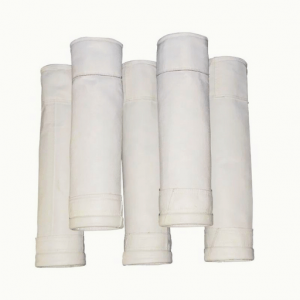
The right accessories and replacement parts for your baghouse make all the difference. Pulse valves, solenoids, filter bags, cages, and control boards, every component plays a key role in maintaining consistent airflow and proper cleaning cycles. In this article, we’ll look at the most important baghouse accessories, what they do, and how they help extend the life of your system while reducing maintenance downtime.
What Do Controllers and Timers Do?
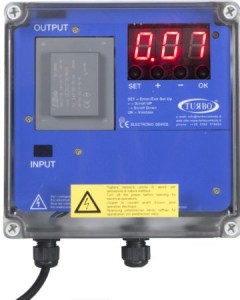
Baghouse filters are cleaned when compressed air is blown into the filters to release dust buildup. A pulse controller times the burst of compressed air that is used to clean baghouse filters, a practice that improves baghouse efficiency and increases bag life.
Types of pulse controllers
Pulse controllers come in two types, a simple timer and an on-demand timer.
• ✅ Simple timer: With this pulse controller, an operator sets a timer for how often the pulse valve will activate. With this type of controller, the bags are cleaned at the set interval even if they do not need cleaning. Typically, trial and error is used to set the frequency. This pulse controller is a lower-cost option because its design is simple and easy to set up. It works best with predictable or consistent loading, and it’s ideal for baghouses that need to be cleaned continuously.
.
• ✅ On-demand timer: For this pulse controller, the timer reads the differential pressure across the baghouse and initiates a pulse sequence once the differential pressure reaches a high set point. It continues to pulse until the pressure across the baghouse reaches the low set point. Once at the low set point, pulsing stops until the differential pressure reaches the high set point again. Because filters are cleaned only when needed, the advantages of an on-demand pulse controller include extended bag life and reduced compressed air consumption.
Set up parameters for pulse controllers
Several parameters can be set on pulse controllers. The simple timer has just two: • ✔️ Time the valve is open: This time correlates to how much compressed air is released through the valve. A quick pulse of air, for example, is just 0.05 of a second. • ✔️ Time the valve is closed: This is the amount of time between pulses. It can typically be set to anywhere from one second to several hundred seconds.
Besides the high and low pressure parameters listed above, the on-demand timer also includes the following:
• ✔️ Alarm pressure: Alarms can be set to notify the operator of issues with the bags. A high-pressure alarm indicates a plugged bag. For example, a high-pressure set point may be six, and an alarm may be set for nine or ten. Conversely, a low-pressure alarm indicates a bag needs replacement because of a leak or detachment. • ✔️ Pulse sequencing: Operators can set the order in which the valves release air.
As an added note, when installing a pulse controller, avoid locations exposed to direct sunlight or areas near heat sources or electromagnetic fields, as these can damage the controller.
Troubleshooting your pulsing system
If you experience issues with the pulse controller, there are several things you can check depending on the problem: • ✔️ Valves are not pulsing: Check the power to the timer, the differential pressure switch, header pressure, and the solenoid and/or diaphragm valve. • ✔️ Hissing sound from valves: This may indicate a possible compressed air leak. • ✔️ If the solenoid air outlet is leaking, check: • ➡️ The electrical connection • ➡️ The sub-assembly for debris • ✔️ If the diaphragm valve outlet port is leaking, check: • 🔵 The air line to the solenoid • 🔵 Header pressure • 🔵 The inside valve body for pitting and debris • 🔵 The membrane for wear • ✔️ Bags are not cleaning adequately: Check the pulse pressure, on-time and off-time, and pressure set points. It may also indicate the need for a bag change.
We also recommend that you keep an adequate supply of dust collector filters and pulse valve kits on hand to avoid costly delays in production.
Clean-On-Demand Baghouse Control Systems
Baghouse.com offers a full line of baghouse control systems designed to achieve maximum ventilation and collection efficiency. Clean-On-Demand controls monitor the differential pressure across the filter bags. The user sets the high and low differential pressure set points (generally ½” w.c. (12.7mm w.c.) apart), at which cleaning will start and stop. By operating the baghouse at a stable and optimum differential pressure, you avoid both over-cleaning and under-cleaning the filter bags.
Benefits of Clean-On-Demand Controls • 🔵 Maintains optimum dustcake for filtration efficiency • 🔵 Helps protect bag fabric from blinding and bleed-through for better airflow and lower emissions • 🔵 Reduces flex cycles on filter bags, increasing their lifespan • 🔵 Maintains stable ventilation with no over- or under-ventilation issues • 🔵 Helps lower compressed air consumption and operating costs
Standard Clean-On-Demand Controller • 🔵 Solid-state construction • 🔵 Digital input for pulse time, pulse duration, and number of valves • 🔵 Low-profile photohelic gauge with high and low differential pressure set points • 🔵 Enclosure
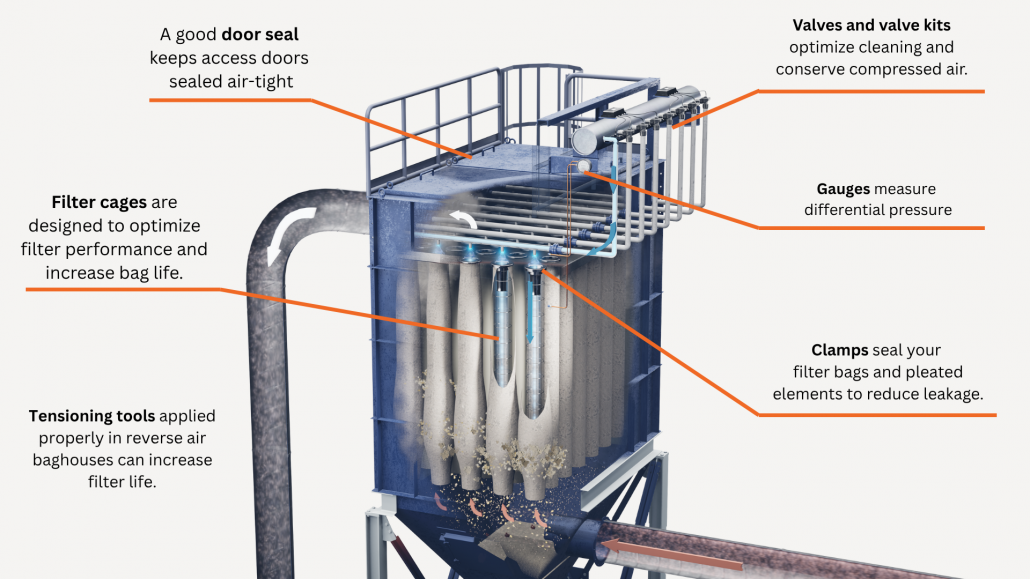
Filter cages might seem like simple components, but they are quite essential. When filter bags don’t fit snugly onto the cages, or when cages are not replaced when needed, system performance can suffer significantly. Neglected filter bag cages are often the root cause of many operational problems in industrial environments.
A key feature is the precise fit between the filter bag and the cage, ensuring proper adhesion and long service life. Quality filter cages are built to withstand cleaning cycles, bag changes, abrasive materials, high temperatures, and other demanding environmental conditions.
Cages should also withstand the pressure exerted by the filter bag during particulate collection and provide uniform support along the entire length of the filter cloth.
Regardless of design, each cage must consistently meet specifications, including correct diameter, total length, and other tolerances. The technologies we use at Baghouse.com ensure your cages are built to spec, providing a precise fit between the filter bag and cage, which results in optimal cleaning performance.
Our dust collector cages can be made to fit existing collectors from any manufacturer, including Astek, Gencor, Flexkleen, Mikropul, and Wheelabrator. We can also manufacture uncommon and specialized cage designs as needed.
When you buy new filters, it’s important to buy new clamps as well. Clamps are designed to protect your filter bags and simplify installation. Our clamps extend bag life by reducing leakage and abrasion. We offer a variety of designs and sizes engineered to meet your specific needs. They can be used with raw edge, cord, hem, or sleeve-constructed bags, and some pleated filter elements.
There are several reasons why clamps can fail: • ❌ Misapplication • ❌ Misplacement • ❌ Over-torquing • ❌ Reuse of old clamps • ❌ Corrosion
Our dust collector experts recommend replacing clamps each time you change your filters.
Tensioning Tools – Why Are They Key for a Secure Filter Fit?
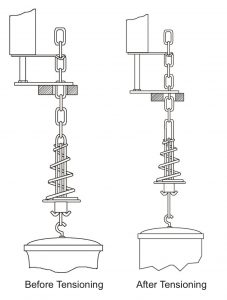
Tensioning tools provide proper support to filter bags. Improper tensioning is one of the main causes of bag failure in these systems. Excessive tensioning causes harmful stress on fabric yarns and threads, while insufficient tensioning prevents proper dust cake release.
We have developed a variety of tensioning assemblies to best fit your application. The assemblies are available in chrome silicon steel for moderately elevated temperatures or 17-7 PH stainless steel for high-temperature applications.
Conical Spring
Unlike a linear spring (which compresses equal amounts for equal pounds of load applied) a conical spring becomes harder to compress as heavier loads are applied. It acts as a shock absorber, preventing the fabric from collapsing completely during the reverse air cycle, and reduces the “popping” effect on the bags when returning to service. This spring is used in the I-Bolt and Double Draw Bar Assembly and the Pre-Loaded Rod and Draw Bar Assembly.
I-Bolt and Double Draw Bar Assembly Features and Benefits
• ✅ Hitch-pin design allows easy maintenance when re-tensioning • ✅ Simple adjustment and installation reduce labor costs • ✅ Provides proper tensioning for optimal collection efficiency • ✅ Prevents bag-to-bag abrasion • ✅ Patented cup washer centers the spring on the bolt, resisting buckling and abrasion • ✅ Non-linear compressibility supports both bag and dustcake • ✅ Provides required pre-load and travel for correct tensioning
The Pneu-Magnum AC Tool
The Pneu-Magnum AC Tool is a pneumatic tensioning tool designed to simplify and standardize the process of tensioning filter bags in reverse-air baghouse systems. It uses compressed air to lift and apply precise tension to the filter bag assembly, ensuring that each bag is tightened evenly and to the correct specification.
This tool operates on a 3:1 pressure principle, meaning that for every 1 psi of air pressure applied, the tool produces approximately 3 pounds of lifting or bag tension force. This allows operators to easily set the desired tension level by simply adjusting the air regulator knob—eliminating the need for manual guesswork or inconsistent tightening with hand tools.
The Pneu-Magnum AC Tool makes filter bag tensioning easier because it:
✔️ Provides accurate and repeatable tensioning for consistent bag performance across the entire baghouse.
✔️ Reduces manual labor by using pneumatic power to compress the spring and lift the bag, instead of requiring physical effort.
✔️ Includes a built-in pressure gauge and regulator for precise control of the applied tension.
✔️ Improves safety, since operators can tension bags without having to reach or strain around the assembly.
✔️ Helps extend filter bag life by preventing issues like over-tensioning (which can damage fabric) or under-tensioning (which can cause bag flex and abrasion).
Valves and Valve Kits – What Role Do They Play in Cleaning Efficiency?
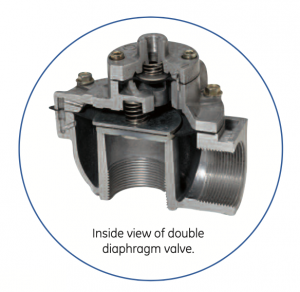
The efficiency of your pulse-jet cleaning system depends on proper valve operation. Diaphragm and solenoid valves work together to ensure consistent baghouse cleaning performance. Baghouse.com provides technical support, rebuild instructions, and in-house engineering assistance for site-specific valve issues.
We supply a wide variety of valves designed to accurately fit your application: • 🟠 Valves can be coated for extremely corrosive environments • 🟠 Integral solenoid valves are mounted directly on the diaphragm valve • 🟠 Remote solenoids are mounted in a separate enclosure • 🟠 Valves available for high-volume / low-pressure applications
Door Seals and Access Doors – How Do They Protect Against Air Leaks and Pressure Loss?
Door seals help prevent outside air from leaking into the system. Properly sealed doors avoid corrosion, emissions, and production losses. A poor door seal is one of the most overlooked maintenance issues in dust collectors and can lead to: • ❌ Corrosion of doors and walls • ❌ Fugitive emissions • ❌ Production losses • ❌ Maintenance problems • ❌ Reduced airflow due to condensation and filter blinding
Helpful Maintenance Tips • ✅ Replace old door seals regularly • ✅ Ensure the door is not warped and seals tightly • ✅ Avoid frequent opening of access doors, which can disturb the seal
Baghouse.com Has the Perfect Access Door for Your Dust Collector
Need custom-made doors for your baghouse, ESP, or SCR system? Baghouse.com supplies access doors to fit all OEM applications, whether you need a stamped, round precipitator door with a key interlock, an insulated center-pivot baghouse door, or a large rectangular moisture-proof scrubber or SCR access door. All our doors are custom-manufactured for your needs. Many are preassembled and stocked, while less common styles are assembled and welded using precision jigs to ensure a perfect fit.
Gauges – How Can They Help You Track System Performance?
Keep Differential Pressure in Check with Pressure-Measurement Gauges
High differential pressure can damage filter bags, reduce airflow, and increase operating costs. Monitoring differential pressure with reliable gauges can also enable clean-on-demand functionality.
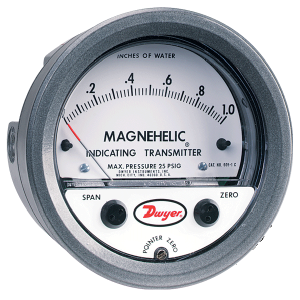
Magnehelic Gauge
A pressure gauge (can be magnehelic or photohelic) measures the differential pressure
The magnehelic gauge measures differential pressure between the clean and dirty sides of the baghouse, indicating the bag’s resistance to airflow. A sudden pressure drop suggests a leak, while a sharp rise indicates filter blinding or excessive dust cake buildup. This gauge provides critical data for troubleshooting and assessing operating conditions.
Photohelic Gauge
A photohelic gauge adds automation to the magnehelic’s measurement function. It allows operators to set high and low pressure points that automatically start and stop the pulse cleaning system as needed, maintaining stable performance and bag life.
Surge Valve
The Surge Valve provides fast, easy cleanout of gauge lines without manual disconnection. Benefits include: • 🔵 Simple push-button operation for quick line cleaning • 🔵 Optional timer-controlled automatic cleaning • 🔵 Temperature range 32°F (0°C) to 200°F (93°C) • 🔵 Heavy-duty design rated for up to 150 psi (10.34 bar)
Auto Purge Valves
Automatic purge valves prevent moisture buildup in the compressed air header of pulse-jet systems. Without them, water from compressed air can cause corrosion, agglomeration, and hard-to-clean dust cake. The valve is installed at the bottom of the air header assembly and opens briefly during each pulse to discharge moisture, keeping your system dry and efficient.
Baghouse accessories play a critical role in maintaining efficiency, extending filter life, and ensuring reliable operation across all types of dust collection systems. Whether you need replacement parts, technical guidance, or complete accessory kits, Baghouse.com can help you find exactly what you need. If you need assistance selecting or requesting baghouse accessories, our team is ready to help… just reach out to us, and we’ll make sure you get the right components for your system.
Director of Operations | Dust Collection Specialist | Industrial Filtration Consultant
Dominick DalSanto is an author and environmental technologies expert specializing in dust collection systems. He has nearly a decade of hands-on working experience in the industry. Dominick is the sales director and sales technical advisor for an industrial dust collection equipment manufacturer. Personally took the lead on key projects each year from sales engineer to field advisor to project manager to business relations. Born in San Bernardino County, California, and raised in Chicago, he currently resides in Buenos Aires, Argentina.
https://baghouse.com/wp-content/uploads/2025/10/Baghouse.com-Accesories.png10801920Dominick DalSantohttps://baghouse.com/wp-content/uploads/2025/10/BH-Logo-Alt-01-300x70.pngDominick DalSanto2026-01-01 19:33:292026-06-19 18:32:08Baghouse Accessories – What Are They, and What Role Do They Play In Baghouse Efficiency?



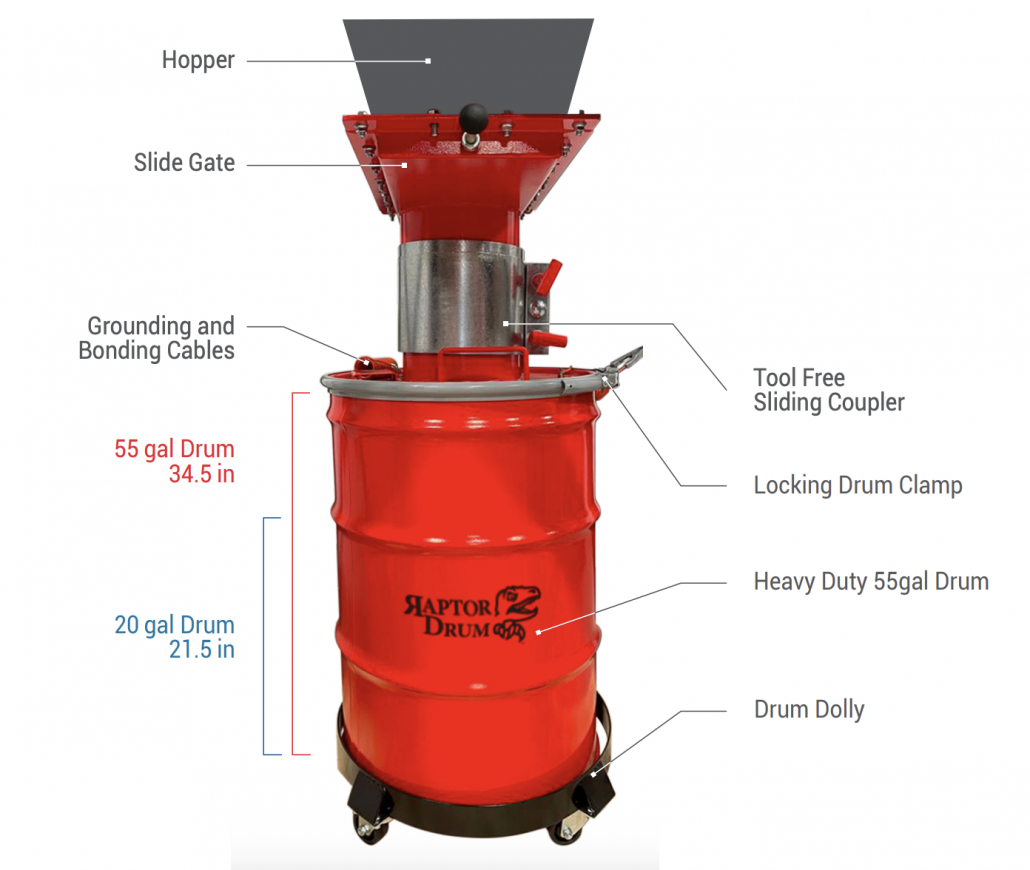


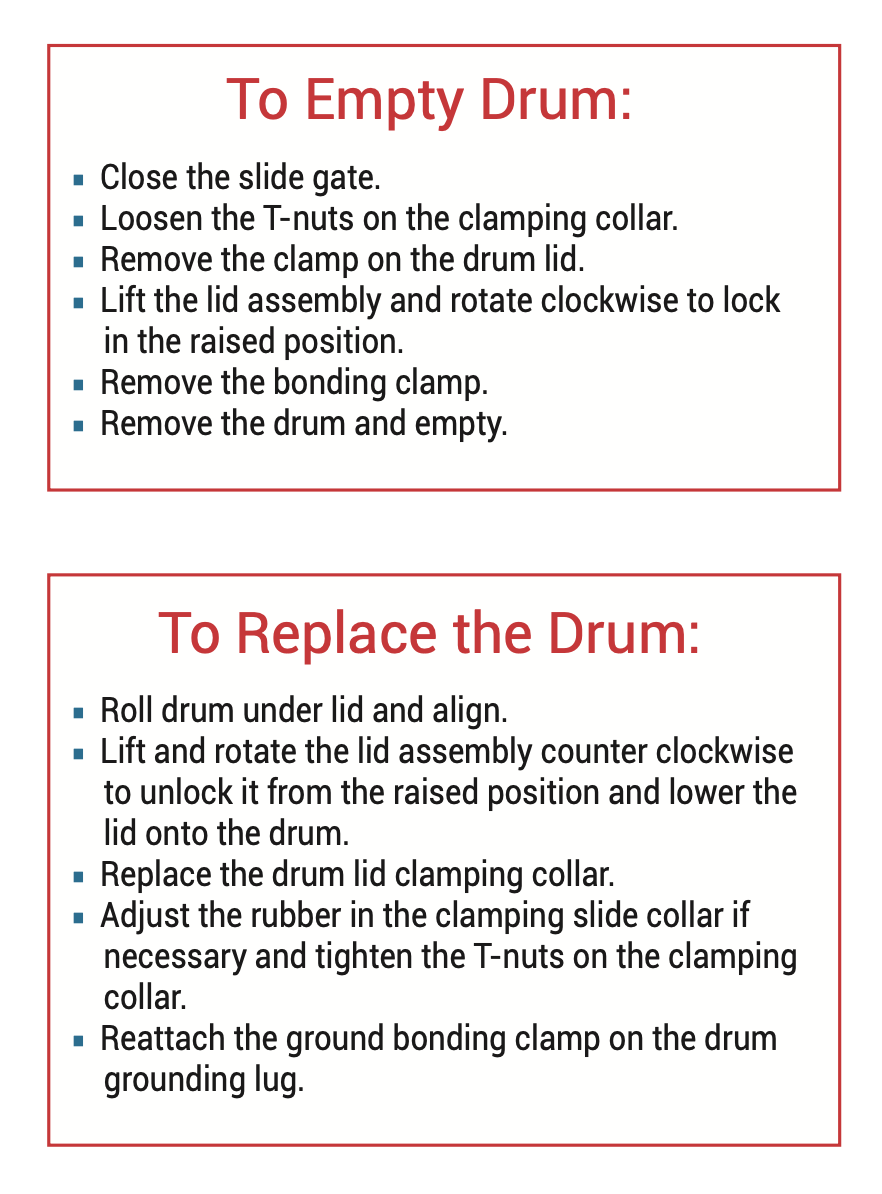 Safe operation is essential. Operators should wear appropriate safety shoes and protective gloves when using the hydraulic lift. The lift should only be used on a firm, level surface and should never be overloaded. It is not intended to be used as a lifting platform or step, and care must be taken to keep hands and feet clear during operation. The surrounding work area should always be checked for overhead obstructions or other hazards.
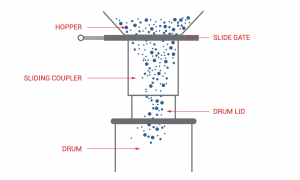 Raptor Drum kits can be used with a wide range of dust collectors that are designed to discharge into a drum. They can also be retrofitted to replace non-compliant drums, flex hose arrangements, airlocks, or other discharge devices on both new and existing systems. Available discharge sizes include 10, 12, 14, 16, and 18 inches, allowing the drum kit to be matched to many common collector configurations.













 • ✅ Simple timer: With this pulse controller, an operator sets a timer for how often the pulse valve will activate. With this type of controller, the bags are cleaned at the set interval even if they do not need cleaning. Typically, trial and error is used to set the frequency. This pulse controller is a lower-cost option because its design is simple and easy to set up. It works best with predictable or consistent loading, and it’s ideal for baghouses that need to be cleaned continuously.


 Tensioning tools provide proper support to filter bags. Improper tensioning is one of the main causes of bag failure in these systems. Excessive tensioning causes harmful stress on fabric yarns and threads, while insufficient tensioning prevents proper dust cake release.
 The efficiency of your pulse-jet cleaning system depends on proper valve operation. Diaphragm and solenoid valves work together to ensure consistent baghouse cleaning performance.

 Door seals help prevent outside air from leaking into the system. Properly sealed doors avoid corrosion, emissions, and production losses. A poor door seal is one of the most overlooked maintenance issues in dust collectors and can lead to: