The process of selecting a baghouse filter supplier for your next set of replacement filters might seem like a simple task. You might think that all you need to do is call them up, tell them your model number and you will be set. But is it really that easy? Can you always rely on just any supplier to get you the right bags, at the best price, every time?
Outlined below are several things that will help you to find the right supplier for your next set of replacement baghouse filters. Going into the filter quoting process armed with this information will enable you to secure the products at a fair price. These are the three key points to keep in mind when searching for your next set of replacement bags.
Have The Correct Information Before You Call
Most people begin their search for replacement bags with only the most basic of information, if any at all. At times all they have is some supplier’s arbitrary product number from their last set of bags, or a serial number from the side of their baghouse. The fact is that there is no central database of baghouse filters out there for your supplier to check. The majority of these product numbers are from their respective manufacturers and only for their internal record keeping/branding.
In order to receive an accurate replacement baghouse filter RFQ more information will be needed. While you may not have easy access to all of this information when sourcing quotes, the more you have the easier it will be for the supplier to give you an accurate quote. Information to have on hand includes:
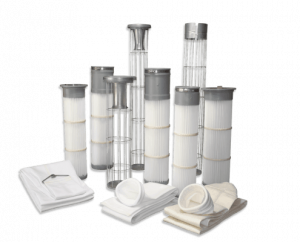
✅ Dust Collector Type – What kind of filters, cleaning system type, etc.
➡️ Shaker
➡️ Reverse-Air
➡️ Pulse-Jet
✔️ Bags
✔️ Pleated filters
✔️ Cartridges
✔️ Envelopes
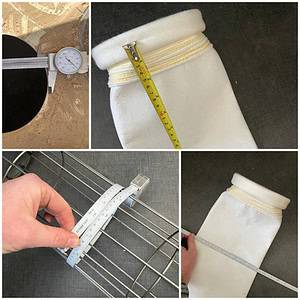
Instructions Step-By-Step on how to measure dust collector filter bags and cages
✅ Filter Measurements – Physical dimensions of the filters
➡️ Length
➡️ Diameter
➡️ Flat-Width
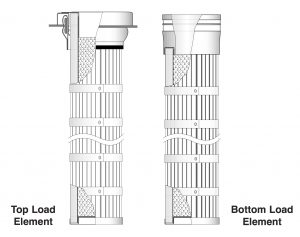
✅ Filter Construction – This differs based on how the bags are installed in the baghouse
➡️ Top (Snapband, Strap, Raw Edge, etc.)
➡️ Bottom (Snapband, Disk, Compression, etc.)
✅ Filter Fabric – The material along with any coatings, finishes or membranes
✅ Special Considerations – Special added features needed only on certain bags
➡️ Antistatic wires
➡️ Support rings
It is also good to include a general overview of the process the filters are used for. This would include air temperature, product to be filtered, alkali or acidic level, combustibility of the dust, etc. You should also including information about how often you replace your filters, system pressure drop, filtering efficiency. While not absolutely necessary, this information will allow a good supplier to offer suggestions for different products that might improve the operation of your system.
Remember to have as much of this information on hand before you begin contacting filter suppliers. If you are not sure about some of these specifications try to get as much as information as possible and then a good filter supplier can help you to find the rest.
There are hundreds of filter suppliers, manufacturers, and sales reps out there to choose from. Finding one that will get you the best product and provide you with the best service for a fair price is no easy task.
Often times, companies portray themselves as “dust collection experts” when in reality they are only sales reps that have little real knowledge of how these complex industrial systems operate. You will want to consider their level of experience in the industry. Companies with real-world experience in the field are able to provide a vastly superior service than the rest. For example, an experienced supplier will be able to not only take your order, but also offer suggestions on how to improve your dust collector operation by offering tips on installation methods, maintenance procedures, and other ways to increase system efficiency, and extend bag life. They also will be able to offer suggestions for different products (such as new fabrics, pleated elements vs. traditional bags, etc.) that could reduce costs and increase efficiency.
Additionally, you should look into the reliability and trust-worthiness of the company before doing any business with them. This can include asking for references from their previous clients, reviewing their return policy, and any guarantees they may offer on their products.
Routine maintenance is critical to ensure your dust collection system operates efficiently.
Additionally, you may wish to seek out a supplier that also offers baghouse filter replacement services as well. Having qualified technicians install your new baghouse filters often is a better choice than using in-house personal. Many times filter suppliers will provide you with a far better price for your filters if you also use them for the service work.
The knowledge an experienced supplier can provide is invaluable. Take advantage of this by seeking out a trust-worthy, and experienced supplier.
Note: A good filter supplier should allow you to send in a sample of your current bags to ensure they are measured correctly. This can be an extra bag, or one from the baghouse (you can remove it and cap off the spot where it was to prevent leaks).
Do Not Forget About Filter Replacement Services!
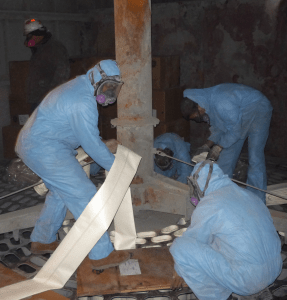
While many facilities elect to install their replacement filters themselves, usually to keep costs down, it is not always the best idea to simply assume that using in-house labor is the best option. Many problems can result when workers without specific baghouse training attempt to carry out baghouse service work. This can include damaging the filter bags during installation (some bags such as those with PTFE membrane are somewhat fragile and require care when handling), improperly installing the bags (not sealing them correctly, improper tension, etc.) that can lead to leaks and early failure of the bags among other things. Additionally, workers may not have experienced dealing with baghouse-specific safety hazards and could injure themselves quite easily.
Furthermore, using in-house labor often takes much longer than using experienced baghouse technicians to install your replacement filters. These technicians are experienced in the design and operation of all different types of baghouses and know the best methods for replacing the filters safely in the shortest amount of time. Often when facilities choose to have in-house labor do the filter changeout it results in long delays that cost the plant much in terms of labor costs and facility down-time. Additionally, many times some of the filters are damaged or installed incorrectly and thus the plant will have to spend additional resources later on to track down the problem and correct it.
Example: One plant decided to have its normal maintenance workers change out all of its bags. 18 compartments, with 200 reverse-air, springs and chains. On average it took them 3 days to do one compartment. Often with mistakes (poorly sealed bags, not fitted in the snapband, wrong tension, etc.). Our crews did 4 a day, and scrapped the walls of rust scale and did leak testing.
Expert crews are trained to recognize problems, holes, warped metal, failing welds, rusting metals, moisture problems, abrasion, etc. Many filter suppliers also provide replacement services as well. While we will have an additional article on the topic of selecting a baghouse service provider, in short we can say that selecting a service provider may be even more important than choosing the filters themselves. A qualified and experienced service team will not only ensure that filters are installed correctly and safely, but will also verify that the system operates at peak efficiency after installation. This includes performing inspections, identifying potential issues such as leaks or improper bag fit, and running leak testing procedures to confirm optimal performance. Partnering with a trusted provider helps extend filter life, minimize unplanned downtime, and maintain compliance with emissions regulations.
Conclusion
Sourcing a quote for replacement baghouse filters is not a task to take lightly. The difference between a capable filter supplier and a poor one is dramatic. While it may not always be easy to find a good supplier, by following the suggestions in this article you can find one that can provide you with the products you need for a fair and reasonable price.
Director of Operations | Dust Collection Specialist | Industrial Filtration Consultant
Dominick DalSanto is an author and environmental technologies expert specializing in dust collection systems. He has nearly a decade of hands-on working experience in the industry. Dominick is the sales director and sales technical advisor for an industrial dust collection equipment manufacturer. Personally took the lead on key projects each year from sales engineer to field advisor to project manager to business relations. Born in San Bernardino County, California, and raised in Chicago, he currently resides in Buenos Aires, Argentina.
https://baghouse.com/wp-content/uploads/2012/10/Cheaper-filters.png10801920Dominick DalSantohttps://baghouse.com/wp-content/uploads/2025/10/BH-Logo-Alt-01-300x70.pngDominick DalSanto2025-10-30 09:06:092026-06-22 22:59:13How Can I Get The Best Price For Baghouse Filters?
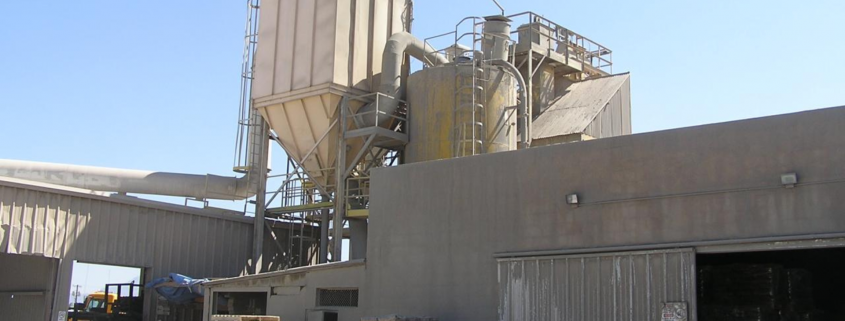
Cement plants deal with some of the toughest dust challenges in any industry: high temperatures, abrasive materials, and nonstop operation. A well-designed and maintained baghouse keeps production efficient and the air clean. Below are some of the most common questions plant and maintenance managers ask us about cement baghouses, along with practical, experience-based answers.
— What exactly does a baghouse do in a cement plant?
Think of the baghouse as the plant’s air filter. It captures fine cement dust from grinding, mixing, and kiln operations before that dust escapes into the atmosphere. Dirty air enters through ductwork, passes through hundreds of fabric filter bags, and exits clean. The dust stays on the surface of the bags until it’s shaken or blown off during the cleaning cycle.
— What types of dust are collected in cement production?
Chemical lime plant dust collection system
Every step of cement manufacturing creates different dust. Handling raw materials like limestone and shale produces coarse particles. Grinding and kiln operations generate much finer dust, sometimes small enough to stay suspended in the air for hours. Then there’s the abrasive mix dust from silos, which needs filters tough enough to resist corrosion and wear. That’s why choosing the right filter media for each stage is key.
— How can I prevent the hopper from clogging when humidity is high?
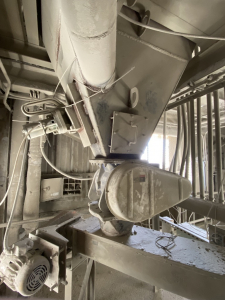
Dust collector hopper
When humidity rises, dust becomes sticky and bridges over the hopper instead of falling through. A few proven tactics include keeping hopper heaters or insulation active during humid conditions, ensuring your discharge system (like rotary valves or screw conveyors) stays dry, and never letting dust sit idle for long periods. Continuous dust discharge is the best prevention.
— My filter bags keep clogging when humidity increases — what can I do?
Humidity in the incoming air causes condensation and blinds the filter bags. The flue gas temperature should be above the dew point before entering the baghouse.
If your bags are blinding due to moisture, start by checking your cleaning system. Pulse valves or compressed air lines that aren’t firing properly can make it worse. Also, look for air leaks that might be pulling in humid ambient air. In some cases, switching to a bag fabric with a moisture-resistant or PTFE membrane finish can dramatically reduce buildup. And if the problem happens during startup, preheat the baghouse to reduce condensation.
— What should I do if I have torn bags but can’t shut down the baghouse?
This is a common challenge in cement plants that run continuously. If shutdown isn’t possible until an overhaul, isolate the compartment where the damage occurred if your system allows it. You can also temporarily plug the tube sheet opening to reduce bypass air. But these are only stopgaps — schedule a full changeout as soon as possible, because running with torn bags not only reduces efficiency but can also damage the fan and downstream equipment.
— How do I deal with corrosion inside the baghouse?
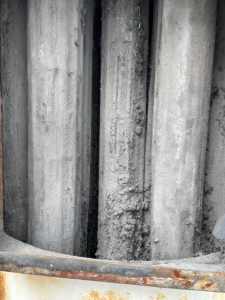
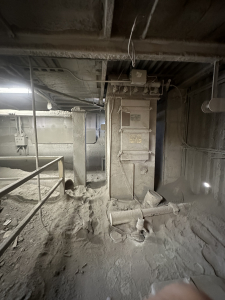
Corrosion usually comes from acidic gases or moisture condensing inside the housing. First, inspect during cooler times of operation — look for rust streaks or pitting around welds and door seals. The fix often starts with controlling condensation by maintaining stable temperature and airflow. For chronic cases, consider upgrading to corrosion-resistant coatings or stainless-steel components in key areas.
— How often should I perform maintenance on a cement baghouse?
In most plants, a visual check should be done weekly, focusing on leaks, bag condition, and hopper discharge. Pulse valves, solenoids, and pressure lines should be inspected monthly for wear or air leaks. At least once a year, a full internal inspection and leak test should be scheduled, preferably during a planned outage.
— How do I know if my baghouse is performing well?
Your best indicator is differential pressure. A stable reading within the manufacturer’s range means airflow and cleaning are balanced. Usually, the normal range is between 3″ to 5″ of differential pressure. If pressure rises steadily, you’re likely dealing with bag blinding, moisture buildup, or a faulty pulse valve. If pressure drops too low, check for leaks or broken bags. Also, keep an eye on visible emissions; a sudden increase in dust escaping the stack is a sure sign something’s wrong.
— What should I include in a baghouse inspection checklist?
A solid inspection form should cover a few essentials:
✅ General info: date, location, production rate, and environmental conditions during inspection.
✅ Visual condition: look for damaged bags, dust buildup, rust, or cracks in the housing.
✅ Operational data: record differential pressure and compressed air pressure.
✅ Observations: note any weak pulse, uneven cleaning, or abnormal sounds from valves or blow pipes.
Keeping consistent records helps you track performance trends and catch issues early.
Modern cement baghouses have evolved. Some systems now feature round bag designs that clean themselves automatically, reducing the need for shutdown maintenance.
IoT sensors are also revolutionizing how maintenance is performed in cement plants. Predictive maintenance (enabled by real-time data from connected sensors) means you can fix stuff before it breaks. This transition not only saves money on repairs and energy but also increases equipment lifespan and improves overall plant efficiency.
— Is silicosis a risk in cement manufacturing? What protection should workers use?
Silicosis risk depends on whether your raw materials contain free silica. But even if they don’t, workers should always avoid breathing dust. Proper dust masks or respirators must be worn in dusty areas. The finished cement product itself doesn’t contain free silica.
— Our electrostatic precipitator (ESP) on the long dry kiln (2520 TPD) is not working. A company suggested replacing it with a water fogging system that sprays 10-micron droplets into the kiln riser pipe. They claim it can capture up to 80% of the dust before the ID fan. Do you think this is a good idea? What are the pros and cons?
We don’t see many advantages to this idea. Normally, water spray is used in a conditioning tower to cool and humidify gases before they enter the ESP. In that setup, up to 80% of the dust might fall out in the tower.
However, spraying directly into the kiln riser is very different, it’s not an expansion chamber. Cooling the gases there would also make them contract, increasing the draft at the kiln inlet and possibly causing more dust to escape from the kiln. I don’t recommend this modification. A deeper analysis of the problem is needed before making any changes.
— We produce white cement and are having problems with lumps forming and coating on the silo walls. The cement enters the silo at about 80°C, and we run a bag filter continuously to remove moisture. How can we stop this problem? Would using a polymer liner or insulating paint inside the silo help?
At 80°C, the cement is still hot enough for gypsum dehydration to continue, which causes lumps and buildup. You should cool the cement below 70°C before it enters the silo.
Another solution is to raise the cement mill outlet temperature to around 115°C so gypsum dehydration finishes inside the mill instead of the silo.
— How do I choose the right silo bin vent?
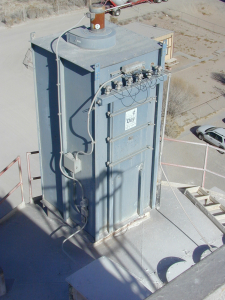
Start by identifying the size and type of silo you’re working with. Most cement and construction materials use standard small or medium silos, and for these, there are well-established bin vent models with proven performance.
If you know your silo’s capacity, that’s often enough to recommend one of our standard bin vents. However, for a more accurate selection, it helps to provide a few key details stated in the following question.
— What information do I need to provide when selecting a silo bin vent?
The more specific your data, the better we can match a collector for your needs. Here’s what helps most:
✔️ Material stored in the silo: Cement, sand, gravel, or other bulk materials. Each has different dust characteristics.
✔️ Required airflow capacity: This depends on your pneumatic pump’s output and how often you load the silo.
✔️ Loading frequency: For example, twice per week or twice per day. This affects both the cleaning method and the filter’s air-to-cloth ratio, more frequent loading requires more filter area.
✔️ Loading pipe size: Ensures the airflow matches the system’s capacity.
✔️ Pressure relief valve: In some cases, you may need an emergency valve to prevent overpressure if the filter becomes blocked.
If you don’t have all this data, that’s fine, we can estimate using a safety margin of 1.2–1.5× to make sure the bin vent performs reliably under all conditions.
— What’s better: a cartridge filter or a baghouse filter?
Cartridge filters are less expensive upfront and suitable for smaller silos or less frequent loading.
This depends on your operation’s workload and budget priorities.
✅ Cartridge filters are less expensive upfront and suitable for smaller collectors or less frequent loading.
✅ Baghouse filters cost more initially but are designed for heavier use. They handle frequent loading and higher dust volumes much better.
In other words, if your collector has regular or high-volume use, a baghouse filter will save you more money in the long run by reducing maintenance and filter replacements.
— Which Filtration Media Is Best for Cement Dust Control?
The first step in deciding which filtration media to use is knowing what is trying to be captured.
General applications for Aramid felt includes highly abrasive dust and chemical applications with high temperatures
If the application involves fine dust particles in high concentrations, then it would be best to use synthetic fiber filters. Highly concentrated dust particles need a greater surface area for adsorption/collection of smaller-sized particles. Two highly reliable filtration media for concrete dust collection are aramids and Polyester.
Aramids, also known as Nomex, is cost-effective and highly efficient at filtering small particles at high temperatures. Nomex can successfully filter particles down to the 2 micron range. Felted aramids are generally the first choice for pulse jet baghouses used in cement, utility and incineration operations around the world. If a project needs to be able to filter even smaller particles, Baghouse.com offers a Nomex product with the ability to filter particles down to the submicron range.
Polyester baghouse filter
Polyester is another popular filter media used in concrete plants. Polyester can be clad with a PTFE treatment to maximize its chemical resistance.
How can I train the maintenance personnel at my cement plant?
At Baghouse.com, we offer several flexible training options tailored to cement plants and other heavy-duty operations:
▶️ In-person training: Hands-on, on-site instruction focused on your specific system and challenges. This option includes a system audit with a report on possible improvements to your facility.
▶️ Virtual training: Live sessions led by our experts, ideal for teams at multiple locations.
▶️ Online training course: Self-paced modules covering everything from filter changeouts to differential pressure analysis.
▶️ Combined training: A hybrid approach that blends virtual lessons with an expert, along with the Online training course.
Do you have any additional questions that were not covered in this article?
If you have specific questions about your cement baghouse setup or want expert guidance on maintenance or upgrades, reach out to the team at Baghouse.com. Our dust collection specialists can help you evaluate your system and offer practical solutions tailored to your operation.
Dust Collection Expert, Technical Writer & Editor at Baghouse.com
Andy Biancotti believes that knowledge is one of the best investments any company can make. As Editor and Marketing Manager at Baghouse.com, he enjoys interviewing engineers, technicians, and customers to capture the real-world lessons behind successful dust collection projects and turn them into practical resources that others can learn from. With more than two decades of experience in industrial maintenance, operations, and technical communication, his goal is simple: help people better understand their systems so they can work safer, smarter, and more efficiently.
https://baghouse.com/wp-content/uploads/2025/10/Cement-FAQ.png10801920Andy Biancottihttps://baghouse.com/wp-content/uploads/2025/10/BH-Logo-Alt-01-300x70.pngAndy Biancotti2025-10-28 08:47:512026-06-19 18:18:22Cement Plant Baghouses: Answers to the Most Common Questions
Even the best-designed dust collection system has its limits. While it captures emissions at their source, it can’t always handle secondary dust created by leaks, material spills, poor housekeeping, or even dust brought in through open doors, windows, or the ventilation system. These “hidden” sources often make the difference between a system that works and one that feels ineffective.
Dust levels inside a facility can spike for reasons that don’t always point to the collector. Common culprits include:
❌ Inadequate maintenance of dust collection equipment or dust-generating processes
❌ Poor housekeeping practices
❌ Recirculating air that still contains dust particles
❌ Emissions from dust collectors that aren’t properly controlled
Of course, all of this assumes that major sources of dust are already equipped with the right collection systems. The focus here is on the secondary factors that can make or break system performance.
Administrative Measures That Make a Difference
Many plants benefit from creating a dedicated dust control task force that includes plant managers, safety managers, and production leads.
Sometimes the best improvements aren’t mechanical but managerial. Establishing a dust control policy backed by leadership sets the tone. Many plants benefit from creating a dedicated dust control task force that includes plant managers, safety managers, and production leads. This group’s role is to survey the facility, set priorities, assign solutions, track progress, and estimate costs.
Education is another powerful tool. A short training program goes a long way in helping employees understand company policies, government standards, reasons for dust surveys, and their own role in reducing exposure. Workers who know why dust control matters are far more likely to support and maintain it.
Managers can adjust work schedules to limit dust exposure, reschedule high-dust activities like hopper emptying to off-hours, and ensure respirators are accessible and used correctly can make a big difference.
Periodic Dust Housekeeping Checklist
✅ All mobile equipment (trucks, front-end loaders, dozers, etc.) clean.
✅ Motors and switch gear clean of excessive dust, oil, slurry, and debris.
✅ All operating department floors and working surfaces to be vacuumed or washed and free of scrap or debris.
✅ Tools, bars, shovels, etc. stored in racks.
✅ Hoses washed down on reel installed and maintained at such points as slurry pumps, stone belt transfer points, etc.
✅ Safety shower operational, available, and clean.
✅ Safety eyewash bottle, first-air kit, and stretcher checked.
✅ Dust accumulations around process equipment at a minimum; spills promptly cleaned up.
✅ Fire extinguishers checked and available.
✅ Belt-conveying systems free of spills and buildup, particularly at transfer and loading points.
✅ Building siding and roofs properly maintained and free from broken or loose sheets.
✅ Building doors and windows clean and in good repair at all times.
✅ Locker rooms neat, clean, and in sanitary condition.
✅ Offices neat and orderly.
✅ Bulletin boards available and properly maintained.
✅ Unpaved roadways and parking areas treated to minimize dust.
✅ Yards and fields mowed frequently.
✅ Plant storm sewers and open drainage ditches clean.
✅ Parts inventory stored in orderly fashion.
✅ Traffic lanes in shop areas clearly marked and free of scrap.
✅ Abandoned process equipment and machinery promptly removed from the plant.
Preventive Maintenance Programs
Preventive maintenance (PM) programs often pay for themselves many times over. Scheduling regular inspections and keeping spare parts on hand can reduce breakdowns and avoid costly interruptions.
☑️ Conduct PM programs on all dust control system hardware and components, as well as dust-producing sources, during plant shutdowns or as recommended by the equipment manufacturer.
☑️ Carry all necessary spare parts in sufficient quantities for dust control systems.
☑️ Give high priority to patching holes, caulking and sealing cracks, and maintaining dust seals.
☑️ Inspect and adjust all belt conveyors and their skirting rubber and dust seals.
☑️ Inspect belt conveyor idlers and non-moving idlers. Remove and replace missing or broken idlers.
☑️ Inspect all belt conveyor training idlers. Adjust them as necessary so the conveyor belt does not travel laterally.
☑️ Shut and clamp all access and inspection doors before any operation begins. Schedule adequate time for workers to perform routine cleanup at work stations.
☑️ Rotate periodic cleanup among crews.
☑️ Inspect all dust seals and repair or replace.
☑️ Inspect belt scrapers on belt conveyors and adjust. Replace worn-out components.
☑️ Measure velocity and static pressures weekly.
☑️ Check for plugged ductwork and clean it immediately. If this problem occurs repeatedly, redesign the ductwork.
☑️ Develop safeguards to prevent overflowing bins.
☑️ Follow the preventive maintenance program for dust collectors, fans, and motors.
☑️ Inspect nozzles and other components periodically. Replace worn-out nozzles as needed.
Even the best equipment won’t perform if it’s not operated properly. Operators should know that dust control systems must be running before production begins. Compressed air shouldn’t be used to clean dust off clothing or equipment… it just puts the dust back into the air. Instead, use vacuum systems or water spray during shutdowns.
Other simple practices include slowing down conveyors to reduce dust circulation, installing alarms to alert staff when collectors shut down, and removing obsolete equipment that serves as a dust trap.
Don’t Forget Outside Sources
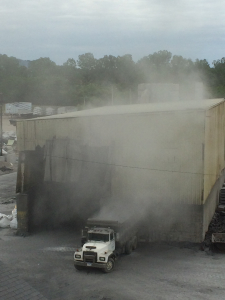
Haul roads, loading and unloading areas, and stockpiles are major contributors to secondary dust.
Haul roads, loading and unloading areas, and stockpiles are major contributors to secondary dust. Even if they’re outside the building, dust can blow or be pulled in through air intakes, doors, and windows. Treating or paving roads, spraying active stockpiles, and enclosing loadout areas with their own dust controls all help. Positioning air intakes to minimize exposure and using automatic bin level indicators to prevent overflows are additional ways to keep outdoor dust from becoming an indoor problem.
Recirculation: Handle With Care
Recirculating air from dust collectors can save heating costs (especially in colder climates), but it comes with risks. If not properly designed and maintained, the system can send dust right back into the workplace. Negative pressure from poor make-up air planning can also pull in outside contaminants or create drafts that affect both workers and equipment.
Secondary sources—whether from poor housekeeping, neglected maintenance, or outdoor dust blowing inside—can overwhelm even the best systems.
If a facility does recirculate, safeguards are essential: a secondary air-cleaning system, fail-safe monitoring devices, warning alarms, and emergency bypasses to the outdoors. Cleaned air should be distributed carefully to prevent local “mini dust storms.” For hazardous dusts with low exposure limits, recirculation is generally not recommended.
Secondary sources, whether from poor housekeeping, neglected maintenance, or outdoor dust blowing inside, can overwhelm even the best systems. For plant managers, operations leaders, and EHS personnel, the real key is consistency: when dust control becomes part of everyday operations, the result is a safer, cleaner, and more efficient workplace.
Director of Operations | Dust Collection Specialist | Industrial Filtration Consultant
Dominick DalSanto is an author and environmental technologies expert specializing in dust collection systems. He has nearly a decade of hands-on working experience in the industry. Dominick is the sales director and sales technical advisor for an industrial dust collection equipment manufacturer. Personally took the lead on key projects each year from sales engineer to field advisor to project manager to business relations. Born in San Bernardino County, California, and raised in Chicago, he currently resides in Buenos Aires, Argentina.
Insufficient baghouse capacity is one of the most common problems our customers encounter. Some common indicators of insufficient capacity include high differential pressure and difficulty cleaning the dust collector. In many cases, a high pressure drop results in lost suction and reduced airflow throughout the system. Reduced suction and airflow mean that pickup points and collection hoods capture less dust at the source, allowing dust to settle and build up in the ductwork, which further reduces suction and airflow. Even if suction and airflow remain sufficient for the process, high differential pressure directly causes higher emission levels through the filter fabric and early bag failure due to increased airflow and more frequent cleaning.
Why Do Systems Lack Sufficient Capacity?
There are several reasons why a dust collection system may be under capacity. One of the most common is that system processes are changed without regard for dust collector design. Even if a system was correctly sized and designed at installation, production increases later on may be made without considering how they affect baghouse operation.
In other cases, systems are undersized from the start due to poor project planning, weak engineering, or deliberate decisions by sales reps, OEMs, or management to undercut competitors with a lower-priced system.
If you are currently dealing with an undersized system, there are several proven ways to increase capacity.
Pleated filters can dramatically lower operating costs by increasing capacity, reducing emissions, and lowering electricity usage. These pleated filters improve on the design of traditional bags by packing more filter fabric into a smaller space, sometimes increasing the amount of filter media by as much as 700%.
They are more efficient at removing particulate than traditional bags and often last up to twice as long. Pleated filters are designed to meet today’s high production demands and can replace existing bags and cages in most standard pulse jet baghouses without any modifications required.
With the greater amount of filter media, operators can either:
✅ Keep the airflow the same, which reduces the air-to-cloth ratio and improves performance and filter life.
✅ Increase airflow to boost baghouse capacity, possibly allowing for the combination of several dust collection systems into one larger unit and in turn reducing operation costs.
💡#2 — Add Additional Modules
Most baghouse and cartridge collectors are designed with modular construction. That means the existing collector shell can be extended with one or more filter compartments. These new modules are bolted or welded onto the main collector housing and tied into the clean air plenum, hopper, and dust discharge system.
By doing so, you’re expanding the collector’s filter area, which directly lowers the air-to-cloth ratio (ACR). This allows the system to handle higher airflow without needing full replacement. This upgrade also reduces stress on fans and bags.
This is not necessarily an expensive upgrade. The biggest costs of a new system are the housing, hopper, support structure, fan, ductwork, and foundation. By adding modules, you’re keeping most of these in place. You’re only paying for the additional filter compartments, installation labor, and sometimes an upgraded fan if airflow requirements have increased.
💡#3 — Convert Older Shakers and Reverse Air Units to Pulse Jet Systems
Many older dust collectors, such as shakers and reverse air units, can be upgraded into modern pulse jet systems instead of being replaced outright. This conversion involves retrofitting the collector housing with new tube sheets, installing pulse-cleaned filter bags with cages, and adding a compressed air manifold and control system.
By doing so, you eliminate the need for mechanical shaking or continuous reverse airflow, which reduces moving parts, maintenance, and downtime. The result is a collector that can handle higher airflow at proper air-to-cloth ratios and provide much better cleaning while using the same basic housing and support structure. For plant managers, this is often a more economical and less disruptive option than buying a completely new system.
💡#4 — Install a Precleaner such as a Cyclone to Lessen Dust Loading
Cyclone dust collector upstream of a baghouse dust collector.
This significantly reduces wear and tear on the bags, lowers the cleaning frequency, and helps maintain a lower pressure drop across the system. By easing the burden on the filters, you can run more airflow through the baghouse without overloading it, effectively gaining capacity without adding modules or replacing the unit.
The microporous ePTFE structure shown here allows gases and vapors to pass while blocking liquids and particles.
Upgrading to high-performance filter fabrics, such as those with a PTFE membrane, can immediately increase a baghouse’s effective capacity without changing its size. PTFE membranes act as a surface filter, preventing dust particles from penetrating deep into the fabric and forming heavy dust cakes.
Every plant faces different challenges when it comes to dust collection, and there’s no “standard” solution for increasing baghouse capacity. The good news is you don’t have to figure it out alone. Our team has helped countless facilities determine the most cost-effective and reliable upgrades. If you’re struggling with high differential pressure, short bag life, or insufficient airflow, reach out to us today. We’ll review your system, discuss your production goals, and recommend the best path forward to maximize your dust collector’s performance while keeping costs under control.
President | Dust Collection Engineer | Industrial Air Pollution Control Specialist
Matt Coughlin is an author, engineer, and dust collection expert specializing in industrial filtration systems, air pollution control, and process ventilation. With more than two decades of experience in the dust collection industry, Matt has helped design, troubleshoot, and optimize hundreds of dust collection systems across a wide range of industries, including cement, mining, food processing, woodworking, metals, power generation, chemical manufacturing, and bulk material handling. Born and raised in Southern California, Matt continues to work closely with industrial facilities around the world, helping companies improve their dust collection performance through engineering expertise, practical solutions, and long-term technical support.
https://baghouse.com/wp-content/uploads/2025/09/Increase-Your-Baghouse-Capacity.png10801920Matt Coughlinhttps://baghouse.com/wp-content/uploads/2025/10/BH-Logo-Alt-01-300x70.pngMatt Coughlin2025-10-14 10:09:002026-06-19 18:18:17What Can You Do to Increase Your Baghouse Capacity?



 ✅ Filter Construction – This differs based on how the bags are installed in the baghouse
 ✅ Filter Construction – This differs based on how the bags are installed in the baghouse

 Cement plants deal with some of the toughest dust challenges in any industry:
 Corrosion usually comes from acidic gases or moisture condensing inside the housing. First, inspect during cooler times of operation — look for rust streaks or pitting around welds and door seals. The fix often starts with controlling condensation by maintaining stable temperature and airflow. For chronic cases, consider upgrading to corrosion-resistant coatings or stainless-steel components in key areas.
 Start by identifying the size and type of silo you’re working with. Most cement and construction materials use standard small or medium silos, and for these, there are well-established






 Most
Most