Interview With David Dal Santo, our Director of Operations
Director of Operations at Baghouse.com, David DalSanto
With decades of experience finding solutions to our customers’ often complex dust collection needs, Baghouse.com has acquired extensive experience overcoming obstacles foreseen and unforeseen.
Read what our Director of Operations, David DalSanto, who has been with the company since its inception nearly four decades ago, has to say about some of the most exceptional projects Baghouse.com has completed.
— "What former projects of Baghouse.com are you the most proud of having been a part of?"
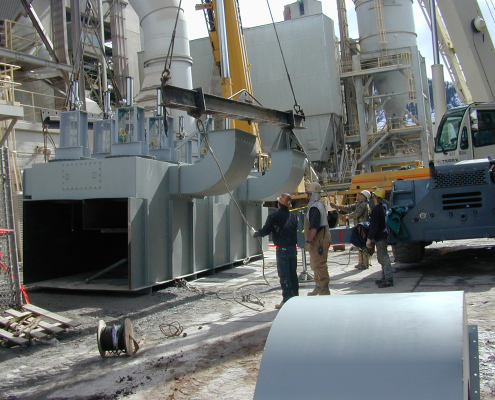
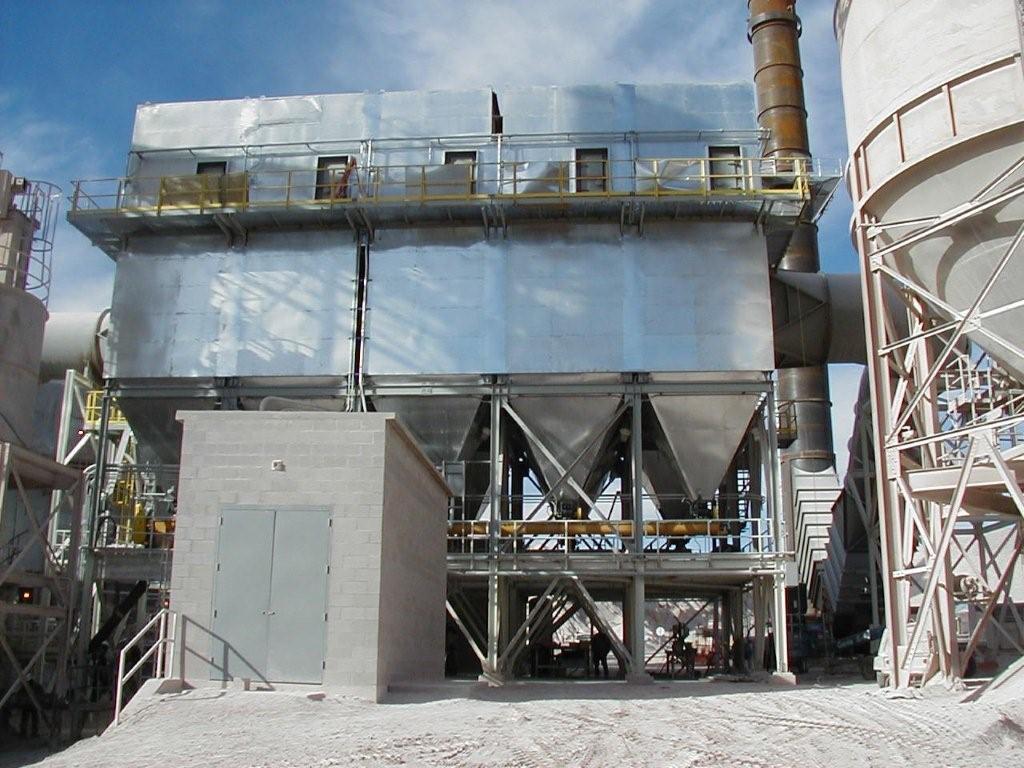
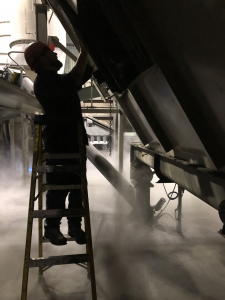
David – “John Deere – Central Foundry – Waterloo, IA – A violent explosion in the furnace did extensive damage to the structure, including the housing, tubesheet and roof structures. We brought in a very large crew and worked around the clock, “improvising and adapting” as the repairs progressed. We sourced many of the needed repair parts, but also fabricated the main parts and structures we needed on site. We had the entire Baghouse system back on line in only nine days.”
— "What were some of the most challenging projects that you have tackled?"
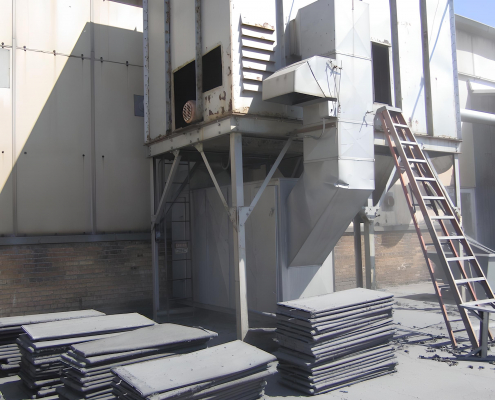
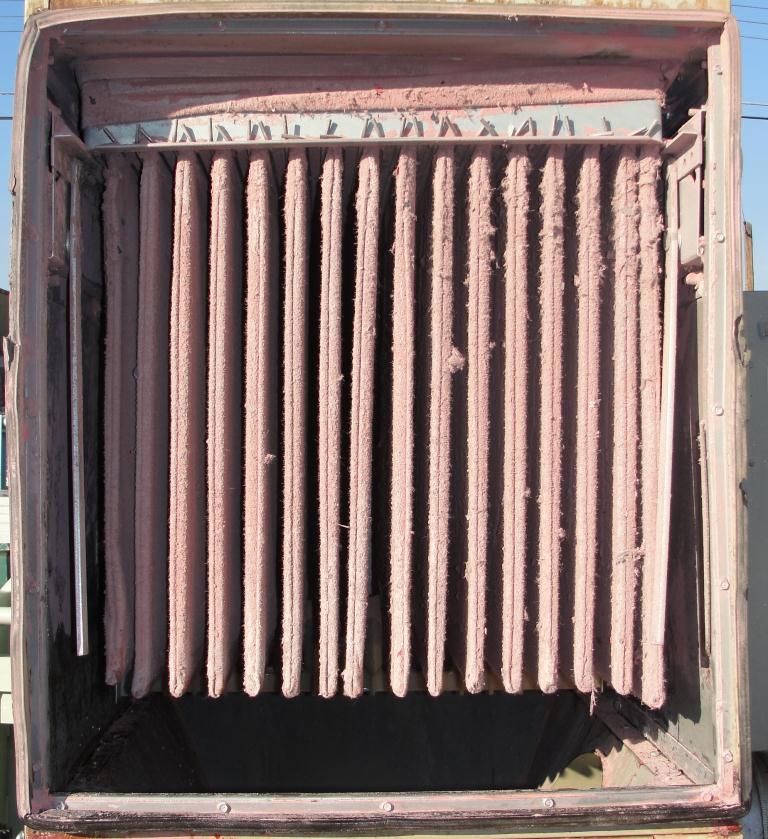
Original condition unit with envelope filters and shaker mechanism
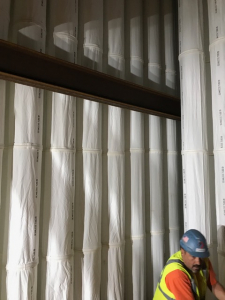
David – “Goodyear Tire & Rubber Co. – Topeka, KS – Old ‘Envelope” style Dust Collectors by W.W. Sly & Pangborn were a “maintenance headache” for the plant. We did multiple Pulse-Jet conversions to the existing Dust Collectors. By removing the inner workings and roof structures, we made room to install modern Clean Air Plenums. We modified the ductwork and installed High Efficiency Cylindrical filter bags and cages to take advantage of the Pulse-Jet cleaning system.”
— "What were the specific problems that you had to face?"
David – “Most units were in the center of a large building, an area that could not be serviced by conventional cranes.”
Follow Up Question — "How did you overcome those problems?"
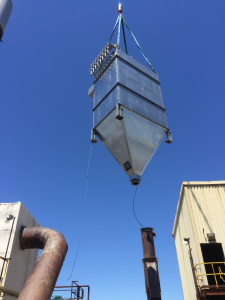
As we couldnt use traditonal cranes, the collectors had to be installed using Helicopter lifts
David – “New equipment had to be installed using Helicopter lifts. As a licensed pilot/aircraft owner myself, I know well just how dangerous these aerial maneuvers are, and the great skill, and expertise that are needed to execute these operations safely. Despite all of the challenges we faced to get this Baghouse back up and running, downtime for each conversion was only 3 to 4 days each. Again remarkable considering the circumstances.”
— "What do you feel are some of the greatest dangers you know of regarding safety on the job site, and how do you handle them?"
David – “Several dangers present themselves regularly in our line of work. #1 – Harmful gasses leaking into the work area. #2 – Unsafe structures/hazard of falling objects. #3 – Fire hazards during welding/cutting operations. We work with our foremen, safety personnel and plant representatives to identify all of these dangers specific to each job before we begin. We then brief our people accordingly, enabling them to keep a close watch for these hazards and avoid them.”
Identifying all the dangers specific to each job before we begin is one of the most important routines of our team
“The greatest danger we encounter however is; unsafe materials hoisting practices by plant or outside contractor personnel. Because of my personal experience as a Structural IronWorker and Heavy Machinery Mover, I know full well the immense danger to life that this process poses. I have seen first hand the tragedy that results when people who are not qualified to carry out this task, or simply have a disregard for lifting/hoisting safety measures.”
“As such, we prefer to do our own lifting/hoisting. All of which is directly led by a duly trained foreman, with extensive training and experience conducting these lifts safely and properly.”
— "What are some of the biggest mistakes you notice other companies make when servicing a Dust Collector?"
Some of the biggest mistakes we notice other companies make when servicing a Dust Collector is to tension the structural filter bags incorrectly.
David – “#1 – Incorrect handling/installation practices on specialty filters such as Fiberglass and PTFE Membrane media. #2. Incorrect tensioning procedures on structural filter bags. #3 – Incorrect start up settings/procedures and Incorrect operations procedures.”
“In many cases we are called to fix another company’s mistakes. We often find that a rushed operation, or an overall lack of technical expertise & attention to detail on account of the contractor has caused many problems. These shortcomings later on, needed to be corrected by Baghouse.com during subsequent maintenance visits.”
— "What would you say makes Baghouse.com different from your competitors?"
David – “We care about our customers and we do everything possible to help get their operation running as efficiently as possible or get them back up and running quickly after problems do arise.”
“We have a long history of successfully responding to emergency breakdown situations in which we were able to get the customer back into operation quickly with minimal downtime and lost productivity. This is no easy task, and you will be hard-pressed to find another company capable of duplicating our successes in this area.”
“At the end of the day, we don’t just fix problems – we fix them fast, efficiently, and with a little bit of creativity…It’s not always glamorous, but hey, someone has to get the Baghouse back up and running!
We’ve seen it all, done it all, and if we don’t know the answer right away, we’ll find it. We are always ready for the next challenge.”
Dust Collection Expert, Technical Writer & Editor at Baghouse.com
Andy Biancotti believes that knowledge is one of the best investments any company can make. As Editor and Marketing Manager at Baghouse.com, he enjoys interviewing engineers, technicians, and customers to capture the real-world lessons behind successful dust collection projects and turn them into practical resources that others can learn from. With more than two decades of experience in industrial maintenance, operations, and technical communication, his goal is simple: help people better understand their systems so they can work safer, smarter, and more efficiently.
https://baghouse.com/wp-content/uploads/2025/04/Daves-Interview.png10801920Andy Biancottihttps://baghouse.com/wp-content/uploads/2025/10/BH-Logo-Alt-01-300x70.pngAndy Biancotti2025-07-29 13:00:002026-06-19 18:18:08“Our Track Record Says It All” —Interview With David Dal Santo
If you’ve ever walked past your dust collector and felt a blast of air strong enough to knock off your hard hat, it’s probably your air headers crying for help.
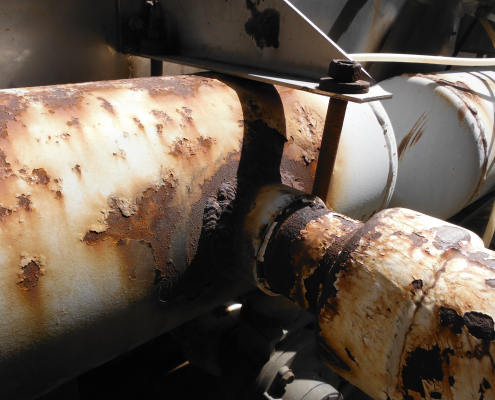
Rusty compressed air header in a dust collector
Recently, on a site visit, I came across headers so corroded and leaky they looked like they’d been through a war zone. The technician walking with me casually mentioned, “Oh yeah, we patch those a few times a year.” In fact, they were so used to leaks, they had makeshift braces holding the headers down to keep them from rattling loose during pulse cleaning. No pressure gauge in sight, just a whole lot of compressed air going to waste.
Let’s talk about how to prevent that from happening to your system — or how to fix it if it already has.
Why Air Headers and Pulse Valves Matter
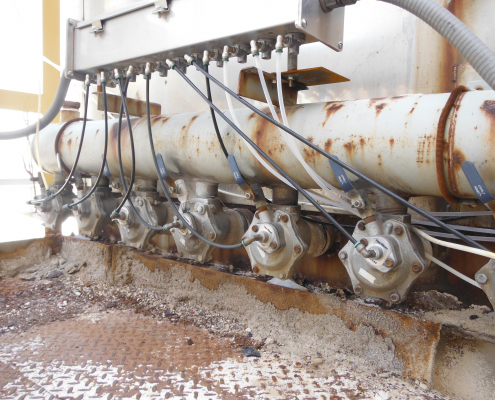
rusty air header
Pulse-jet baghouses rely on clean, high-pressure air stored in headers to deliver sharp bursts through pulse valves. These bursts keep your filter bags clean and your system breathing easy. But if the headers are corroded, leaking, or the valves are misfiring, you’re not cleaning — you’re wasting energy, damaging bags, and likely spending way more than you think.
Patching up air headers over and over might seem like a budget-friendly solution — until you count the cost of compressed air loss, labor, lost efficiency, and unplanned downtime.
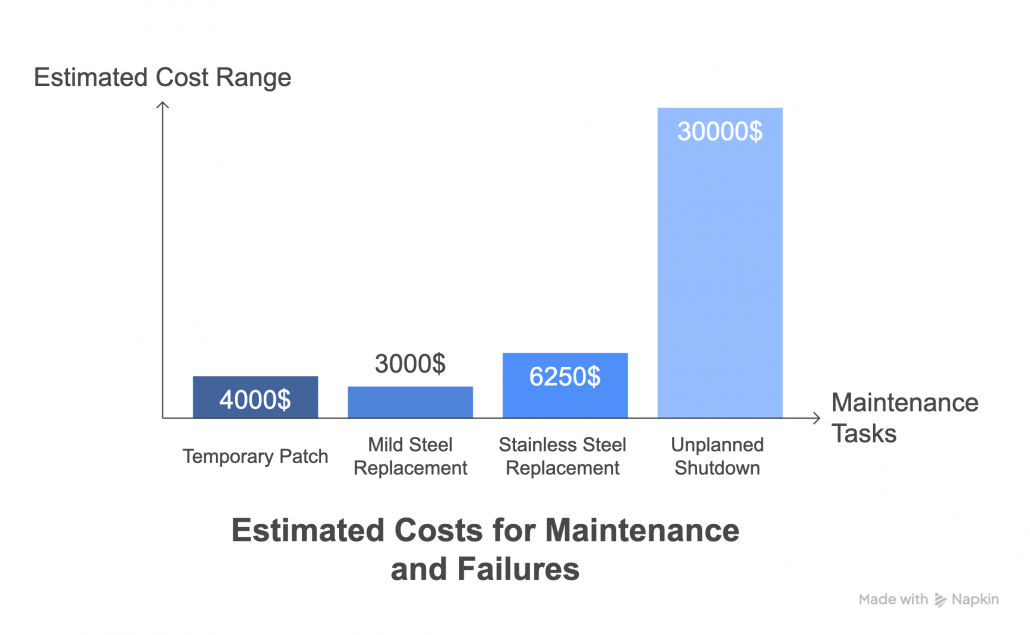
Here’s a ballpark comparison:
Task
Estimated Cost
Temporary patch (3x/year)
$3,000–$5,000 (labor + air loss)
Replacing header with mild steel (again)
$2,000–$4,000
Replacing with stainless steel once
$5,000–$7,500
Unplanned shutdown due to failure
$10,000–$50,000+
The numbers add up quickly. And that’s without counting the frustration of explaining to upper management why another baghouse went down in the middle of production.
Why Stainless Steel Is Worth It
Stainless steel air headers not only look fancy, they’re functional. They resist the corrosion that eats away at mild steel, especially in humid or outdoor conditions. Install them once, and they’ll likely outlast the bags themselves.
Important tip: When installing SS headers, avoid contact with dissimilar metals (like carbon steel mounts or fasteners). Use insulating wraps or gaskets. Otherwise, you’ll get galvanic corrosion, and you’ll be right back where you started — but now with a more expensive problem.
Water in Your Lines?
One of the leading causes of internal corrosion in air headers is water in the compressed air lines. It sneaks in from improperly drained receivers, faulty dryers, or sometimes just plain humid air.
Purge valves or auto-drains at the bottom of your headers automatically open to release the water, helping to get rid of this moisture before it can collect and cause corrosion. If you don’t have these — it’s time.
What About the Pulse Valves?
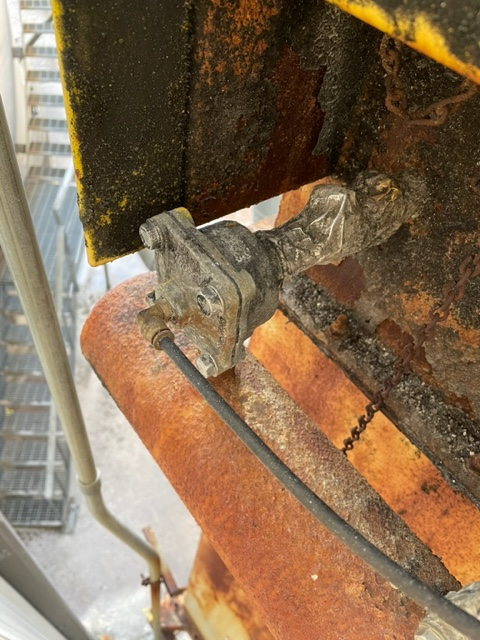
Routine inspection and replacement of pulse valves and diaphragms (typically every 1–2 years, depending on conditions) keeps your cleaning sharp and efficient.
Your pulse valves are the workhorses of the cleaning system. But if they’re sticking, leaking, or misfiring, they’ll throw your firing sequence off — and cleaning gets spotty. That means:
🔹 Bags cake up
🔹 Differential Pressure goes up
🔹 Fan has to work harder
🔹 Energy bills climb
🔹 Filter life drops
Routine inspection and replacement of pulse valves and diaphragms (typically every 1–2 years, depending on conditions) keeps your cleaning sharp and efficient.
Multiple Headers? Sync the Firing Sequence
If your collector has multiple air headers, it’s critical that your pulse control system fires valves in sequence — not all at once. Simultaneous firing can cause a pressure drop across all headers, making pulses weak and ineffective.
A simple test: For most applications using felted filter media, compressed air at roughly between 70 and 100 PSI may be recommended for proper cleaning of the filter elements. Check that pressure holds steady (or quickly recovers) during a full cleaning cycle. If it’s dropping like a rock, you’ve got either misfiring valves, leaks, or undersized air supply.
A Little Prevention Goes a Long Way
If your baghouse is a central part of your operation, then keeping your headers, valves, and air lines in top shape it’s essential.
Stainless steel headers, moisture control, working purge valves, and a good pulse sequence setup will pay for themselves in a year or less. And maybe, just maybe, you’ll get to keep your hard hat on next time you walk past the collector.
Would you like some help getting pulse valves, a new air header or purge valves?
Director of Operations | Dust Collection Specialist | Industrial Filtration Consultant
Dominick DalSanto is an author and environmental technologies expert specializing in dust collection systems. He has nearly a decade of hands-on working experience in the industry. Dominick is the sales director and sales technical advisor for an industrial dust collection equipment manufacturer. Personally took the lead on key projects each year from sales engineer to field advisor to project manager to business relations. Born in San Bernardino County, California, and raised in Chicago, he currently resides in Buenos Aires, Argentina.
https://baghouse.com/wp-content/uploads/2025/04/Caratula-Air-Headers.png10801920Dominick DalSantohttps://baghouse.com/wp-content/uploads/2025/10/BH-Logo-Alt-01-300x70.pngDominick DalSanto2025-07-23 01:00:002026-06-30 22:35:27Are Your Air Headers and Pulse Valves Causing Poor Cleaning in Your Baghouse?
Why Consume Expensive Downtime To Precoat Your Dust Collector’s New Filters?
Onegoodreason: Dust and fine particles 0.5 micronsorsmaller can leakrightthrough a new bag orcartridgefilter’spores, workingtheirwaydeepintothe media tothepointofcloggingthefilter and slowingorstoppingairflowthroughyourcollector.
So ifyourdustparticles are smallerthan 10 microns, takingthe time toprecoatyour new filters’ surfacewith a dryprecoating material isthesmartthingto do.
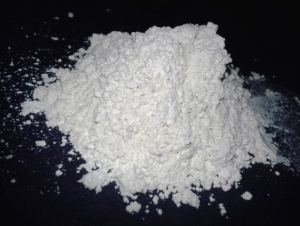
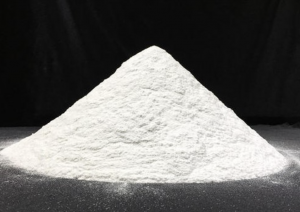
Precoat powder is a fine, inert material—typically made of substances like cellulose or diatomaceous earth—used in dust collection systems to protect and enhance filter performance. It is applied as an initial layer on new filter bags or cartridges before the system begins collecting process dust.
Common pre-coat materials include:
Expanded Perlite
.
Expanded Perlite: Absorbs sticky residues and hydrocarbons while providing a porous barrier.
.
.
.
.
Diatomaceous Earth
.
Diatomaceous Earth: Known for its fine particle capture and moisture-absorbing properties.
.
.
.
.
Calcium Carbonate
.
.
Calcium Carbonate: Neutralizes acidic contaminants and provides an effective protective layer.
Benefit: Longer Filter Life
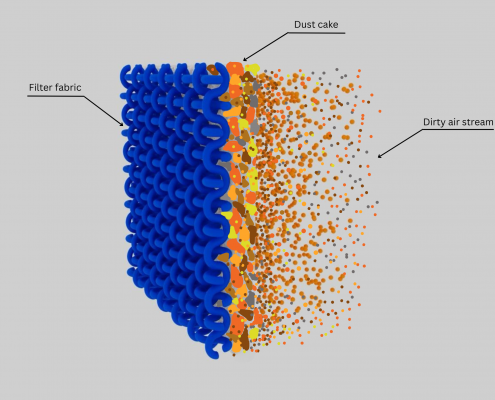
When your dust stream contains a significant percentage of submicron particles, precoating can reduce or prevent the premature failure of your new filter media. Precoating material will build up an initial dust cake on the filter, preventing dust particles from flowing into and clogging the media.
Typical service life for bag filters without precoating is 1 to 3 years and for cartridge filters is 3 to 12 months. Depending on the application, precoating can extend the filter’s life substantially providing enormous cost savings in replacement filters and changeout labor.
Precoating material will build up an initial dust cake on the filter, preventing dust particles from flowing into and clogging the media.
Precoating new filters provides other benefits, too. By keeping particles on the filter surface, precoating improves the initial filtering efficiency at startup. Precoated filters are easier to clean and provide better dust cake release for applications with process air that contains moisture, hydrocarbons, or both. Precoating materials, which don’t burn, can be applied to filters made of fire-retardant media to help reduce explosion risks in spark-producing processes, such as milling.
So, as a review, the main benefits can be summed up as follows:
✅ Sets up consistent porous dust cakes throughout all the filters.
✅ Absorbs moisture and oils that can shorten bag life.
✅ Safe to handle, lightweight powder remains on the filter bags.
Pore Opening Size and Particle Size
Now that we have analyzed the benefits, there are two additional factors you should know when deciding to precoat your filters:
🔶 The pore openings in bag filter media are usually larger than in cartridge filter media, so precoating is required more commonly for bag filters than for cartridge filters. For example, the pore openings in a 16-ounce polyester bag filter are 19.675 microns, significantly larger than the 10.253-micron pore openings in a comparable 80-20 polyester blend (80 percent cellulose, 20 percent polyester) cartridge filter.
🔶 The smaller your dust particles are, the more important it is to consider precoating your filters. And depending on the kind of size analysis used for determining your dust’s size distribution, the particles may be smaller than you think.
The true filtering surface is not the bag itself, but the dust layer or filter cake. When adding a precoating material, you make sure that even the smallest particles are captured by the filter.
Instructions For Precoating Your Filters
The method for precoating new bag or cartridge filters is relatively simple and doesn’t require any special equipment. After installing the new filters in your dust collector, you simply run the collector fan at a low volume to draw precoating material into the collector and onto the filters. For a baghouse or large cartridge collector, this process typically takes 3 to 4 hours; for a small cartridge collector, it can take just 30 to 60 minutes.
The method for precoating new bag or cartridge filters is relatively simple and doesn’t require any special equipment.
Step by step
Whether you’re precoating bag or cartridge filters, the procedure is the same. After installing your new filters in your baghouse or cartridge collector, follow these steps:
For Collectors With A Full Set Of New Bags:
With the fan running, the cleaning mechanism off, and the process off, inject Baghouse.com precoat powder into the system.
With the cleaning mechanism remaining off, bring the process online.
Operate under normal conditions and allow differential pressure to reach 4” to 5” w.c.
Monitor differential pressure across the collector. It may be possible to reduce the frequency and/or duration of cleaning and maintain adequate differential pressure. This may extend filter bag life.
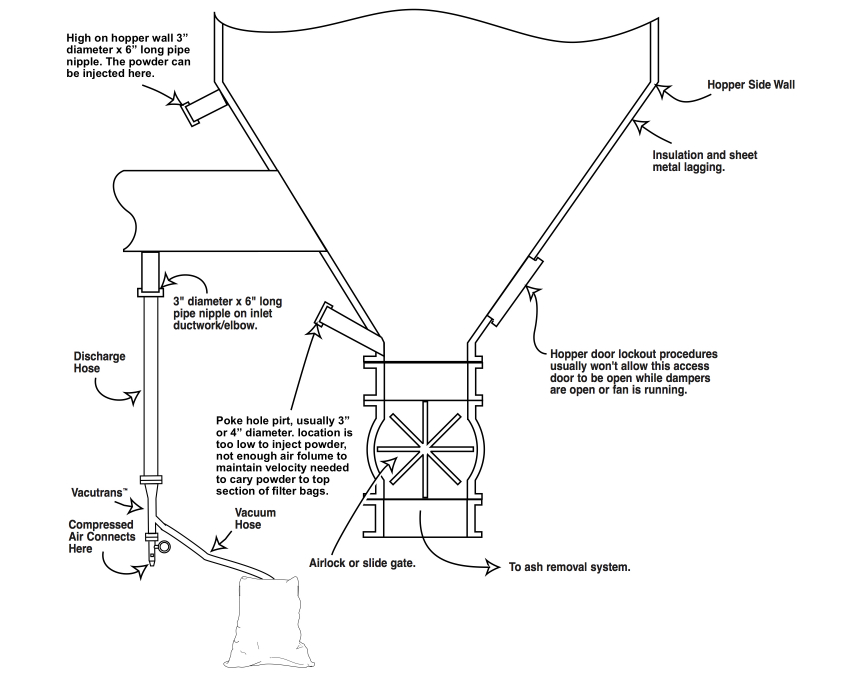
Some hoppers have an inlet above the discharge. Although many people are tempted to inject the precoat powder through this inlet, it is a very low location, there is not enough air volume to maintain the velocity needed to carry powder to the top section of the filter bags
For Bag Recovery And Spot Changing Online Cleaning Collectors (Pulse-Jet Only):
Turn off the fan and run the system through the cleaning cycle two or three times to purge the excess particulate. Turn off the cleaning system after purging the collector and leave it off through step 5.
With the process off, restart the fan and inject Baghouse.com precoat powder into the system.
With the cleaning mechanism remaining off, bring the process back online.
Operate under normal conditions and allow differential pressure to reach 4” to 5” w.c.
Turn the cleaning system on. Monitor differential pressure across the collector. It may be possible to reduce the frequency and/or duration of cleaning and maintain adequate differential pressure. For better cleaning on pulse-jet applications, stagger the row pulsing to prevent re-entrainment of particulate onto the bags.
Off-Line Cleaning Collectors (Reverse Air, Shaker, And Pulse-Jet)
Individually isolate the inlet and outlet of the compartments that will receive the injection and manually run through the cleaning cycle two or three time.
Turn off the cleaning mechanism in each compartment and leave it off until step 6.
The outlet of the compartment should be opened on negative systems. On positive systems, both the inlet and the outlet to the compartment should be opened.
Inject Baghouse.com precoat powder into your system.
With the cleaning mechanism still locked out, the isolated compartment should be returned to service. The pressure drop should be allowed to build up to the normal operating differential pressure before the cleaning mechanism is reactivated.
Turn the cleaning system on. Due to increased airflow and decreased differential pressure, it may be possible to reduce the frequency and/or duration of cleaning. This may extend filter bag life.
NOTE: DO NOT SHUT OFF THE COLLECTOR FAN FOR A MINIMUM OF 8 HOURS AFTER THE PRECOAT POWDER INJECTION!
The precoat powder may dislodge and fall into the collection hopper if the fan is shut off.
A good rule of thumb is to use one pound of pre-coat for every 20 square feet of baghouse filter media. Operate the system at 50% of the design airflow to the baghouse. This results in an inlet duct velocity of approximately 2000 FPM. Avoid dropping the velocity below this threshold.
The material should not be “dumped” into a system. Use a pre-coat feed rate of 1/3 pound per minute per 1000 CFM of reduced airflow. For instance, for a 25,000 CFM reduced airflow system, the feed rate would be 7.5 lbs./minute.
Calculations for Application
Bag Diameter (inches) x 3.1416 = Circumference
Circumference (inches) x length (inches) = Inches² Per Bag
Inches² / 144 = Feet² Per Bag
Feet² x Total Number of Bags = Total Feet²
Total Feet² x .042 lbs = Precoating agent (pounds) Required
After applying the pre-coat, isolate each filter compartment and inspect the filter bags to confirm they’ve developed a uniform coating
After applying the pre-coat, isolate each filter compartment and inspect the filter bags to confirm they’ve developed a uniform coating—ideally about 1/16 inch thick. It’s also important to check the dust collector hopper to ensure there hasn’t been excessive pre-coat material dropout, which could indicate uneven distribution or overfeeding.
Once the inspection is complete and coverage is confirmed, gradually increase the airflow to the system’s design-rated volume. At this point, you can reactivate the dust discharge equipment, such as the airlock. However, hold off on restarting the filter bag cleaning system until the differential pressure across the bags reaches 3 to 4 inches. This delay allows the pre-coat to settle and form a stable dust cake on the filter media before the first pulse cleaning cycle begins.
Conditioning Feed Of Precoat Powder
After the initial injection, Baghouse.com precoat powder can be added on a continuing basis as a conditioning feed to improve overall long-term collection efficiency and absorb damaging moisture. This provides improved porosity of the dust cakes, resulting in better airflow while reducing bag blinding and depth penetration that can shorten filter bag life.
Although every case is site-specific, the following formula applies for conditioning feed:
ConditioningFeed = 10% ofPrecoatPowderInitial Control Layer Per Day
The extended life, improved efficiency, and energy savings when precoating your media filters is always a very cost effective solution.
Do you have any additional questions regarding the precoating powder use for your specific application?
Dust Collection Expert, Technical Writer & Editor at Baghouse.com
Andy Biancotti believes that knowledge is one of the best investments any company can make. As Editor and Marketing Manager at Baghouse.com, he enjoys interviewing engineers, technicians, and customers to capture the real-world lessons behind successful dust collection projects and turn them into practical resources that others can learn from. With more than two decades of experience in industrial maintenance, operations, and technical communication, his goal is simple: help people better understand their systems so they can work safer, smarter, and more efficiently.
https://baghouse.com/wp-content/uploads/2025/04/Calportland-Dave-Inspecting-Dust-Collection-System-Pickup-Hoods-scaled.jpg19202560Andy Biancottihttps://baghouse.com/wp-content/uploads/2025/10/BH-Logo-Alt-01-300x70.pngAndy Biancotti2025-07-15 13:00:002026-05-25 11:06:48Precoating: A Simple Step To Boost Performance In Filters
Often the hardest part about purchasing replacement parts for your dust collection system is identifying what kind of dust collector you have. Use this guide to quickly learn how to identify which dust collector style you have and get your quotes faster.
Knowing Your Dust Collector is Key To Getting Better Quotes For Replacement Parts and Services
When a potential customer calls or emails us requesting pricing for replacement filters, parts, or services for their dust collection system, we often run into the same problem. “Can you tell me what kind of dust collector you have?”we ask, followed by “um…I don’t know.” Yes, it is quite common for customers to not know what kind of dust collector they have, let alone the specs for their filter bags, pulse valves, control boards, etc.
Knowing the details about your dust collection system is vital for obtaining information and pricing for products/services such as:
🔹 Engineering Services: Replacing or modifying an existing dust collector, changing filter materials, upgrading to pleated filter elements, etc.
At times, customers may have some obscure part numbers they’ve pulled off a rusty metal plate on the collector… sadly, these almost never result in any meaningful information, since most dust collector OEMs either assign random serial/part numbers to their units or do not provide reference sheets for their products. As such, maintenance personnel, purchasing agents, or others assigned to get pricing for these items do not have the necessary information for us to determine what they need.
With this in mind, we have prepared the following guide to identifying the various types of dust collector styles and configurations.
All fabric filters operate on the same basic principle of passing dust-laden air through a fabric material to capture and remove particulates. The main differences between various dust collectors are the way the filters are cleaned and the type of filters they use.
NOTE: Fabric filter dust collectors (i.e. baghouses) are the most common kind of dust collection system used in industry. Electrostatic precipitators, wet scrubbers, and cyclone collectors are also used, often in conjunction with fabric filter units. For this article we will consider only fabric filter dust collectors.
The three kinds of dust collectors according to cleaning styles are:
🔸 Pulse Jet – Bags are suspended from a tubesheet at the top of the unit and cleaned by blowing compressed air into the filters from above. Bags are supported by metal wire cages. Cleaning can be accomplished while the unit is running (i.e. online cleaning) using blasts of compressed air directly into rows of bags. The vast majority of units manufactured in the last 30 years are pulse jets. Included in this style are Bin Vents. These small units are basically just small pulse jets with no hopper that dump directly back into the storage vessel when pulsed. These units can be converted to pleated filters.
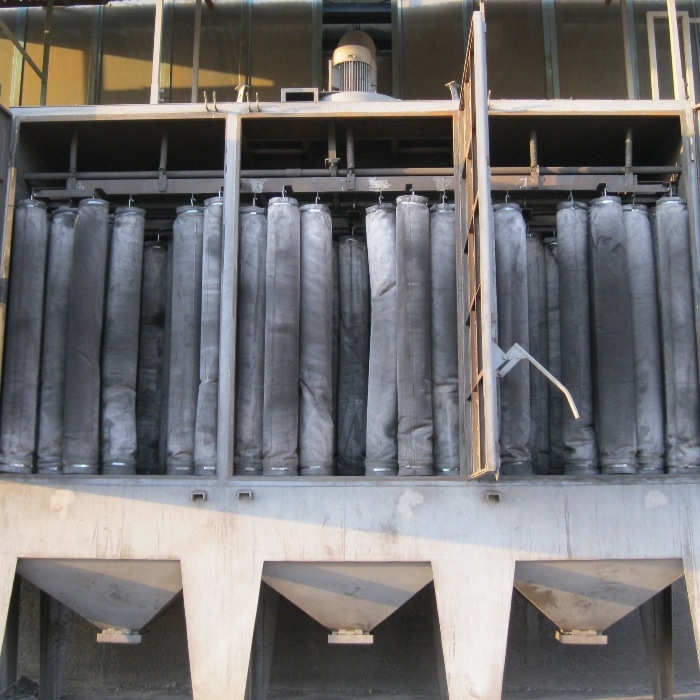
Notice the bags attached to the shaker rack at the top and at the bottom to thimbles using bag (hose) clamps.
🔸 Shaker – Bags are attached to a rack or tubesheet shaken by motor(s) to release buildup dust cake and clean the bags. New installations of these systems are uncommon due to inefficiency and high cost of use.
🔸 Medium Pressure Reverse Air – In these systems, bags attach to a tubesheet with a snap band top and then use a metal wire cage for support. Bags are cleaned by a rotating cleaning arm that directs a constant steam of clean air down into each bag as it rotates. It uses essentially identical bags as a top load pulse jet; some use oval-shaped bags in place of round bags/cages. These can also be converted to pleated filters.
► NOTE: Medium-pressure reverse air systems (Such as Donaldson RF series) while not as widely-used as pulse jets, are still found in many industries. These units use bags nearly identical to top-load pulse jet bags.
🔸 Low Pressure Reverse Air – In these systems, bags are attached at the bottom to a tubesheet with large mounting hubs or thimbles, and then suspended from chains and conical springs or “J-Rods” with conical springs and then tensioned from above. Bags are cleaned when the dirty air inlet is closed and a secondary cleaning inlet is opened, then a second system fan (reverse air fan) blows air back into the baghouse from the top, and creates positive pressure collapsing the bags and causing the dust cake to fall off into the hopper. These are almost always very large units (500+ bags), compartmentalized to allow for continuous operation (cannot clean online), and found on foundries, mills, boilers, etc.
Pulse jets account for the vast majority of filters in use today. For that reason, let’s examine the various differences between pulse jet styles.
Identifying Variations of Pulse Jet Dust Collectors
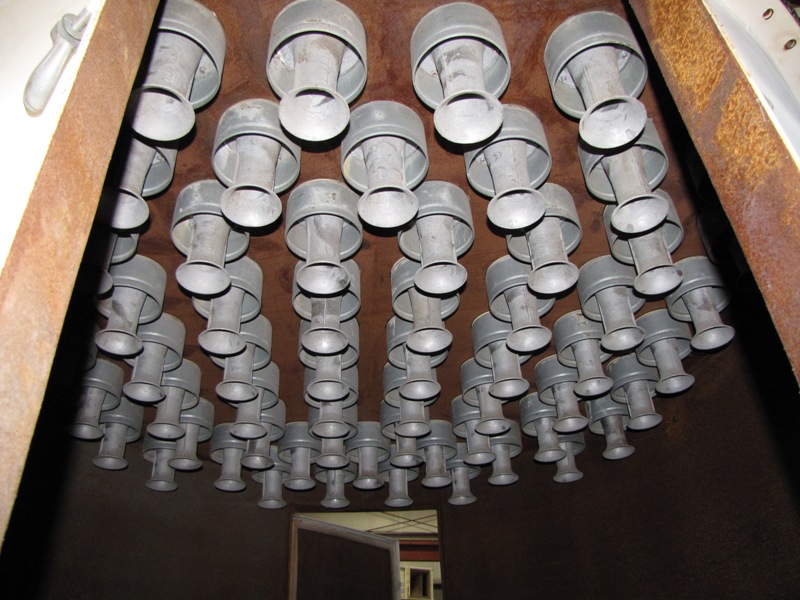
View from underneath a tubesheet in a bottom load dust collector. Note the fixed venturi and mounting hubs where the bags and cages are attached.
🔵 On Bottom Load Dust Collectors (or bottom entry) units, the dirty air plenum is accessed through a door or hatch on the side of the unit (usually near the hopper break) with a walkway inside. The bags are attached to mounting hubs or thimbles on the underside of the tubesheet using a bag clamp (i.e. hose clamp). Replacing the filters requires the technician to enter the dirty side and release the clamp at the top of the filter and then remove the dirty filter and cage from the unit. These units typically take raw edge top, disk bottom bags, and split collar cages. The cages go inside the bag and then the excess fabric is folded over the edge of the cage, and then pushed up onto the mounting hub/thimble and then secured with a clamp.
Real-life example of a top load pulse jet dust collector with walk-in plenum. Notice the doors on the catwalk.
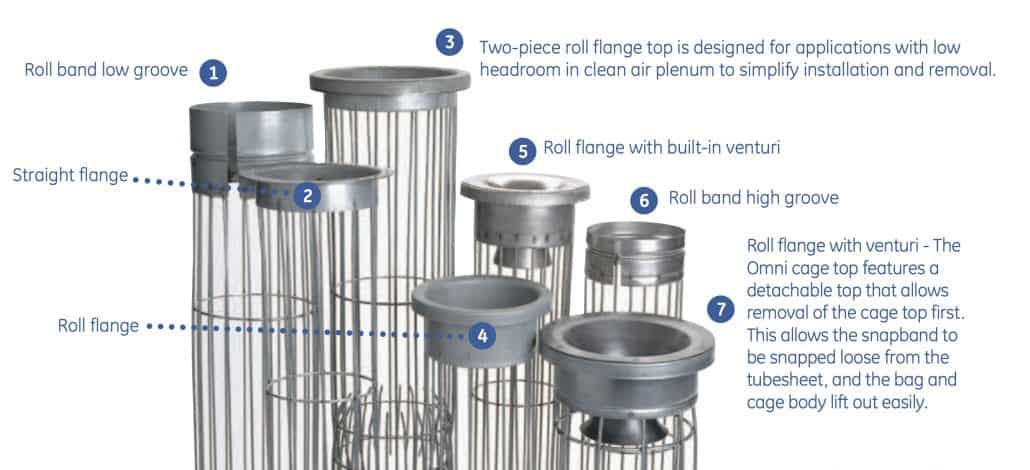
🔵 Top Load Dust Collectors (or top entry) permit access from above the tubesheet, on the clean side of the baghouse, usually by removing a top hatch/door and then stepping down onto to the tubesheet. The filters go down into the tubesheet hole from above and then are secured into the holes by either a snap band or use some kind of hold down hardware.
Some top-load units have an enlarged clean air plenum that allows technicians to walk in and remove the bags and cages entirely within the structure. These are called Walk-In-Plenum Top-Entry baghouses. Aside from the enlarged clean air plenum, these units are identical to top hatch/top-entry units. Due to the limited overhead clearance, these units may require two-piece cages to be used.
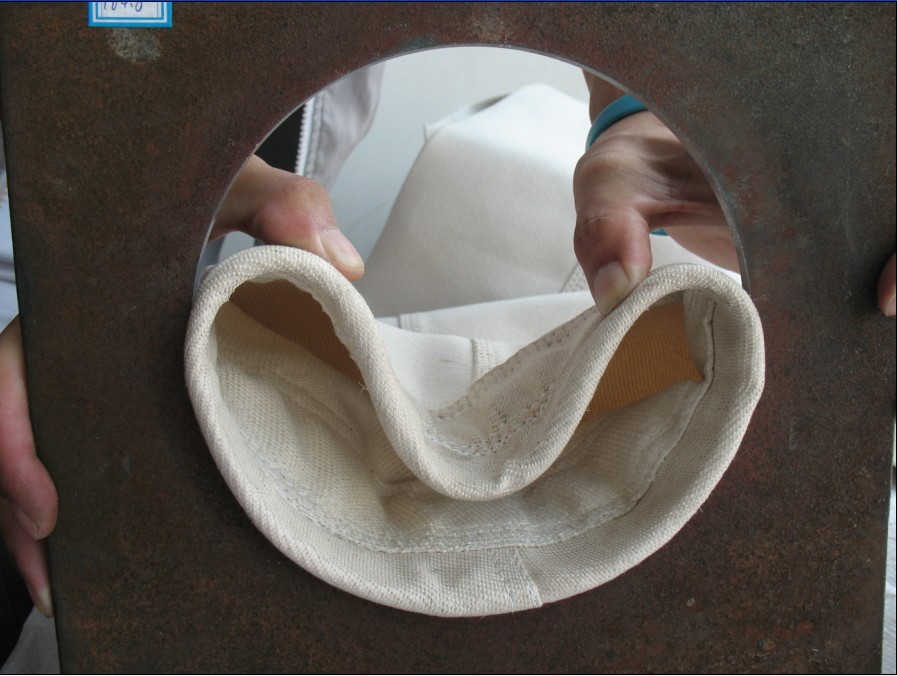
Top load style units almost always take snap band bags or a variation. Common cage designs include rolled top flange or flat flange. Some cages also have a separate venturi that drop into place, or are part of the cage top. Top entry units can also use pleated filter elements specifically designed for top load units.
Now that you have determined your style of pulse jet baghouse. Next, let’s examine the filters and cages to determine which kind you need.
Identifying The Different Filter, Cage, Cartridges, and Pleated Filter Variations
Next, you must identify the specifics of your filter bags and cage design. Many think that there are “standard” baghouse filters and that all they need is to mention a part number or a make of a baghouse, and the specs can be “looked up” and found. The reality is that in almost all cases, a detailed bag spec is required to get a proper quote.
Generally, to receive an accurate quote for dust collector filters requires the following specs:
✅ Dimensions (length & diameter)
► Flat width (most accurate measurement possible for a round bag)
✅ Top/Bottom Design
✅ Fabric
✅ Treatment/Finish (if any)
✅ Less-common special items
► Grounding wire
► Anti-collapse rings (reverse air only)
► Center or bottom wear strip (for two-piece cages or high abrasion applications)
The most common Top/Bottom Construction Styles according to baghouse style:
Top Load Baghouses – Common Bag/Cage Combos
🔵 Filter Bag: Snap band top, disk bottom
Snap band designs are used for top-load dust collectors
► May include additional wear strip at the bottom of the bag or in the middle (two-piece cages)
🔵 Cage: Rolled top, pan bottom
► Drop-in venturi or integral venturi
► Two-piece cages more common for Walk-In-Plenum variations
Bottom Load Baghouses – Common Bag/Cage Combos
🔵 Filter Bag: Raw edge top, disk bottom
🔵 Cage: Split collar (rolled band) normal or high groove, rolled flange (rolled band), flat flange, top, pan bottom
Selection of Filter Fabrics and Treatments
This depends on what material is being handled and air conditions inside the system (i.e. temperature, presence of acid/alkali gases or other reactive chemicals, etc. Cost is also a factor as some more resilient fabrics would be cost-prohibited in certain applications.
🔶 Low-Temperature Fabric Materials (250F or less) – Polyester (PE), Polypropylene, Cotton, Acrylic and Nylon
Food Grade fabrics also exist for applications requiring FDA-approved materials.
🔶 Treatments/Finishes and Membranes are used to increase resistance to certain conditions or compounds. Common treatments included humidity/moisture (hydrophobic), oils and hydrocarbons (oleophobic), acid resistance, glazed, singed, egg-shell, PTFE treatment (not membrane) and others.
► A very special kind of treatment is PTFE membrane, which imparts higher collection efficiencies, easier dust cake release (i.e. easier to pulse clean), and extends useful service life. Membranes do not require precoating and can be cleaned more forcefully than normal bags.
Envelope-Shaped bags do exist (Maybe consider converting to newer style bags or pleated.)
🔶 Certain less-common design features include:
► Hold-down hardware (used on older models to hold bags and cages to the tube sheet)
► Non-standard bottoms such as sown flat, open bottom, star-shaped, etc.
► Non-standard tops such as cord, double-beaded-snap band, hangers, grommets, etc.
While the majority of bags are round, there are some older units that used envelope, oval, or other oddly-shaped bags for one reason or another. If this is the case, a accurate measurements and/or photos and samples are required to duplicate.
The thickness of the tube sheet may be required when replacingsnap band bags and cages. Since this varies from manufacturer to manufacturer, it’s often best to verify this before sending your request for a quote. This is especially important when converting older bag and cage styles or when installing pleated filter elements.
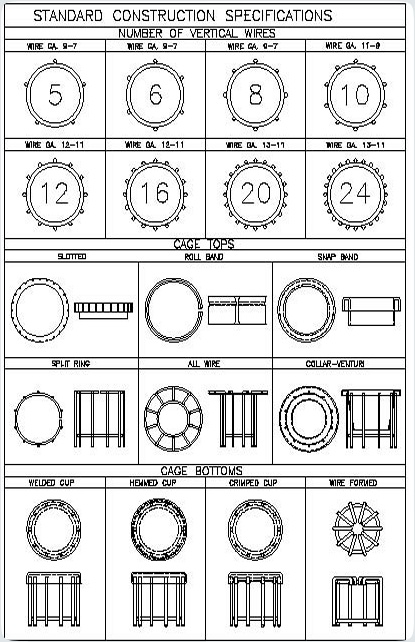
Baghouse Cages
Cage designs vary depending on the pulse jet variation. The main variables for baghouse cages are:
Dust Collectors with Cartridges and Pleated Filters
Many cartridge collector manufacturers intentionally avoid giving detailed spec sheets, reliable part numbers, or designations to force the customer to continue to buy replacements from them.
In place of bags and cages, some dust collectors use cartridges. Identifying the correct replacement for these can be tricky. Many cartridge collector manufacturers intentionally avoid giving detailed spec sheets, reliable part numbers, or designations to force the customer to continue to buy replacements from them.
In many cases, cartridge collector manufacturers sell units at a loss and then make up the difference by charging high prices for replacement cartridges. While cartridge collector designs vary widely, it is always possible to get replacement cartridges from an aftermarket vendor at discounted rates compared to the original manufacturer.
Generally, to get a quote for a replacement cartridge often the following information is required:
✅ Any part, serial, or model numbers on the cartridge
✅ Collector manufacturer, serial/model numbers
✅ Detailed measurements (Inside diameter, Outside diameter, overall length, and width (ID, OD, OAL, and W respectively)
✅ Type of fabric (see above for differences in fabrics and treatments)
✅ Number of pleats in the fabric (at times pleat depth as well)
✅ Top and Bottom construction (open/closed, open/open, gasket types, etc.)
As with bags, the best option is to send a sample for us to duplicate. When this is not possible, a series of detailed photos, along with the measurements and information above, will ensure a compatible replacement is found.
Pleated Filter Elements
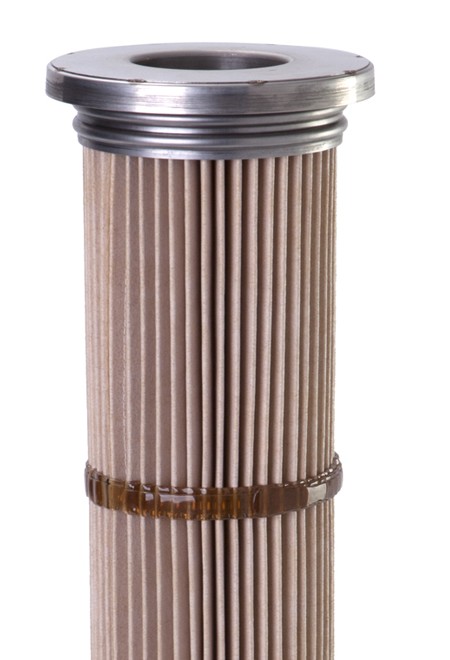
A pleated filter element is NOT the same as a cartridge. Pleated filters often replace traditional bags and cages in both top load and bottom load pulse jet collectors.
In many cases, manufacturers design newer baghouses to use pleated filter elements (also called pleated bags) in place of standard bags and cages. Though similar, pleated elements differ from cartridges in both application and operation.
Generally, they are not suitable for high temperatures and excessively abrasive dust.
Pleated filter quotes require the same basic information as bag quotes, namely, dimensions, fabric/treatment, and baghouse style (bottom load or top load).
Now you should be able to identify what kind of dust collector you have and what kind of filters it uses. This should enable you to gather the information needed for a pricing quote on replacement filters, or engineering services.
Now when you call in and ask for a quote you will be able to provide the needed information for our sales associates to help quote your filters and cages.
🔸 Baghouse.com Associate: “What kind of baghouse do you have?”
🔹 Your Answer: “We have a top-entry, pulse jet baghouse.”
🔸 Baghouse.com Associate: “What kind of filters and cages does it take?”
🔹 Your Answer: “The bags are snap band top, disk bottom, aramid (Nomex) with PTFE membrane, 6″ x 120″, with a 6.25” tubesheet hole, with a QTY of 400. The cages are rolled-top, with integral venturi, 12 vertical wires, made from galvanized steel, QTY 400. “
🔸 Baghouse.com Associate: “Excellent! I can get you pricing on that right away.”
Still confused after this article? It’s ok, that’s what we are here for. Give us a call at (702) 848-3990 or email us here and we will be happy to walk you through the process. And if all else fails, you can always send us a sample filter to examine and leave the rest to us.
Director of Operations | Dust Collection Specialist | Industrial Filtration Consultant
Dominick DalSanto is an author and environmental technologies expert specializing in dust collection systems. He has nearly a decade of hands-on working experience in the industry. Dominick is the sales director and sales technical advisor for an industrial dust collection equipment manufacturer. Personally took the lead on key projects each year from sales engineer to field advisor to project manager to business relations. Born in San Bernardino County, California, and raised in Chicago, he currently resides in Buenos Aires, Argentina.
https://baghouse.com/wp-content/uploads/2025/04/What-Kind-of-DC-Do-I-Have.png10801920Dominick DalSantohttps://baghouse.com/wp-content/uploads/2025/10/BH-Logo-Alt-01-300x70.pngDominick DalSanto2025-07-09 13:00:002026-06-04 22:52:14What Kind of Dust Collector Do I Have? Guide To Baghouse Styles
Every time we visit a new plant and chat with the folks running the dust collectors, we notice that the word “damper” means different things to different people. So we figured it’s a good time to clear things up and explain what dampers actually are, what are VFDs, and how to use them the right way.
What Are Dampers?
As systems increase in size, it may be necessary to use dampers on the ductwork
Ventilation dampers are used in dust collection systems to adjust and control airflow. Air dampers are also used to separate sections of the ductwork that are not currently operated, thus optimizing the operation of the entire system. There are different types of dampers, including manual dampers (adjusted by hand), motorized dampers (controlled by an electric motor), and automatic dampers (responding to changes in temperature or pressure). Dampers provide a way to manually or automatically adjust airflow, but they do not change the speed of the fan or motor.
In the dust collector itself, there are two main types of dampers and they adjust fan capacity with different system effects:
Outlet Damper: This is the least efficient option, as it increases system pressure drop as the air flow decreases.
Inlet Vane Damper (VIV) – Installed on the inlet of the fan, swirls the air in the same direction as the fan rotation. They are commonly modulated with electric or pneumatic actuators. This is the most efficient damper option. Power consumption can be reduced, though not as much as with a VFD.
Outlet Damper – Mounted on the outlet of the fan, simply “throttles” the air leaving the fan. This damper is the least efficient option, as it increases system pressure drop as the airflow decreases.
The Importance of Initial Damper Settings
You might have to readjust the dampers throughout the lifespan of the filters
When a dust collector is first commissioned, a service technician measures the total air volume and duct conveying velocity to ensure proper dust control at the hoods in the process. These measurements are typically taken when the system and filters are new, with a low differential pressure around 1.0 inch of water column. At this point, the technician sets and records the fan damper position.
Most dust collectors have a cleaning system that keeps dust from building up in the filters and helps maintain an average differential pressure. But as time goes on, pressure builds up and airflow drops, so you might have to readjust the damper a bit to keep things working right. This kind of adjustment might need to happen a few times throughout the lifespan of the filters.
When it’s time to replace the filters, the damper must be readjusted to its original position set during commissioning. If you skip that step, you could end up with too much airflow, which wears out the new filters faster, increases costs due to more frequent replacements, and could even cause some downtime in your process.
What is the difference between Dampers and VFDs?
While dampers control airflow by opening or closing to adjust the volume of air passing through ducts, VFDs control the speed of motors to regulate the output of fans.
VFDs (Variable Frequency Drives) are electronic devices used to control the speed of an electric motor by varying the frequency and voltage supplied to it. They are often used with fans to adjust the speed of the motor based on the required airflow. By adjusting the speed of the motor, VFDs can achieve energy savings by matching the output of the fan or pump to the actual demand, rather than running at full speed constantly.
The VFD can sense this decrease in flow via a pressure transducer located in the dirty air inlet duct. The VFD will automatically increase the speed of the fan and return the system to the optimal operating point of flow and air to cloth ratio.
This setup is great for dust collector users because it cuts down on the work needed to keep the system running—no one has to constantly mess with the outlet damper. Plus, the VFD keeps the collector working at the right air-to-cloth ratio all the time. That means there’s no risk of someone accidentally opening the damper too much and throwing things off, which can wear out the filters faster.
But the biggest perk for dust collector owners? Long-term energy savings. Since fans use variable torque, the energy they need depends on how fast they’re running. And it’s not a small difference—if you slow a fan down by 25%, it only uses about 42% of the energy. Cut the speed in half, and it only uses around 12% of the power. That adds up to serious savings over time.
Do I Need a Fan Damper or a VFD?
Simply put, it all depends on the application. What can help you decide?
PROS
In addition to reducing the power, variable frequency drives in fan applications may also result in reduced noise in heating and ventilation ductwork due to the elimination of dampers. When regulating flow rates, dampers can induce unwanted vortexes in the airflow, which create noise and vibration. In a variable frequency drive system, making flow-rate changes generally only results in slight changes to the noise levels, which are normally undetectable to the ear.
The energy a fan needs depends on how fast they run. If you slow a fan down by 25%, it only uses about 42% of the energy. That adds up to serious savings over time.
CONS
✳️ Full load conditions: in well-optimized applications where the process demand may already closely match the full-load capacity of the motor, then use of a variable frequency drive with its associated energy losses would only add to the overall system losses.
✳️ Equipment speed limitations: some equipment is not designed to operate at reduced speeds, and could be damaged if operated at a reduced speed. Check with equipment suppliers to ensure the equipment is compatible with variable speed operation.
✳️ Another limitation of variable frequency drives is that it is not normally possible to reduce the flow all the way to zero due to a reduction of cooling capacity in the motor; a minimum speed of around 30% is permissible, however this is dependent on the specification of the variable frequency drive and motor.
Which One is the Most Convenient for My System?
Here we have some key factors you should have in mind:
✔ How many hours will the fan be in operation?
✔ What is the cost of power in your area?
✔ Dampers have lower up-front costs than VFD’s, but VFD’s can provide higher long-term savings in energy costs.
✔ Outlet dampers may be a great option if cold-starting the fan is the only concern (when the air’s temperature at start-up is colder than the actual operating temperature).
✔ Dampers can be used to regulate and balance system pressure.
Do you have any additional questions regarding fan dampers and VFD’s? Are you wondering how you can make the switch in your current dust collection system?
President | Dust Collection Engineer | Industrial Air Pollution Control Specialist
Matt Coughlin is an author, engineer, and dust collection expert specializing in industrial filtration systems, air pollution control, and process ventilation. With more than two decades of experience in the dust collection industry, Matt has helped design, troubleshoot, and optimize hundreds of dust collection systems across a wide range of industries, including cement, mining, food processing, woodworking, metals, power generation, chemical manufacturing, and bulk material handling. Born and raised in Southern California, Matt continues to work closely with industrial facilities around the world, helping companies improve their dust collection performance through engineering expertise, practical solutions, and long-term technical support.
https://baghouse.com/wp-content/uploads/2025/04/VFD-or-Dampers.png10801920Matt Coughlinhttps://baghouse.com/wp-content/uploads/2025/10/BH-Logo-Alt-01-300x70.pngMatt Coughlin2025-07-01 13:00:002026-06-19 18:11:22The Role of Dampers and VFDs in an Efficient Dust Collection System


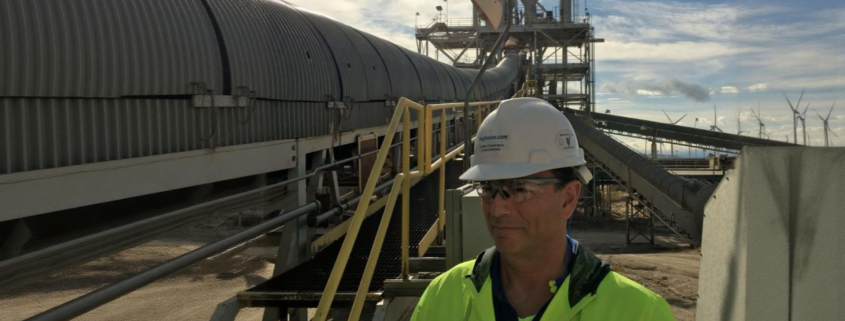

 David – “John Deere – Central Foundry – Waterloo, IA – A violent explosion in the furnace did extensive damage to the structure, including the housing, tubesheet and roof structures. We brought in a very large crew and worked around the clock, “improvising and adapting” as the repairs progressed. We sourced many of the needed repair parts, but also fabricated the main parts and structures we needed on site. We had the entire Baghouse system back on line in only nine days.”