How Can Metal Plants Improve Dust Collection Performance?

What Do Steel Mills, Smelters, and Foundries Need to Know About Dust Collection?

Dust Collection in the Metals Industry: What Steel Mills, Smelters, and Foundries Need to KnowWhen the dust collector falls behind in steel mills, aluminum smelters, foundries, recycling operations, and other metal manufacturing environments, the problem usually shows up everywhere else first: smoky work areas, rising differential pressure, shorter filter life, overloaded hopper systems, maintenance headaches, and frustrated operators.

That is why dust collection in metal manufacturing has to be looked at as part of the process. In many of these facilities, production changes come first. A furnace is pushed harder, melt times are shortened, amperage goes up, new burners are added, or throughput increases. The dust collector, however, is often still expected to perform as if nothing changed. That disconnect is where many problems begin.

Why Do Process Changes in Steel Mills Often Overload the Baghouse?

Dust Collection in the Metals Industry: What Steel Mills, Smelters, and Foundries Need to KnowIn steel production, especially around Electric Arc Furnaces (EAF) and Ladle Metallurgy Furnaces (LMF), dust and fumes are generated as part of normal melting. A useful rule of thumb is that about 1 to 3 percent of the steel melted becomes dust. That can mean roughly 20 to 60 pounds of dust for every ton of steel. Once you look at production in those terms, it becomes clear how quickly a baghouse can be pushed beyond its original design conditions.

A baghouse is designed around two main factors: gas volume and dust loading. Gas volume is tied to the heat balance of the furnace operation, while grain loading refers to how much dust is carried in each cubic foot of air. If a process change increases grain loading, the collector now has to handle more particulate without necessarily having any more filtration area, fan capacity, or discharge capacity to work with.

When that happens, plant teams usually start seeing the same symptoms. Differential pressure rises. Fan motor energy consumption increases. Suction at the furnace drops off. Work areas get dustier and smokier. Air volume falls. Filter bags wear out faster. Hopper evacuation systems get overloaded. None of those problems are isolated; they are all connected.

What Process Changes Quietly Create Dust Collection Problems?

Oxygen burners

Many metal manufacturing producers have installed oxygen burners in electric arc furnaces to increase production. The logic is straightforward: more heat and shorter melt times mean more output. But from the dust collector’s point of view, this also means the same amount of dust is being generated in less time. That increases grain loading and can push the baghouse into a higher loading condition than it was originally designed to handle.

Oxygen burners in metal industry

Creating more heat and shorter melt times means more dust is being generated in less time.


Water-cooled panels and ductwork

These are increasingly used in place of refractory in furnace evacuation systems. They make larger melts possible because they provide more area for the charge. Larger melts, however, generate more fumes and may overload the baghouse.

They also introduce another operational risk: leaks. When water leaks into panels or ductwork, the result can be a moist dust cake on the filters. That raises differential pressure and increases cleaning frequency. The moist heat can hydrolyze polyester media and weaken the bags. Dust can also accumulate on the dust collector fan wheel, leading to vibration and additional maintenance problems. From a maintenance standpoint, this is one of those issues that can look like a filter problem when it is really a process and moisture problem.

Foamy slag processes

Foamy slag methods use coke breeze or other carbon sources to form a slag layer on top of the heat, helping retain heat in the furnace. From a production standpoint, that can be very effective. From a dust collection standpoint, placement matters. If this material is injected too close to the baghouse ventilation, grain loading can increase and unburned coke can be pulled into the collector. That creates not just a loading problem, but a fire risk. The process should be located on the side of the furnace opposite the evacuation system.

Increased transformer size

Larger transformers allow the furnace to melt faster by delivering more electric energy. As with oxygen burners, faster melting means more dust generated in less time. The collector may still be physically intact and operational, but it may no longer be correctly sized for the real process conditions.

How Should Steel Mills Choose the Right Filter Media?

Filter and cages

Baghouse filters are used in a vast range of industries and applications

In EAF and LMF applications, filter media selection has a direct effect on bag life, collector performance, and particulate compliance. This is not a place for a generic filter choice. The particulate characteristics can vary depending on the process, and the media has to stand up to real operating conditions.

For steel mill baghouses, the media needs to address several specific demands. It should resist hydrolysis where moisture may be present. It must handle sparks. It needs abrasion resistance. It should capture fine particulate effectively. It has to survive repeated cleaning cycles without losing integrity. And it has to support particulate matter compliance over time, not just when the bags are new.

This is where many metal manufacturing facilities lose money without realizing it. A media that is technically “working” may still be the wrong media if it is wearing out early, blinding, or forcing the cleaning system to work harder than it should.

Filter Medias Infographic

Filter Media Types Infographic

Download our free infographic Filter Media Explained

Why Do Aluminum Smelters Face Different Dust Collection Challenges?

Dust Collection in the Metals Industry: What Steel Mills, Smelters, and Foundries Need to KnowIn aluminum smelting, the production driver is often pot amperage. Increasing amperage is usually one of the most economical ways to improve output, especially in older smelters where the physical footprint of the furnace area is fixed and large capital changes are difficult.

But increasing pot amperage does not just affect metal production. It also increases gas volume, gas temperature, and hydrogen fluoride emissions. The higher gas volume and temperature bring more moisture and dilution air into the scrubber, and the added HF reacts with the fluoride-enriched electrolyte already in the system. In other words, the scrubber is now dealing with more gas, more heat, and more chemical demand at the same time.

The solution to increase dust collector capacity

investing in PTFE-membrane bags or pleated filter elements can give you lower operating differential pressure (meaning less energy use), better filtration efficiency (which helps keep emissions low), and longer service life (sometimes 2–3 times longer than standard felt bags).

Investing in pleated filter elements can give you lower operating differential pressure, better filtration efficiency, and longer service life

One solution that has been used successfully in potline acid gas scrubbing systems is pleated filter elements. The advantage is not complicated: they provide roughly twice the filtration area of conventional bags in the same space. That lowers the air-to-cloth ratio, reduces drag, and can significantly extend filter life. In many installations, pleated filter life has ranged from 18 months to more than 55 months.

That matters because, in a smelter, the goal is stable performance under changing operating conditions. Pleated filters give the system a more effective filtration area without requiring the same footprint expansion that a full collector rebuild might need.

Differential Pressure Alone Does Not Tell the Whole Story

A concept that deserves more attention in metals plants is filter drag. Differential pressure is measured in inches of water column, and most operators are already familiar with it. But differential pressure by itself does not always give a fair comparison between systems running at different air-to-cloth ratios.

What is filter drag?

Filter drag is the differential pressure divided by the air-to-cloth ratio. Drag helps show how well the filters are retaining dust and how effectively the cleaning system is doing its job. For example, if the differential pressure is 6.0 inches water column and the air-to-cloth ratio is 5, then the drag is 1.2. This is useful because it lets engineers and maintenance teams compare filter performance under different operating conditions more accurately.

That becomes especially valuable in metals operations where airflow, dust loading, and cloth area can vary by system or change over time. For plants trying to decide whether a change in filter media, operating conditions, or cleaning settings made an improvement, drag is often a better tool than differential pressure alone.

What Dust Collection Risks Do Foundries, Recycling Operations, and Metal Manufacturers Face?

Not every metal manufacturing facility looks like a steel mill or an aluminum smelter, but many of the same dust collection principles still apply. Foundries, metalworking plants, recycling operations, welding and grinding shops, and even 3D printing labs handling metallic powders all generate particulate that can create serious issues if it is not captured and managed correctly.

A properly designed, operated and maintained dust collection system is the great defense against combustible dust hazards in your facility.

A properly designed, operated and maintained dust collection system is the great defense against combustible dust hazards in your facility

In these environments, the dust collection system needs to do more than remove nuisance dust. It may need to deal with conductive dust, combustible dust, toxic fumes, sparks, or fine particles that can stay airborne and reach worker breathing zones. Unlike general-purpose collectors, metal dust collection systems often need application-specific safeguards such as spark arrestors, explosion isolation valves, and antistatic filters.

Read a case study of how Baghouse.com helped Sunshine Minting, a global supplier and processor of precious metals.

Final Thoughts

The process in a metal foundry facility evolves, production targets increase, and the dust collector is expected to keep up. For plant managers, maintenance teams, and EHS leaders, the key is to stop treating dust collection as separate from production. In metals plants, it is part of production. 

A good next step is to evaluate whether your current collector still matches the process you are actually running today, not the one it was designed for years ago.

Firefighter killed, several injured in lumber mill explosion and massive fire in Maine

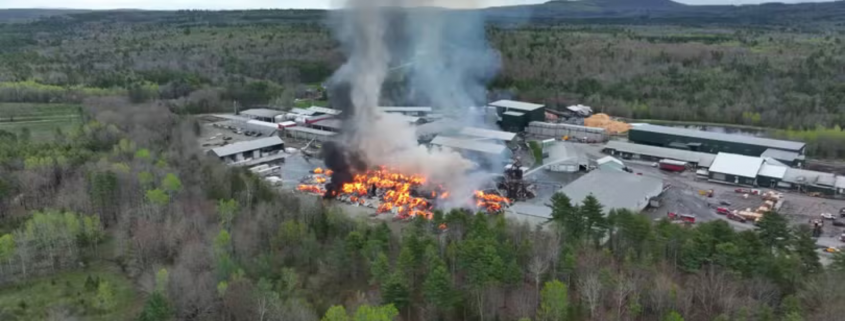
The recent fire and explosion at Robbins Lumber in Searsmont, Maine is a heartbreaking reminder of how serious wood dust and explosion hazards can be in wood-processing facilities. According to public reporting, a fire broke out at the mill and a silo later exploded after emergency responders had already arrived on site. One firefighter, Andrew Cross, was killed, and multiple others were injured. The cause remains under investigation.

The firefighter was part of a huge emergency response to flames tearing through Robbins Lumber in a rural part of the state when a silo exploded.

A Serious Reminder Regarding Wood Dust

When events like this happen, it is important not to jump to conclusions before investigators have done their work. But even without knowing the exact cause, incidents like this reinforce a few basic truths about combustible dust safety in lumber mills, wood shops, pellet plants, and other woodworking operations. Under the right conditions, wood dust can fuel fires, flash fires, and explosions.

In facilities that cut, sand, plane, grind, or handle dry wood fiber, dust can collect in process equipment, silos, conveyors, bins, ductwork, and building surfaces. If a fire starts and enough dust has accumulated, the situation can escalate quickly. That is one reason housekeeping matters so much. Good housekeeping removes fuel that can allow a small fire to spread into a much larger incident.

Read our article: Questions & Answers About Dust Control in the Woodworking Industry

Another important lesson is that upstream processes should be shut down as quickly as possible once a fire is identified, assuming it is safe to do so and consistent with the facility’s emergency procedures. Continued material flow can keep feeding a fire, move burning material into connected equipment, or make it harder to isolate the problem. In wood dust systems, that can mean the difference between a contained fire and an event that spreads through multiple parts of the operation.

What is a Dust Explosion and How Does It Begin?

What is a Dust Explosion and How Does It Begin?

This is also where system design and protection equipment matter. In many wood applications, fire protection is not always explicitly required in every part of the system, but that does not mean it lacks value. Spark detection, extinguishing systems, abort gates, sprinkler protection, and related safeguards can be worthwhile investments, especially where dust collectors, silos, or pneumatic conveying systems handle dry combustible dust. The right protections depend on the process, the equipment, and the results of a proper hazard review.

Explosion protection and prevention should also be addressed where a Dust Hazard Analysis identifies an explosion hazard. A DHA is the process used to evaluate where combustible dust is present, how it can become dispersed and ignited, and what safeguards are needed. In woodworking and lumber operations, that may include explosion venting, explosion isolation, spark detection, extinguishing systems, and other measures depending on the application. If a hazard exists, it should be addressed before an incident forces the issue.

Read our article: What Is a Dust Hazard Analysis and Why Does It Matter for Dust Collection?

For plant managers, maintenance teams, and EHS personnel, this is a good time to revisit some basic questions.

  • ⦿ Are dust-producing systems connected in a way that could let a fire spread?

  • ⦿ Are housekeeping practices keeping pace with production?

  • ⦿ Are emergency shutdown procedures clear and realistic?

  • ⦿ Have dust collectors, silos, and process equipment been evaluated for combustible dust hazards?

  • ⦿ And if a DHA has already been completed, have all of its recommendations actually been implemented?

Tragic events like the one in Maine affect families, coworkers, first responders, and entire communities. They also remind the rest of the industry that combustible dust safety is never something to treat casually. Wood dust hazards are manageable, but only when facilities take them seriously and build prevention, protection, and response planning into day-to-day operations.

Our thoughts are with the family of firefighter Andrew Cross, the injured responders, and everyone affected by this incident.

Case Study MCLB

Background

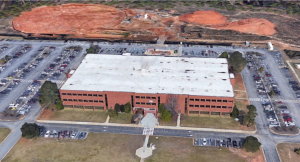
Case Study MCLBThe Marine Corps Logistics Base Albany project started as part of a broader Defense Logistics Agency initiative to upgrade dust collection systems in box shops at military facilities across the country. These shops produce wood crates and shipping containers, which means the dust collection challenge is straightforward — it is all wood dust — but still serious from both a performance and combustible dust safety standpoint. The existing equipment in these facilities was older, harder to maintain, and not performing as well as it should.

Baghouse.com reviewed the RFQ, put together a detailed proposal, and submitted a package built around relevant project experience, technical depth, and value. Based on the government’s evaluation criteria, Baghouse.com was selected for the Albany project.

The project at Albany became part of a larger relationship that also included similar box shop work at Marine Corps Logistics Base Barstow, Warner Robins Air Force Base, and Hill Air Force Base. It was part of a larger effort to bring older military woodworking facilities up to a more modern standard for dust collection performance, maintenance, and NFPA combustible dust safety.

For more information, watch our Webinar Designing Dust Collection Systems for Woodworking, by clicking here.

Scope of Work

The system at the Albany facility needed to capture wood dust generated during cutting and handling operations while also addressing combustible dust risks that were not adequately covered by the older equipment.

Unlike some projects that begin with a pre-bid walkthrough, Baghouse.com developed its initial proposal using the information provided in the solicitation package. That included documents, photographs, and layouts from the government. Once the contract was awarded, we went to the site in person to walk the shop and update the engineering plan based on actual field conditions.

From there, Baghouse.com prepared a full engineering submittal package that included:

The safety package was a major part of the scope. The new system included provisions for:

In addition to design and installation, the project also carried government-specific testing and turnover requirements, including a formal functional test procedure, on-site verification, and post-startup performance validation.

Solution

The final solution for Albany centered on replacing the old equipment with a modern pulse-jet baghouse and a high-performance, efficient fan. The goal was to give the wood shop a system that would perform better, be easier to maintain, and meet current expectations for combustible dust protection.

New Dust Collector

  • ⦿ Model: 144S-TA-10 Top-Load Baghouse
  • ⦿ Airflow / Air-to-Cloth: 13,670 CFM at an air-to-cloth ratio of 5.8:1
  • ⦿ Filter Area: 2,352 sq. ft.
  • ⦿ Construction: Heavy-duty carbon steel body with 10-ga housing, 12-ga clean air plenum, and 3/16” tubesheet and hopper
  • ⦿ Cleaning System: Pulse-jet, clean-on-demand, using a Dwyer DCT2010 controller, 12 SMC 1.5” diaphragm valves, Magnahelic gauge, and 6” air header
  • ⦿ Compressed Air Requirement: 90 PSI, 45 ACFM of clean, dry air
  • ⦿ Hopper: Inverted pyramidal 60-degree slope hopper with 10” square discharge and filter catch grate

Fan Specs

  • ⦿ IAT ground-mount fan with silencer, outlet damper, and vibration isolation frame
  • ⦿ Airflow: 14,900 ACFM
  • ⦿ Static Pressure: 19.9 in. w.g.
  • ⦿ Operating Speed: 3,555 RPM
  • ⦿ Operating Power: 68.27 BHP
  • ⦿ Air Density: 0.0659 lb/ft³
  • ⦿ Operating Temperature: 110°F
  • ⦿ Maximum Operating Speed: 3,700 RPM
  • ⦿ Maximum Temperature: 160°F

Motor

  • ⦿ Motor Size: 75 HP
  • ⦿ Motor Speed: 3,600 RPM
  • ⦿ Motor Type: WEG premium efficiency TEFC
  • ⦿ Frame: 364/5TS
  • ⦿ Voltage: 230/460V

Explosion Rated Rotary Airlock

  • ⦿ Boss Products HT Series Certified Rotary Valve
  • ⦿ NFPA 69 compliant, explosion proof up to 1.7 bar / 24.65 psi
  • ⦿ Cast iron body
  • ⦿ Mild steel, closed-end, 8-vane rotor with polyurethane flex tip adjustable tips, ~15 RPM rotor speed
  • ⦿ IP65, 1/3HP, 230/460-3-60, motor, TEFC
  • ⦿ Helical gearbox, side mounted to valve body with taperlock sprockets and chain drive enclosed in a mild stee guard with safety/warning labels

Baghouse.com designed the new system around the actual operating conditions in the shop and incorporated the required fire and explosion safety equipment from the start. A custom control package was also included to support proper system operation and integration. Because this was a wood dust application, NFPA compliance was a major part of the value of the upgrade.

It was also included a quarterly maintenance support commitment, with regular inspections and ongoing system checks. That gives the customer a path to keeping the system operating the way it was designed.

Installation Challenges

As with many government and military projects, the field conditions introduced a few surprises. One of the more important issues was electrical power. The site documentation indicated the system would be served by 460-volt power, but once Baghouse.com got into the field, it turned out the actual available power was 208 volts, which is less common for this kind of industrial dust collection equipment. The team had to adjust the design to accommodate that condition.

There were also the kinds of access issues that are common on military bases, including badge access and coordination for crews and subcontractors. In addition, the team had to deal with a site water supply issue tied to the extinguishing system. A valve outside Baghouse.com’s original scope was not functioning, which required bringing in another contractor and processing a contract modification to complete the connection properly.

A concrete pad also had to be poured for the installation, so Baghouse.com coordinated with a local subcontractor for that portion of the work.

From award to completion, the project took roughly eight to nine months, which included design updates, fabrication, site coordination, installation, testing, and final acceptance.

Outcome and Conclusion

The Albany project gave the Marine Corps Logistics Base a much stronger dust collection system for its wood shop operations. With the new pulse-jet baghouse and fan package in place, the facility should see better suction, better airflow, fewer dust-related maintenance issues, and a more reliable overall system. Just as important, the site now has the combustible dust protection features that were missing from the older setup.

The project also went through the kind of testing and validation process that government customers require. That included a 24-hour functional test with Baghouse.com personnel on site, followed by a 30-day operating period before final certification of compliance. That process has now been completed for Albany.

Baghouse.com will continue visiting the site quarterly to inspect the equipment and help keep it running correctly. This is part of the long-term value of the maintenance support tied to the installation.

 
What Are the Direct and Indirect Costs Associated with Your Dust Collection System?

When plants talk about dust collection direct and indirect costs, the conversation usually starts with the obvious numbers: filters, valves, compressed air, maybe a fan motor. Those are real costs, but they are only part of the picture. 

In practice, the biggest cost of a dust collector is often not what you spend directly on the collector itself. It is what the collector does to the rest of the operation when it is underperforming.

How to Balance Baghouse Performance vs Reducing Operating Costs direct and indirect costs

That is the difference between direct costs and indirect costs. If you only pay attention to the first group, it is very easy to make decisions that look economical on paper but end up costing far more in production, maintenance, and compliance.

As Dominick Dal Santo, Sales Director of Baghouse.com, often explains,  “The real cost of a dust collection system should be measured by its impact on the plant as a whole, not just by the price of replacement filters.”


Direct Costs: The Costs Everyone Sees

Direct costs are the expenses that are easy to identify and usually easy to budget. These include:

  • ⦿ Electricity for the fan
  • ⦿ Compressed air for pulse cleaning
  • ⦿ Replacement filter bags or cartridges
  • ⦿ Cages
  • ⦿ Pulse valves and diaphragms
  • ⦿ Differential pressure gauges and controls
  • ⦿ Door gaskets, solenoids, and other wear parts
  • ⦿ Routine maintenance labor

These are important, and they should absolutely be tracked. But they are also the costs that get too much attention in many plants.

A common example is filter replacement. A plant may try to delay a changeout because the filters are expensive. On the surface, that seems like smart cost control. But if those old filters are blinded or leaking, the system may now be using more compressed air, pulling less airflow at the hood, creating more emissions, and putting the process at risk. 

Matt Coughlin, Owner and Engineer at Baghouse.com, said: “Many facilities become ‘penny wise and pound foolish’ by stretching filter life too far while ignoring the much larger costs created by poor performance.”

Saving a few thousand dollars on filters can easily create tens of thousands of dollars in other losses.

Indirect Costs: The Ones That Actually Hurt

Indirect costs are the downstream effects of poor dust collector performance. These are harder to see at first, but they usually have the biggest financial impact.

⦿ Downtime

This is often the most expensive category. If a dust collector problem shuts down a production line, the cost is not the valve or the filter that failed. The cost is the lost production.

A good way to calculate this is to ask a simple question:

  • What does one hour of downtime cost this plant?

For some facilities, the answer may be $5,000 per hour. For others, it may be $25,000 or more. Once you know that number, it becomes much easier to justify preventive maintenance, inspections, and timely filter replacements.

⦿ Production bottlenecks

A dust collector does not need to fail completely to cost you money. If it cannot maintain airflow, the process may have to slow down. Hoods stop capturing effectively, conveyors get dusty, operators complain, and production capacity drops.

The system may still be running, but if it is reducing suction, increasing housekeeping, or forcing the process to run below target, it is already costing money.

⦿ Product quality

Secondary dust sources are created by leaks, material spills, poor housekeeping, or even dust brought in through open doors, windows, or the ventilation system.In some plants, poor dust collection affects product quality directly. Dust escaping into the wrong area can contaminate product. In batch processes, poor collection can change consistency or create off-spec material. That can mean rework, scrap, or customer complaints.


This cost is often overlooked because it gets blamed on the process rather than on the collector. But if weak dust capture is part of the cause, it belongs in the cost calculation.

⦿ Environmental compliance

If your collector is leaking or not controlling particulate emissions effectively, the cost can go well beyond housekeeping. A plant may face fines, permit violations, or extra reporting requirements.

This is another area where a small direct-cost decision can create a large indirect penalty. A plant might delay replacing a leaking filter set to save money, then end up risking an emissions violation that costs much more than the changeout would have.

⦿ Health and safety compliance

In many industries, workers can be exposed to high levels of dust, causing breathing problems that could lead to life-threatening respiratory diseases.

In many industries, workers can be exposed to high levels of dust, causing breathing problems that could lead to life-threatening respiratory diseases.

Poor dust collection can also affect worker exposure and plant safety. That may involve OSHA concerns, combustible dust hazards, or general housekeeping and visibility issues. These costs are not always immediate, but they can become very expensive very quickly if an audit, injury, or incident occurs.

A Better Way To Think About Dust Collection Cost

The best way to evaluate a dust collection system is to look at the full operating picture. Instead of asking, “How can we avoid spending money on filters this quarter?” ask:

  • ⦿ What does this system cost us when it underperforms?
  • ⦿ What does one shutdown cost?
  • ⦿ What does reduced airflow do to production?
  • ⦿ What does poor emissions performance risk?
  • ⦿ What does excessive cleaning do to compressed air use and filter life?

That is the difference between managing cost and simply delaying expense.

Final Thought

A dust collector is connected to everything around it: production, maintenance, quality, compliance, and safety. If you only look at direct costs, you are only seeing part of the story. The plants that make the best decisions are the ones that quantify both direct and indirect costs and then manage the system accordingly.

In most cases, the least expensive dust collector is not the one with the cheapest filters. It is the one that keeps the plant running.

Improving Dust Collection in Cement Plants and Mining Applications Webinar

Why Dust Collection Matters in Cement and Mining?

MIning conveying materialIn cement plants and mining operations, the dust collection system is tied directly to worker safety, housekeeping, equipment life, emissions control, and uptime. When it is designed well, it helps the plant run cleaner and more efficiently. When it is undersized, poorly maintained, or mismatched to the application, the result is usually higher maintenance costs, visible dust, shorter filter life, and constant operational frustration.

This webinar takes a practical look at cement dust collection and mining dust collection, starting with the process itself. We will walk through the cement manufacturing process, from crushing and raw material preparation to clinker production, grinding, and packing, and explain where dust is created at each step. We will also look at mining-related applications such as crushing, screening, conveyor transfer points, silo filling, bulk material handling, and cement-based processes like grout plants and backfill systems. These are the areas where an industrial dust collectorbaghousecartridge dust collector, or silo vent collector often has to work the hardest.

What the Webinar Will Cover

  • ⦿ The cement manufacturing process and mining process

  • ⦿ Where dust is generated in cement plants and mining operations

  • ⦿ Why cement dust is different from ordinary dust

  • ⦿ The main dust collection technologies used in these industries

  • ⦿ Safety and combustible dust considerations

  • ⦿ Best practices for selection, maintenance, and optimization

If you work in cement, mining, bulk material handling, or heavy industrial processing, this webinar is meant to give you useful, field-relevant guidance rather than generic theory. Whether you are planning a new system, troubleshooting an existing one, or trying to improve performance from the equipment you already have, this session will help you think more clearly about what your dust collection system should be doing and how to get better results from it.

Who Should Attend This Webinar?

This webinar is especially relevant for professionals responsible for dust control, air quality, equipment reliability, and process performance in cement and mining operations, including:

  • ⦿ Plant managers 

  • ⦿ Operations managers and supervisors

  • ⦿ Maintenance managers and maintenance personnel 

  • ⦿ Process engineers

  • ⦿ Project engineers and project managers

  • ⦿ EHS managers and safety professionals 

  • ⦿ Reliability engineers

  • ⦿ Dust collection and air pollution control specialists

  • ⦿ Bulk material handling professionals

  • ⦿ Anyone involved in cement manufacturing, mining, grout plants, silo systems, or dry material handling

How To Connect

Baghouse.com free webinarsAttending the webinar is easy! Simply register using the link below. Once registered, you’ll get a confirmation email with all the details to log in. Don’t miss it!
Improving Dust Collection in Cement Plants and Mining Applications Webinar

📅 Date: Wednesday, July 10th, 2026
⏰ Time: 1:00 PM (EST)
📍 ZOOM

Hope to see you and your team there!

Detecting Internal Leaks Using Fluorescent Powder and Ultraviolet Light

Internal filter leaks are one of the most common reasons a dust collector starts sending dust out the stack, losing efficiency, or creating a mess on the clean-air side of the system. The problem is that many leaks are not easy to see with the naked eye. Unless there is a major tear, a missing filter, or a badly seated snap band, visual inspection alone can miss the real source of the problem.

That is where fluorescent leak detection powder and ultraviolet light inspection become extremely useful. This method gives maintenance teams a fast and reliable way to identify leaking filters, poor seals, installation mistakes, and other internal leak paths. It is also one of the best tools to include in a regular quarterly preventive maintenance program, especially on pulse-jet baghouses.

Why This Leak Testing Method Works

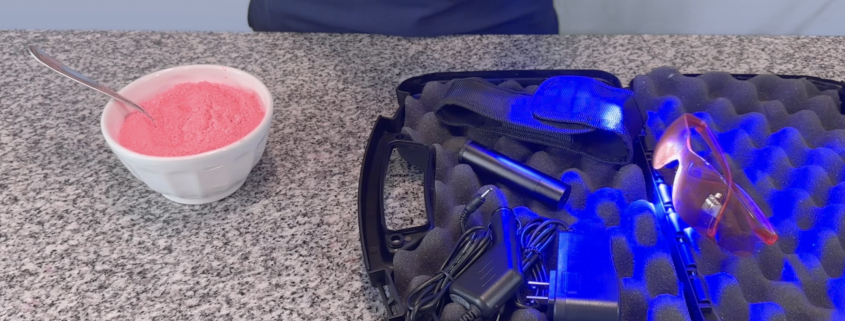
Green and Pink Leak Testing Powder

The benefits of leak testing far outweigh the risks associated with system failures.

Fluorescent leak powder is introduced into the dirty-air side of the dust collector. As it moves through the system, it behaves like the process dust. If there is a leak path, such as a hole in a filter, a damaged seam, a bad snap band seal, or a filter that is not seated correctly, the powder follows that path into the clean-air side.

Once the collector is shut down and the clean-air side is inspected with a black UV light, the leak powder becomes highly visible. Instead of guessing which bag is leaking, the maintenance team can see exactly where the powder came through.

This is much more reliable than trying to spot holes visually, especially when the leak is small.

How Often Should I Perform a Leak Test?

Leak testing is not just for old filters that have been in service for a long time. It should also be used in several routine and corrective situations.

A leak test is especially valuable:

  • ⦿ When dust is visible coming out of the stack
  • ⦿ During quarterly PM inspections
  • ⦿ After a filter changeout
  • ⦿ After contractor-installed bags or cartridges are put in service
  • ⦿ When emissions increase unexpectedly
  • ⦿ When maintenance suspects a leak but cannot identify it by visual inspection alone

One of the most practical uses of this method is immediately after a bag changeout. A collector may look fine from the outside, but if even a few bags were not snapped in correctly, the leak test will show it before the unit is returned to full service.

What Tools Do I Need for Leak Testing?

To perform this inspection properly, the maintenance team should have:

  • ⦿ Fluorescent leak detection powder
  • ⦿ A black UV inspection light
  • ⦿ UV filtering glasses
  • ⦿ An injection point on the dirty-air side of the system
  • ⦿ A way to disable the cleaning system
  • ⦿ A grid sheet or map of the collector for documenting leak locations
  • ⦿ Enough spare filters on hand in case damaged filters need replacement
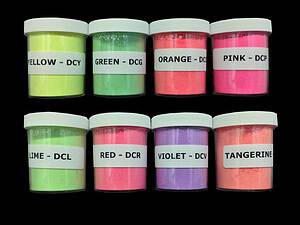
Leak powder available colors

Different applications require specific fluorescent powder colors for leak identification during the inspection

Leak powder is typically available in multiple colors, which is helpful if the collector needs to be tested more than once. Using a second color after repairs makes it easy to confirm that the original leaks were actually fixed.

A general rule is to use about one pound of leak powder per 1,000 square feet of filter media.

How Can I Perform a Leak Test? Step by Step Instructions

Step 1: Identify the injection point

Choose an injection port on the negative-pressure side of the dust stream, as close to the baghouse inlet as practical. This helps the powder travel through the collector the same way the dust does.

Step 2: Turn off the cleaning system

Deactivate the baghouse cleaning mechanism, but keep the exhaust fan running. This is important because it allows dust cake to build on the filters and increases differential pressure across the collector. That pressure difference encourages the leak powder to move toward the points of least resistance, which are the leak paths you want to find.

Step 3: Inject the fluorescent powder

Introduce the leak powder into the dirty-air stream. The powder will move through the collector and pass through any holes, bad seals, or other leakage points.

Step 4: Shut down the collector

After the powder has been introduced and allowed to move through the system, shut down the collector.

Step 5: Enter the clean-air side

Go into the clean-air plenum above the filters. Close doors or block outside light if needed so the inspection area is as dark as possible.

Step 6: Inspect with black light and UV glasses

Use the UV light and the filtering glasses to inspect:

  • ⦿ The tops of the filters
  • ⦿ The tubesheet
  • ⦿ Snap band areas
  • ⦿ Seams
  • ⦿ Any part of the clean-air side that is exposed to the filtered airstream

Anywhere the powder glows is a leak path.

Step 7: Document all failures

Mark the leaking locations on a collector grid sheet. This is important for repairs and also for tracking repeated failures in the same area. If leaks keep happening in one section, that may point to a larger operating or design problem.

Step 8: Repair or replace the problem filters

If the filter is just not seated correctly, it may be possible to reseat it. If it is torn or the seam is damaged, replace it.

Step 9: Retest with a different color if needed

After repairs, run another test using a different powder color. This confirms the leaks are gone and helps separate the new test from the old one.

Why Should I Include Leak Testing Into Our Quarterly Preventive Maintenance?

Quarterly PM leak testing is valuable because it helps identify small leaks before they turn into visible emissions or major bag failures. It also gives maintenance personnel a repeatable, reliable procedure for checking filter integrity on a schedule.

What the Results Mean

One of the biggest advantages of this method is that it helps the team interpret what kind of leak problem they actually have.

If you see glowing spots or trails

This usually means there is a localized leak, such as:

  • ⦿ a torn filter
  • ⦿ a bad seam
  • ⦿ a poorly seated snap band
  • ⦿ a damaged seal
  • ⦿ a missing or failed filter

In this case, the powder tends to concentrate at the specific point of failure.

If you do not see obvious leak points, but dust is still going out the stack

This can mean something different. If the filters are badly blinded, they may allow dust to pass through more evenly across the whole filter set rather than through one obvious hole. In that case, the powder may not show a concentrated bright leak path because there is no single failure point. Instead, the entire set of filters may be leaking a little.

Final Thoughts

Detecting internal leaks with fluorescent powder and ultraviolet light is one of the most practical and reliable inspection methods available for dust collectors. It removes guesswork, speeds up troubleshooting, and gives maintenance teams a repeatable way to verify filter condition and installation quality.

For plants that want better control over dust collector performance, leak testing should be a standard part of the maintenance program.