Questions and answers about IoT sensors and remote monitoring

This article distills five expert questions from the Boosting ROI with Smart Sensors & Industrial IoT Webinar, featuring Eric Schummer – CEO of Senzary and Matt Coughlin, Engineer and Owner of Baghouse.com, into practical guidance for bringing this technology to your dust collection systems.

— "Are there software tools for predicting possible failures in IoT networks?"

Yes. There are software tools for predicting maintenance and failures, and this is a major driver for many customers. Tools address different equipment types—vibratory, rotational, conveyors, elevators, pumps and motors, kilns, and more—by monitoring a range of signals such as gas concentrations (over 20 gases), inclinations, tilts, vibrations, pressures, and even metal particles in oil.

By analyzing these data points over time, they help reveal how a system degrades, enabling predictive maintenance decisions, whether manual or automated.

— "How do sensors and gateways maintain uptime?"

LoRaWAN is a service-enabled protocol that ensures robust uptime. The system continuously monitors every packet in real time and coordinates between sensors and gateways 24/7, adjusting for distance, noise, quality, and signal conditions. Sensors are designed to save battery life and rejoin the network after disruptions, with transmissions typically under one second due to small payloads.

The platform uses multiple gateways and selects the best one for each transmission. AI tools monitor packet counts, missing packets, and signal degradation to identify issues early, such as a gateway disconnect, supporting proactive maintenance and uptime.

— "How to measure dust and noise in concrete plants?"

Dust sensors measure both particle counts and particle mass, with counts and mass expressed on scales tied to health-relevant metrics. Particle counts may use very fine measurements (down to small PPM-like scales in some contexts, e.g., data centers), while common regulatory references use 2.5 and 10 micrometer equivalents. Particle mass concentration per cubic meter is also tracked, using scattered lasers from compact, portable sensors that can be placed in various locations.

Noise is measured as air-pressure–based sound levels (decibels) for regulatory and worker exposure purposes, and ultrasound ranges (0–80 kHz) can be used to monitor equipment like conveyors and motors for predictive maintenance. The discussion also suggests evaluating the dust collection system’s basics (sizing, hood design, capture velocities) to maximize the effectiveness of IoT sensing.

— "What are the Basics Before IoT Implementation?"

Before IoT deployment you should establish solid dust collection basics. This includes having systems sized appropriately, with proper hood design and capture velocities—the “dust collection 101.”

Once these fundamentals are in place and functioning, IoT sensors and predictive maintenance tools can provide meaningful monitoring and optimization rather than chasing issues after they occur. 

— "Can sensors handle heat and dust?"

Yes. The sensors are described as protected electronics with IP67 ratings, meaning they are resistant to water and dust ingress and suitable for harsh environments. There are real-world examples of sensors operating in extreme conditions, including 400–500 degrees Celsius (or Fahrenheit) in steel industry contexts, demonstrating that these devices can function reliably in hot, dusty industrial settings.

Every facility is different, and the remote monitoring needs of your systems can vary widely depending on your dust, equipment, layout, and production demands.

If you didn’t see your question here—or if you’re dealing with a specific issue in your system—don’t hesitate to reach out. Our team is always available to help you find practical, effective solutions and guide you through any challenges you may be facing.

We’d be glad to answer your questions and support you in improving the safety of your dust collection system.


Questions and Answers about Combustible Dust Webinar Serie

This article distills six expert questions from the Is My Facility Compliant with Combustible Dust Hazards? Webinar, featuring Joseph Kastigar, Regional Sales Manager of Boss Products and Matt Coughlin, Engineer and Owner of Baghouse.com, into practical guidance for managing combustible dust risks across industries.

— "In a food industry that handles dust and sugar with some humidity, is a mitigation system necessary?"

A DHA (dust hazard analysis) is recommended and will specify whether a mitigation system is needed, with the final decision depending on the DHA outcomes, and for isolation, a mechanical passive isolation valve is typically used, with pneumatic options depending on what the DHA indicates.

— "How to prevent fire events in laser cutting applications when both aluminum and ferrous dusts are present?"

Spark detection with a mechanical fire break shutter can be recommended, along with spark traps; and because a dust mix could be highly explosive, a DHA is important, as it may indicate the need for a wet collector or other protections, while if the dust is manageable, protection can include spark detection and mechanical valves and related safeguards.

— "What are some OSHA regulations regarding combustible dust?"

OSHA has a National Emphasis Program (NEP) for combustible dust, and while OSHA points to NFPA as the benchmark, NFPA is not the law; regulators may require additional items, so involve regulators early and plan so they can sign off, with NFPA serving as the guideline basis.

— "What are the proper steps for confirming the appropriate building occupancy based on a DHA?"

Building occupancy depends on architectural standards (IFC tables) and DHA results; simply having combustible dust does not automatically trigger H2 if mitigation like vents, isolation, and CO2 suppression is in place, and the regulator ultimately determines occupancy; the DHA firm knows NFPA, but the architectural regulator decides the occupancy designation, so if needed a follow-up discussion can be arranged.

— "Is coal dust a hazard? Do you have any case study or experience with this kind of dust?"

Coal dust can be a hazard and a full on-site DHA is recommended to determine the exact risk; past projects with coal dust have DHA outcomes guiding protection needs.

If coal dust is present, sharing process details can enable a DHA-based assessment.

— "How does zinc dust affect ignition and explosion risk compared to other metals?"

Zinc dust from galvanizing presents a combustible dust risk, with spark arresters and chemical fire suppression as reasonable protections already in place; to be fully NFPA-compliant, additional explosion protection such as venting and isolation between vessels may be needed, and a DHA is still recommended to review the entire protection setup alongside fire protections.

Every facility is different, and combustible dust challenges can vary widely depending on your dust, equipment, layout, and production demands.

If you didn’t see your question here—or if you’re dealing with a specific issue in your system—don’t hesitate to reach out. Our team is always available to help you find practical, effective solutions and guide you through any challenges you may be facing.

We’d be glad to answer your questions and support you in improving the safety of your dust collection system.


Frequently Asked Questions Woodworking Facilities

Dust control in woodworking facilities comes with a unique set of challenges, from managing fine particulate to addressing combustible dust risks and maintaining consistent system performance.

In this article, we’ve compiled some of the questions asked by plant managers, engineers, and shop operators during our Designing Dust Collection Systems for Woodworking Webinar, along with practical, easy-to-understand answers based on real-world experience from our webinar.

— "How can recirculating air be safely set up in a woodworking environment?"

Since wood dust is combustible, the main concern is preventing a fire or explosion from traveling back into the workspace. To do this, systems typically need explosion isolation valves on both the inlet and outlet sides of the collector, especially if the air is being returned indoors. Explosion venting is also critical, as it provides a safe path for pressure release in case of an event. In many cases, additional fire protection systems like spark detection and suppression may also be required.

Because every facility is different, it’s important to evaluate the full system design and ensure it aligns with NFPA guidelines and local regulations before recirculating air.

— "Can a dust collection system be overdesigned to avoid issues if a branch is added later?"

Yes, a system can be intentionally designed with future expansion in mind… but “overdesigning” needs to be done carefully. Simply oversizing everything can actually create inefficiencies, such as poor air velocity or unnecessary energy consumption.

A better approach is to plan for future capacity by selecting a fan and system that can handle additional airflow while still maintaining proper performance under current conditions.

— "What type of damper is typically used to balance dust collection systems?"

In most woodworking dust collection systems, balancing is achieved using blast gates rather than traditional dampers. Blast gates are simple mechanical devices installed at each branch line to control airflow.

They allow operators to open or close specific pickup points depending on which machines are running. This helps maintain proper airflow distribution across the system.

For larger or more complex systems, more advanced balancing methods may be used, but blast gates remain the most common and practical solution in woodworking environments.

— "How can blast gates be used in smaller applications to assist with balancing?"

In smaller shops, like schools or hobbyist environments, blast gates are especially useful because not all machines are running at the same time. By opening only the gates for active machines and closing the rest, you can direct airflow where it’s needed most.

This improves dust capture efficiency and helps maintain proper duct velocity without requiring a more complex control system.

It’s a simple, cost-effective way to manage airflow and keep the system performing properly in smaller-scale operations.

— "How much extra capacity should engineers consider when selecting a fan?"

Engineers typically include a safety margin when selecting a fan, but it shouldn’t be excessive. Adding some extra capacity helps account for system losses, future expansion, or unexpected conditions.

However, too much capacity can lead to inefficiencies, higher energy costs, and even operational issues if airflow exceeds optimal levels.

A well-designed system considers realistic operating conditions and includes just enough flexibility to handle variations without oversizing the equipment.

— "Do explosion vents come standard with dust collectors, or do they need to be specified during selection?"

Explosion vents are not always standard… they usually need to be specified based on the application. Since woodworking dust is combustible, most systems will require explosion venting to meet safety standards.

These vents are designed to relieve pressure safely in the event of an explosion, preventing damage to the equipment and reducing risk to personnel.

It’s important to address this during the design phase to ensure compliance with NFPA standards and proper system integration.

— "How do I determine the correct airflow required for each woodworking machine in my facility?"

The required airflow depends on the type of machine, the size of its dust port, and the capture velocity needed to effectively collect dust.

Typically, this is determined using industry charts and guidelines that specify CFM requirements for different machines and duct sizes. You then calculate the total system airflow by adding up all active pickup points.

Accurate airflow calculations are critical. Too little airflow leads to poor dust collection, while too much increases energy costs and system wear.

— "What are the warning signs that a dust collection system is undersized or not performing properly?"

Common signs include visible dust in the air, dust buildup on surfaces, and poor capture at machines. You may also notice frequent clogging in ducts or higher-than-normal differential pressure across filters.

Other indicators include reduced airflow, inconsistent system performance, or increased maintenance needs.

If these issues appear, it’s often a sign that the system isn’t moving enough air or isn’t properly balanced, and it may need to be evaluated or upgraded.

— "Are floor sweeps a good idea in woodworking facilities or can they create problems in the dust collection system?"

Floor sweeps can be convenient, but they need to be used carefully. If not properly managed, they can introduce large debris into the system, which may clog ducts or damage filters.

They also require sufficient airflow to work effectively, which can impact the performance of other pickup points if the system isn’t designed for it.

When included in the design, they should be properly sized and used strategically to avoid negatively affecting the overall system.

— "How do you properly size duct branches when multiple woodworking machines operate intermittently rather than continuously?"

When machines don’t run all at once, the system can be designed using diversity, what means that not all branches are assumed to be active simultaneously.

However, this requires careful planning. You still need to maintain proper velocity in all ducts when they are in use, which may involve balancing with blast gates or using controls like VFDs.

The goal is to ensure consistent performance regardless of which combination of machines is operating at any given time.

— "What type of filter media is typically recommended for softwood versus hardwood dust?"

In most cases, the type of wood (softwood or hardwood) doesn’t significantly change the filter media selection. Standard polyester filter bags or cartridges are commonly used and perform well in both applications.

What matters more is the dust loading, particle size, and operating conditions. Choosing high-quality filter media and maintaining proper cleaning cycles will have a bigger impact on performance and lifespan than the wood type itself.

Proper system design and maintenance are key to getting the most out of your filters.

Every woodworking facility is different, and dust control challenges can vary widely depending on your equipment, layout, and production demands.

If you didn’t see your question here—or if you’re dealing with a specific issue in your system—don’t hesitate to reach out. Our team is always available to help you find practical, effective solutions and guide you through any challenges you may be facing.

We’d be glad to answer your questions and support you in improving your dust collection system.


What Is the Smallest Particle a Baghouse Dust Collector Can Capture?

One of the most common questions engineers and plant managers ask about dust collection systems is simple: What is the smallest particle size a baghouse dust collector can capture?

People often want to know if systems are rated for particles in millimeters, microns, or even nanometers, and whether there is a measurement system that quantifies this capability. The short answer is that dust collectors are not rated for a specific particle size, but they can still capture extremely fine particles very effectively when properly designed and operated.

Let’s break down why.

The Real Filtration Mechanism

fisherman fishing net big fish small fishIn pulse-jet baghouses, filtration does not primarily happen within the filter fibers themselves. Instead, the system relies on something called a filter cake.
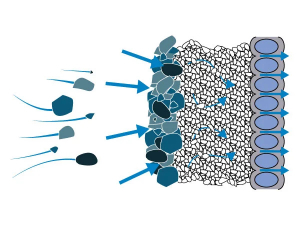
A simple way to visualize this is with a fish net. Imagine throwing a net into the water. The first fish caught are the larger ones, which begin blocking the openings in the mesh. As more fish accumulate, smaller fish are stopped by the larger ones already trapped.

Dust collectors work in a similar way.

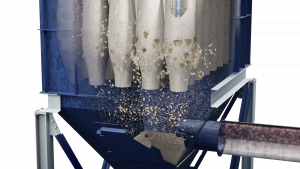
When new filters are installed, some of the smallest particles can pass between the fibers of the fabric. But as the system runs, larger particles begin to accumulate on the surface of the filter bags. This layer of dust forms the filter cake, which becomes the true filtration barrier.

The small white particles in this image represent the dust cake, a layer of fine dust that helps intercept the new incoming dust and makes it easier to be cleaned and reused again

The small white particles in this image represent the dust cake, a layer of fine dust that helps intercept the new incoming dust and makes it easier to be cleaned and reused again

Once this cake forms, the collector can capture very fine dust particles—typically down to below 2 microns with very high efficiency.

The pulse-jet cleaning system periodically removes some of the dust cake to prevent excessive pressure buildup while leaving enough material on the surface to maintain effective filtration.

With proper filter cake development and good maintenance practices, only a very small percentage of sub-2-micron particles should pass through the system.

How Filter Media Is Tested

Filter fabrics used in baghouses are extensively tested by manufacturers in laboratory conditions. Several industry organizations establish testing procedures, including:

These tests typically require that 40% to 70% of the test dust consist of particles smaller than PM2.5 (particles smaller than 2.5 microns).

For example, testing data for aramid filter media shows impressive performance even with extremely fine dust:

  • ✔️ Test dust contained 40% particles smaller than PM2.5

  • ✔️ The plain aramid fabric captured 99.99905% of the dust

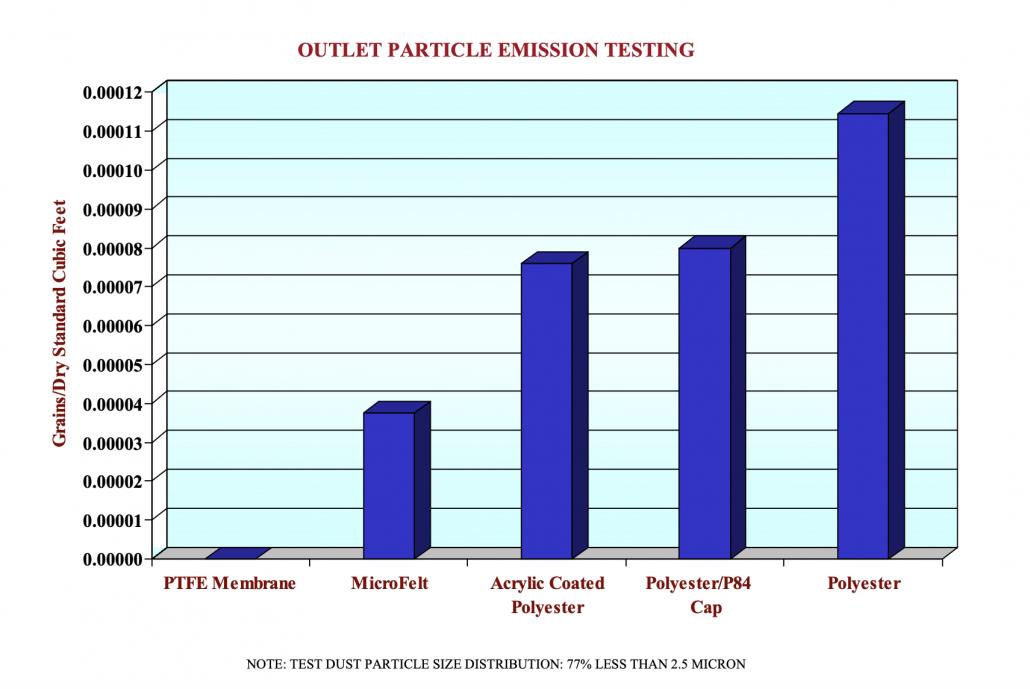
Even with that level of efficiency, measurable emissions can still occur when very large volumes of air are moving through the system. In the test example, emissions measured 7.95 grains per dry standard cubic foot (gr/dscf)—a strong performance considering the large proportion of fine particles.

Particle Emission Testing

PTFE Membrane: Capturing Even Smaller Particles

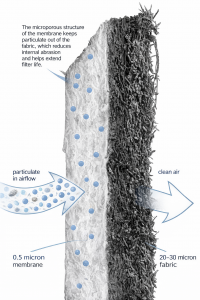
When PTFE membrane is added to the filter media, collection efficiency increases even further.
In testing performed by LMS laboratories, aramid with PTFE membrane was challenged with potassium chloride (KCl) dust containing particles as small as 0.3 microns. The filter captured 99.98% of those particles.

In many cases, emissions from PTFE membrane filters are so low that standard test equipment cannot detect measurable emissions.

For this reason, the United States Environmental Protection Agency considers PTFE membrane filters a MACT-level technology (Maximum Achievable Control Technology) for particulate pollution control.

Why Dust Collection Filters Aren’t “Rated” by Particle Size

Unlike liquid filtration systems, dust collector filters are not rated for specific particle sizes.

Collection efficiency depends on several variables:

  • ✔️ Dust loading (how much dust is hitting the filters)

  • ✔️ Particle size distribution

  • ✔️ Air-to-cloth ratio

  • ✔️ Operating conditions

  • ✔️ Cleaning system performance

  • ✔️ Filter media type

Because of these factors, manufacturers do not assign a fixed particle-size rating. Instead, performance is verified through standardized laboratory testing.

From those test results, engineers can calculate emissions for a specific process and express them in grains per dry standard cubic foot (gr/dscf)—the common North American measurement used in environmental permitting.

When MERV Ratings Apply

There is one partial exception to the “no rating” rule.

Certain pleated or HEPA-style filters are evaluated using the MERV rating system established by ASHRAE.

However, this rating system was originally designed for HVAC air filtration, not industrial dust collectors. It provides a general comparison rather than a precise prediction of emissions.

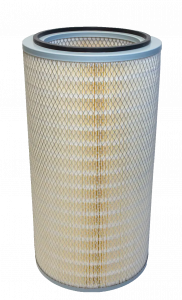
Typical MERV ranges for dust collector cartridges include:

  • ✔️ MERV 10–12 – Spunbond polyester filters

  • ✔️ MERV 15 – Nano-fiber media over cellulose or spunbond base

  • ✔️ MERV 16 – PTFE membrane filters

While useful as a quick reference, MERV ratings do not account for factors like dust loading or air-to-cloth ratio.

What is a MERV Rating on Dust Collection?

Three Performance Levels for Baghouse Filter Media

In practical terms, dust collection performance can be viewed in three filter media categories.

Grade 1 – Standard Media

Plain polyester, acrylic, polypropylene, or aramid filter bags, along with standard spunbond polyester pleated filters. These provide reliable performance and are suitable for most industrial dust collection applications.

Grade 2 – Microfiber Media

Microfelt or microdenier polyester and aramid fabrics. These specialty fabrics typically cost 15% to 35% more than standard media but offer:

  • ✔️ Improved collection efficiency

  • ✔️ Lower pressure drop over time

  • ✔️ Longer operating life in some applications

They are commonly marketed under names like microfelt, microdenier, or Hydrolox.

Grade 3 – PTFE Membrane Filters

PTFE membrane applied over polyester, acrylic, polypropylene, or aramid base media. These filters provide the highest level of particulate control available in baghouse filtration. When used in a properly designed system, they can capture extremely fine dust and meet strict environmental standards.

In fact, they are widely recognized as best-available technology for particulate control.

Cartridge Collectors Use Similar Media Categories

Cartridge dust collectors follow a similar media structure:

80/20 cellulose/polyester blend

Grade 1

  • ✔️ Plain spunbond polyester

  • ✔️ 80/20 cellulose/polyester blend

Grade 2

  • ✔️ Nano-fiber media over spunbond polyester or 80/20 media

Grade 3

  • ✔️ PTFE membrane over polyester, aramid, or PPS

Each step increases filtration efficiency and improves performance in challenging dust applications.

The Real Secret for Effective Filtration: Proper System Design

Ultimately, the smallest particle a dust collector can capture depends less on a fixed “rating” and more on system design and operation.

Factors such as proper air-to-cloth ratio, correct filter media selection, adequate cleaning systems, and good maintenance practices determine how effectively fine particles are removed.

With the right combination of these elements, modern pulse-jet baghouses can capture an extremely high percentage of particles well below 2 microns—and even into the sub-micron range.

For facilities dealing with extremely fine materials—such as perlite, stucco, or other lightweight powders—working with experienced dust collection engineers is the best way to ensure optimal performance and compliance.

Wonderful Case Study

What does it really take to build a dust collection system that performs reliably from day one and holds up for the long haul?

This case study looks at how early collaboration between Wonderful Foods and Baghouse.com, with expert engineered design and careful installation came together to support a demanding food processing environment.

Background

Pistachios Wonderful

Wonderful Pistachios and Almonds is known as the “world’s largest grower and processor of almonds and pistachios.” …And we can certainly confirm this! The Lost Hills facility is the company’s primary processing site, housing the firm’s largest pistachio and almonds processing facility.

Their Wonderful Pistachios brand is widely distributed across the U.S. and commonly found in grocery stores, airports, and retail outlets nationwide. To support continued growth, the company invested in a new pistachio processing facility in Lost Hills, California.

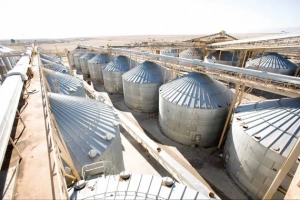
Pistachio SilosAs with many large-scale food processing operations, the expansion introduced significant dust control challenges. Matt Coughlin, Owner of Baghouse says: “Pistachio processing generates large volumes of fine organic dust that can quickly become an indoor air quality issue and a combustible dust hazard if not properly managed.”

Wonderful Foods engaged Baghouse.com early in the project to design a dust collection system that could scale with production while meeting safety, operational, and maintenance requirements.

"My experience working with Baghouse.com was very good. The design aspect was excellent—really well done. The installation itself was good as well. It was very easy to work with Matt and Dominick from the design aspects to the final installation."

Scope of Work

The project scope covered the complete design, supply, and installation of a centralized dust collection system serving approximately 25 process machines, including aspirators and mixers, distributed across the facility.

In total, the system consisted of three rotary arm valve reverse air style baghouses (also sometimes called reverse jet). This style of baghouse is generally a good fit for applications containing nuts and grains, since its easier for the dust to blow off and remove off the filters, and this cleaning method is gentler on the filters. It is also a little cheaper to run a fan to blow air back into the bags than to maintain an air compressor like in the Pulse Jet cleaning system. Pulse jet style baghouses can also be used for this application, but Wonderful chose to go with a reverse air style baghouse, since they had many more of these collectors at the facility and they were comfortable using this technology. 

We also installed ground-mounted system fans, combustible dust safety equipment and a fully engineered ductwork system tailored to the process, providing a combined airflow capacity of approximately 170,000 CFM. Baghouse.com also provided a 51,000 CFM makeup unit to maintain neutral pressure inside the processing facility.

Challenges

  • • Large size of the project
  • • Several dozen process machines that required multiple pickups
  • • Customer requested us to connect all these process machines with custom ductwork. However, during the course of the project, the location of these machines changed multiple times, which required us to completely reconfigure the layout of the ductwork after the project was already on its way.
  • • After the ductwork design was finalized, the ductwork was shipped to the site, and upon learning about the completely new equipment layout, we had to adapt the ductwork to the new layout reusing every piece of ducting and minimize the amount of new ducting that needed to be fabricated. Closely coordinating with our install crew, we were able to completely change the routing of the ductwork and connect to the machines in their new location without wasting any piece of duct.
  • • An additional challenge was working alongside the other contractors’ trades and equipment providers. The customer was building a new facility, installing new equipment and services, and this required us to coordinate with more than a dozen trades, service providers and manufacturers so everyone was able to work unobstructed and still meet the project deadline.
  • • The project timeline spanned roughly one year from purchase order to final installation, driven largely by the customer’s construction schedule and phased equipment startup.

Solution

Besides the three rotary arm reverse air baghouses and the ground-mounted fans, we were aware that given the combustible nature of pistachio shells, we needed to include combustible dust equipment in the design. We designed the system with NFPA-compliant combustible dust safety equipment, including explosion isolation valves and explosion vents. These elements were engineered into the layout from the beginning, rather than added later, allowing the system to meet safety expectations without compromising performance.

To maintain proper airflow and building balance, a 51,000 CFM makeup air unit was installed in Building 1 to support proper ventilation and system performance. This ensured that air removed by the dust collectors was replaced in a controlled manner, preserving capture efficiency at hoods and preventing uncontrolled infiltration.

The ductwork system was engineered to maintain proper conveying velocities.

Ductwork Layout Pistachio Wonderful Foods

Installation Challenges

Like most new construction projects, this one came with its fair share of coordination challenges. Multiple trades were working on tight schedules, which meant the installation needed close attention to stay on track and flexibility on our part. Keeping the field work aligned with the engineered ductwork design was especially important to avoid things like unnecessary restrictions, abrupt transitions, or air leaks that could have chipped away at the system’s overall performance.

Additional challenges included designing and installing custom intake manifolds and ductwork for several unique machine connections that were not part of the original equipment layout. In some areas, ductwork had to be re-routed to accommodate building support structures that differed from early construction drawings. Close coordination between the installation team, engineering, and the customer allowed these challenges to be addressed without impacting system performance or project timelines.

"Now that the project is completed, the system is running great. This installation greatly increased production capacity. There are a few items we’re still working through, but we’re actively addressing those issues. Because we are located in a very remote area, coordinating support and assistance on-site was sometimes challenging. For our next project, we would like this coordination to be smoother. But I would absolutely recommend working with Baghouse.com."

Outcome and Conclusion

Dust Collectors Wonderful Case StudyOnce commissioned, the dust collection system performed as intended. Airborne dust levels were effectively controlled throughout the facility and the system was able to operate continuously without requiring excessive manual intervention or aggressive cleaning cycles. Maintenance demands were reduced, and the system became a stable, reliable part of the production process.

Dominick Dal Santo, Baghouse expert involved in this project said: “This project was a great example of why dust collection and safety really need to be treated as one complete system…especially in food processing, where combustible dust risks are quite common. By bringing us in early in the project, Wonderful Foods ended up with a dust collection system that not only supports their expansion, but is built to perform reliably and safely for the long haul.”

In summary, the things that worked well in this project were:

  • ‣ The customer engaged early in the design process
  • ‣ The customer understood what they needed
  • ‣ We supplied everything to turn key installation
  • ‣ We were flexible and adaptable to make adjustments as the project changed or progressed
  • ‣ We designed a system that had extra capacity giving room to the customer to adapt it as the needs and processes change.
What is the Difference Between Medium Low-Pressure Reverse Air and Pulse-Jet Baghouses?

While both systems perform the same fundamental task (capturing particulate matter from an airstream) but their cleaning mechanisms, operating characteristics, and ideal applications differ significantly. Understanding these difference between pulse-jet and reverse air baghouses can help engineers, plant managers, and maintenance teams select the most appropriate technology for their process.

Pulse-Jet Baghouses

Pulse-jet baghouses are the most widely used type of dust collector in modern industry due to their versatility and powerful cleaning capability. They are suitable for a broad range of dust types and operating conditions.

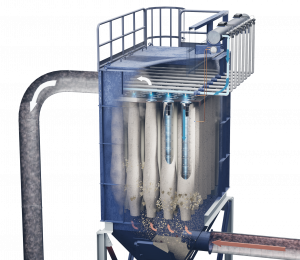
In a pulse-jet system, dust-laden air enters the collector and passes through fabric filters supported by internal cages. Particles are captured on the outside surface of the filter, forming a dust cake that aids filtration.

Cleaning occurs when short bursts of compressed air are injected through blowpipes above the filters. These high-energy pulses rapidly expand the filter bags, dislodging the dust cake and allowing it to fall into the hopper below.

Advantages of Pulse-Jet Systems

Pulse-jet collectors offer several key benefits:

  • ✔️ Powerful cleaning action that removes stubborn dust deposits

  • ✔️ Ability to handle difficult dust types, including sticky or agglomerating materials

  • ✔️ Continuous operation during cleaning, meaning filtration does not need to stop

  • ✔️ Compact design with high filtration capacity

The smooth surface of pulse-jet filter bags makes them particularly effective when filtering:

dust cake detaching from bags

✔️ Sticky dust

  • ✔️ Dust mixed with chips, strips, or fibers

  • ✔️ Agglomerating or clumping particulate

Because of this aggressive cleaning capability, pulse-jet baghouses are often used in demanding industries such as cement, metals, chemical processing, minerals, and power generation.

Low and Medium-Pressure Reverse Air Baghouses

Low and medium-pressure reverse air baghouses offer an alternative filtration approach that uses gentler cleaning methods compared to pulse-jet systems.

These collectors are commonly used in applications such as:

  • ✔️ Grain and cereal processing

  • ✔️ Woodworking facilities

  • ✔️ Bulk material loading and unloading

  • ✔️ Industries with moderate to high dust loading and easily dislodged dust

Because the cleaning force is less aggressive, reverse air systems can sometimes extend filter life by reducing mechanical stress during cleaning cycles.

Reverse Air Baghouse Operation

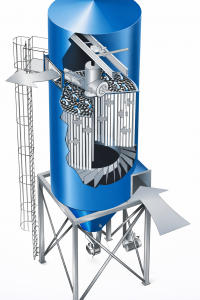
Rotating Low/Medium Pressure Reverse Air Baghouse

Rotating Low/Medium Pressure Reverse Air Baghouse

In a traditional reverse air baghouse, cleaning is accomplished using a fan that directs airflow in the opposite direction of filtration.

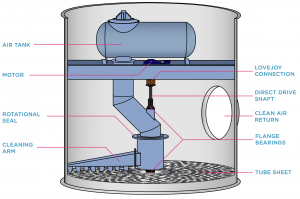
A rotating cleaning arm moves across the filter compartments and directs the reverse airflow into each bag sequentially. This reverse airflow gently collapses the bag, causing the dust cake to break loose and fall into the hopper.

One major advantage of this system is that the collector can remain online during cleaning. Unlike compartmentalized collectors that must isolate sections during cleaning, reverse air cleaning can occur while filtration continues.

Another benefit is that reverse air collectors do not require compressed air, relying instead on fans to generate the cleaning airflow.


Medium-Pressure Cleaning Systems

Medium-pressure baghouses represent a hybrid cleaning approach.

The rotating cleaning arm is mounted on a shaft at the tube sheet’s center, and typically nozzles or similar devices along the rotating arm align with the top of each filter element in one row.

Rotating Low/Medium Pressure Reverse Air

Instead of a simple fan, these collectors use a positive displacement (PD) blower or compressor to produce moderate-pressure air pulses that clean the filters. A rotating arm distributes the air pulses across the bags to ensure uniform cleaning.

A proximity sensor typically monitors the arm position, ensuring the cleaning mechanism aligns correctly with each filter before the air pulse is released.

Because compressed air pulses are used, more dust is dislodged from the filter surface compared to a standard reverse air system. However, the cleaning energy is still typically lower than the high-pressure pulses used in pulse-jet collectors.

Key Differences Between Pulse-jet and Reverse Air Baghouses

While both technologies serve the same purpose, several important differences define their operation and suitability:

► Cleaning Energy

The most significant difference lies in cleaning intensity.

Pulse-jet collectors deliver high-energy bursts of compressed air that aggressively shake dust from the filter surface. Reverse air systems rely on gentle airflow reversal, which is less disruptive to the filter media.

As a result:

  • ✔️ Pulse jets handle difficult dust more effectively

  • ✔️ Reverse air systems create less mechanical stress on filters

.


► Dust Characteristics

Pulse-jet baghouses are well suited for:

  • ✔️ Sticky dust

  • ✔️ Agglomerating dust

  • ✔️ Fine particulate

  • ✔️ Mixed material streams

Reverse air systems perform best with:

  • ✔️ Easily dislodged dust

  • ✔️ Larger particulate

  • ✔️ Fibrous or granular materials


.

► Energy Consumption

Pulse-jet collectors rely on compressed air systems, which can represent a significant energy cost in facilities where air compressors operate continuously.

Reverse air collectors instead use fans or PD blowers, which may consume less energy depending on system size and operating conditions.

.


► Filter Life

Because reverse air cleaning is gentler, filters in these systems may experience less mechanical fatigue over time. In certain applications, this can translate into longer filter service life.

However, if the dust is difficult to remove, insufficient cleaning can lead to filter blinding and higher pressure drop, offsetting this advantage.


.

► System Flexibility

Pulse-jet baghouses generally offer greater operational flexibility. They can accommodate:

  • ✔️ Higher air-to-cloth ratios

  • ✔️ Higher dust loading

  • ✔️ A wider variety of dust types

This flexibility explains why pulse-jet collectors have become the dominant design in many industries.

Choosing the Right Baghouse Design

As we have seen, selecting between the difference between pulse-jet and reverse air baghouses requires evaluating several process variables, including:

  • ✔️ Dust loading

  • ✔️ Particle size distribution

  • ✔️ Dust chemistry and stickiness

  • ✔️ Operating temperature

  • ✔️ Available utilities such as compressed air

  • ✔️ Maintenance preferences

  • ✔️ Facility space constraints

Before making a final decision, it is highly recommended to speak with one of our dust collection experts. With decades of field experience across many industries, the team at Baghouse.com can evaluate your application and recommend the most reliable and cost-effective solution.

Aluminum plant explosion combustible dust

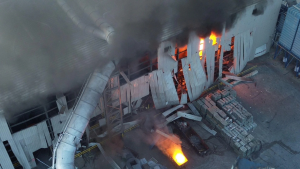
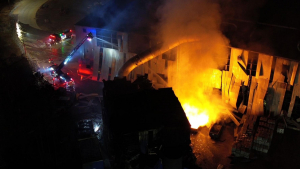
Fire damages the Novelis Aluminum Recycling Plant in Greene County after explosion on March 1 at the facility.

An explosion at the Novelis aluminum recycling facility in Greensboro, Georgia, on March 1, 2026, is drawing renewed attention to the hazards associated with combustible metal dust and the importance of properly designed dust collection systems. The blast occurred in a baghouse dust collector—equipment designed to capture fine aluminum particles generated during recycling operations.

Emergency responders reported that the explosion was powerful enough to be heard up to five miles away, with residents in the surrounding area saying the shock wave caused noticeable vibrations in their homes. The blast damaged the baghouse unit and nearby cold-end processing equipment, temporarily halting operations at the facility.

Despite the severity of the explosion, the plant’s emergency procedures worked as intended. All 16 employees present at the facility were evacuated safely and no injuries were reported. Local authorities conducted air quality monitoring following the incident and determined that no hazardous levels of aluminum oxide or volatile organic compounds were present in the surrounding community.

As one official report noted, “the fire at the Novelis Greensboro aluminum recycling plant demonstrated effective emergency response coordination and environmental containment, suggesting robust safety protocols despite equipment failure occurrence.” After inspection and cleanup, the facility was able to resume operations within four days.

The Role of Dust Collection in Aluminum Recycling

The Greensboro facility is a major hub in Novelis’ recycling network, processing approximately 18,000 tons of aluminum scrap every month. The plant specializes in recycling used beverage cans (UBC), which are cleaned, stripped of coatings, melted, and then formed into new aluminum products for beverage manufacturers.

These processes involve several potentially hazardous steps. Paint removal generates volatile organic compounds, while high-temperature furnaces operating above 1,200°F melt the recycled metal. At the same time, pneumatic systems move aluminum scrap through the facility, generating extremely fine dust particles.

Baghouse dust collectors are designed to capture these particles before they are released into the air. However, when fine metal dust accumulates inside filtration systems, it can create conditions that make explosions possible.

Aluminum dust is particularly dangerous because of its high surface area and reactivity. When suspended in air, even a small ignition source—such as a spark, static discharge, or high heat—can trigger rapid combustion. In enclosed spaces like ductwork or dust collectors, this combustion can generate powerful pressure waves capable of damaging equipment and structures.

Understanding the Explosion Risk

An explosion that could be heard for miles damaged the Novelis Aluminum Plant in Greene County on March 1.

An explosion that could be heard for miles damaged the Novelis Aluminum Plant in Greene County on March 1.

Industrial dust explosions typically follow a predictable pattern. First, combustible particles accumulate in equipment such as baghouses, ducts, or silos. If the dust becomes suspended in the air and encounters an ignition source, combustion can spread rapidly through the dust cloud. The confined environment allows pressure to build, resulting in an explosion that can travel through connected equipment.

In the Greensboro incident, investigators believe the blast originated in the baghouse filtration system. Factors such as dust accumulation, electrostatic charge buildup, temperature fluctuations, and maintenance intervals for filter cleaning can all contribute to conditions that increase explosion risk.

While the incident was contained without injuries, it still demonstrated the destructive potential of combustible dust in industrial facilities.

Why Preparedness Matters

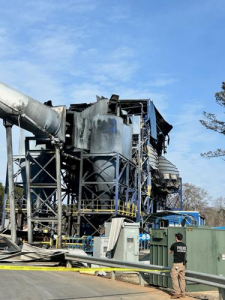
A section of the Novelis Aluminum Plant in Greene County is roped off with police tape after being damaged March 1 in an explosion.

A section of the Novelis Aluminum Plant in Greene County is roped off with police tape after being damaged March 1 in an explosion.

Events like the Novelis explosion serve as a reminder that combustible dust hazards are present in many manufacturing environments—from aluminum recycling to woodworking, food processing, chemical manufacturing, and metalworking. When dust collection systems are not properly designed, maintained, or protected, small failures can escalate quickly into serious incidents.

Facilities must evaluate their processes carefully, ensure that dust collection systems meet current safety standards, and implement appropriate protection technologies. These can include spark detection systems, explosion isolation valves, explosion venting, grounding systems, and real-time monitoring of operating conditions.

How Experts Can Help Prevent Future Incidents

Preventing combustible dust incidents requires specialized knowledge of dust behavior, equipment design, and regulatory requirements. That is why many facilities turn to experts such as Baghouse.com for guidance.

Baghouse.com works with companies across a wide range of industries to evaluate dust hazards, support Dust Hazard Analyses, design compliant dust collection systems, and integrate fire and explosion protection equipment. By addressing risks early and ensuring that systems are properly engineered and maintained, facilities can significantly reduce the likelihood of incidents like the explosion at the Greensboro plant.

Designing Dust Collection Systems for Woodworking

Woodworking operations—from small cabinet shops to large industrial mills—generate large amounts of dust every day. Fine sanding particles, chips from planers, and dust created during cutting and routing can quickly accumulate if they are not properly controlled. Beyond creating a messy workplace, wood dust can affect employee health, machine performance, facility cleanliness, and even introduce serious fire and explosion hazards.

To help address these challenges, our upcoming webinar, Designing Dust Collection Systems for Woodworking, will walk through the fundamental principles of building effective and reliable dust collection systems for woodworking applications. The session focuses on practical concepts, real-world design considerations, and common mistakes that many facilities experience.

Why Dust Collection Matters in Woodworking

A properly designed system plays a critical role in maintaining safe and efficient operations.

First, effective dust collection improves air quality for employees by capturing dust at the source before it enters breathing zones. This reduces exposure to fine airborne particles and helps maintain a healthier work environment.

Second, controlling dust helps maintain housekeeping and overall facility cleanliness. In large operations, dust production can reach surprising volumes—sometimes even filling trailer loads of collected material each day. Without an effective system, this dust would accumulate quickly across equipment and production areas.

Dust collection also plays a role in environmental compliance and emissions control. Facilities must often meet air quality regulations, and properly designed systems help ensure those requirements are met.

Perhaps most importantly, wood dust is combustible. When dust accumulates or becomes airborne in confined spaces, the potential for fires, flash fires, or explosions increases. A properly designed dust collection system helps reduce these risks by controlling dust where it is generated.

Finally, dust collection directly affects equipment performance. When dust is not captured efficiently, it can interfere with machinery, reduce efficiency, and lead to unnecessary interruptions to production.

Who Should Attend This Webinar

This webinar is designed for professionals involved in woodworking operations and facility design, including:

  • ✔️ Plant managers

  • ✔️ Maintenance managers and technicians

  • ✔️ Engineers and system designers

  • ✔️ EHS (Environmental, Health, and Safety) professionals

  • ✔️ Operations managers

  • ✔️ Wood shop owners and supervisors

Anyone responsible for operating, maintaining, or designing woodworking equipment and facilities can benefit from a better understanding of dust collection fundamentals.

How To Connect

Attending the webinar is easy! Simply register using the link below. Once registered, you’ll get a confirmation email with all the details to log in. Don’t miss it!

📅 Date: Wednesday, March 25th, 2026

 Time: 1:00 PM (EST)

📍 WATCH NOW ON DEMAND

Why Attend

This webinar provides a practical overview of how dust collection systems work and how the different components interact. By understanding these fundamentals, attendees can better identify problems, make informed decisions when expanding or upgrading systems, and improve overall safety and performance.

The session will also include a live Q&A discussion where participants can ask questions and explore real-world challenges related to woodworking dust collection systems.

Whether you are planning a new system, troubleshooting an existing one, or simply looking to better understand how dust collection works, this webinar offers valuable insights to help you build safer, cleaner, and more reliable woodworking operations.

How Combustion Process Design Affects Dust Collector Performance

Maybe your application involves utility boilers, independent power generation, waste-to-energy, or industrial process heating. The performance of the dust collector is inseparable from the performance of the combustion system itself.

Understanding how combustion processes interact with dust collection equipment is essential to maintaining reliability, minimizing corrosion and filter damage, and avoiding costly unplanned outages.

How Combustion Process Design Affects Dust Collector Performance

No two combustors behave the same way… each design introduces distinct system characteristics, fuel chemistry, and operating variables that directly influence the particulate matter entering the dust collection system.

Pulverized coal (PC) boilers is an industrial or utility boiler that generates thermal energy by burning pulverized coal (also known as powdered coal or coal dust since it is as fine as face powder in cosmetic makeup) that is blown into the firebox.Their high combustion temperatures produce very fine fly ash with a narrow particle size distribution. That fine ash can be challenging to filter and places high demands on filter media permeability and cleaning effectiveness.

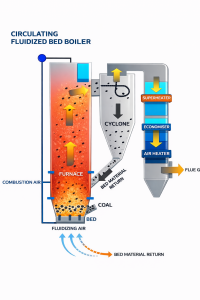
Circulating fluidized bed boiler system

Circulating fluidized bed boiler system

Fluidized bed combustors (FBCs) are a developing technology for coal combustion to achieve lower emission of pollutants. By using this technology, up to 95% of pollutants can be absorbed before being emitted to the atmosphere. These are favored by independent power producers because of their fuel flexibility. They can burn low-grade fuels, biomass, and waste materials, but they generate significantly higher ash volumes. The resulting dust loading to the baghouse is often much heavier and more abrasive, requiring robust mechanical design and conservative air-to-cloth ratios.

Stoker boilers occupy another category altogether. They tend to produce larger particulate and are more prone to unburned hydrocarbons due to lower combustion efficiency. These hydrocarbons can complicate filtration by contributing to sticky dust conditions and filter blinding.

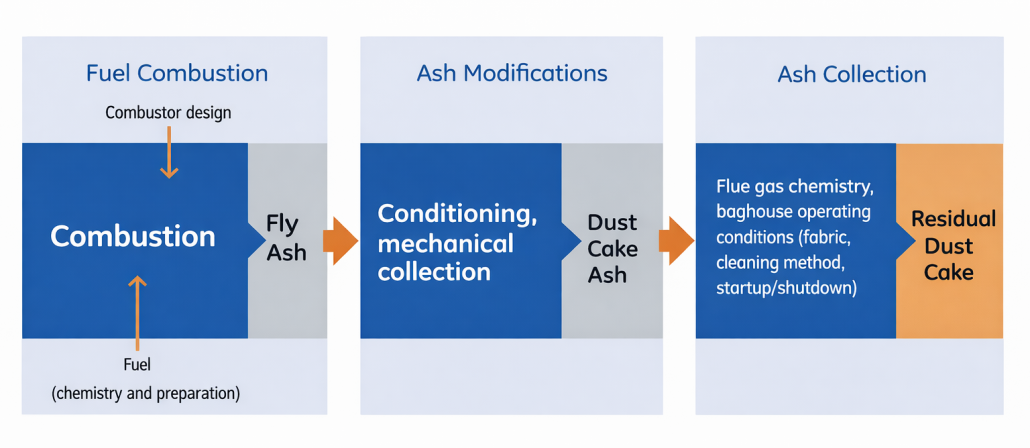
Across all combustion systems, fly ash characteristics are influenced by fuel chemistry, combustion temperature, upstream mechanical collection, flue gas conditioning, and the design and operation of the baghouse itself. Each of these variables must be evaluated together.

Temperature, Moisture, and Dew Point

Gas stream components that remain above their dew point are generally not harmful to baghouse operation. Problems begin when temperature drops suddenly or moisture levels rise enough to cross the dew point threshold.

When this occurs, condensation forms on internal surfaces and filter media. The result can be rapid corrosion, heavy filter buildup, and deposits that are extremely difficult to remove through normal cleaning. These conditions often lead to increased pressure drop, poor hopper evacuation, and visible stack plumes.

This risk is especially pronounced in combustion systems that cycle frequently, operate at partial load, or experience off-peak conditions. Acidic gases become more prevalent under these operating modes, increasing the likelihood of chemical attack on both filter media and carbon steel components.

Acidic Conditions and “Acid Attack” Failures

An acid attack occurs when flue gas temperatures pass through the acid dew point due to operational excursions, combustion chemistry changes, or upstream equipment malfunctions.

Acid attack can:

  • ✔️ Corrode structural steel and ductwork
  • ✔️ Chemically degrade filter fibers
  • ✔️ Blind filter media
  • ✔️ Interfere with hopper discharge
  • ✔️ Create visible plume issues at the stack

Cyclic boiler systems are particularly vulnerable. For these applications, startup and shutdown procedures must be carefully engineered and rigorously followed. Many facilities benefit from dual cleaning strategies—automatic cleaning for peak loads and manual or modified cleaning approaches for low-load operation.

Because operating conditions can vary so widely, filter media selection often requires chemical resistance beyond standard designs. Protective finishes, specialized fibers, or alternative media constructions may be necessary—but only after actual operating conditions are measured and compared against original design assumptions.

Advanced Filtration Technologies for Combustion Applications

Newer dry filtration technologies, like pleated filter elements, provide two to three times more effective filtering area than traditional bags, allowing higher airflow capacity within the same housing footprint.

High-efficiency filter media can also increase allowable air-to-cloth ratios while maintaining acceptable pressure drop. Microporous ePTFE membrane technologies, provide extremely high filtration efficiency along with a slick, nonstick surface that resists dust adhesion. These surfaces reduce the risk of system upset conditions and can lower overall energy consumption by stabilizing pressure drop.

Baghouse Overloading

Baghouse overload conditions emerge from cumulative process changes over time.

Peak load boilers can push systems beyond their original design parameters, increasing resistance across the filters and disrupting combustion draft. Switching to lower-BTU fuels increases ash generation and grain loading. Multi-pollutant control strategies—such as powdered activated carbon (PAC) injection for mercury control, SCR or SNCR systems, and catalyst erosion—add even more particulate burden to the collector.

In all of these cases, the baghouse must be flexible enough to handle fluctuating loads without sacrificing filtration efficiency or airflow stability.

Blinding or Bleed-Through of Filter Media

Heavy grain loading alone is enough to strain a baghouse, but changes in particle size distribution can be just as damaging. Fuel changes often produce finer ash, increasing the risk of filter blinding or bleed-through.

Mechanical precollectors—cyclones, multiclones, dropout boxes, or de-energized ESPs—can reduce overall dust loading, but they also remove larger particles and leave behind finer, denser ash. That fine material forms less permeable dust cakes, increases airflow resistance, and can drive particulate deep into the filter media.

In these cases, cleaning system modifications may be required. Precoating is often an effective strategy, particularly during startup with new filter bags. A precoat layer creates an artificial dust cake that protects the media from fine ash penetration and helps stabilize filtration performance.

Factors influencing dust cake characteristics.

Fuel and Flue Gas Neutralization

Environmental regulations and evolving fuel strategies have led many combustion systems to incorporate dry or semi-dry acid gas scrubbers upstream of the baghouse. These systems inject lime, sodium bicarbonate, or magnesium oxide slurries to neutralize acid gases and convert them into solid particulate.

The resulting dust is dense, moisture-laden, and reagent-rich. Once deposited on filters, it can be extremely difficult to remove using conventional cleaning methods. Cleaning cycles must be carefully reviewed to ensure sufficient energy is delivered to the bags.

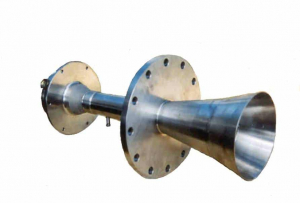
This equipment functions by producing high intensity sound waves that vibrate the accumulated dust, fluidizing it and causing it to fall off the surfaces where it has collected.

The sound waves generated by acoustic horns create
vibrations that effectively break apart and dislodge material
deposits from surfaces.

For collectors capable of off-line cleaning—such as reverse-air baghouses or pulse-jet systems—acoustic cleaning technologies like sonic horns can intensify cleaning without damaging the filter media. Acoustic horns are also effective when mounted on scrubber sidewalls, where low-frequency energy helps prevent buildup on vessel walls and nozzles.

Startup and Shutdown: Where Many Failures Begin

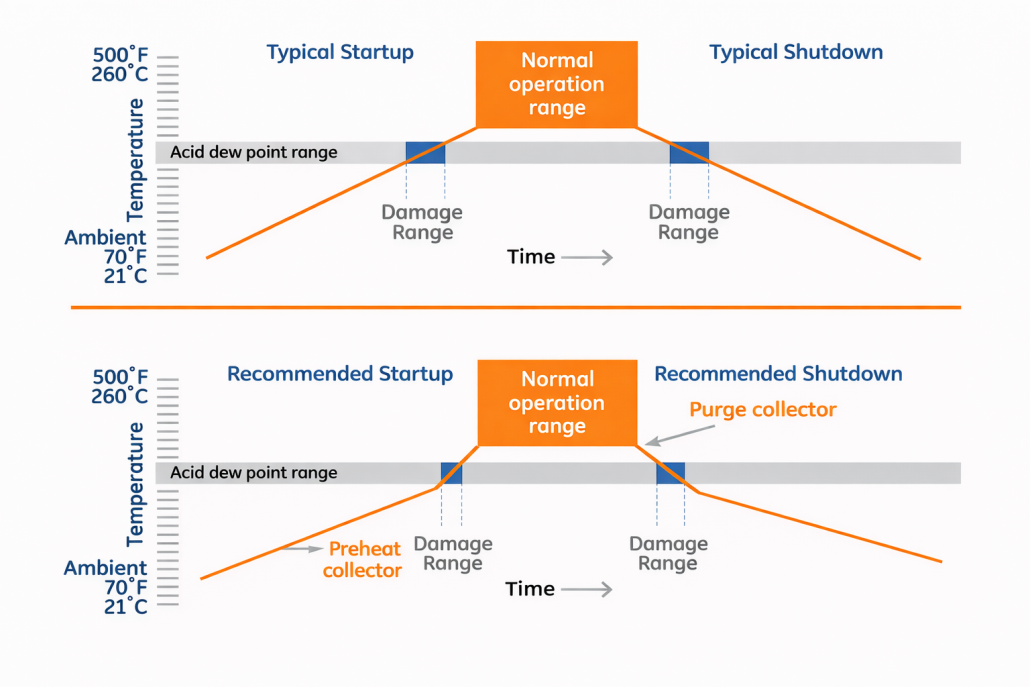
Intermittent combustion systems filtering hot flue gases are routinely exposed to dew point excursions during startup and shutdown. A common mistake is monitoring only outlet stack temperature while ignoring the temperature of the steel components inside the collector.

Rapid heating causes mechanical stress, while cold steel surfaces promote condensation. When moisture combines with sulfur oxides, low-grade acids form inside the collector, weakening filter fibers and corroding metal surfaces.

Startup/shutdown timeline in relation to dew point.

Proper startup requires preheating the baghouse above the acid dew point before introducing process gases. Shutdown procedures must include immediate purging with clean gases to prevent corrosive compounds from condensing as the system cools. In severe cases, neutral desiccant materials can be applied to filters as a protective barrier.

Fabric selection plays a critical role here. Woven fiberglass fabrics require chemically resistant finishes, while high-temperature synthetic media designed for chemically active gas streams can significantly extend service life.

Dust collection systems in combustion applications operate at the intersection of chemistry, thermodynamics, and mechanical design. Success depends on understanding how fuels, combustion conditions, emissions controls, and operating cycles interact inside the baghouse.

Facilities that treat dust collection as an integrated process system are far better positioned to maintain reliability, protect assets, and stay compliant as operating conditions evolve.