This article provides a simple use-case for the DustIQ predictive maintenance platform, describing how implementing a few sensors to replace manual differential pressure gauges can yield significant savings in man-hours, compliance risk, and up-time for your dust collection system.
There are many such use cases that can be addressed with the same DustIQ platform by simply adding more sensors. The objective here is to highlight the ease of installation and startup, and the rapid ROI for implementing these tools.
Background
Smart plant, digital transformation, IoT… these terms have been used for years to describe a future state of industry where manual inspections, processes, and routine tasks are replaced by connected sensors feeding data from across the facility into a single system that streamlines operations. Everything from tracking inventory to regulating building temperature to predicting equipment failures would ideally be managed through software, reducing labor hours, process interruptions, and compliance issues. As Eric Schummer, CEO of Senzary, often says, “The goal was never just to connect machines, it was to make the data actually useful for the people running the plant.”
In practice, many early technologies struggled to deliver on that promise. Integrating them with legacy IT systems was difficult, departments often lacked alignment, and objectives weren’t always clearly defined. This led to a patchwork of systems and sensors that sometimes created more work instead of less. Operators frequently found that data was trapped behind licensing walls, dashboards were hard to navigate, and installation or configuration required expensive engineering support. As Schummer puts it, “Companies didn’t fail at IoT — IoT failed them, mostly because it wasn’t built with the end user in mind.”
Opportunity
In recent years with the advent of AI-supported software and machine learning algorithms, lower cost and higher power sensors, and focused effort by a handful of providers to address these issues, the dream of the “Smart Plant” is actually quite accessible for most facilities.
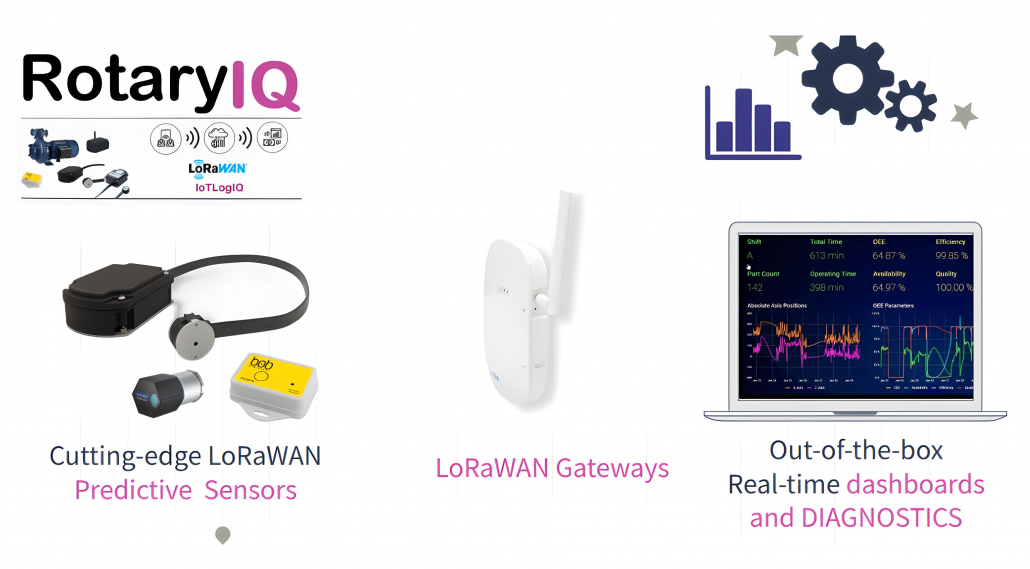
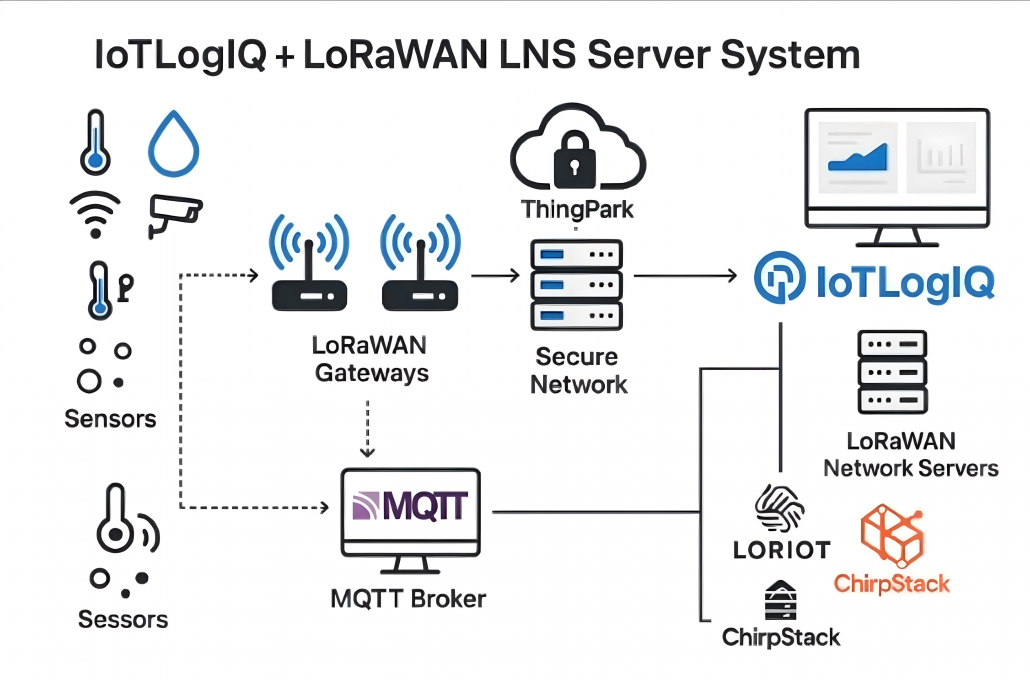
Senzary’s DustIQ platform is one such success story. With DustIQ in place as a backbone providing user-friendly dashboards, reporting, and alerts, the user simply needs to add sensors. Senzary offers a huge range of compatible wireless sensors, which transmit data wirelessly via LoRaWAN gateways at the site. Available sensors include fan vibration, environmental monitoring (temperature, humidity, gas and particulate monitoring), air and water flow, room occupancy, and the list goes on. As a single LoRaWAN gateway can serve dozens or hundreds of sensors within a few hundred meter radius, the system can be quickly and cheaply scaled to add processes and sensors to the system once in place.
DustIQ provides real-
time monitoring of dust levels and
filter performance
Replacing Manual DP Checks
Now to our particular use case. Virtually every air quality permit for a dust collection system in the US requires the site owner to monitor differential pressure across the dust collector filters and take action when the DP exceeds the set limits. Typically this is done with a simple Magnahelic-style analog gauge. To stay compliant, many facilities still send someone out every day to manually check and record the DP on each dust collector. As Matt Coughlin, Owner of Baghouse.com, puts it, “It still amazes me how many plants rely on someone climbing a ladder with a clipboard to check something we can monitor automatically every second.”
Even with photohelic or transmitting DP gauges, where a 4-20mA signal is sent to a control room, the information often ends up buried in spreadsheets or forgotten reports that someone has to manually retrieve to meet compliance requirements.
A far easier and more reliable alternative is to install a transmitting sensor — such as the Synetica EnLink offered in the DustIQ platform — directly on the dust collector. The sensor can be installed in minutes and can run on batteries or site power. Once it’s in place and connected to an outdoor LoRaWAN gateway, the DP data updates automatically in the DustIQ dashboard. The dashboard can be configured for simple reporting to show your permit inspector and can generate automated alerts when the DP crosses a threshold or begins trending upward. This gives your team enough warning to schedule filter changes proactively instead of reacting in a panic.
Benefits
✔️ Labor hours reduced
🔵 For a site with 4 dust collectors, an average of 20 hours/month will be saved in manual inspections.
✔️ Reduced shut-downs due to broken/plugged filters
🔵 By tracking DP across time, site maintenance will know well in advance with a filter change will be required, so filter changeouts can be planned around production instead of reactively.
✔️ Safety improvement
🔵 There is no longer any need for operators to climb ladders in bad weather, ice, etc. to manually check and record DP
✔️ Better record-keeping
🔵 The data is logged in the DustIQ dashboard for easy retrieval
✔️ Real-time data and continuous monitoring
🔵 Instead of one data point per day, which may vary based on the filter cleaning status, data can be logged up to every second, for better data integrity
✔️ Rapid Deployment
🔵 Unlike legacy “IoT” systems that required months of configuring and integration, the DustIQ platform can be deployed almost immediately with the cloud-based dashboard. Integration with existing SCADA or control systems can be added and expanded if desired by the customer.
Costs
The cost for implementing the DustIQ platform will typically be less than $25,000 to include hardware (sensors and gateway), software (DustIQ platform), and installation. This would include 10 or so sensors, so the price may be less for a smaller site with fewer sensors.
Sensors can be added for a few hundred dollars each. A single gateway is typically sufficient for an entire building or site.
Additional Opportunities
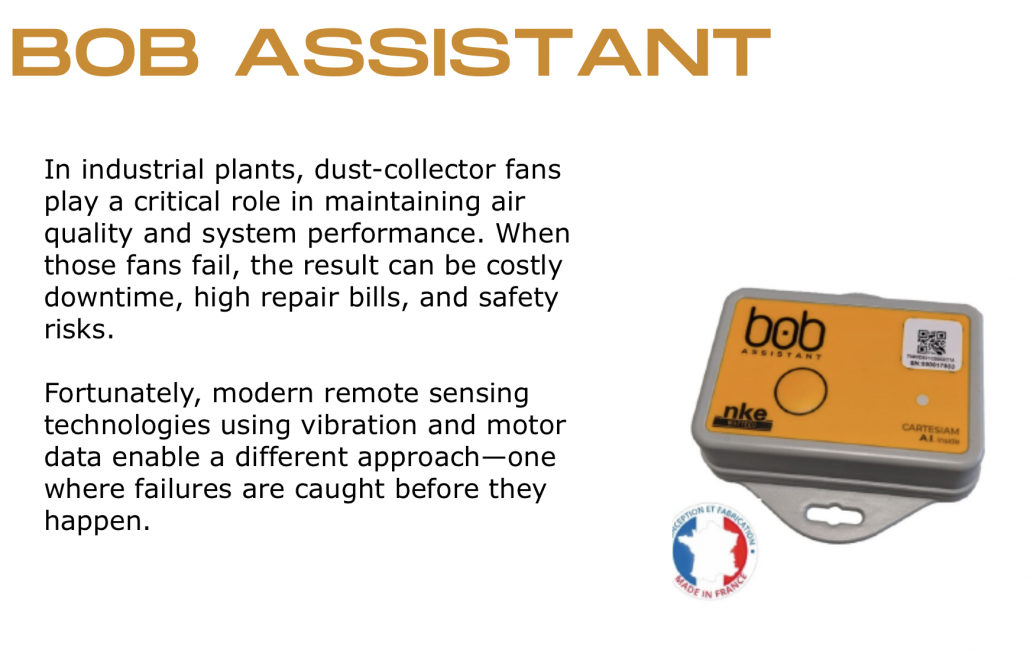
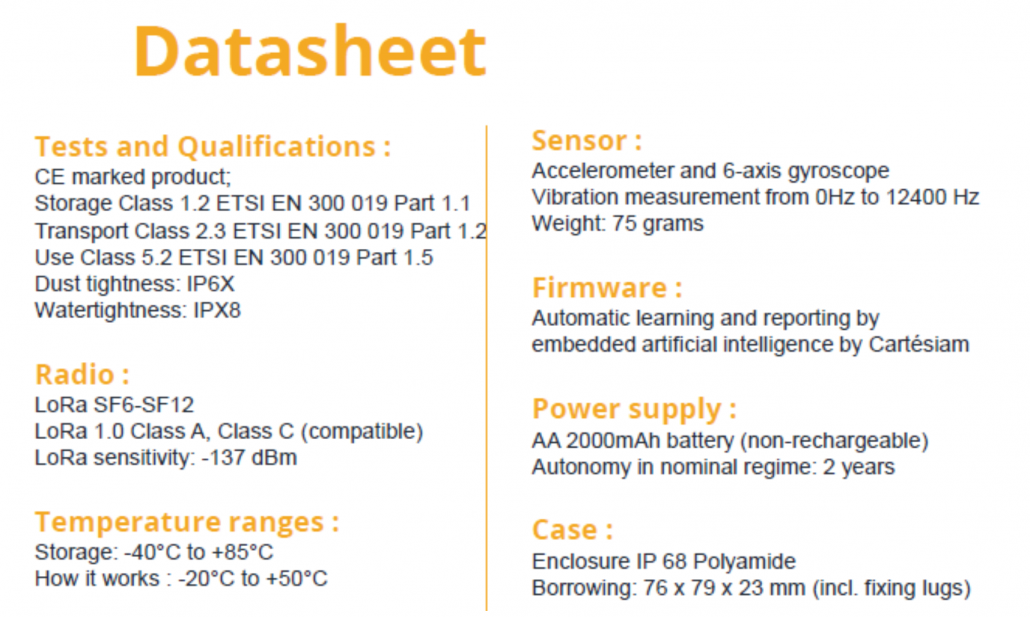
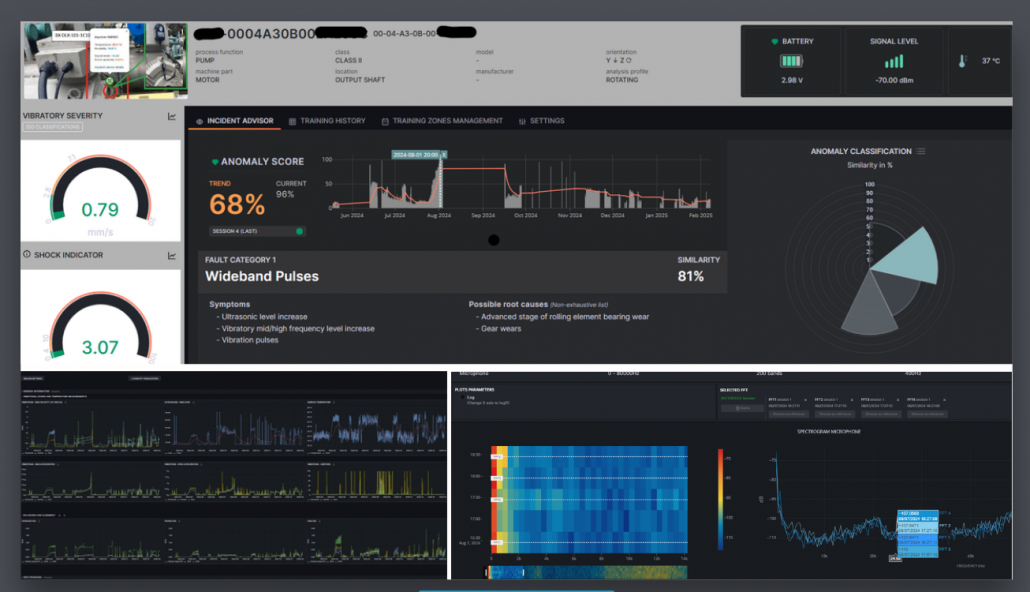
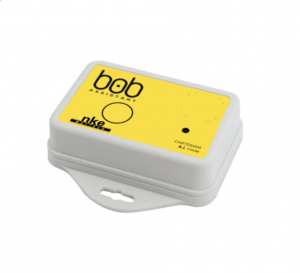
Once the DustIQ predictive maintenance operating system is in place, additional sensors can be added with very little effort. For instance, installing an NKE Watteco BoB sensor on fans and motors allows continuous vibration tracking, giving early insight into bearing wear or developing motor problems long before a breakdown occurs. Alerts and reminders work the same way they do with DP monitoring, keeping maintenance teams ahead of issues instead of scrambling after the fact.
Particulate sensors can be mounted on dust collector exhaust stacks to monitor emissions in real time, helping facilities catch broken or leaking filters before they trigger a compliance violation. Airflow and velocity sensors can measure dust and air movement through ductwork, making it possible to detect early signs of blockages. Indoor environmental sensors can monitor temperature, humidity, pressure, noise, and airborne particulate levels, offering better visibility into workplace conditions that fall under PM2.5 or safety requirements.
Eric Schummer, CEO of Senzary, often explains the value of this modular approach: “Once the platform is running, adding sensors is almost plug-and-play. You don’t need a big IT project every time you want more visibility. You just add a sensor and the system takes it from there.”
With this flexibility, it becomes easy to see how one platform can unify an entire facility into a practical version of a Smart Plant, cutting manual labor, preventing unplanned shutdowns, and reducing compliance risks across the board.
To learn more about how the DustIQ predictive maintenance operating system can be deployed at your facility, contact us now!
President | Dust Collection Engineer | Industrial Air Pollution Control Specialist
Matt Coughlin is an author, engineer, and dust collection expert specializing in industrial filtration systems, air pollution control, and process ventilation. With more than two decades of experience in the dust collection industry, Matt has helped design, troubleshoot, and optimize hundreds of dust collection systems across a wide range of industries, including cement, mining, food processing, woodworking, metals, power generation, chemical manufacturing, and bulk material handling. Born and raised in Southern California, Matt continues to work closely with industrial facilities around the world, helping companies improve their dust collection performance through engineering expertise, practical solutions, and long-term technical support.
In this article, we’ve gathered the most common questions we hear from plant managers, operations leaders, maintenance teams, and EHS professionals about predictive maintenance and emissions compliance for baghouse systems. This FAQ brings together their real-world concerns, so you can quickly understand how modern IoT tools are transforming dust collection reliability, reducing risk, and strengthening compliance across industrial facilities.
— "What is predictive maintenance for baghouses and how does IoT enable it?"
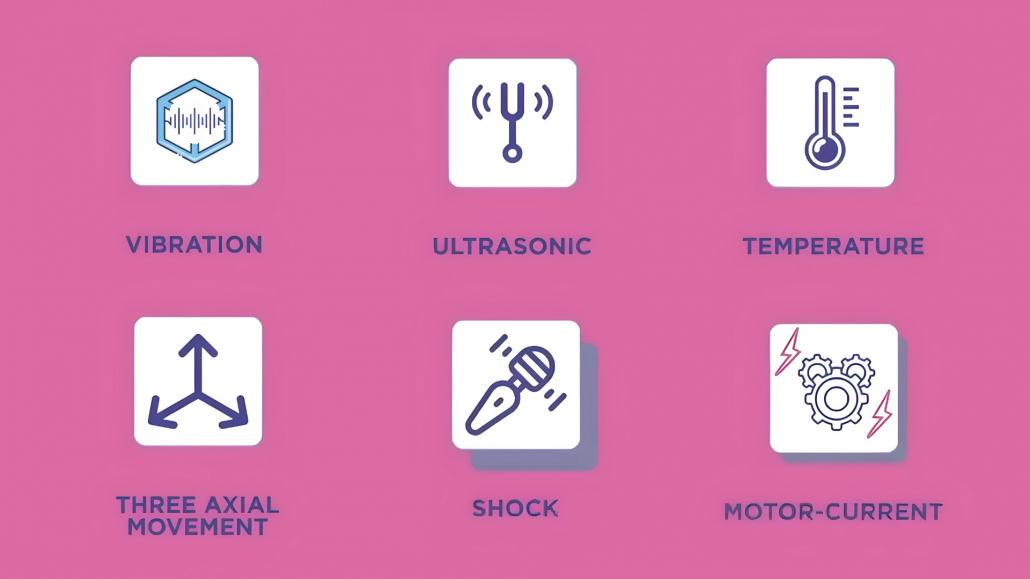
Predictive maintenance means using data to detect early signs of failure and take action before equipment breaks. For baghouses, IoT enables continuous, automated collection of signals such as vibration, motor current, bearing temperature, differential pressure across filter bags, pulse counts, and airflow. These data streams go to a central platform where analytics or simple threshold logic identify trends and anomalies. Instead of scheduled inspections or waiting for alarms, you get notifications when a bearing is beginning to degrade, a fan motor draws extra current, filters are starting to blind, or cleaning cycles are becoming abnormal. That early visibility reduces emergency repairs, avoids unplanned shutdowns, and extends component life.
— "Which sensors and measurements are most useful for baghouse predictive maintenance?"
Key measurements include differential pressure (clean vs dirty plenum), fan motor current and temperature, vibration (tri-axial accelerometers), pulse valve counters and pilot pressure, airflow or static pressure at critical points, and particulate sensors for confirming filtration performance. Combining multiple signals gives better detection accuracy. For example, rising dP plus more frequent pulse cycles and a small increase in fan motor load is a clearer warning than any of those alone.
— "How does IoT help with emissions compliance?"
IoT provides continuous, timestamped records of emissions-related parameters: particulate counts or mass (PM2.5/PM10), differential pressure across media, pulse counts and cleaning performance, inlet/outlet temperatures, and alarm events. That data can be archived for regulators, used to demonstrate trending and corrective action, and tied to site SOPs. When a compliance breach or an excursion occurs, the system can trigger immediate alerts and produce an auditable event log showing what happened and what corrective steps were taken.
— "Can IoT systems be retrofitted to older baghouses, or do I need a full replacement?"
Most IoT solutions are designed for retrofit. Wireless, battery-powered sensors and protocol converters let you add monitoring without tearing out controls or running extensive wiring. Modbus or analog outputs from legacy devices can be converted and digitized; low-power long-range radio (LoRaWAN) or cellular gateways send data to the cloud. In many cases the baghouse’s mechanical systems remain unchanged while visibility and analytics are layered on top rapidly.
— "How fast can an IoT predictive maintenance pilot be deployed and show results?"
A focused pilot — instrumenting 1–3 critical baghouse assets — can be installed and configured in a few days. Early wins usually come from trending differential pressure, fan motor load, and pulse counts. Within weeks you can see clear trends that indicate overcleaning, leaking bags, or a failing fan bearing. Because hardware and radios are plug-and-play, the time to measurable insight is short compared with traditional SCADA projects.
— "What are the typical economic benefits and ROI drivers?"
IoT reduces emergency repairs, extends filter and bearing life, reduces unscheduled downtime, and lowers labor for manual inspections. Savings come from fewer expedited spare parts, less production loss, and lower energy (by avoiding over-cleaning or running inefficient fans). For many facilities payback on a modest sensor rollout can be 6–18 months depending on asset criticality and failure costs.
— "How do software platforms and AI turn raw sensor data into actionable insights?"
Raw data is streamed to a platform where baseline “normal” behavior is learned. Analytics do trend analysis, compare signals, and apply rules or machine learning to surface likely fault modes: bearing degradation, imbalance, filter blinding, solenoid failures, or duct blockages. Alerts are routed to the right people with suggested actions (e.g., check fan bearing, schedule bearing replacement, inspect pulse valve bank). Good platforms also provide dashboards, historical reports, and exportable compliance logs.
— "Are there security or IT integration concerns?"
Modern implementations prioritize security. Typical architectures use outbound-only connections from local gateways to cloud endpoints, TLS encryption, device certificates, and role-based access. IoT can be deployed cloud-first, hybrid, or fully on-premise to meet IT or regulatory requirements. For pilots, teams often use separate gateways or cellular connections to avoid heavy IT change control while proving value.
— "What are realistic, illustrative case studies that reflect typical outcomes facilities see when they add IoT monitoring to baghouses?"
Illustrative Case A — Cement Plant Fan Bearing Prediction
A cement plant struggled with intermittent fan bearing failures that forced weekend outages and expedited bearings costing five figures each. The team installed vibration sensors and motor current monitoring on the fan system. Analytics identified a rising vibration spectrum and a subtle harmonics shift two weeks before failure. The bearing was replaced during scheduled day shift hours with a planned spare. Result: one prevented emergency outage per year, three weeks less production lost, and payback in under a year.
Illustrative Case B — Aggregate Crusher with Multi-Baghouses
An aggregate producer had three separate baghouses with no central control, causing uneven airflow and premature filter failures. An IoT gateway consolidated differential pressure readings and enabled clean-on-demand logic. Trending showed one compartment was over-cleaned while another was starving. After switching to dP-driven cleaning and balancing flows, filter life extended by 30 percent and fuel/energy consumption on fans decreased due to steadier operation.
Illustrative Case C — Metal Finishing Plant: Emissions Event Avoided
A metal finishing shop used particulate monitors and plume-exit sensors integrated into an IoT dashboard. One weekend, the system detected a sudden rise in outlet particulate count and sent alarms to on-call staff. Remote access to pulse counts and header pressure revealed a stuck diaphragm. Prompt intervention prevented a permit exceedance, avoided fines, and produced an audit trail documenting response time and corrective actions.
— "How do you avoid data overload and false alarms?"
Start with a small number of meaningful KPIs and use staging thresholds: an initial “informational” band, a “service soon” band, and a “critical” band. Combine multiple signals to reduce false positives, for example require both rising dP and increased pulse cycles before flagging filter change. Regularly review alarm tuning with operators and reliability staff. Many platforms offer built-in templates for baghouse health that have been tuned in multiple installations.
— "Do I need AI or machine learning to get value?"
No. Rule-based thresholds and trend detection already provide huge value. AI and machine learning add incremental benefit by finding complex multivariate correlations and shortening the time to root cause. Facilities can see fast ROI with simple analytics and add advanced models as they scale.
— "Who should be involved in an IoT project?"
Engage operations, maintenance, EHS, and procurement early. Include IT/security to agree on deployment architecture and data handling. A cross-functional team ensures the solution solves practical problems and that alarms go to the right people.
— "How do plants measure success after implementing IoT-based predictive maintenance and emissions monitoring?"
Success is usually measured through a combination of reliability, compliance, and cost savings. Most facilities start by tracking reductions in unplanned downtime and emergency maintenance, since IoT alerts often prevent fan failures, high-DP shutdowns, and bag failures before they happen. Plants also measure how many routine inspections and unnecessary part replacements they eliminate once they shift from fixed schedules to true condition-based maintenance.
On the compliance side, success shows up as fewer emissions excursions, more stable differential pressure trends, and a stronger record of meeting permit limits. Energy use is another benchmark, with many plants seeing lower kWh consumption as fans and filters run more efficiently. Finally, teams track faster detection and response times thanks to real-time dashboards, demonstrating that IoT is helping them act earlier and more effectively.
If you’re considering bringing IoT into your dust collection systems or broader plant operations, we’re here to help. Our team works directly with facilities to design practical, cost-effective sensor strategies that deliver real gains in reliability, maintenance, and compliance. If you have questions about anything covered in this FAQ or want to explore what this technology could look like in your facility, reach out to us anytime. We’re happy to walk you through options, share examples from similar plants, and offer a free consultation to evaluate how IoT can support your goals.
Dust Collection Expert, Technical Writer & Editor at Baghouse.com
Andy Biancotti believes that knowledge is one of the best investments any company can make. As Editor and Marketing Manager at Baghouse.com, he enjoys interviewing engineers, technicians, and customers to capture the real-world lessons behind successful dust collection projects and turn them into practical resources that others can learn from. With more than two decades of experience in industrial maintenance, operations, and technical communication, his goal is simple: help people better understand their systems so they can work safer, smarter, and more efficiently.
Across cement plants, foundries, food processing lines, metalworking facilities, and even woodworking shops, one challenge is the same everywhere: dust collectors systems seem to always fail at the worst possible time. Motors seize without warning. Fans vibrate themselves into costly repairs. Filters blind until production grinds to a halt.
Today, however, connected sensors and cloud-based monitoring are changing how plants maintain their systems. Instead of responding after a failure, facilities are now predicting issues days or weeks beforehand.
“IoT is finally giving maintenance teams the visibility they always needed,” says Matt Coughlin, Owner of Baghouse.com. “When you can actually see what’s happening inside your dust collector in real time, you stop guessing and start preventing problems.”
IoT devices act as gateways that send sensor data to the cloud.
Modern remote sensors make this possible by tracking vibration, temperature, pressure, airflow, and equipment health with precision. Data is transmitted instantly to a secure cloud dashboard (accessible anywhere) to warn teams before a failure appears.
According to Eric Schummer, CEO of Senzary, “Plants are finding that once they start collecting this data, downtime drops fast. You can’t fix what you don’t know, and IoT removes that blind spot completely.”
Below is a practical look at how IoT works, what it delivers, and how companies in multiple industries are using it to boost reliability, safety, and productivity.
What IoT Technology Means for Dust Collection
IoT devices act as gateways that send sensor data to the cloud. They operate independently from plant PLCs, making them ideal for maintenance systems.
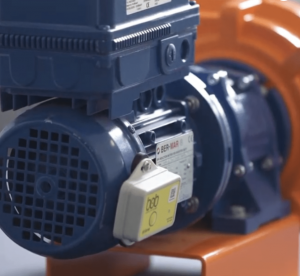
Wireless battery-powered sensors now attach easily to:
✅ Fan motors
✅ Bearings
✅ Valves
✅ Airlocks
✅ Pulse headers
✅ Baghouse plenums
✅ Duct sections with heat or spark potential
They measure vibration, acceleration, temperature, differential pressure, humidity, and more. The gateways then upload encrypted data via cellular networks. This allows teams to monitor performance remotely and troubleshoot issues without climbing ladders or entering unsafe areas.
Eric Schummer notes: “The hardware is simple now. You mount a sensor, power a gateway, and the data flows automatically. Plants of every size can adopt predictive maintenance without redesigning their controls.”
✔️ Temperature spikes on motors hinting at overload
✔️ Abnormal cleaning cycles due to diaphragm problems
The system flags these deviations and alerts the right people instantly.
“Prediction is where the value truly appears,” says Schummer. “With vibration analytics, many failures can be identified weeks ahead. That gives teams time to schedule repairs instead of reacting.”
4 – Improving Plant Reliability and Efficiency
IoT data helps operators optimize their process by trending equipment behavior over entire campaigns. Plants can customize alarms, track changes in production, and evaluate the impact of raw material shifts.
Knowing the true causes of upset conditions empowers teams to reduce losses, cut energy usage, and ultimately extend equipment life.
As Matt puts it: “Improvement only happens when you understand what’s really going on. IoT cuts through the noise.”
A quarry using three baghouses struggled with uneven airflow and no centralized differential pressure reading. Filters failed unpredictably, forcing shutdowns.
✅ Solution: All three collectors were unified through one IoT controller reading combined dP. Clean-on-demand logic replaced fixed cleaning cycles. A bearing temperature sensor added automated alerts.
✅ Result: Better airflow balance, predictable filter life, and practically no unplanned downtime.
Case 2: Hazardous Metal Dust Operation
A metal processing plant had dangerous dust that could smolder if airflow conditions changed. Manual monitoring exposed technicians to risks and still missed key warnings.
✅ Solution: IoT push notifications alerted personnel to power loss, pressure drops, and unsafe flow conditions in real time.
✅ Result: Fires were prevented, exposure risks dropped, and data allowed safer, more reliable operations.
Case 3: Alternative Fuel Storage Silos
A facility handling wood and organic fuels had frequent filter collapses due to unknown high pressure. The cleaning system was occasionally left isolated after maintenance, worsening failures.
✅ Solution: A full IoT baghouse control system with temperature and dP trends revealed material behavior and alerted staff immediately when compressed air was left off.
✅ Result: Filter life increased, failures were caught early, and operators identified how certain fuels were affecting the baghouse.
Predictive maintenance through IoT is no longer optional… it’s a competitive advantage.
To evaluate an IoT solution, ask:
⁉️ Will it connect easily to your equipment?
⁉️ Will it collect the data you actually need?
⁉️ Will it predict failures early?
⁉️ Will it help the plant improve performance long term?
⁉️ Will it support all brands of sensors and equipment?
As Matt says: “Dust collection doesn’t have to be reactive anymore. With IoT, you stay ahead of the problems instead of chasing them.”
IoT has reached maturity. Plants that embrace it are cutting downtime, extending equipment life, and gaining a clearer view of their operations than ever before.
If done correctly, predictive maintenance becomes the norm—not the exception—and dust collectors become far more reliable, efficient, and safe.
Dust Collection Expert, Technical Writer & Editor at Baghouse.com
Andy Biancotti believes that knowledge is one of the best investments any company can make. As Editor and Marketing Manager at Baghouse.com, he enjoys interviewing engineers, technicians, and customers to capture the real-world lessons behind successful dust collection projects and turn them into practical resources that others can learn from. With more than two decades of experience in industrial maintenance, operations, and technical communication, his goal is simple: help people better understand their systems so they can work safer, smarter, and more efficiently.
https://baghouse.com/wp-content/uploads/2025/12/How-iIoT-Powers-Predictive-Maintenance.png10801920Andy Biancottihttps://baghouse.com/wp-content/uploads/2025/10/BH-Logo-Alt-01-300x70.pngAndy Biancotti2025-12-03 18:38:132026-05-23 19:41:41How IoT Cuts Downtime by Predicting Failures Before They Happen
Using vibration and motor data to prevent dust collector fan failures is no longer a complicated or expensive process thanks to modern IoT sensor technology. Remote monitoring makes it possible to detect small changes in fan behavior long before they turn into breakdowns. According to Matt Coughlin, Owner of Baghouse.com, “We used to rely on gut feeling and periodic checks. Now we can see what’s happening with a fan in real time, even before the operators notice anything. It changes the way maintenance teams work.” With easy-to-install sensors and continuous data streaming, plants can finally stay ahead of problems instead of reacting to them after it is too late.
How Do Remote Sensors Work?
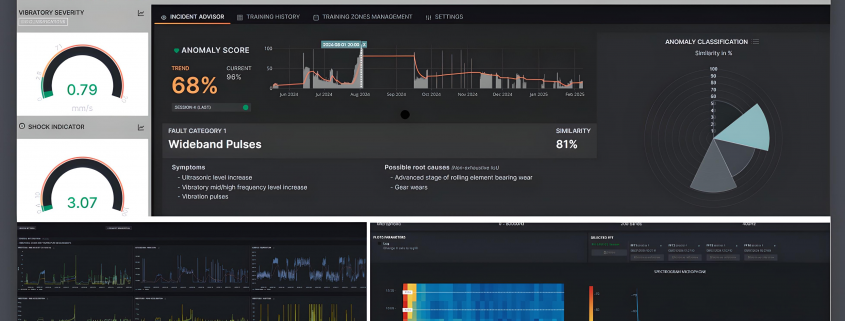
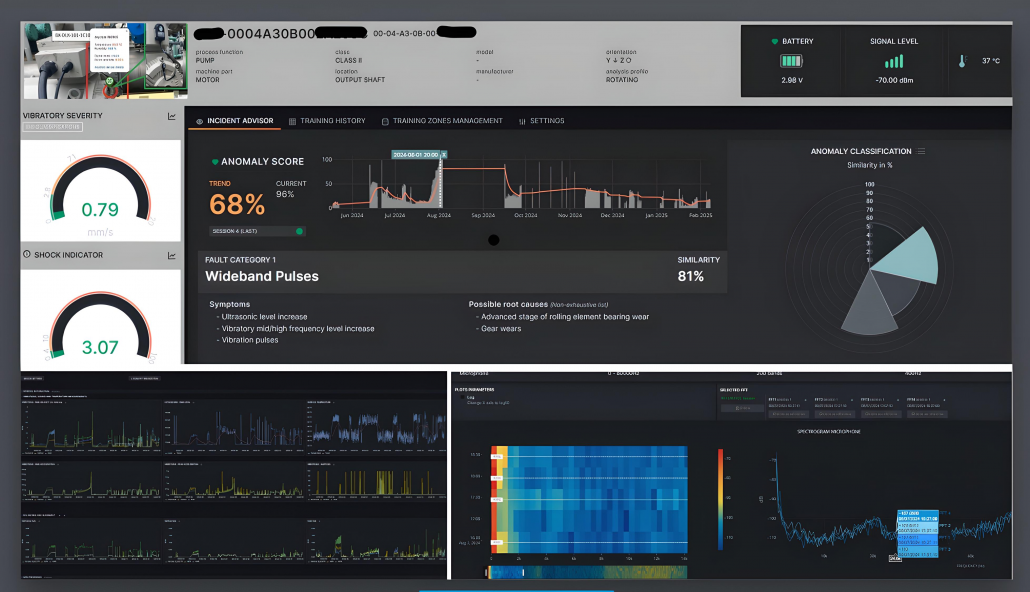
Remote IoT sensors attached to fan motors and rotating equipment continuously monitor parameters like vibration, acceleration, and temperature. Instead of periodic manual inspections, these sensors stream real-time data to a cloud platform. There, embedded analytics examine baseline behavior and flag subtle deviations, like early signs of misalignment, bearing wear, or imbalance. Once thresholds are crossed, the system sends an alert, giving maintenance teams time to intervene before a failure evolves. This predictive maintenance approach can dramatically reduce unplanned outages and extend the useful life of critical equipment.
An example of this technology is an IoT sensor package that mounts easily onto a motor or fan housing using magnets… no cabling, no shutdown required. The sensor uses a tri-axis accelerometer to track vibration patterns, and an embedded temperature sensor monitors heat build-up. After a short learning period, the device recognizes the normal operating “signature” of the equipment. From that point onward, any abnormal vibration or temperature anomaly triggers a predictive alert.
For a dust collection system, this means you can monitor fan motors, blowers, and related equipment around the clock. Instead of relying on fixed maintenance intervals or waiting for a fan to show loud or obvious failure signs, remote IoT monitoring helps you catch bearing wear, imbalance, or loose components days or even weeks before anything goes wrong. This prevents catastrophic breakdowns, reduces emergency callouts, and keeps production running without surprises. Industry research continues to show that vibration-based condition monitoring is one of the most effective ways to cut unplanned downtime and maintenance costs. Matt Coughlin puts it simply: “You’d be amazed how many disasters start with a tiny vibration you can’t hear. When the sensors pick it up early, it’s like getting a heads-up before the problem even exists.”
Proactive Maintenance
Beyond preventing failures, this method gives you real operational intelligence. Built-in analytics transform vibration and temperature signals into clear information about machine health, remaining useful life, and the best moment to service equipment. Maintenance can finally be scheduled proactively, exactly when it’s needed instead of when the calendar says so. That means fewer unnecessary part replacements, fewer surprise interruptions, and much longer life for fans, motors, and the entire dust collection system.
Implementing remote IoT sensors is now easier than ever. Wireless sensors with battery operation and long-range protocols eliminate the need for complex wiring. Installation can often be performed in minutes with minimal disruption… even on running equipment! Data flows through gateways into secure, cloud-based dashboards accessible on desktop or mobile devices, giving maintenance teams real-time visibility from anywhere.
If you manage dust collection, plant maintenance, or facility operations, integrating vibration-based IoT monitoring into your maintenance strategy offers a practical path to safer, more reliable, and cost-effective operation.
President | Dust Collection Engineer | Industrial Air Pollution Control Specialist
Matt Coughlin is an author, engineer, and dust collection expert specializing in industrial filtration systems, air pollution control, and process ventilation. With more than two decades of experience in the dust collection industry, Matt has helped design, troubleshoot, and optimize hundreds of dust collection systems across a wide range of industries, including cement, mining, food processing, woodworking, metals, power generation, chemical manufacturing, and bulk material handling. Born and raised in Southern California, Matt continues to work closely with industrial facilities around the world, helping companies improve their dust collection performance through engineering expertise, practical solutions, and long-term technical support.
https://baghouse.com/wp-content/uploads/2025/11/Using-Vibration-and-Motor-Data.png10801920Matt Coughlinhttps://baghouse.com/wp-content/uploads/2025/10/BH-Logo-Alt-01-300x70.pngMatt Coughlin2025-12-01 18:45:082026-06-19 18:21:45Using Vibration and Motor Data to Prevent Dust Collector Fan Failures


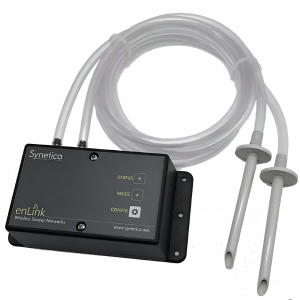 A far easier and more reliable alternative is to install a transmitting sensor — such as the Synetica EnLink offered in the DustIQ platform — directly on the dust collector. The sensor can be installed in minutes and can run on batteries or site power. Once it’s in place and connected to an outdoor LoRaWAN gateway, the DP data updates automatically in the DustIQ dashboard. The dashboard can be configured for simple reporting to show your permit inspector and can generate automated alerts when the DP crosses a threshold or begins trending upward. This gives your team enough warning to schedule filter changes proactively instead of reacting in a panic.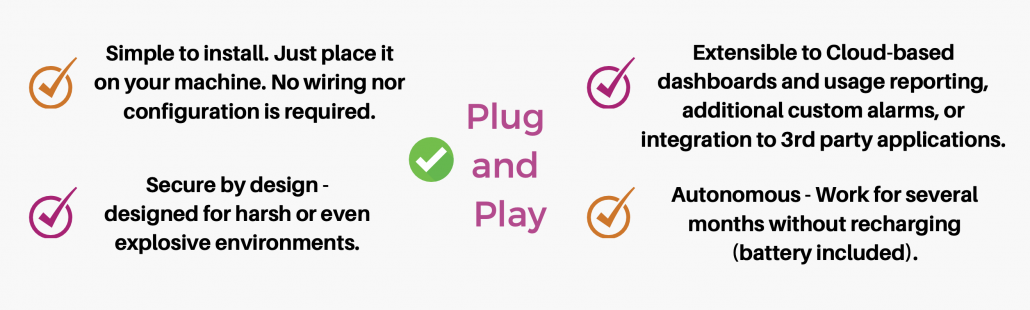


 If you’re considering bringing IoT into your dust collection systems or broader plant operations, we’re here to help. Our team works directly with facilities to design practical, cost-effective sensor strategies that deliver real gains in reliability, maintenance, and compliance. If you have questions about anything covered in this FAQ or want to explore what this technology could look like in your facility, reach out to us anytime. We’re happy to walk you through options, share examples from similar plants, and offer a free consultation to evaluate how IoT can support your goals.

 ✅ Fan motors
 ⁉️ Will it connect easily to your equipment?
 An example of this technology is an IoT sensor package that mounts easily onto a motor or fan housing using magnets… no cabling, no shutdown required. The sensor uses a tri-axis accelerometer to track vibration patterns, and an embedded temperature sensor monitors heat build-up. After a short learning period, the device recognizes the normal operating “signature” of the equipment. From that point onward, any abnormal vibration or temperature anomaly triggers a predictive alert.