Combustible dust remains one of the most underestimated hazards in industrial environments, despite decades of research, regulation, and high-profile incidents that highlight its destructive potential. As facilities scale production, add new materials, or modernize equipment, many unknowingly create the perfect conditions for fires, flash fires, and even catastrophic explosions.
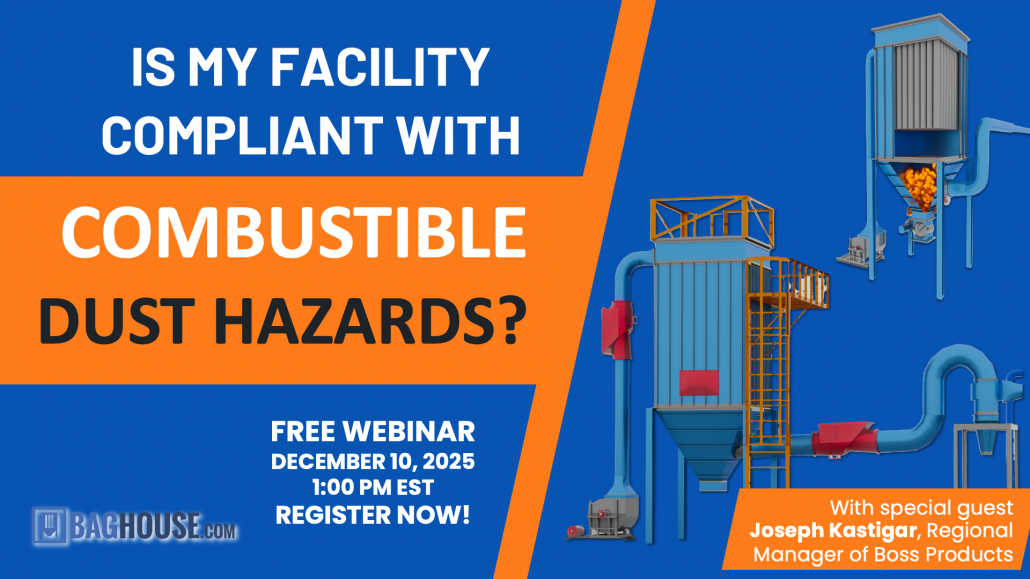
Special Guest for our Webinar – Joe Kastigar, Regional Sales Manager of Boss Products
This FREE webinar brings together industry experts like Joe Kastigar, our special guest from Boss Products, to walk you through the essential concepts, modern technologies, and practical steps every facility must understand to manage combustible dust safely and responsibly. Here’s a quick overview of what will be explored.
Why Combustible Dust Still Deserves Your Full Attention
Manufacturers across woodworking, food processing, metals, agriculture, and paper have dealt with combustible dust since the Industrial Revolution. But major incidents in the last decades proved that even well-established operations can underestimate the hazard. These events triggered sweeping changes, including OSHA’s National Emphasis Program and continuous updates to NFPA standards.
Yet incidents still happen every year.
Why? Because identifying, testing, and controlling combustible dust is more complex than it seems, and each industry brings its own unique risks.
✔️ What Is the Fire Triangle and the Dust Explosion Pentagon?
✔️ NFPA 660 Application Flowchart and how to use it
✔️ What “layers of protection” actually look like in a real facility?
This segment will help you understand whether your dust, process, and environment create conditions for ignition or explosion.
Fire Prevention Technologies: Stopping Ignition at the Source
This section includes the modern tools that prevent fires before they start, including:
✔️ Spark detection and extinguishing systems (Raptor Spark)
✔️ Firebreak shutters
✔️ Abort gates for safe airflow redirection
✔️ Explosion-tested drum kits
✔️ Spark traps
✔️ CO₂ fire suppression systems
These technologies are often the first line of defense, especially in high-risk processes involving wood dust, grain, metal fines, paper fibers, or food ingredients.
Explosion Protection: Containing and Controlling the Event
Fire prevention reduces risk, but it cannot eliminate it entirely. That’s where explosion protection becomes critical.
✔️ Explosion isolation valves to prevent propagation
✔️ Explosion vents and flameless vents for safe pressure relief
✔️ Active suppression systems that extinguish an explosion in milliseconds
✔️ How these devices integrate with dust collection systems
This section helps facilities understand how to design or upgrade systems so a deflagration is contained rather than becoming a plant-wide disaster.
Industry-Specific Challenges
We will explore what combustible dust looks like across major industries:
✔️ Woodworking: embers, sanding dust, large duct systems
Each sector has different ignition sources, dust characteristics, and system challenges. This portion of the webinar helps attendees connect general principles to their real-world processes.
Implementation & Best Practices: Where Many Facilities Struggle
We will finish with the practical steps that turn knowledge into action, including:
✔️ How to conduct a Dust Hazard Analysis (DHA)
✔️ When retrofitting is enough—and when a redesign is needed
✔️ Essential maintenance routines for prevention and protection systems
This segment gives attendees a clear roadmap for moving from awareness to compliance and long-term risk reduction.
What You’ll Take Away
You’ll walk away with:
✔️ A better understanding of the dust in your facility
✔️ A clearer view of NFPA 660 and related standards
✔️ Practical fire and explosion mitigation options
✔️ A roadmap for improving safety, uptime, and compliance
How to Connect
Attending the webinar is easy! Simply register using the link below. Once registered, you’ll get a confirmation email with all the details to log in. Don’t miss it:
The session will be interactive, with a live Q&A at the end, so be sure to come prepared with any questions you may have about combustible dust.
Combustible dust hazards aren’t going away. As materials change, production speeds increase, and automation grows, the potential for ignition and explosion becomes even more important to manage proactively. Through education, testing, prevention, and engineered protection systems, you can significantly reduce risk and safeguard both people and operations.
This webinar is your chance to get expert-guided clarity on what steps to take next—no matter your industry or facility size.
Dust Collection Expert, Technical Writer & Editor at Baghouse.com
Andy Biancotti believes that knowledge is one of the best investments any company can make. As Editor and Marketing Manager at Baghouse.com, he enjoys interviewing engineers, technicians, and customers to capture the real-world lessons behind successful dust collection projects and turn them into practical resources that others can learn from. With more than two decades of experience in industrial maintenance, operations, and technical communication, his goal is simple: help people better understand their systems so they can work safer, smarter, and more efficiently.
https://baghouse.com/wp-content/uploads/2025/11/Combustible-Dust-Webinar-2.png10801920Andy Biancottihttps://baghouse.com/wp-content/uploads/2025/10/BH-Logo-Alt-01-300x70.pngAndy Biancotti2025-11-25 17:30:142026-06-23 11:08:01NEW FREE WEBINAR: Is My Facility Compliant With Combustible Dust Hazards?
When designing a pulse-jet dust collector, engineers often focus on the air-to-cloth ratio as the main sizing parameter. However, there’s another equally important factor to consider: interstitial velocity and can velocity. Ignoring this variable can lead to significant performance issues, including poor dust release, higher energy consumption, and reduced filter life.
What is Interstitial Velocity?
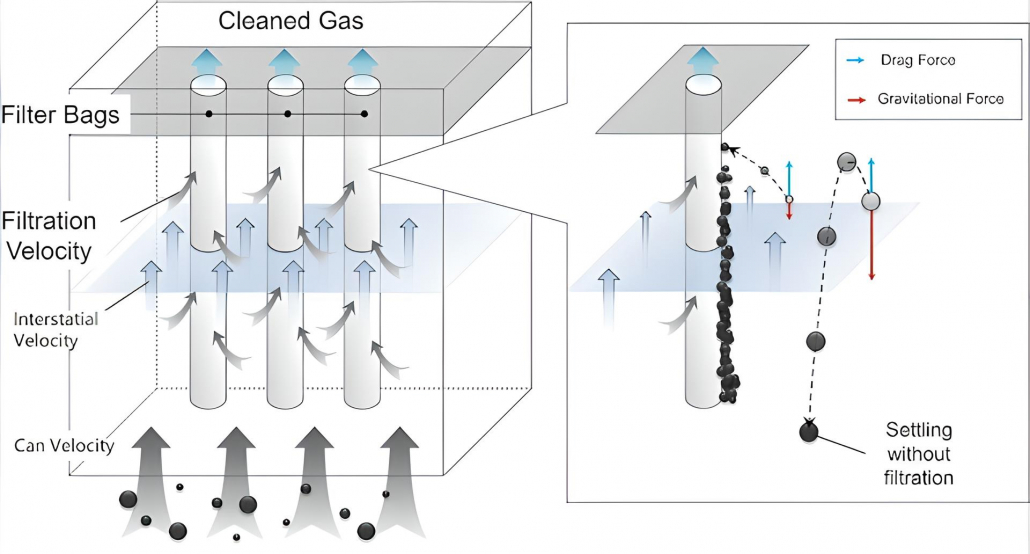
Interstitial velocity refers to the upward velocity of air moving through the open spaces between the filter bags inside a dust collector.
This upward air movement occurs in systems that use a hopper inlet. In these configurations, dust-laden air enters through the hopper and flows upward into the filter housing. The clean air passes through the filter bags, while the dust accumulates on the outer surfaces of the bags.
The interstitial velocity can be calculated using the following formula:
If the interstitial velocity is too high, dust that’s pulsed off during cleaning won’t fall back down into the hopper. Instead, it will remain suspended and be drawn back onto the bags. This leads to a high pressure drop, excessive compressed air usage, and shortened bag life.
Can velocity refers to the upward air velocity through the entire housing below the filter bags. In other words, interstitial velocity focuses on the air movement between the bags themselves, while can velocity measures the air movement just below them.
The can velocity can be calculated using the following formula:
There isn’t a single standard value for interstitial velocity. The optimal level depends on several factors, including dust characteristics and operating conditions.
✅ Bulk Density: Dusts with higher bulk density settle more easily, allowing for higher interstitial velocities.
✅ Particle Size: Smaller particles remain suspended longer, so lower interstitial velocities are preferred.
✅ Agglomeration Tendencies: If the dust tends to clump together, it may fall more easily, permitting slightly higher velocities.
✅ Inlet Loading: Both high and low dust loading rates can influence how much upward velocity the system can tolerate.
Each of these factors must be evaluated during the design phase to determine an acceptable range that keeps the collector efficient and prevents re-entrainment.
Optimizing Interstitial Velocity in New Dust Collectors
When designing a new dust collector, engineers typically start by dividing the system’s airflow by the desired air-to-cloth ratio to determine the required filter area. After that, the number, length, and diameter of the filter bags are selected. If the resulting interstitial velocity is too high, several adjustments can be made:
Change Bag Length: Switching from 10-foot to 8-foot bags (or even shorter) can reduce upward air velocity.
Change Bag Diameter: Using smaller-diameter bags (for example, 4½ inches instead of 5¾ inches) increases spacing between bags and lowers interstitial velocity.
Use a High Inlet: A high inlet design introduces dust-laden air into the upper part of the housing, minimizing upward air movement.
Increase Row Spacing: Widening the distance between bag rows (from the standard 8-inch centers to a greater spacing) helps reduce velocity between the filters.
Sometimes a combination of these methods is required. For instance, to achieve an interstitial velocity below 100 feet per minute, you might need to use shorter bags and increase bag spacing simultaneously.
Optimizing Interstitial Velocity in Existing Dust Collectors
Reducing interstitial velocity in an existing dust collector can be more challenging, but several modifications can still be effective:
✅ Switch to Smaller-Diameter Bags: This increases open space in the housing but requires a new tubesheet. Even though the air-to-cloth ratio increases, lowering interstitial velocity can still improve overall performance.
✅ Use Smaller-Diameter, Longer Bags: This maintains the same air-to-cloth ratio while expanding open space. However, housing modifications may be necessary.
✅ Reduce Air Volume: Adjusting the ventilation system to lower airflow (CFM) decreases interstitial velocity directly.
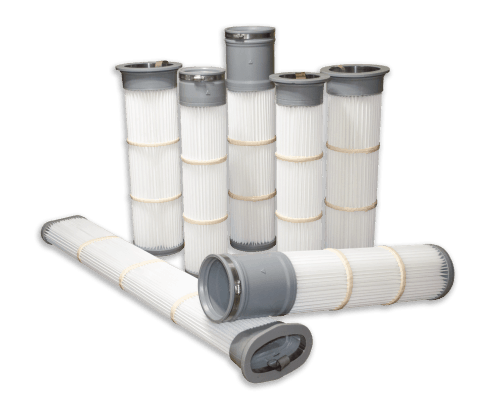
Pleated elements offer much greater filter area, reducing both interstitial and can velocities.
✅ Install Pleated Filters: Pleated elements offer much greater filter area, reducing both interstitial and can velocities. Some rows of filters can even be removed while maintaining or improving filtration efficiency.
These pleated filters are usually 40″ shorter than the bags, doubling the height in the drop-out zone. This increase allows large dust to settle before even entering the filter section, further reducing the load on the filters. When filters “see” less dust, they do not load up as quickly, they are not pulsed as frequently, and they last longer.
✅ Add a High Inlet Section: Retrofitting a high inlet effectively eliminates upward air velocity by changing the airflow path.
Careful consideration of interstitial velocity during the design phase can prevent costly performance issues and maintenance problems later.
For existing collectors, thoughtful retrofits and airflow adjustments can restore performance and reduce re-entrainment problems without requiring a full system replacement.
Keeping interstitial velocity under control is a small design detail that makes a big difference in achieving reliable, efficient, and long-lasting dust collection performance.
Dust Collection Expert, Technical Writer & Editor at Baghouse.com
Andy Biancotti believes that knowledge is one of the best investments any company can make. As Editor and Marketing Manager at Baghouse.com, he enjoys interviewing engineers, technicians, and customers to capture the real-world lessons behind successful dust collection projects and turn them into practical resources that others can learn from. With more than two decades of experience in industrial maintenance, operations, and technical communication, his goal is simple: help people better understand their systems so they can work safer, smarter, and more efficiently.
https://baghouse.com/wp-content/uploads/2025/11/Can-Velocity-and-Interstatial-Velocity-Article.png10801920Andy Biancottihttps://baghouse.com/wp-content/uploads/2025/10/BH-Logo-Alt-01-300x70.pngAndy Biancotti2025-11-18 12:54:112026-06-19 18:21:34Why Interstitial Velocity and Can Velocity Matters in Dust Collector Design?
The rapid growth of the electric vehicle (EV) industry and energy storage solutions has brought lithium-ion battery manufacturing into the spotlight.
The rapid growth of the electric vehicle (EV) industry and energy storage solutions has brought lithium-ion battery manufacturing into the spotlight. As production scales up, managing hazardous dust and fumes generated during manufacturing is critical for safety, quality, and environmental compliance. This article explores the intricate process of designing effective dust collection systems tailored for battery manufacturing, emphasizing best practices, challenges, and innovations to ensure a safe, compliant, and high-quality operation.
How Lithium-Ion Batteries Are Made: Step by Step
Thanks to their high energy density, rechargeability, and long lifespan, lithium-ion batteries power everything from smartphones to electric vehicles (EVs). But how exactly are they made before they end up inside your EV?
Let’s walk through the main stages of lithium-ion battery production, from raw material extraction to final quality testing.
Step 1: Raw Material Extraction and Preparation
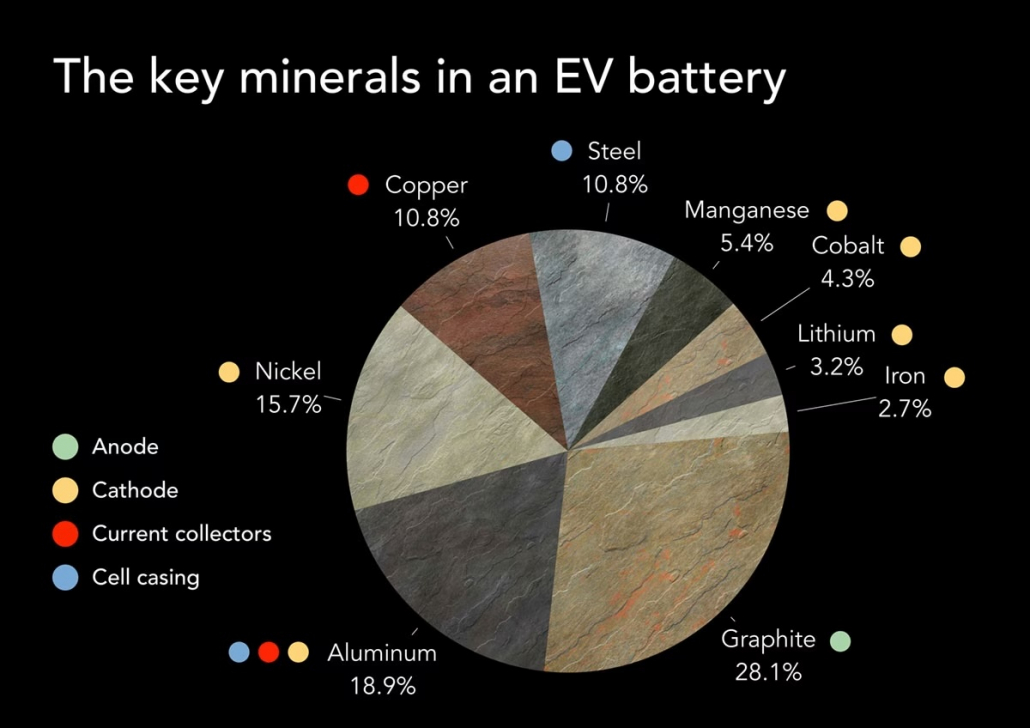
Critical materials for lithium-ion batteries include lithium, graphite, cobalt, and manganese.
Production begins with extracting key raw materials. According to the National Renewable Energy Laboratory, critical materials for lithium-ion batteries include lithium, graphite, cobalt, and manganese.
Inside the battery, these materials form the two main electrodes:
✅ Anode: typically made from carbon-based materials such as graphite.
✅ Cathode: composed of metal oxides containing lithium, cobalt, and manganese. These materials allow electric charge to flow between the electrodes during charging and discharging.
Step 2: Active Material Synthesis
Next, the extracted raw materials are refined and synthesized into active electrode materials with precise chemical and physical properties. This process often involves mixing, heating, cooling, and combining base metals with lithium, graphite, and binders. The goal is to create uniform, high-performance compounds for the anode and cathode.
Step 3: Electrode Manufacturing
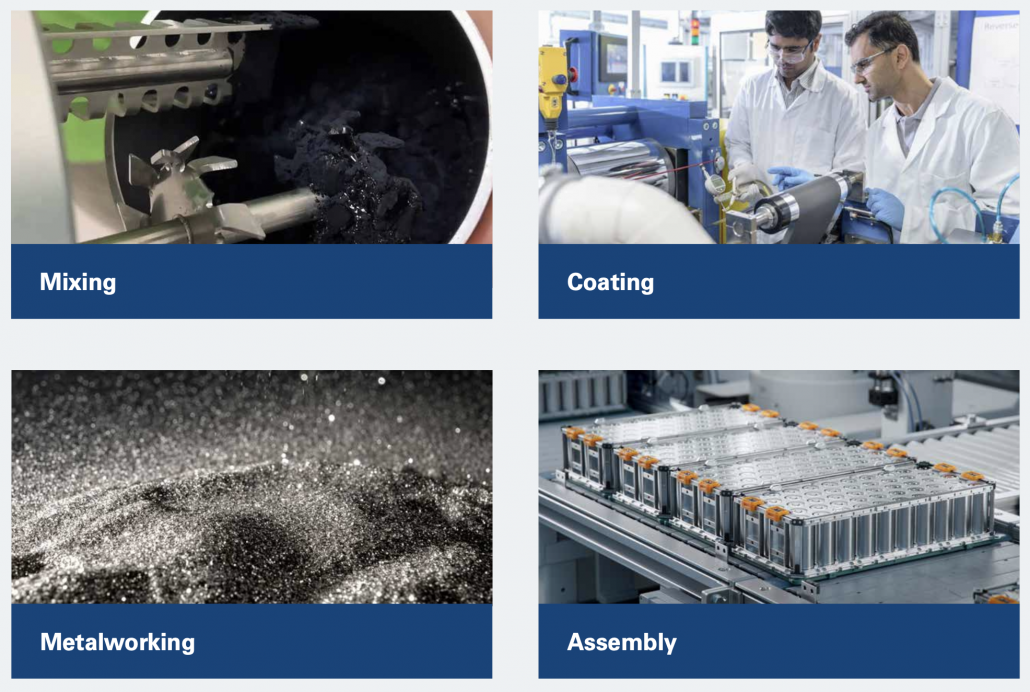
The electrode manufacturing stage includes three main steps: slurry preparation, coating and drying, and calendering. During slurry preparation, active materials are mixed with a solvent and binder to form a smooth paste. The slurry is coated onto thin metal foils (usually copper for the anode and aluminum for the cathode) and dried in a controlled environment to remove the solvent. Finally, the coated foils are compressed between rollers to reach the required thickness and density — a process known as calendering.
Dust in battery production tends to be dry, fine, and lightweight, often containing hazardous metals like cobalt, nickel, lithium compounds, and other reactive materials. Fumes can be flammable, needing strict fire safety measures. Areas such as slurry mixing, electrode coating, slitting, and cell assembly are hotspots for dust creation, with dust onset during material handling and processing steps. Both dust and fumes can contribute to combustible explosions and pose inhalation hazards, that’s why the need for specialized collection and filtration systems.
Step 4: Cell Assembly
Lithium-ion battery cells can take different forms: cylindrical, prismatic, or pouch cells. During assembly, anode and cathode sheets are stacked or wound together with a separator between them to prevent short circuits. Then, the cell is filled with electrolyte, which enables lithium ions to move between the electrodes. The cell is finally sealed to prevent leaks and contamination.
Step 5: Cell Formation and Aging
In this stage, cells undergo a series of controlled charging and discharging cycles. This activates the electrolyte and forms a solid electrolyte interphase (SEI) layer on the anode, which is essential for battery performance and durability. After formation, the cells are left to age and stabilize, ensuring consistent performance before further assembly.
Step 6: Module and Pack Assembly
Thanks to the high energy density of lithium-ion technology, manufacturers can design compact, powerful battery systems for a wide range of applications.
Individual cells are grouped into modules, and multiple modules form a battery pack. Each pack is equipped with a Battery Management System (BMS) that monitors voltage, temperature, and performance to maintain safety and efficiency. Thanks to the high energy density of lithium-ion technology, manufacturers can design compact, powerful battery systems for a wide range of applications.
Step 7: Quality Control and Testing
Finally, every lithium-ion battery goes through strict quality control and safety testing at multiple stages. This includes: Material inspections, in-line production checks, performance and capacity testing and electrical and safety evaluations.
These steps ensure each battery meets exact performance and safety standards before reaching the market.
Dust Collection System Design Principles for Battery Manufacturing
Effective dust collection hinges on a combination of properly designed hoods, ducts, fans, and filters:
✔️ Hood Design: Capture hoods must be positioned close to emission points and designed to optimize airflow velocities (usually 150-200 ft/min for dust and fumes), minimizing both overshoot and energy consumption.
✔️ Ducting Infrastructure: Size and slope ducts correctly to maintain minimum conveying velocities (commonly 4,000-4,500 ft/min for combustible dust) to prevent settling and blockages, avoiding turbulence and wear.
✔️ Fans and Ventilation: Size fans based on total static pressure, including filters, ductwork, and hoods, ensuring reliable operation and energy efficiency.
✔️ Filters and Dust Collectors:Cartridge collectors, especially models with nanoparticle filtration media, are ideal for capturing fine, dry dust without compromising airflow or adding excessive maintenance
Fire and Explosion Safety
Due to the combustible nature of many battery dusts, mitigation strategies such as system isolation (both mechanical and explosion venting), use of flame retardant filters, and chemical suppression systems are crucial. Conducting dust hazard analysis (DHA) determines fire/explosion risks and guides protective measures. The NFPA 660 standard provides guidance, but specific standards for battery manufacturing are evolving.
Preventive Maintenance and Monitoring
Modern systems incorporate electronic monitoring with smart sensors for filter differential pressure, fan operation, and alarm notifications. Bag-in, bag-out handling protocols prevent worker exposure to hazardous dust, and routine inspections help identify filter blockages or wear early.
Learning and Implementation Recommendations:
✔️ Engage with experienced dust collection providers early in facility design.
✔️ Conduct comprehensive dust hazard analyses to understand explosion and fire risks.
✔️ Implement smart monitoring and preventive maintenance routines.
✔️ Design for future scalability to adapt to technological changes.
✔️ Prioritize worker safety through proper PPE, bag-in, bag-out protocols, and training. With these strategies, manufacturers can ensure a safer, cleaner, and more efficient production environment—driving the future of energy storage and electric mobility.
As explained, battery manufacturing involves multiple intricate steps, all processes which inherently generate fine dust and fumes. These airborne particulates, often combustible and hazardous, pose risks of explosions, fires, and long-term health effects for workers.
Companies like Baghouse.com bring decades of expertise in customizing solutions to meet these unique challenges, all with an emphasis on safety, regulatory compliance, and operational excellence. As battery manufacturing evolves, continuous innovation and adherence to best practices will be vital in safeguarding facilities and advancing sustainable energy solutions globally.
President | Dust Collection Engineer | Industrial Air Pollution Control Specialist
Matt Coughlin is an author, engineer, and dust collection expert specializing in industrial filtration systems, air pollution control, and process ventilation. With more than two decades of experience in the dust collection industry, Matt has helped design, troubleshoot, and optimize hundreds of dust collection systems across a wide range of industries, including cement, mining, food processing, woodworking, metals, power generation, chemical manufacturing, and bulk material handling. Born and raised in Southern California, Matt continues to work closely with industrial facilities around the world, helping companies improve their dust collection performance through engineering expertise, practical solutions, and long-term technical support.
The industrial sector is one area that often has difficulties finding ways to go green.
Finding new ways for companies to reduce their environmental impact is vital in today’s ever-increasingly “green” conscious world. While many are able to employ a number of popular methods to decrease their environmental impact, others are limited in their applications of many of these methods due to the nature of their business. The industrial sector is one such area that often has difficulties finding ways to go green.
Often they are not able to directly cut back on their electricity usage due to the nature of their process. Perhaps safety regulations interfere with their efforts to trim incandescent light usage, or the manufacturing process itself cannot operate without a large amount of electricity (e.g. heavy metals smelting).
Are there any methods these companies can use to lessen the impact they have on the environment, while still providing these essential products and services?
Decreasing Environmental Impact Through Dust Collection System Efficiency
An easy way for companies to decrease their environmental impact is by making efficiency improvements to their dust collection system.
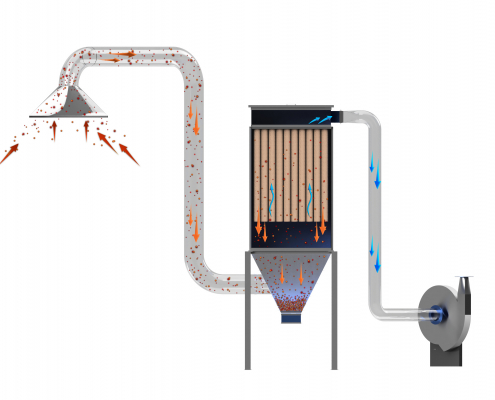
A dust collection system is used to collect dust particles that are generated in industrial processes before they escape into the atmosphere. It does so by using a large system fan to create a powerful vacuum in the ductwork throughout the plant.
Diagram showing dust collection system from the dust pickup to the fan on the clean side of the ductwork
At each location where dust is generated (hammer mills, transfer points [bucket elevators, conveyor belts, etc.], exhaust stacks, etc.) the air is sucked up through venting hoods to transfer the dusty air to the dust collector. Once in the collector, the dirty air is forced through a series of filter bags to remove the dust particles from the air. Finally, the now clean air can be exhausted to the outside atmosphere.
These systems are required by law to be installed in almost every industrial facility for safety and environmental reasons. In most cases the dust generated by industrial processes are treated as pollutants and cannot by law be allowed to exhausted into the outside air. This is especially true of processes that generate hazardous dusts (containing chemicals, heavy metals, etc.) or that are dangerously combustible (such as food products like flour and sugar, powdered metals like iron dust, etc.).
The mechanics of this process require a large amount of energy. By working to maximize the efficiency of the entire process, plant operators can at times drastically reduce the amount of energy needed to operate the system, reduce the amount of maintenance needed, and reduce wear and tear while all the while increasing overall capacity, and even increasing the plant’s operating potential.
Ways to Increase Dust Collector Efficiency
You might think that a system as complicated as this would require massive investments in capital and manpower to see any improvement in efficiency. “The reality is that there are a number of simple things plants can do to increase their baghouse efficiency by up to 20%” says Dominick Dal Santo, Sales Director of Baghouse.com. “Some [things that can increase efficiency] are as simple as installing gauges to measure things such as pressure, airflow, and filter status in the baghouse. Others involve using that data to adjust the cleaning cycles on the baghouse to be more efficient.” He went on relating the cost of installing these instruments was minimal, stressing that in-house electricians and other personnel can easily install the equipment.
“In most cases, the best return on investment is fine-tuning the cleaning system’s settings” says Dominick. Most baghouse dust collectors use a series of compressed air bursts to clean off excess dust build-up from the surface of the filters. “The more dust that builds up on the surface of the filter, the harder the fan has to work to pull the same amount of air through them.” A balance must be found between cleaning filters often (to keep resistance low), limiting the number of cleaning pulses (to minimize the use of often-expensive compressed air) to avoid lowering collection efficiency (a certain amount of dust buildup is needed to capture the maximum amount of particles) and minimize wear and tear on the filters (the more often and more aggressively cleaned the filters are, the shorter their service life).
“Fine-tuning the cleaning system is a very difficult balancing act, but finding that optimum balance is the key to decreasing the cost of operating a dust collection system” relates Dominick. Often times a facility will have outside dust collection technical advisors come out to their plant to help them find the best setting for each particular situation.
Other simple methods of optimizing the system include making sure the correct filters for the application are being used. “Many plants cut corners [initially] and buy cheaper filters that are not sufficient to meet their needs.”Dominick says that many plants could stand to switch to the latest filter technology that includes high-tech filter fabrics and treatments. “A lot of plants will see huge operational improvements when they switch to bag filters with PTFE membrane technology. These filters last many times longer than traditional fabrics, are easier to clean (therefore requiring less energy to clean them), and capture more particulate than others.”
Another solution that at times is very effective is switching from standard filter bags to pleated filter elements. These are essentially filter bags that have pleats that allow them to fit more filter fabric in a smaller amount of space than traditional filter bags. Among the host of benefits that they offer, they can allow a plant to increase its filtering capacity without building a new collector, reduce wear and tear, increase collection rates, and lower installation and maintenance costs.
Potentially Lower Energy Costs By 20%
While cutting 20% of the dust collection system energy costs may not sound like much, on the industrial scale, its potential savings can be massive. Let’s take two examples to see how much we could save.
Let’s say that a plant decides to implement a few of the methods described above to improve the baghouse cleaning cycle, specifically, they manage to increase the amount of time between each cleaning pulse (thereby lowering their compressed air use and fan brake horsepower). Just how much can they expect to save each year in energy costs alone?
Cleaning Efficiency
Size of Collector
Bags#: 144
Rows: 12
Valves: 1 1/2 double diaphragm
Electricity Cost $0.07
Fan energy Costs
System flow (ACFM): 11,000
Current SP (Inches w.c.): 12
Compresses Air Costs
Pulse Pressure (psig): 100
Number of pulses at the same time: 1
time between pulses (Sec): 5
BHP used: 33.3
Pulse pressure: 100
Number of pulses at same time: 1
Time between pulses (sec): Current 5 – New 7.5
BHP: 5.00
Savings per day: $5.82
Compressed air per year: $2,094.77
Fan savings per year: $2,539.00
By improving just one aspect of their system’s operation, this plant can expect to see savings of $4633.77 each year. This does not include the added benefits of longer filter life, better collection rates, and lower maintenance costs. Imagine if this example were scaled up to a large plant with a system 100 times larger (easily the case in many larger plants), these simple improvements could easily translate into millions of dollars per year for this plant.
Everyone, including industrial plants, can find ways to increase their energy efficiency and reduce their environmental impact. While identifying ways to do so might be harder in certain sectors of the economy, there are still ways out there. For industrial plants, whose options are at times quite limited, improving dust collection system efficiency is often a surprisingly easy way to reduce their environmental impact, while simultaneously increasing production, reducing plant downtime, and lowering operating costs.
Traditional Filter Bags vs. Pleated Filters
Traditional filters usually mean lowest cost per filter, but with pleated elements the overall short term and long term cost of replacing and maintaining your baghouse can be dramatically reduced
Switching from traditional filter bags to pleated filters can significantly reduce both energy costs and overall maintenance expenses. Here’s why the numbers make sense.
First, energy consumption drops dramatically: in our comparison, the filter bag system consumes about $72,392 in energy over the same period, while the pleated filter setup uses only $43,659. That’s a 40% reduction in energy use. The main reason is that pleated filters have a larger filtration area within the same space, which allows air to flow more easily through the media. With less resistance to airflow, the system’s fan doesn’t have to work as hard, so it draws less power. Lower fan load = lower energy bill.
Second, pleated filters are cheaper to maintain in the long run. Although their initial cost is higher ($6,336 vs. $4,480 for filter bags), you save on labor and replacement frequency. Pleated filters often last longer and are easier to install, cutting labor costs almost in half ($900 vs. $2,700). Plus, because they maintain stable airflow longer, they reduce strain on the cleaning system, lowering wear on components like valves and compressors.
Altogether, the monthly operating cost drops from $1,658 to $1,060, saving nearly $600 per month (over $7,000 a year) all while improving system performance and reducing downtime.
Filter Bags
Activity 0 12 24 36 48 total
Fabric buy 2,240 2,240 4,480
Labor (install) 1,350 1,350 2,700
Energy 72,392 72,392
Monthly cost 1,658
Pleated Elements
Activity 0 12 24 36 48 total
Fabric buy 6,336 6,336
Labor (install) 900 900
Energy 43,659 43,659
Monthly cost 1,060
Benefits of Switching to Pleated Filters
Reduce costs by up to 60%.
Many think older filters save money… they don’t.
Pleated filters can:
✅ Cut energy and operating costs by up to 50%.
✅ Require fewer filters overall.
✅ Lower labor and replacement expenses.
✅ Use less compressed air.
Built for modern, heavy-duty production. They replace existing bags and cages, no expensive system rebuilds required.
Capture more dust thanks to their larger filter area, and last up to twice as long as standard bags.
Fewer filters, less work. Lower maintenance time and labor costs.
No system modifications needed, just install and start saving.
There are many additional ways to reduce energy consumption and improve the performance of your dust collection system beyond the methods discussed here. The key is knowing where to look, and that’s where expert guidance can make all the difference.
At Baghouse.com, our team specializes in helping plants identify and implement the most cost-effective improvements for their specific systems. Even small adjustments can translate into massive annual savings, reduced downtime, and a cleaner, safer working environment.
Director of Operations | Dust Collection Specialist | Industrial Filtration Consultant
Dominick DalSanto is an author and environmental technologies expert specializing in dust collection systems. He has nearly a decade of hands-on working experience in the industry. Dominick is the sales director and sales technical advisor for an industrial dust collection equipment manufacturer. Personally took the lead on key projects each year from sales engineer to field advisor to project manager to business relations. Born in San Bernardino County, California, and raised in Chicago, he currently resides in Buenos Aires, Argentina.
https://baghouse.com/wp-content/uploads/2025/10/Industrial-Electricity-Bill.png10801920Dominick DalSantohttps://baghouse.com/wp-content/uploads/2025/10/BH-Logo-Alt-01-300x70.pngDominick DalSanto2025-11-04 11:33:182026-06-30 22:34:24Practical Tweaks for Lower Energy Bills and Cleaner Air On Your Dust Collection System





 Interstitial velocity refers to the upward velocity of air moving through the open spaces between the filter bags inside a dust collector.



 The electrode manufacturing stage includes three main steps: slurry preparation, coating and drying, and calendering. During slurry preparation, active materials are mixed with a solvent and binder to form a smooth paste. The slurry is coated onto thin metal foils (usually copper for the anode and aluminum for the cathode) and dried in a controlled environment to remove the solvent. Finally, the coated foils are compressed between rollers to reach the required thickness and density — a process known as calendering.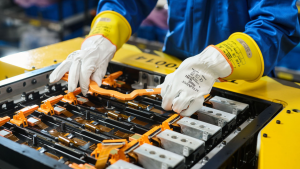




 At
At