
Top 5 Common Baghouse Misconceptions — And Why They Matter

If you’re trying to get the most out of your baghouse system, there’s one simple rule to keep in mind: go back to the basics.

It might not sound exciting, but fundamentals like starting up the system properly and cleaning only when needed (based on differential pressure) can make a huge difference in performance and bag life.

You’d be surprised how many plants overlook these essentials. And often, it’s because of a few persistent myths about how baghouses actually work. So let’s clear the air and take a closer look at five common misconceptions that could be holding your system back.

(And just a quick heads-up: if you’re using PTFE or Teflon-coated bags, these points might not apply in the same way.)

Misconception #1: The Bags Do the Filtering

fisherman casting a net and catching small and big fish. In dust collection, when a dust cake is formed in the filter, the smaller particles cant go through

The dust cake in the filter is like having big fish in your net, which collect small fish that normally would go through the holes of the net.

It seems logical to assume the filter bags are what filter the dust, right? But that’s partially right.

In reality, the real filtering happens in the dust cake—the fine layer of dust that builds up on the surface of the bag. This “control layer” is what traps the smaller particles. Without it, fine dust can slip right through and get embedded in the bag fabric. That’s how you end up with prematurely blinded bags that have to be replaced long before their time.

This is why proper startup is so critical when you install new bags. If you rush the process and start collecting full-load dust too soon, there’s no chance for that initial dust layer to build properly. And once the media gets clogged internally, there’s no cleaning it out. That’s why we recommend using precoat powder when the bags are new, to contribute to form an initial dust layer.

Misconception #2: Over-Cleaning is Better Than Under-Cleaning

It’s easy to fall into the “cleaner is better” mindset. After all, that’s true for most things—just not baghouses.
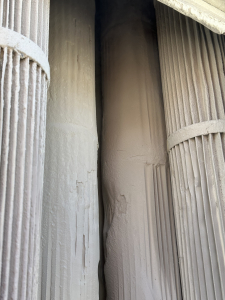
Blinded pleated filters with a thick dust cake

Undercleaning usually happens when the cleaning system is in poor condition or is set incorrectly. The result is excessive dust cake that will choke off the airflow.

Over-cleaning can be worse than under-cleaning. Why? Because every time you pulse clean the bags, you’re removing the dust cake layer that does the actual filtering. If you clean too often—especially on a time-based schedule rather than based on differential pressure—you’re stripping the bags down to the raw fabric over and over again. This opens the door for fine dust to embed in the media and causes early blinding.

And here’s the kicker: most emissions from a baghouse happen during the cleaning cycle. So if you’re cleaning more than you need to, you’re not just wearing out your bags—you’re potentially increasing emissions and wasting compressed air too.

Misconception #3: Filtering Wears Out the Bags

This one is sneaky because it seems true on the surface. You might think, “The more dust that goes through the system, the more wear on the bags,” right?

Not quite. It’s not the filtering—it’s the cleaning that wears them out.

Every pulse of air flexes the bag fabric. Over time, that flexing weakens the fibers, opens up the weave, and lets dust in. Add to that the mechanical stress of thousands of cleaning cycles, and you’ve got a recipe for premature bag failure.

If you wait until the differential pressure really justifies a cleaning, you’ll reduce how often the bags flex—and that extends their life significantly.

Misconception #4: Short Temperature Spikes Aren’t a Big Deal

Another common myth is that short temperature spikes—ones that go just a bit above the filter media’s rating—don’t really hurt anything.

That’s not true. Even brief exposures to high temperatures weaken the tensile strength of the filter media. And the damage is cumulative. The media may look fine after the spike, but a few days or weeks later, you start seeing bags fail during normal operation.

We’ve seen this happen at foundries running close to the temperature limit for their bags. One sudden spike, even for just 30 minutes, and a week later they’re pulling bags with ripped seams and fabric tears. The material just couldn’t hold up under the usual cleaning cycles anymore.

Check here the different filter medias and their corresponding temperature rating.

Misconception #5: You Don’t Need to Inspect Bags Until You See a Problem

It’s easy to fall into the “if it ain’t broke, don’t fix it” mindset when it comes to baghouse maintenance. But waiting until there’s a visible problem—like a spike in emissions, a drop in airflow, or a jump in differential pressure—usually means the damage is already done.

Inspecting the baghouse

Routine inspections are super important, even if the system seems to be running smoothly

Filter bags degrade gradually, and many issues start long before you see any obvious signs. Tiny tears, seam separation, chemical attack, and wear from cleaning cycles often begin on a small scale. If left unchecked, these issues can turn into full-blown failures that lead to downtime, permit violations, or even safety risks.

That’s why routine inspection and preventative maintenance are critical, even when everything seems to be running fine. Visual checks, spot bag testing, and scheduled compartment inspections can catch early signs of trouble—like bag hardening, embrittlement, or abrasion—before they impact performance.

 

Final Thoughts

Understanding how your baghouse really works—and what doesn’t cause problems—is key to running a more efficient and reliable system. 

And remember: if something seems “off” with your baghouse, don’t just assume it needs more cleaning. Sometimes the best thing you can do is let the dust do its job.

Taking care of your bags during startup is one of the smartest things you can do to extend their life and avoid expensive issues down the road.
New bags take in, that’s why it’s essential to protect them during startup

New bags take in, that’s why it’s essential to protect them during startup

Starting up a new set of filter bags in your baghouse might seem like a routine step, but it’s actually one of the most critical moments in determining how long those bags will last. Many operators don’t realize that what happens in the first 24 to 48 hours can make or break the long-term performance of the filters.

Here’s the issue: brand-new filter bags are clean and porous. That means air and dust can move through them very easily. If you send the full process flow through them right away, high-velocity dust particles can slam into the bare filter media, embedding deep into the fibers. This leads to premature blinding, where airflow is restricted, the pressure drop rises, and bag life is drastically shortened.

To understand this better, let’s talk numbers. A brand-new bag may have a permeability of 25 to 60 CFM/ft². That’s how easily air flows through it. A seasoned bag with a healthy dust cake may be down to 5 to 10 CFM/ft². A bag that’s blinded? Less than 2. That’s a massive drop. The takeaway: new bags take in a lot more air and dust—if you’re not careful. That’s why it’s essential to protect them during startup.

What’s The Right Way to Start Up a New Baghouse Compartment?

The short version: precoat, restrict, and go easy on the cleaning.

Precoat powder bag Baghouse.com

Precoat powder comes in 50-lb bags.

Start by applying a precoat—a compatible fine powder like limestone dust or commercial precoat products. This coats the clean bags with a thin layer of dust that acts like a buffer. It protects the fabric from direct contact with abrasive or sticky dust, and helps absorb moisture or acids that might form when the system is heating up.

Think of this step like preparing a fishing net: imagine you’re about to toss a net into a lake full of small fish. If you send it in empty, the fish will slip right through the holes. But if you first catch a few big fish and they block the holes, they form a barrier—so that even the smaller fish can’t pass through anymore. That’s exactly what a precoat does. The coarse particles land first, fill in the open pores of the fabric, and create a protective layer. When finer, stickier particles arrive later with the process dust, they’re less likely to get embedded in the media because the “big fish” have already blocked their path.

Next, limit the airflow. For reverse gas or shaker baghouses, you can do this by closing inlet or outlet dampers down to about 20% or by slowing down the fan. For pulse jet systems, you can also reduce fan speed or limit compressed air. Remember, the goal is to keep flow near the design air-to-cloth ratio, not wide open. Just enough to ventilate the system.

Finally, reduce or disable the cleaning cycle for the first 8 to 12 hours—or even longer if possible. That dust cake needs time to build. In reverse air systems, stop the reverse gas or shaking. In pulse jets, lower the compressed air pressure going to the pulse header. If you start blasting the bags too early, you’ll strip away the precoat and delay cake formation.

A Few Extra Tips

  • Hopper heater

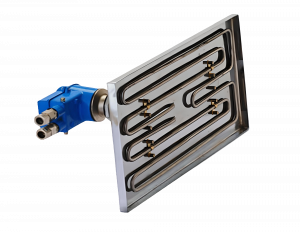
    Turn on the hopper heaters before startup to preheat the compartments to avoid condensation

    🔹 If your baghouse has hopper heaters, use them before startup to preheat the compartments. This helps you avoid hitting the dew point and forming condensation.
  • 🔹 Be especially cautious with high-moisture or acidic processes—the precoat is even more important here.
  • 🔹 Always document how the startup was handled. If you notice premature failures later on, it’s helpful to trace things back to how the bags were introduced into service.

The Payoff of a Proper Startup Routine

Taking care of your bags during startup is one of the smartest things you can do to extend their life and avoid expensive issues down the road. A little extra attention now can save you thousands of dollars in early bag replacements, lost production time, and increased energy costs.

Don’t let brand-new filters fail early. Precoat them, limit the airflow and give the filters time to settle in.

Need help with your startup procedure or choosing the right precoat material? Reach out—we’re always here to help!

Avoid Downtime By Taking Care of Your Baghouse Dust Collector

Downtime or lost production at a manufacturing facility can be incredibly costly.

Plants that operate 24/7 or produce large volumes of goods often know exactly how much each hour of downtime costs them—and it’s usually a number that makes management break into a cold sweat.

Problems with baghouses are a common cause of unplanned downtime, especially when maintenance is overlooked.

Problems with baghouses are a common cause of unplanned downtime, especially when maintenance is overlooked.

Problems with baghouses are a common cause of unplanned downtime, especially when maintenance is overlooked. Many facility managers think they’re saving money by cutting back on dust collection system maintenance. But what they’re really doing is saving a few pennies now only to lose buckets of dollars later when the whole system grinds to a halt.

It’s probably not realistic to expect any plant to run perfectly 24 hours a day, 7 days a week, 365 days a year. (If yours does, please tell us what’s the secret!) That’s why smart plant managers plan regular maintenance windows to keep things running smoothly.

There are two types of downtime: planned and unplanned. Both come with costs, but only one of them is on your schedule.

A survey of automotive industry execs showed that stopping production costs an average of $22,000 per minute. Let that sink in. Another study found that most facilities underestimate their downtime costs by a whopping 300%.

Now, imagine that your industrial dust collector goes down. Odds are, it won’t be going alone—it’ll take related systems with it. In many facilities, dust collectors used for pollution control are required to run at all times. Any malfunction can trigger a mandatory shutdown of the entire operation. When downtime costs tens of thousands per minute, it’s easy to see how skipping routine maintenance on a dust collector can quickly become the most expensive “savings” plan in history.

Yet despite their importance, dust collectors often get minimal attention when it comes to preventive maintenance.

Below are four practical tips to help keep your dust collector—and your production—running like clockwork.

1. Prevent Abrasion from Damaging Your Bags

Holes in a dust collector filter bag

High compressed air will lead to early bag failure, often creating abrasion problems or even creating holes in the fabric

Abrasion occurs when incoming dust hits the filters at high speed or volume. It can also happen when filter bags rub against each other or other components, like filter cages. This kind of wear is the main cause of early bag failure—and when bags leak, that usually means shutting the system down to find and replace them.

To reduce abrasion:

  • 🔸 Use baffle plates to slow down and evenly distribute incoming air, allowing heavier dust to fall out before reaching the filters.
  • 🔸 Ensure a proper inlet design to keep air from blasting directly onto the bags.
  • pleated filter graphic

    Pleated filter elements have many folds of the fabric that provide a greater surface area of filter cloth in a shorter length, allowing for improved air-to-cloth ratios in the same space

    🔸 Consider pleated filter technology, which elevates the filters out of the direct path of incoming dust. This gives particles more space to settle before hitting the filter media.

2. Change the Whole Set—Avoid Spot Changing

One of the most common (and most shortsighted) maintenance mistakes is only replacing the individual filters that fail, instead of the entire set. While it might seem like a cost-saving measure, it actually leads to more frequent failures, more emissions, and more downtime—not exactly a win.

Here’s why: when a brand-new filter is installed among older, dust-laden ones, air naturally flows through it more easily. That extra airflow causes the new filter—and those around it—to wear out faster. It’s a domino effect of failure.

Pro tip: If you’ve spot-changed more than 5–10% of the filters in a unit, it’s time to replace the entire set. That prevents the cycle of failure from continuing and helps restore optimal system performance.

3. Use Triboelectric Monitoring

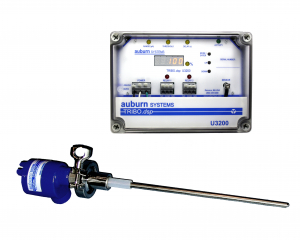
Triboelectric leak detector

With devices such as opacity meters or triboelectric bag leak detection systems, plants can measure emissions with extreme accuracy

Want to catch bag failures before they catch you off guard? Install a triboelectric monitor. It’s one of the best tools to proactively detect early or end-of-life filter failures.

With a properly installed system, you’ll get an alert at the first signs of a leak, early enough to address it during your next scheduled maintenance window. That means fewer emergency shutdowns and less contamination of nearby filters.

And when a leak does occur, triboelectric monitoring systems can help you pinpoint its exact location, right down to the compartment, row, or even individual bag. Quite impressive, right?

4. Review electrical components

Modern dust collection systems often rely on automated controls to manage cleaning cycles, monitor pressure and maintain consistent operation. If these systems fail or drift out of calibration, performance can suffer without obvious warning signs.

How to reduce maintenance on a dust collection controller?

Periodic inspection of control panels, sensors and wiring ensures everything is functioning as intended. Inspect and clean cooling fan filters for electrical components at least monthly. Inspect other components quarterly or annually, depending on system complexity.

At least once a year, it’s worth stepping back and looking at the system as a whole.

  • ⦿ Are airflow levels still meeting requirements?
  • ⦿ Are filters lasting as expected?
  • ⦿ Has the nature of the dust or production process changed?

This type of review helps ensure the system is still aligned with operational needs and compliance requirements. It can also highlight opportunities for optimization, such as adjusting cleaning cycles or upgrading components.

Conclusion

Regular maintenance and smart monitoring of your baghouse dust collector can help you avoid unplanned downtime, reduce emissions, and keep your team focused on production, not chasing leaks. In the end, it’s not just about dust—it’s about dollars.

Can I Get Fire-Proof Baghouse Filters?

Recently, we received a request from a purchasing agent at a woodworking facility looking for “fireproof” baghouse filters. It was his first time ordering anything for the company’s baghouses, and one potential filter supplier had told him to look into “fireproof media like Nomex” (i.e., aramid) for use in their collector. Needless to say, he was a bit surprised when we explained that no such thing existed — and that his so-called “filter expert” had given him potentially disastrous advice. 

Read article: Introduction to Combustible Dust Explosions Common to Baghouses

Fire and Explosion Dangers to a Dust Collection System

The most serious risk to a dust collection system (and the facility using it) is a combustible dust fire or explosion. Materials such as flour, wood, iron, aluminum, sugar, and many others become extremely combustible when in powder form. In addition to fires, combustible material inside a dust collection system finds the perfect combination of oxygen, dispersion, and confinement to explode with extreme force.

Fire triangle and explosion pentagon
Fire Triangle and Explosion pentagon

High-Temperature Fabrics and Flame-Resistant Finishes?

Even if the dust being handled isn’t combustible enough to explode or sustain a fire, sparks and embers can still damage the baghouse filters. Even when a spark or ember cannot ignite the dust, it can still ignite the filters themselves.

Aramid baghouse filters (trade name Nomex) is widely used because of its resistance to relatively high temperatures and to abrasion.

General applications for Aramid felt includes highly abrasive dust and chemical applications with high temperatures

Most dust collector filters are made from synthetic materials such as polyester, polypropylene, aramid, or fiberglass. While some fabrics like aramid (Nomex) and fiberglass have a higher maximum operating temperature, they are NOT fireproof. This temperature rating refers only to the process gas temperature, not to direct contact with sparks or flames. If hot embers make contact with these fabrics, they can still burn holes or even ignite the filters.

Additionally, certain manufacturers offer “fire-resistant” or “flame-retardant” treatments for various filter media types. While these coatings can provide an extra layer of protection, they will not fully prevent damage from sparks or embers that contact the filter bags.

Read a case study involving combustible dust: Case Study – Combustible Dust Safety in Aerospace Manufacturing 

Fire/Explosion Prevention and Protection — Two Different Objectives

To protect your system from damage, there are two categories of solutions: prevention and protection.

Prevention devices include:

  • Spark arrestor and cartridge collector

    Explosion isolation valve connected to ductwork outside the facilities

    🔶 Spark arrestors, which break embers into small pieces, extinguishing them before they reach the dust collector.
  • 🔶 High-speed abort gates and diverter valves, which redirect airflow to stop ignition sources from entering the baghouse.
  • 🔶 Inerting systems, which introduce inert gases or powders to reduce the risk of ignition in high-risk processes.

.

Protection devices focus on minimizing damage after an incident occurs. These include:

  • The installation of explosion-rated vents aimed to minimize the risk of dust-related incidents and ensure the safety of the environment.

    Newly installed explosion vents

    🔹 Explosion vents (also called pressure relief vents) that safely relieve excess pressure.
  • 🔹 Fire suppression systems, such as high-speed sprinklers or dry chemical injection systems, which extinguish fires or explosions quickly.

Both prevention and protection systems are also critical for stopping fires or explosions that start in the ductwork from reaching the baghouse.

To comply with fire safety regulations (such as those from OSHA and the NFPA), a combination of both prevention and protection is often required. Only by skillfully integrating both can a facility create a comprehensive strategy to mitigate the risks associated with combustible dust.

See other Combustible Dust Accessories

Conclusion — “Fireproof” Bags? Don’t Be Misled

There’s no such thing as a fireproof filter fabric. Be wary of anyone offering such a product — they are either misinformed or not being honest with you.

Facilities that face significant hazards from combustible dust should consult an experienced baghouse engineering provider or a fire safety expert to develop a comprehensive mitigation strategy. Even facilities not dealing with combustible dust can still experience fires if sparks or embers reach the baghouse. Your system might not explode, but your filters can still catch fire — and they will, if you’re not careful.