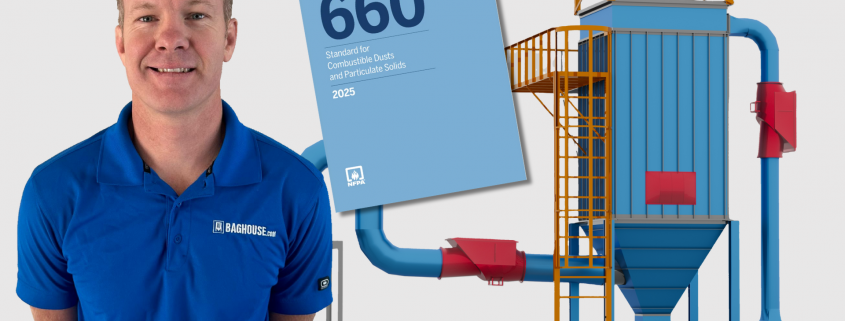
On December 6, 2024, the NFPA introduced a landmark shift in combustible dust safety standards with the release of NFPA 660: Standard for Combustible Dusts and Particulate Solids (2025). We interviewed Matt Coughlin, Owner and President of Baghouse.com, regarding how these new standards affect multiple industries.
— "What is NFPA 660, and why should we care?"
Matt: “If your facility handles anything dusty enough to be combustible, this new standard applies to you. NFPA 660 is the new consolidation of six different combustible dust standards. It replaces several older industry-specific standards, like NFPA 654, 61, 484, 655, and 664, and brings them together under one unified framework. The goal is to simplify compliance and create a consistent baseline for dust hazard analysis (DHA), explosion protection, housekeeping, ignition source control, and system design, regardless of the industry.”
— "So... what exactly does NFPA 660 cover?"
Matt:“In short: all the requirements for identifying, evaluating, and managing combustible dust hazards. It pulls together everything from hazard analysis to equipment design to training and emergency response. The first 9 chapters are based on what used to be NFPA 652, the old “Fundamentals” standard, while the remaining chapters dive into industry-specific details—like agriculture, woodworking, and metal processing. So whether you make cereal, shape aluminum, or sand furniture, there’s a chapter in the new standard that applies to your facility.”
Here’s a breakdown of the key features of NFPA 660 to help you navigate and understand this transformative standard:
Fundamental Chapters (1–10): These chapters provide core guidelines for combustible dusts and particulates, aligning with the previous NFPA 652 standard (Chapters 1–9). Chapter 10 introduces new content.
Future Topics (Chapters 11–20): These chapters are reserved for additional fundamental topics such as Fire Protection, Additive Manufacturing, and Nano Materials.
Agricultural and Food Processing (Chapter 21): This chapter replaces NFPA 61, focusing on the unique requirements for agricultural and food processing industries.
Combustible Metals (Chapter 22): Representing the previous NFPA 484, this chapter addresses risks and guidelines specific to combustible metals.
Sulfur Standards (Chapter 23): Derived from NFPA 655, this chapter provides sulfur-related guidelines, now managed by the former NFPA 654 committee.
Wood Processing (Chapter 24): This chapter supersedes NFPA 664, covering wood processing and woodworking standards.
Other Material Combustible Dusts (Chapter 25): This chapter consolidates guidelines for all other particulate materials not specified in previous chapters, replacing NFPA 654.
Committee Oversight: Committees for each specific area (e.g., Fundamentals, Agriculture) remain active to ensure accurate, industry-specific standards.
Annex Material (A–Z): Expanded annexes offer supplemental information, including explanations, diagrams, and additional guidance. These are for reference only and not mandatory.
Commodity-Specific Standards (Chapters 21–25): Include tailored requirements that address the unique risks and operational needs of specific industries, enhancing the foundational guidelines.
— "Is this standard wildly different from what we were doing before?"
Matt: “Not wildly. Most of the technical guidance is similar to existing standards, just reorganized, clarified, and modernized. The biggest updates? Clearer language, fewer contradictions, and improvements in the Hazard Management chapter—especially around process-specific equipment. Also, more detail on how to handle metallic dusts.”
— "Why did NFPA feel the need to consolidate all these standards?"
Matt: “Great question. Imagine trying to assemble IKEA furniture using six different instruction manuals written in different fonts and translated from Swedish by six different people. That’s kind of what combustible dust compliance looked like before. NFPA 660 streamlines the process. Now, you’ve got one clear document, with consistent definitions and guidance. “
— "Is NFPA 660 legally enforceable?"
Matt: “Technically, NFPA standards aren’t laws. But when OSHA or your local fire marshal adopts one by reference—or expects you to follow the “most current standard”—then yes, it effectively becomes enforceable. So, if you’ve got combustible dust anywhere in your facility, you should be planning around NFPA 660 going forward. Even if your inspector hasn’t mentioned it yet… you don’t want to be caught off guard when they do. It’s important to note however that your local regulations may differ from the NFPA standards, and you are responsible for complying with local laws regardless of whether they align with the standard.”
Matt: “If you’ve already completed a DHA under NFPA 652, good news—you’re still covered. NFPA 660 affirms that every facility handling combustible dust must complete a DHA and keep it updated. If you haven’t done a DHA yet? Well… this is your friendly reminder that now’s the time.”
— "Are there changes to dust collection system design in NFPA 660?"
Matt: “Not major ones. Most of the requirements for dust collection systems remain consistent, with some clarifications around explosion protection, fire isolation, and cleaning systems. If you were already designing to NFPA 652 or 654, you’re pretty close. Just make sure your documentation reflects the new standard and double-check anything specific to your industry. And no, NFPA 68 (deflagration venting) and NFPA 69 (explosion prevention systems) aren’t included in NFPA 660—they remain separate standards, so keep them in your compliance toolbox. And in case you are wondering, we do sellcombustible dust equipment that is designed to comply with those standards as well.And if you need help understanding the standards or outfitting your facility to comply, we have a staff of experts who can help you.””
— "What industries are affected by this?"
Matt: “Pretty much any facility dealing with fine particulate matter that could become airborne—and flammable. That includes agriculture, food processing, wood, metal, plastic, rubber, pharmaceuticals, chemicals, and more.”
— "How do I start complying with NFPA 660?"
Matt: “Start by reviewing your current safety programs. Ask yourself: Have you done a DHA? Are your mitigation and suppression systems up to date? Are you training your people? Is your documentation current and aligned with NFPA 660? If you want to dig in a bit deeper on your own, you can start with some of our other posts on the basic requirements of combustible dust safety for dust collection systems. If you need help, this is where it pays to talk to experts—your equipment vendors and consultants like Baghouse.com who can guide you as well as provide the equipment”
— "Is this the final version, or should I expect more changes soon?"
Matt: “NFPA standards go through a three-year revision cycle. So yes, NFPA 660 will continue to evolve based on public input and committee feedback. The current version went into effect in December 2024, and we can expect updates in future editions—especially in the “reserved” chapters where new technologies (like additive manufacturing or nanomaterials) might be added. But for now? This is the go-to standard, and it’s worth getting familiar with.”
Final Thoughts
Standard for Combustible Dusts and Particulate Solids (2025)
NFPA 660 gives the combustible dust community a clear, consistent roadmap for staying safe and compliant. The intent is not to bury you in paperwork but to help prevent real-world tragedies from something as deceptively harmless-looking as dust.
So, grab a cup of coffee, open that PDF, and get to know NFPA 660.
Dust Collection Expert, Technical Writer & Editor at Baghouse.com
Andy Biancotti believes that knowledge is one of the best investments any company can make. As Editor and Marketing Manager at Baghouse.com, he enjoys interviewing engineers, technicians, and customers to capture the real-world lessons behind successful dust collection projects and turn them into practical resources that others can learn from. With more than two decades of experience in industrial maintenance, operations, and technical communication, his goal is simple: help people better understand their systems so they can work safer, smarter, and more efficiently.
https://baghouse.com/wp-content/uploads/2025/04/Matts-Interview.png10801920Andy Biancottihttps://baghouse.com/wp-content/uploads/2025/10/BH-Logo-Alt-01-300x70.pngAndy Biancotti2025-04-28 18:43:572026-06-30 22:50:10What Does The New NFPA 660 Standard Mean for Your Facility? —Interview with Matt Coughlin
Whether you’re upgrading an existing system or planning a new installation, understanding the planning, budgeting, and execution processes is essential to the success of your dust collection project. That’s why we’re excited to invite you to our upcoming webinar, How to Plan, Budget, and Execute Successful Dust Collection Projects.
The webinar will provide in-depth knowledge and actionable strategies for effectively managing dust collection projects from start to finish. Our expert speakers will guide you through the essential steps of planning, designing, and executing a dust collection project. Whether you’re a plant manager, process engineer, or maintenance professional, the content is tailored to be super practical and based on real case scenarios.
Program
🔹 Welcome & Overview
🔹 How to Develop Your Dust Collection Scope and RFQ
🔹 How to Lay Out Your Ductwork, Hoods, and Fans
🔹 How to Get the Best Quotes
🔹 How to Manage Critical Spare Parts and Avoid Downtime
🔹 Conclusion & Q&A
Why Should You Attend?
Gain Practical Knowledge: The webinar is designed to provide real-world strategies for planning and executing dust collection projects. You’ll walk away with actionable insights into creating detailed RFQs, and making smarter equipment decisions.
Optimize Your Dust Collection System: Dust collection isn’t just about buying the cheapest system. It’s about understanding the needs of your facility and selecting the right components to ensure long-term performance and efficiency. This webinar will show you how to make informed decisions that can save you money, time, and headaches down the line.
Avoid Delays and Costly Mistakes: One of the key goals of the webinar is to help you develop a clear and effective RFQ that reduces the risk of miscommunication, delays, and unexpected costs. Knowing exactly what to ask for and how to compare quotes will help you avoid delays and costly mistakes.
Learn from Industry Experts: With years of experience in the field, our expert speakers have worked on numerous projects and are eager to share their knowledge. You’ll get insights from professionals who understand the challenges you face daily.
How to Connect
Attending the webinar is simple! All you need to do is register using the link provided below. Once registered, you’ll receive a confirmation email with all the details you need to log in at the scheduled time. Don’t forget to mark your calendar:
The session will be interactive, with a live Q&A at the end, so be sure to come prepared with any questions you may have about dust collection systems and projects.
Questions & Answers Section
During this section, our experts answered some of the live questions our attendees sent.
✅ What are the advantages and disadvantages of using star cages for round bags?
✅ How to size a collector for a new application?
✅ What is the maximum temperature that filter bags can sustain?
✅ What are the biggest challenges you face in the process of manufacturing dust collectors and filters? Do you outsource?
✅ Why do you need continuous dust emissions monitoring?
✅ What spray coating can we apply inside the baghouse to protect it against dust and flue gas?
✅ How can we equip dust collectors that handle explosive dust?
✅ What are some baghouse maintenance schedules and techniques, along with troubleshooting methods?
You can watch our experts’ answers in the video below!
Sign up now and take the first step toward mastering dust collection planning, budgeting, and execution.
Dust Collection Expert, Technical Writer & Editor at Baghouse.com
Andy Biancotti believes that knowledge is one of the best investments any company can make. As Editor and Marketing Manager at Baghouse.com, he enjoys interviewing engineers, technicians, and customers to capture the real-world lessons behind successful dust collection projects and turn them into practical resources that others can learn from. With more than two decades of experience in industrial maintenance, operations, and technical communication, his goal is simple: help people better understand their systems so they can work safer, smarter, and more efficiently.
https://baghouse.com/wp-content/uploads/2025/04/2.png10801920Andy Biancottihttps://baghouse.com/wp-content/uploads/2025/10/BH-Logo-Alt-01-300x70.pngAndy Biancotti2025-04-23 12:01:392026-06-23 11:13:43NEW FREE WEBINAR: How to Plan, Budget, and Execute Successful Projects
If you are the kind of professional that is always looking into the latest cutting-edge technology and ways to implement it in your cement and mining applications, well… this article is for you.
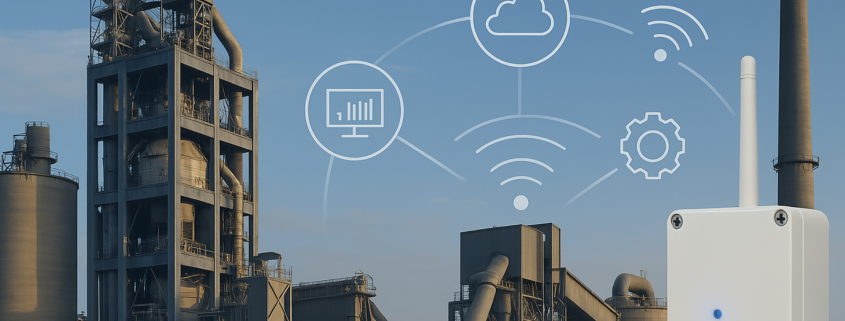
IoT sensors are revolutionizing how maintenance is performed in cement plants. Predictive maintenance—enabled by real-time data from connected sensors—means you can fix stuff before it breaks. This transition not only saves money on repairs and energy but also increases equipment lifespan and improves overall plant efficiency.
Besides, you will get the pulse of your plant at all times. 24/7/365!
A typical cement plant goes through several important steps to make cement. First, extractors remove raw materials from the quarry. Then, crushers and mills break down large rocks into smaller pieces. These are mixed in the right amounts using blenders and mixers, and then finely ground in grinders. The mixture is heated and cooled in a large rotating kiln. Finally, the finished cement is packed and sent out using conveyor belts or trucks.
Throughout the whole process, systems like dust control, silo management, motors, fans, and conveyors play a vital role in keeping everything running smoothly.
Here’s how different IoT sensors can make your dust collection system smarter and more efficient in 2025.
Baghouse.com is teaming up with Senzary to offer advanced IoT sensors that will take your dust collection and plant maintenance to the next level.
We are excited to collaborate with this renowned company, and thrilled with the many possibilities to bring the Internet of Things to create Smart Plants, not only to the cement industry, but also all other dust collection applications.
The Power of Sensor-Driven Maintenance
In modern cement plants and other industries, sensor-based maintenance is transforming equipment upkeep:
✅ Predictive Insights: Advanced sensors continuously monitor your machinery, detecting subtle changes that indicate potential issues before they escalate into costly breakdowns.
✅ Data-Driven Decisions: Real-time data from strategically placed sensors empowers you to make informed maintenance decisions, optimizing your equipment’s performance and lifespan. By identifying maintenance needs precisely, you can schedule interventions during planned downtimes, minimizing disruptions to your operations.
✅ Cost Reduction: Sensor-based maintenance significantly reduces unnecessary repairs and replacements, lowering your overall maintenance costs.
How Does this Technology Work?
In a cement plant, IoT sensors are installed on critical equipment to monitor parameters like temperature, vibration, and pressure in real time. These low-power sensors transmit data wirelessly to gateways using robust radio technologies such as LoRaWAN. The gateways securely send the data to a cloud-based platform like IoTLogIQ, where it’s organized and processed through a network layer. The system then provides actionable insights through a user-friendly dashboard, enabling plant operators to detect issues early, plan predictive maintenance, and reduce unexpected downtime while improving overall efficiency and safety.
Undetected leaks in a baghouse can lead to emissions violations and efficiency losses. Advanced sensors can detect leaks early, ensuring that maintenance teams address the issue promptly before it leads to significant performance declines or regulatory fines.
These sensors continuously monitor the dust concentration in exhaust air. Most leaking baghouse filters begin as small holes or rips that overtime become worse and worse. DustIQ provides real- time monitoring of dust levels and filter performance.
🔶 It’s simple to install, you just need to place it on your equipment without any wiring or configuration.
🔶 It’s autonomous, it works for several months without recharging.
🔶 It’s secure by design, its designed for harsh or even explosive environments.
The enLink Air LoRa wireless Air Quality Monitor is a high-precision device that measures up to 14 important environmental conditions.
The enLink Air LoRa wireless Air Quality Monitor is a high-precision device that measures up to 14 important environmental conditions. These include temperature, humidity, light level, volatile organic compounds (VOCs), carbon dioxide (CO₂), fine and coarse dust particles (PM2.5 and PM10), oxygen, sound level, and barometric pressure. It can also connect to 4 extra plug-in gas sensors, choosing from over 200 different gas types or sensitivity levels. The monitor sends real-time data to the cloud using long-range LoRa wireless technology, so the information can be viewed and analyzed from anywhere.
Auburn Filtersense PM series probes
Virtually any sensor with the capability to send a digital signal can be integrated with the IOT software and system. For example, the Auburn Filtersense PM series probes with 4-20mA outputs can also be integrated if you need this particular style of broken bag detection.
Extensible to Cloud-based dashboards and usage reporting,
additional custom alarms, or integration to 3rd party applications
Differential Pressure Sensors
Monitoring the pressure difference across filter bags or cartridges is important to know how well the filters are working. If the pressure slowly goes up, it usually means the filters are getting clogged. If the pressure suddenly drops, it might mean a filter has failed. Real-time alerts help maintenance teams act quickly—cleaning or changing filters before they create bigger problems. This helps save energy and avoid unplanned shutdowns.
The EnLink Status-DP uses long-range LoRa wireless to measure and send differential pressure data, even from up to 16 km away.
The EnLink Status-DP makes this easy by using long-range LoRa wireless to measure and send differential pressure data, even from up to 16 km away. It can be used to track pressure before and after filters. It runs on a long-life battery, making installation simple and low-cost. Its special Multi-Range sensor includes up to 7 calibrated pressure ranges, so one Status-DP unit can handle a wide range of pressure monitoring needs.
Airflow Sensors
Airflow sensors help detect blockages in the ductwork or issues with the fan. If airflow drops below the ideal level, operators can respond quickly to fix the problem and keep the system running smoothly.
The enLink Status-AF focuses specifically on airflow, measuring air velocity from 0 to 40 m/s with extremely high accuracy of 0.1%.
The enLink Status-AF focuses specifically on airflow, measuring air velocity from 0 to 40 m/s with extremely high accuracy of 0.1%. Like the other enLink devices, it transmits data using LoRa wireless for easy cloud integration or connection to onsite systems via Modbus IP, enabling performance tracking and real-time alerts.
Temperature and Humidity Sensors
High humidity can cause dust to stick together and clog filters, while very high or low temperatures can shorten the life of equipment. By monitoring these conditions, plants can make adjustments to avoid damage and maintain system efficiency.
The Dragino LSN50v2-S31 is a LoRaWAN wireless sensor designed to accurately measure temperature and humidity in the surrounding environment.
The Dragino LSN50v2-S31 is a LoRaWAN wireless sensor designed to accurately measure temperature and humidity in the surrounding environment. It uses the SHT31 sensor from Sensirion, which is fully calibrated, temperature compensated, and known for its reliability and long-term stability. The sensor is housed in a waterproof, anti-condensation casing, making it suitable for long-term use. It can also send alerts if temperature or humidity goes beyond set limits. Powered by an 8500mAh Li-SOCI2 battery, it’s built to last up to 10 years depending on usage and update frequency, making it a reliable, low-maintenance monitoring solution for industrial environments.
Rotating Machine Monitoring (RotaryIQ)
RotaryIQ monitors and analyses any rotating machine and helps to automate diagnostics and predict anomalies, wirelessly and non-intrusively, with a simple installation. Sensors communicate through LoRaWan (Long range network) and data is encrypted end-to-end. Senzary’s sensors monitor not only heat and vibration, but ultrasound too, meaning customers have the earliest possible alert of drift – before any damage has occurred.
The high-frequency signals (e.g., 80 GHz) and narrow beam angles (e.g., 15°) enable accurate targeting of the material surface, even with uneven topography or buildup on walls. Radar technology allows for non-intrusive measurement without contact with the abrasive cement material. This eliminates issues like sensor wear, maintenance, and contamination associated with contact-based methods.
Real-time level data from radar sensors provides up-to-date information on material inventory in each silo. This enables better production planning, timely replenishment, and avoidance of costly run-outs or overfills. It also can optimize material usage, production scheduling, and logistics. Radar performs well in challenging silo geometries found in cement plants, including tall and narrow silos, large bunkers, and dome-shaped storage halls.
The Advantage of Smart Sensors In Your Cement Plant
Choosing an advanced IoT solution for the maintenance needs of your cement plant means benefiting from:
✅ Custom sensor networks aligned with your specific equipment, industry requirements, and operational goals.
✅ AI-powered analytics that translate complex sensor data into actionable maintenance insights.
✅ Sensors and software that integrate smoothly with existing maintenance management systems.
✅ The ability to start with critical assets and expand sensor networks as operational needs grow.
✅ Ongoing assistance from maintenance and IoT specialists to ensure maximum benefits from sensor-based maintenance programs.
Investing in IoT sensors is no longer an option—it’s a necessity for cement plants looking to remain competitive in 2025 and beyond.
If you’re a plant manager, operator, or engineer committed to pushing your facility to peak performance, now is the time to act. With each connected device, you’re not only protecting your equipment but unlocking the full potential of your plant. Don’t wait for failure—get ahead of it. Invest in intelligence, drive efficiency, and lead your plant into a new era of innovation, reliability, and profitability. The technology is here.
Let Baghouse.com help you implement this in your facility!
Dust Collection Expert, Technical Writer & Editor at Baghouse.com
Andy Biancotti believes that knowledge is one of the best investments any company can make. As Editor and Marketing Manager at Baghouse.com, he enjoys interviewing engineers, technicians, and customers to capture the real-world lessons behind successful dust collection projects and turn them into practical resources that others can learn from. With more than two decades of experience in industrial maintenance, operations, and technical communication, his goal is simple: help people better understand their systems so they can work safer, smarter, and more efficiently.



 Matt: “In short: all the requirements for identifying, evaluating, and managing combustible dust hazards. It pulls together everything from hazard analysis to equipment design to training and emergency response. The first 9 chapters are based on what used to be NFPA 652, the old “Fundamentals” standard, while the remaining chapters dive into industry-specific details—like agriculture, woodworking, and metal processing. So whether you make cereal, shape aluminum, or sand furniture, there’s a chapter in the new standard that applies to your facility.”


 The webinar will provide in-depth knowledge and actionable strategies for effectively managing dust collection projects from start to finish. Our expert speakers will guide you through the essential steps of planning, designing, and executing a dust collection project. Whether you’re a plant manager, process engineer, or maintenance professional, the content is tailored to be super practical and based on real case scenarios.