If you’re in industries like foundry, mining, cement, or pharmaceuticals, think of dust management like that one chore you can’t skip—because nobody wants their facilities and equipment to look like it’s been hit by a sandstorm!
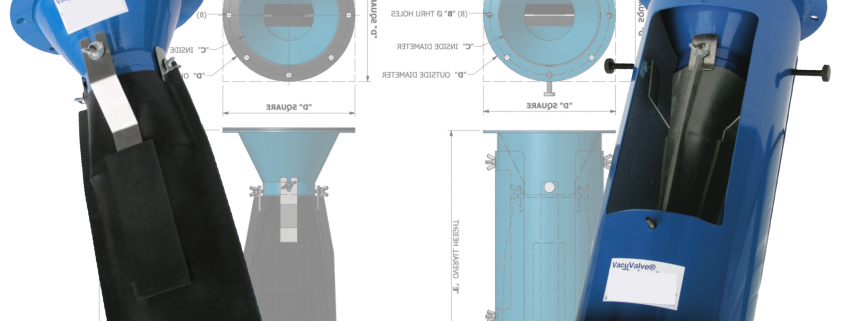
That’s where the Vacu-Valve comes in—an economic and reliable solution for continuous dust discharge in systems operating under negative pressure.
The
fitted sleeves adjust to the desired vacuum,
allowing for the continuous discharge of material
while still maintaining an adequate seal.
How the Vacu-Valve Works
The Vacu-Valve operates without any electrical power, lubrication, or complicated mechanisms. Instead, it uses a simple yet effective method of airlock and vacuum management. Here’s how it works:
— The sleeve inside the valve forms an airtight seal due to the vacuum present in the system.
— As dust particles accumulate above the valve, their weight and the force of gravity eventually force the sleeve to open, allowing particulate to trickle out while maintaining the vacuum.
— The valve then closes automatically, sealing the system again without any external input.
Fine spherical particles, such as sand, pass through most effectively, but the Vacu-Valve can handle a wide variety of particulate sizes and shapes depending on the application.
The Vacu-Valve is perfect for a wide range of industries, including:
— Foundry
— Mining
— Cement
— Pharmaceutical
— Plastics
— Chemicals
— Manufacturing
Frequently Asked Questions about the Vacu-Valve
— What makes the Vacu-Valve different from a rotary valve?
The Vacu-Valve operates without power or controls, relying on the balance between the vacuum pressure and the weight of particulate matter. Rotary valves require power and regular maintenance, making the Vacu-Valve a more economic and simpler alternative.
— Can the Vacu-Valve handle high temperatures?
Yes! The high-temperature silicone sleeve option can handle temperatures up to 500°F, while the VHT chemical-resistant sleeve is suitable for temperatures up to 400°F.
— What types of dust materials can the Vacu-Valve handle?
The Vacu-Valve works best with free-flowing, dense materials such as sand, industrial powders, coffee, and other small particulates.
— How durable is the Vacu-Valve?
The Vacu-Valve is highly durable and resistant to wear and tear. Its sleeves are available in different materials such as neoprene, nitrile, and silicone, allowing it to be used in abrasive or chemically aggressive environments.
— Does the Vacu-Valve require a lot of maintenance?
No, the Vacu-Valve requires minimal maintenance. Since it doesn’t need lubrication or electrical power, the valve can run continuously with little oversight.
— How quickly can I get a Vacu-Valve after ordering?
Most Vacu-Valves are stocked and can ship within 2-3 business days after placing an order.
Why Choose the Vacu-Valve?
If you’re looking for an efficient, worry-free, and low-cost method of dust discharge, the Vacu-Valve is a very smart investment.
Ready to simplify your dust management system? Contact us today to learn more about how the Vacu-Valve can meet your specific industrial needs.
Dust Collection Expert, Technical Writer & Editor at Baghouse.com
Andy Biancotti believes that knowledge is one of the best investments any company can make. As Editor and Marketing Manager at Baghouse.com, he enjoys interviewing engineers, technicians, and customers to capture the real-world lessons behind successful dust collection projects and turn them into practical resources that others can learn from. With more than two decades of experience in industrial maintenance, operations, and technical communication, his goal is simple: help people better understand their systems so they can work safer, smarter, and more efficiently.
Optimize Dust Collector Compressed Air Pressure to Balance Filter Life, Efficiency and Airflow
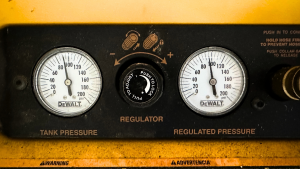
The pressure supplied by the compressed-air system must be high enough to clean the entire length of the bag during the pulse, but not so high that it damages the upper portion of the bag. Insufficient cleaning of the bag may gradually increase pressure drop and reduce the useful bag life.
If the compressed-air pressure is too low, which is usually more common than excessive pressure, it may be caused by wear of the compressor rings, leakage in connections, or excessive draining of the reserve of the compressors by other equipment tied to a common supply line. Additionally, if the pulse valves, air header tanks or connecting pipes on the unit itself have leaks, then the absolute pressure or the effective pressure at the blowpipe will be lower.
If the compressed-air pressure is too low, it may cause excesive wear of the compressor components
For most applications using felted filter media, compressed air at roughly 70 PSI (Per Square Inch) is adequate for proper cleaning of the filter elements. Pressures between 100 and 120 PSI may be recommended for some difficult applications where other options to improve cleaning efficiency are not viable. Operators running their systems at pressures above 100 PSI should first consult a dust collection expert at Baghouse.com for advice and recommendations on how to improve performance.
Compressed air pressures below 70 PSI may be required under special circumstances such as when using cartridges, pleated filter elements or with certain filter medias such as fiberglass. These situations often call for special design and sizing of the dust collector in order to function correctly.
Guidelines for Setting Compressed Air Pressure on a Pulse Jet Baghouse
If filters are not cleaning sufficiently, raising the air pressure may be one of several things to try to improve operation.
The following general guidelines can help you to set the the correct pressure of compressed air for your baghouse:
— Start at 60 PSI and go up as needed by the application. At no point should it go above 100 PSI unless advised to do so by a reputable dust collection systems engineer.
— Pleated filter systems and cartridge systems may use much lower PSI for cleaning depending on the design of the unit and the application (airflow, dust load on filters, how hard the dust is to pulse off, moisture problems, etc.)
— If filters are not cleaning sufficiently, raising the air pressure may be one of several things to try to improve operation. However, it alone will not solve the problem in most cases. Often, fixing other problems such as high can/interstitial velocity, will improve things so that you can actually lower the PSI and have better cleaning.
For help optimizing your dust collection system please contact Baghouse.com for more information or to arrange a site visit and/or training course.
Director of Operations | Dust Collection Specialist | Industrial Filtration Consultant
Dominick DalSanto is an author and environmental technologies expert specializing in dust collection systems. He has nearly a decade of hands-on working experience in the industry. Dominick is the sales director and sales technical advisor for an industrial dust collection equipment manufacturer. Personally took the lead on key projects each year from sales engineer to field advisor to project manager to business relations. Born in San Bernardino County, California, and raised in Chicago, he currently resides in Buenos Aires, Argentina.
https://baghouse.com/wp-content/uploads/2024/09/Compressed-Air.png10801920Dominick DalSantohttps://baghouse.com/wp-content/uploads/2025/10/BH-Logo-Alt-01-300x70.pngDominick DalSanto2024-09-07 20:07:522026-06-19 17:53:02The Importance of Correct Compressed Air Pressure in a Pulse Jet Dust Collector
While many facilities often choose to install replacement filters using in-house labor, usually to keep costs down, it is not always the best idea to simply assume that using in-house labor is the best option. Here’s why relying solely on your maintenance staff for baghouse filter installation may not be the best option.
The Risks of Using In-House Labor
Improperly installing the bags (not sealing them correctly, improper tension, etc.) can lead to leaks and early failure of the bags
When workers without specialized training attempt to service a baghouse, several issues can arise. For example, filter bags, particularly those with PTFE membranes, are fragile and require careful handling. Untrained personnel can easily damage the bags during installation, leading to early failure or leaks. Furthermore, incorrect installation techniques, such as failing to properly seal the bags or applying incorrect tension, can result in compromised system performance and costly downtime.
In addition to potential damage, in-house workers might not be familiar with the unique safety hazards associated with baghouses. This can lead to injuries, further increasing costs for the facility.
Efficiency Concerns
Even if the installation is completed without incident, it usually takes much longer for in-house labor to replace filters compared to a trained baghouse service team. Experienced technicians understand the design and operation of various baghouse types and can perform replacements safely and efficiently. When in-house teams handle filter changeouts, it often leads to delays, increased labor costs, and extended facility downtime. These delays are especially costly when mistakes are made during installation, requiring additional resources later to fix the problems.
For instance, one facility chose to have its regular maintenance workers replace filters in 18 compartments, each containing 200 reverse-air filters with springs and chains. The in-house team took an average of three days to replace the filters in one compartment, often making mistakes like improperly sealed bags or incorrect tension. In contrast, a professional crew completed the same work in just four compartments per day while also addressing additional maintenance tasks such as scraping rust scale from walls and performing leak tests.
Benefits of Hiring Professional Baghouse Technicians
Professional crews are trained to recognize underlying problems that may go unnoticed by in-house teams, such as broken supports of blowpipes, as seen here
Hiring expert Baghouse.com technicians can save facilities time, money, and resources. Professional crews are trained to recognize underlying problems that may go unnoticed by in-house teams, such as warped metal, failing welds, moisture issues, and abrasion damage. These early detections can prevent more serious issues down the line.
Conclusion
While using in-house labor to install baghouse filters may appear to be a cost-effective solution, the risks of improper installation, safety hazards, and inefficiencies can quickly outweigh any potential savings. In many cases, outsourcing this task to professionals pays for itself through increased efficiency and reduced risk.
Ready for your next filter changeout?
Would you like a quote on filters and cages, along with the changeout service?
Director of Operations | Dust Collection Specialist | Industrial Filtration Consultant
Dominick DalSanto is an author and environmental technologies expert specializing in dust collection systems. He has nearly a decade of hands-on working experience in the industry. Dominick is the sales director and sales technical advisor for an industrial dust collection equipment manufacturer. Personally took the lead on key projects each year from sales engineer to field advisor to project manager to business relations. Born in San Bernardino County, California, and raised in Chicago, he currently resides in Buenos Aires, Argentina.
https://baghouse.com/wp-content/uploads/2024/09/Banners-Articles.png10801920Dominick DalSantohttps://baghouse.com/wp-content/uploads/2025/10/BH-Logo-Alt-01-300x70.pngDominick DalSanto2024-09-06 13:49:202026-06-19 17:53:30Why Use Experienced Baghouse Technicians for Your Next Filter Replacement
All industrial baghouse systems are designed with various cleaning methods in order to ensure correct operation and longevity of the baghouse filter.
As the bag flexes, the dust cake (built up dust on surface) fractures falls into the hopper below.
Today, the most common cleaning method used in industrial dust collectors is pulse jet or reverse jet cleaning. These methods involve removing the dust from the bag filters using a blast of compressed air. The air blast creates a shock wave that causes the bag to flex or expand as the shock wave travels down the bag.
However for trouble and maintenance free operation, it is extremely important that the compressed air used in the system is clean, dry and at the correct pressure. In this article we will concentrate on the importance of dry and clean compressed air. A discussion on the importance of proper air pressure will be covered in a another article.
Clean, Dry and Oil Free Compressed Air
Dirt, rust, and scale can prevent diaphragm valves from operating properly. Moisture can cause valves to freeze in cold weather.
Moisture and oil can also cause deterioration of the valve diaphragms, and if the interior of the filter bags become coated with moisture and/or oil, eventual blinding of the filter media will occur. Blinding of the filter material occurs when the filters become so impregnated with dust in the depths of the fabric that you cannot clean them 100% anymore and the airflow through them will never go back down, resulting in premature failure of the baghouse filters.
A Liquid Moisture Trap (automatic moisture drain) must be installed on the compressed air receiver.
How to ensure the Compressed Air is:
Clean
In order to trap small amounts of dirt, rust and scale, a small dirt leg is installed at the point where the air line connects to the compressed air header. In situations where large amounts of dirty rust and scale are present, and inline filter or a centrifugal separator is required.
Dry
A Liquid Moisture Trap (automatic moisture drain) must be installed on the compressed air receiver.
There are a number of solutions to ensure that the Compressed air remains dry. For example a Liquid Moisture Trap (automatic moisture drain) must be installed on the compressed air receiver. These automatic drains come in a variety of float, piston, and pilot operated types. When small amounts of moisture are present it can be handled by inline air filters with automatic drains. For large amounts of moisture, a centrifugal separator and chemical dryer may be required. For more specific situations, for example climate and indoor temperatures, other methods are used to ensure the compressed air remains dry.
Much of the above mentioned equipment used to remove moisture can also be used to remove oil and oil mist. For installations where oil and oil mist are the major problem, inline filters are available that use desiccant adsorptive elements or packed beds of an oil absorbing granular organic polymer.
Conclusion
During regular operation, Pulse Jet Industrial filtering systems do not stop the flow of dirty air into the baghouse and it is the only true “online cleaning” method.
Bag cleaning cycles are initiated to keep the overall pressure drop across the baghouse within the designed range. Therefore the importance of clean, dry, oil free compressed air cannot be over emphasized. However another important factor to take into consideration is the pressure of the compressed air. This will be discussed in an upcoming article.
For further information or to arrange a site visit, please contact us at Baghouse.com.
Director of Operations | Dust Collection Specialist | Industrial Filtration Consultant
Dominick DalSanto is an author and environmental technologies expert specializing in dust collection systems. He has nearly a decade of hands-on working experience in the industry. Dominick is the sales director and sales technical advisor for an industrial dust collection equipment manufacturer. Personally took the lead on key projects each year from sales engineer to field advisor to project manager to business relations. Born in San Bernardino County, California, and raised in Chicago, he currently resides in Buenos Aires, Argentina.
https://baghouse.com/wp-content/uploads/2024/09/best-sellers-2.png10801920Dominick DalSantohttps://baghouse.com/wp-content/uploads/2025/10/BH-Logo-Alt-01-300x70.pngDominick DalSanto2024-09-02 21:29:402026-06-19 17:53:39The Importance of Dry and Clean Compressed Air in a Pulse Jet Dust Collector
Baghouse.com personnel servicing a DustVent dust collector.
We are thrilled to announce a new partnership between Baghouse.com and DustVent (Mid-Air Consulting), marking a significant milestone for both companies. Baghouse.com is now the exclusive service partner for all DustVent equipment including their Cyclone Collector, Fabric Collector, and Downdraft Bench. This partnership means that customers who own DustVent equipment can now rely on us for expert on-site service and support, maintenance and repairs for their equipment.
DustVent has a rich history, dating back to the 1970s when it was founded by an innovative engineer whose passion for dust collection systems laid the foundation for what the company is today. William Fitzpatrick (Fitz), the current owner, began his journey with DustVent in 1989, working closely with the company’s founder to redesign and enhance their product offerings. In 2008, the company rebranded as Mid-Air Consulting, and Fitz, along with his dedicated team, has continued to deliver high quality products.
Our team has the capability to service any DustVent collector or downdraft table.
By complementing DustVent’s products with our extensive expertise and on-site service capabilities, we can now ensure that your DustVent equipment continues to meet your production requirements. This collaboration not only enhances our service portfolio but also underscores our commitment to delivering the highest quality support and solutions to our clients.
We are excited about the possibilities this partnership brings and look forward to servicing more DustVent equipment.
Do you have DustVent equipment that needs service?
Dust Collection Expert, Technical Writer & Editor at Baghouse.com
Andy Biancotti believes that knowledge is one of the best investments any company can make. As Editor and Marketing Manager at Baghouse.com, he enjoys interviewing engineers, technicians, and customers to capture the real-world lessons behind successful dust collection projects and turn them into practical resources that others can learn from. With more than two decades of experience in industrial maintenance, operations, and technical communication, his goal is simple: help people better understand their systems so they can work safer, smarter, and more efficiently.