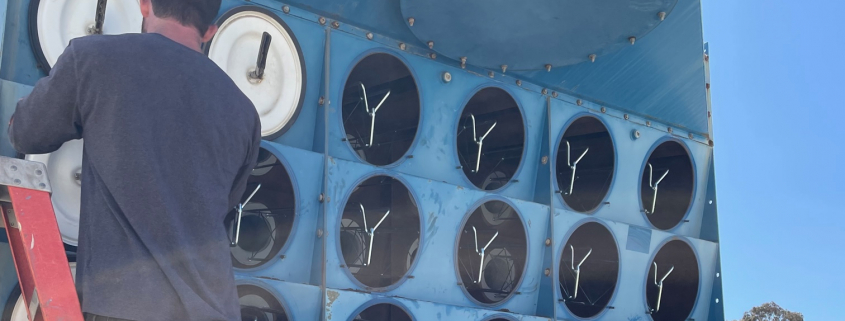
Cartridge collector filter changeout

In the world of industrial operations, maintaining your dust collectors in top condition can consume lots of time and resources. But investing in regular maintenance yields many advantages for productivity, product quality, employee health, compliance with safety standards, and equipment longevity:

1. Boost Productivity

Excessive dust accumulation inside your facilities or on industrial equipment poses a silent threat to productivity.  If your dust collection system is underperforming due to prolonged wear and tear or if your dust collector is inadequate or undersized, it poses a significant risk to your entire operation. Filter leaks and other maintenance issues that go unchecked could lead to an unexpected plant shutdown, disrupting operations for days to weeks or more.
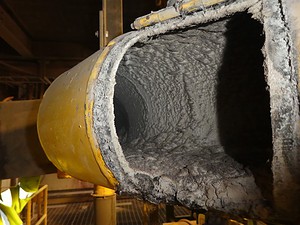
Plugged duct by dust leak

Filter leaks and other maintenance issues that go unchecked could lead to an unexpected plant shutdown, disrupting operations for days to weeks or more.

Additionally, even minor maintenance issues can have unseen impacts on your operations. Take for example a dust collection duct that slowly accumulates dust build-up. The airflow at dust pickups slowly reduces over time and fugitive dust slowly increases, costing more and more time spent on housekeeping and cleanup. Alternatively, addressing the issue with regular duct inspection and cleanouts will keep your workforce productively working on shipping product.

2. Increase Product Quality

For many manufacturing facilities, dust in the air can mean dust on their products. A robust dust collection system acts as a guardian, efficiently capturing and eliminating dust particles from the air. This not only enhances the quality of finished goods but also ensures consistency in production.

Any maintenance issue with your dust collector, fan, ductwork, cleaning system, or controls ultimately results in more unwanted dust in your facility, increasing the risk of dust on and in your products.

3. Enhance Health & Safety Standards

Industries dealing with hazardous materials emit contaminants that may pose serious health risks to employees. Inhalation of these particles can lead to both short-term and long-term health issues. For example, silica dust may expose workers to silicosis, and wood processing may expose workers to carcinogenic dust.

Maintenance Baghouse.com personnel performing an inspection

Maintenance Baghouse.com personnel performing an inspection at a plant

A well-maintained dust collection system plays a critical role in removing hazardous dust, safeguarding the comfort and long-term health of your workforce. Additionally, it mitigates the risk of fire or explosion, especially in industries susceptible to combustible dust.

4 Requirements for a Combustible Dust Explosion

  • — Oxygen
  • — Enclosed space (ductwork or a baghouse)
  • — Ignition source (spark or smoldering dust)
  • — Combustible dust dispersed at the right concentration level 

4. Preserve Equipment

Manufacturing machinery is a substantial investment, and its lifespan can be significantly shortened by the accumulation of dust and debris. Dust settling on sensitive surfaces (such as computers, control boards, mechanical parts, etc.) can lead to malfunctions, resulting in frequent and costly maintenance.

A proactive approach to dust collection not only ensures the longevity of your equipment but also reduces the need for extensive and unplanned repairs.

5. Enhance Production Through Strategic Maintenance

Unlike reactive or routine maintenance, which focuses on fixing issues as they arise, strategic maintenance (also known as “planned maintenance” or “total preventive maintenance or TPM”) involves a thoughtful, long-term perspective. The first step in implementing strategic maintenance at your facility is to plan periodic inspections following a maintenance checklist tailored to your specific system.

If you have any questions or challenges specific to your industry, consult with a dust collection expert such as Baghouse.com for a comprehensive inspection to assess the efficiency and suitability of your current system. Call us now! Our experts can provide you with customized recommendations to minimize inefficiencies, ensuring your equipment works optimally and reducing maintenance costs.

In conclusion, the benefits of a well-maintained dust collection system extend far beyond mere compliance. It’s a multifaceted strategy that safeguards your investments, secures employee health, and improves your production efficiency.

Frequently Asked Maintenance Questions

How can I know if the filters are working correctly?

The main signs to know if your filters are in good condition or if they need to be replaced are whether they can be cleaned effectively or not by the baghouse, or if they start leaking. Click here to read more about filter service life.


How often should I do a filter changeout?

Baghouse filters have an average service life of 1-3 years in most applications. Some can go beyond that without major increases in emissions, while others may last less than a year in more difficult applications. The two main reasons to replace baghouse filters at the end of their life are (1) because blinded filters will begin to have higher and higher emissions (even if there are no holes) and (2) old filters have higher differential pressure (i.e. pressure drop), which decreases the airflow through the system, causing cascading effects of reduced dust collection at pickup point (fugitive dust emissions) and dust buildup in the ductwork.


Can we delegate the filter changeout to our in-house maintenance department?

Of course you can! But you want to make sure they are properly qualified for the task. With dust collection training from Baghouse.com, your maintenance technicians, maintenance planners, engineers, operators and reliability staff will be able to keep your systems running at maximum efficiency, troubleshoot any problems that may arise, and optimize the systems to meet the demands of production.

Read the article: Why Use Experienced Baghouse Technicians for Your Next Filter Replacement
Dust collection expert conducting a class

Training class tailored to maintenance, engineering and safety personnel


Can I outsource the baghouse filter changeout?

The answer is yes! However, you have to be careful who you outsource this vital task to. Inexperienced contractors often get in over their heads after accepting a contract to replace filters, only later discovering the complexity of the task. A rushed or improper installation can cause problems later due to early filter failure in some cases costing millions of dollars to replace.


Can you recommend someone for a system inspection?

Our experts can visit your facilities and perform a thorough inspection of all your baghouses. They will provide you with a comprehensive report of the things that could improve. Additionally, with a highly trained field service team, and decades of experience, you can trust Baghouse.com to do the filter service with minimal downtime.

Contact Us to Speak to One of Our Baghouse Experts.

For more baghouse related training and information, be sure to check out our Baghouse Online Training page.

Baghouse systems

  • If you’re in the market for a dust collector, whether it’s a new purchase or an upgrade for your facility, it’s essential to make an informed decision. A dust collector is a crucial component for maintaining air quality and safety compliance in various industries.

To ensure you get the right dust collector for your specific needs, consider these six key factors:

1. Dust Control Requirements

Different processes generate various types of dust, from wood chips to welding fumes or grain dust. It’s vital to not only recognize the type of dust you generate but also how your processes create it. How much dust is generated by the process? Is this dust hazardous or does it require special handling? Are there regulatory standards for air quality that you need to meet?

In response to these challenges, two primary dust collection systems have proven effective: baghouse-style dust collectors and bin vents. These systems offer reliable solutions for grain dust control, each with its unique advantages.

2. Customization Options

Dust collectors are not one-size-fits-all solutions. The space constraints of your facility may require customizations in terms of height, footprint, or additional features like discharge devices, monitoring equipment, or fire and explosion mitigation tools.

Other common custom features include:

  1. Rotary airlocks, screw conveyers, or other special dust discharge equipment
  2. Special construction materials like stainless steel for food applications
  3. Customer controls including integrated motor starters, timer boards, differential pressure gauges, or outputs to connect to control systems
  4. Special sizing for very light dusts or restricted spaces

3. Complete System Design

New baghouse system

The type of dust and your operational needs will determine the most suitable dust collector. In the cases where dust is hard to collect due to being too fine or sticky, you should obtain a dust collector that is equipped to capture it effectively. Another instance could be if your industry demands complying to food-grade standards.

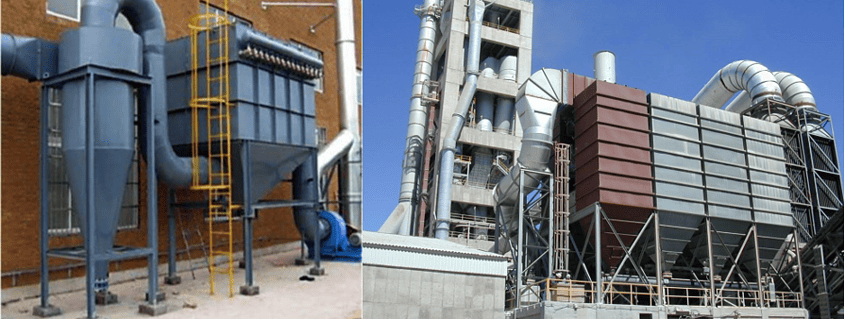
Additionally, different dust collector styles are more suited than others for certain applications. Generally, cartridge collectors work best for light dust loads and fine dusts at lower temps, but perform poorly with heavy dust loading, irregularly-shaped dusts, or sticky dusts. Baghouses on the other hand, are able to work in a wide range of applications. Many companies will only offer you a single style and try to convince you it can do more with less so it appears to be the cheapest bid, regardless of how well it will perform later.

Finally, if your dust is hazardous or explosive, it’s crucial to obtain a specialized system (collector, ductwork and safety devices) designed to comply with NFPA regulations.

4. Installation Simplification

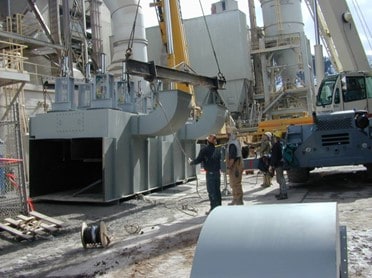
Baghouse installation by baghouse.com personnel

The ease of installation depends on the size of the dust collector and its location. Smaller collectors located close to the dust source may eliminate the need for extensive ductwork, simplifying installation. Understanding your processes, localizing dust collection, and minimizing collector size can streamline installation. It is critical to work with an expert in dust collection systems who can foresee potential installation issues and address them early on to ensure a smooth install.

5. Long-Term Value for Your Investment

Your investment in a dust collector goes beyond the initial purchase. Think about the operational costs for the entire lifecycle of the system. Factors like replacement filters, downtime due to maintenance, and energy consumption need to be analyzed closely. Evaluating collector style, location, and design can help you make a cost-effective choice. Watch video: Intro Guide to Sizing and Designing Your Baghouse

6. Post-Purchase Support

Baghouse.com is an original equipment manufacturer with extensive experience in design, installation, and parts supply. This makes us stand apart from others in the industry who simply resell catalog components. Our extensive experience enables us to provide tailored solutions, designed to meet every industry need. From design to installation and ongoing support, choosing us means opting for a partner invested in the success and longevity of your dust collection system.

In conclusion, investing in the right dust collector will significantly contribute to a safer and more efficient workplace. Making a well-informed decision ensures that your dust collector not only meets your current needs but also serves you for years to come. It’s an investment in both your facility’s air quality and the longevity of your operations.

Frequently Asked Questions

How do I know if this dust collector will work for my application?

When talking about dust collection, it’s rarely a “it works or it doesn’t” scenario; rather, it spans a spectrum from highly effective to very poor performance. While some smaller/cheaper systems may “work” for an application, that’s not the whole story.

A well-designed system, with the right collector size and style, operates efficiently, maintains low operating costs, and captures all target dust without compromising safety or emitting pollutants. However, poorly functioning systems may fail to capture all dust generated by a process, leading to compromised product quality, frequent filter blinding, high maintenance costs, safety hazards, and/or emissions that risk exceeding air permit limits.  At Baghouse.com, we help you choose the right system, ensuring not just functionality, but the best performance.

Different companies recommended different kinds of dust collectors, with an ample range of prices. What should I consider when choosing my supplier?

It’s not uncommon for companies to try to convince their clients that a one-size-fits-all approach is best when it comes to dust collectors, either because it’s the only style they manufacture or because they aim to provide the lowest bid. However, at Baghouse.com we offer multiple kinds of dust collectors and we prioritize recommending what works best for your application rather than trying to be the lowest bid without regard for how it works. We ensure that you not only get a dust collector but the right one that aligns perfectly with your operations.

Who can I contact if I have technical issues with my dust collector?

Whether you need parts, filters or a system inspection to improve the efficiency of your dust collectors, the experts at Baghouse.com can simplify the maintenance process by providing you with the knowledge and supplies needed that will save you lots of downtime, money, as well as headaches!

Contact Us to Speak to One of Our Baghouse Experts.

For more baghouse related training and information, be sure to check out our Baghouse Online Training page.

Grain Dust Main Image

Grain dust collection is a paramount concern within the grain and seed industry, given the frequent occurrence of grain dust fires and explosions. So prevalent is this issue that OSHA has established its own combustible dust rule specific to agricultural dust. Failures in grain dust control not only compromise workplace safety but tragically result in injuries and fatalities.

The Varied Nature of Grain and Seed Dust

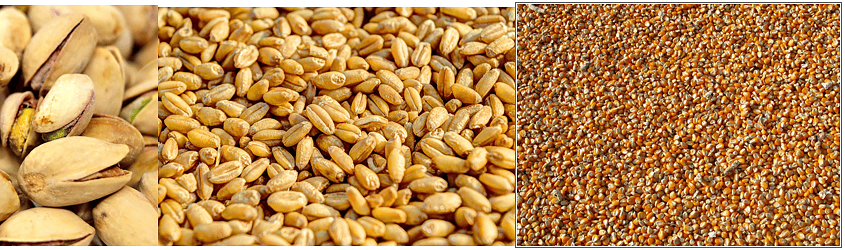
Grain and seed dust come in diverse sizes and textures, making effective control of dust a multifaceted challenge.

The grain dust can range from abrasive and sticky to fine and volatile. Moreover, grain processing facilities encompass a multitude of machines and processes, all of which require meticulous dust control to comply with OSHA and NFPA standards.

Processes within the grain and seed industry that are particularly prone to generating problematic dust include:

  1. Conveyor belts and transport systems
  2. Bucket elevators
  3. Transfer points
  4. Hammer mills
  5. Bins and silos
  6. Blenders and mixers
  7. Truck and rail loading and unloading

Grain dust sources in agriculture such as: truck loading, conveyor belts and harvesting


In response to these challenges, two primary dust collection systems have proven effective: baghouse-style dust collectors and bin vents. These systems offer reliable solutions for grain dust control, each with its unique advantages.

Recommended Equipment for Grain Dust Control

  • Baghouse Dust Collectors: Unlike cartridge collectors which are very efficient but require uniform dust grain size, light loading, and a narrow range of dust types, a baghouse is a robust collector that can operate with a larger selection of filter media, and generally suffers from fewer problems with varying grain size and loading. A suction-side fan is typical, with a network of ductwork connecting the central dust collector to pickup points on conveyer belts, silos, transfer and loadout points, and other dust sources.
  • Bin Vents: A bin vent is a specialty piece of dust collection equipment designed for silos and storage bins. As product is loaded into a silo, via pneumatic transfer, gravity chute, etc., pressure is created in the enclosure. A bin vent is used to allow this pressure to vent to the outside air without spewing dust into the air. Bin vents may have a fan to generate negative pressure, or they may operate as a passive vent with no fan. In either case, they are filters that operate according to the same principals as a baghouse or other dust collector.

Possible Additional Equipment

Grain dust, due to its extreme combustibility, presents a substantial fire and explosion risk across all grain-handling applications. Dust control measures are vital in preventing accidents that can lead to injuries, facility damage, and even fatalities. Fires within grain processing facilities have been known to inflict significant harm on structures and equipment.

Grain silos with a dust collection system

Given the inherent risks, it is essential to consider a highly effective grain dust collection system as a mandatory component of any grain and seed processing facility. Safety standards unequivocally dictate that all systems must be safeguarded against fire and explosion hazards. This is not an area where cost-cutting is prudent; investing in a properly designed system is an imperative step towards a safer, more secure working environment.


Contact Us to Speak to One of Our Baghouse Experts.

For more baghouse related training and information, be sure to check out our Baghouse Online Training page.

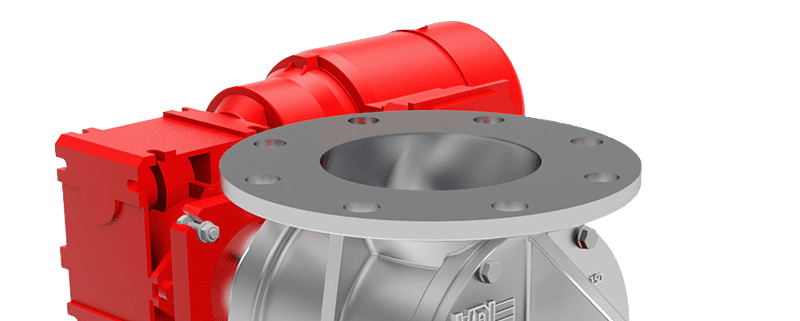
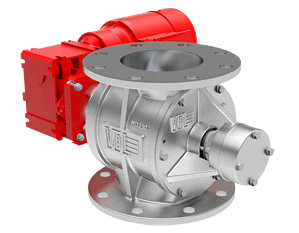
Explosion rated rotary valve

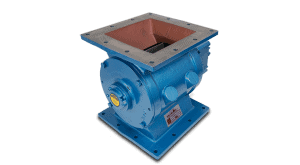
Dust collector rotary valves, also known as rotary airlocks or rotary feeders, are essential components in many industrial processes that involve the handling of bulk materials and are very commonly used in dust collection systems. These valves play a crucial role in controlling the flow of material, preventing air and pressure loss, and ensuring minimal product loss during processing. Selecting the right dust collector rotary valve is of utmost importance to maintain system efficiency, safety, and product integrity. In this article, we’ll delve into the different types of rotary valves and the key considerations for selecting the right one for your specific application.

Rotary Valve

Understanding Rotary Valves

Rotary valves are mechanical devices that facilitate the transition of materials from pressurized environments, such as dust collectors, to unpressurized points, like storage bins or drums. They come in various types, sizes, and materials to suit different industrial applications.

Types of Rotary Valves

  • Drop-Through Rotary Valve: In drop-through valves, product feeds into an inlet at the top, typically from a gravity-fed hopper, and exits through an outlet below. These valves are often used in applications where the primary function is to maintain air pressure differentials.
  • Convey Through (Blowing Seals) Rotary Valves: In convey-through valves, product enters the inlet and is directly fed into a pneumatic convey line connected to ports on the bottom sides of the housing end covers. These are more suitable for applications where height limitations exist, and the valve feeds a pneumatic conveyor directly.

Choosing the Right Rotary Valve

Selecting the right rotary valve depends on several critical factors:

1. Application Type:

  • Airlocks: Used in applications where maintaining pressure differentials is crucial. They allow material to flow between different pressure zones and are commonly found in cyclone and baghouse outlets.
  • Feeders: These valves control the rate at which material flows through the valve by metering the bulk powder material’s flow. They are suitable for low-pressure or gravity-fed applications, such as filling packaging machines.
  • Airlock Feeders: Combining the functions of airlocks and feeders, these valves are versatile and can be used for feeding pneumatic conveyors or moving products in and out of pressure and vacuum receivers.

2. Materials of Construction:

The choice of materials for the housing, rotor, drive, and accessories is crucial to match the requirements of your product and the operating environment. For example, some applications may require stainless steel for its resistance to chemicals, while others may need cast iron or chrome-plated cast iron for durability.

Adjustable rotors allow for tips to be adjusted to account for wear, and flex tip rotors are designed to maintain an airtight seal while preventing material jams. These are just a couple examples of the type of material and design options available.

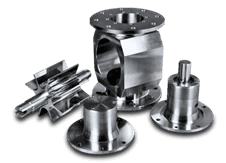
Sanitary rotary airlock components

Sanitary rotary valve components

3. Ease of Cleaning:

For applications where frequent cleaning is necessary, choose a rotary valve designed for easy disassembly. Look for valves that facilitate access to product contact surfaces for cleaning. Hygienic applications should ensure the valve’s surface finish, seals, and construction meet regulatory standards.

Typically, open end rotors are easier to clean and maintain. These are often used with lighter or finer materials, to minimize the risk of material becoming trapped in the space between the endplates and rotor disc.

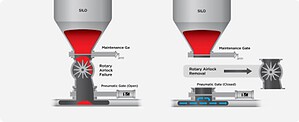
Rotary Airlock Removal

4. Explosion Protection:

In environments where explosion isolation is required, make sure the valve design complies with standards like NFPA to ensure safety in case of an explosion.

Explosion rated rotary valve

NFPA compliant rotary valve

5. Pressure:

The pressure of your conveying system is a key determinant of the required valve durability. Dilute phase pneumatic conveying systems typically operate between 4 and 8 PSI, while dense phase systems operate over 15 PSI. Valves for high-pressure or vacuum applications need to be designed to withstand the conditions, possibly requiring additional venting systems to prevent air leakage.

6. Temperature:

Consider the operating temperature, as extreme heat or cold can impact the choice of materials, rotor design, and airlock capabilities of the valve. Ensure the selected valve can withstand the temperature conditions of your application.

Selecting the right dust collector rotary valve is a critical decision for maintaining the efficiency and safety of your industrial processes.

By considering the type of valve, materials of construction, ease of cleaning, explosion protection, pressure, and temperature, you can make an informed choice that ensures optimal performance, minimal product loss, and a safe working environment. Collaborating with experts in this field such as Baghouse.com can be invaluable in making the right selection for your specific application.

Contact Us to Speak to One of Our Baghouse Experts.

For more baghouse related training and information, be sure to check out our Baghouse Online Training page.