Pollution

By Dominick DalSanto
Environmental Technologies Expert, & Author
Baghouse.com

A new report finds that air pollution is a leading cause of heart attacks worldwide, along with alcohol, drug use and physical exertion.

Triggers such as Sex, anger, marijuana use and chest or respiratory infections  can also trigger heart attacks to different extents, the researchers said, but air pollution, particularly in heavy traffic, is the major culprit.

Doctors are always looking at individual factors, but often they fail to take into consideration population-wide factors when researching heart risks. Even so called “low risk” factors, when spread out over such a large percentage of the population, can end up being a major cause. Preventing them is just as vital in the large scope of things, as preventing less common, higher risk factors such as drug abuse.

The study led by Tim Nawrot of Hasselt University in Belgium, and which was published Lancet Journal, was the result of comparing data from 36 separate studies. Then the researchers calculated the relative risk posed by a series of heart attack triggers and their population-attributable fraction (PAF) — in other words the proportion of total heart attacks estimated to have been caused by each trigger.

WHO (The World Health Organization) calls air pollution as “a major environmental risk to health”. According to its own estimates, nearly 2 million premature deaths a year are the result of air pollution.

Across Asia, a recent report published this year found that many major cities in the region exceed the WHO’s air quality standards. That often lethal mixture of pollutants in the air combine to cause nearly 530,00 premature deaths each year.

The largest source of these harmful emissions, are industrial plants and power generation stations that do not employ sufficient pollution control equipment. The most evident type of this pollution, smog, is caused mainly by particulate matter emissions from the burning of coal without first processing the exhaust through the proper dust collection equipment.

While passive smoking was not included in this study, Nawrot said the effects of second-hand smoke were likely to be similar to that of outdoor air pollution, and noted previous research which found that bans on smoking in public places have significantly reduced heart attack rates.

The highest risk PAF was exposure to traffic, followed by physical exertion, alcohol, coffee, air pollution, and then things like anger, sex, cocaine use, smoking marijuana and respiratory infections.

About the Author

| Dominick DalSanto is an Author & Environmental Technologies Expert, specializing in Dust Collection Systems. With nearly a decade of hands-on working experience in the industry, Dominick’s knowledge of the industry goes beyond a mere classroom education. He is currently serving as Online Marketing Director & Content Manager at Baghouse.com. His articles have been published not only on Baghouse.com , but also on other industry related blogs and sites. In his spare time, Dominick writes about travel and life abroad for various travel sites and blogs.

industrial facility

By Dominick DalSanto
Environmental Technologies Expert & Author
Baghouse.com

Two Biomass power plants in California’s central valley were fined $835,000 by the U.S. Environmental Protection Agency (EPA) for exceeding emission limits of nitrogen oxides (which lead to the formation of Ozone), and fine particulate matter. Ampersand Chowchilla Biomass, LLC, (ACB), and Merced Power, LLC, (MP), are located within 12 miles of each other in California’s San Joaquin Valley. An additional fine of $15,000 was issued to ACB by the San Joaquin Valley Air Pollution Control District for violation of a district only statute.

The two plants which began operating in 2008 after nearly 2 years of refurbishments, are additionally required to install new pollution control technologies, and monitoring systems. As a result of this action, the plants have installed equipment that will reduce nitrogen oxide emissions by up to 180 tons per year, and carbon monoxide by up to 365 tons per year. The EPA and The District have placed the plants under supervision for the next years years to ensure compliance.

Failure to maintain a fully functionally dust collection system often leads to heavy governmental fines, and sanctions. In the end, the cost of properly maintaining your dust collection system is much lower than the costs associated with operating a faulty, inefficient, and inadequate system.

This action is part of the EPA’s larger efforts for improve the air quality across the nation, specifically in some of the nations largest urban areas. The San Joaquin Valley suffers from one of the worst air quality situations in the country. With heavy industry, a strong reliance on personal automobiles (lack of public transportation), and geographical characteristics all combining to create large amounts of smog, ozone and particulate matter pollution. The area often consistently exceeds national health standards for ozone and particulate matter.

“EPA is committed to doing our part to tackle the worst air quality in the nation. Today’s enforcement actions are a victory for human health,” said Jared Blumenfeld, EPA’s Regional Administrator for the Pacific Southwest. “San Joaquin Valley communities can now breathe easier as a result of the significant pollution controls won in these settlements.”

Nitrogen oxides react with other chemicals to form ozone and small particles, both harmful to the public’s health. Ozone and particulate matter affect the human respiratory system, and are linked to a variety of significant health problems ranging from aggravated asthma to premature death in people with heart and lung disease.

Biomass power plants use green waste from farms and other operations that would otherwise be subject to open burning, and construction debris that might have gone to a landfill, to generate power. A key piece of equipment needed to control emissions from this process, is an suitable dust collection system. As this case demonstrates, failure to maintain a fully functionally dust collection system often leads to heavy governmental fines, and sanctions. In the end, the cost of properly maintaining your dust collection system is much lower than the costs associated with operating a faulty, inefficient, and inadequate system.

After refurbishing the plants in 2007-2008, ACB and MP initiated operations in 2008. A joint investigation by the EPA and District found that ACB and MP violated the air permits issued to them by the District by:

· Emitting air pollutants including nitrogen oxides, sulfur dioxide, and carbon monoxide in excess of the permit limits;

· Failing to perform timely source testing to measure emissions of various air pollutants;

· Failing to properly install and operate emissions control systems for nitrogen oxides, a precursor to ozone; and

· Failing to certify the continuous emissions monitoring systems.

The plants also violated various District rules including requirements for emissions control plans.

Do you know of any real-life examples where plants chose not to invest in a adequate dust collection system (or failed to maintain it properly, install a larger system to keep up with production needs, etc…) and in the end it ended up costing them much more later on? If you do, we would love to hear from you in the comments section below.

About the Author

| Dominick DalSanto is an Author & Environmental Technologies Expert, specializing in Dust Collection Systems. With nearly a decade of hands-on working experience in the industry, Dominick’s knowledge of the industry goes beyond a mere classroom education. He is currently serving as Online Marketing Director & Content Manager at Baghouse.com. His articles have been published not only on Baghouse.com , but also on other industry related blogs and sites. In his spare time, Dominick writes about travel and life abroad for various travel sites and blogs.

pollution

By Dominick DalSanto
Environmental Expert & Author
Baghouse.com

The first sweeping legislation governing air pollution in the state of Israel recently went into effect on Jan 1st, 2011, nearly 2 and a half years after it passage through the Israeli legislature.

Industrial plants that previously had no set emissions standards to operate under will now be required to have emissions permit. This is the culmination of nearly a decade of legislative efforts on the part of Israeli policy makers, and environmental activists to bring Israel up to par with other industrialized nations’ stance on harmful emissions. For example, the initial Clean Air Act in the United States was passed in 1970.

While the wait may have been long, the effect of the act is not a mere formality. The new legislation sets new limits for emissions, requires permits to be obtained, and establishes fines for violations of the those statues and permits. Incorporation under the Act will be gradual over the next four years with factories in the metal production and processing sector required to apply for permits by March.

The Environmental Protection Ministry said an expert committee was expected to return its recommendations by mid-January. Following which, the ministry, with the help of an international consultant, would determine the appropriate tools and develop a national plan.

The Act also merges all air monitors into one national network while increasing the number of substances monitored. The ministry will also be increasing the number of portable testers for vehicles from six presently to 11.

A database of emissions data will also shortly be available on the ministry’s website in Hebrew.

The original version of the Act was first drafted by experts on behalf of the Environmental Protection Ministry but failed to pass through the legislative process. A private member’s bill submitted by various MKs, drafted in part by the Israel Union for Environmental Defense, and championed by Omri Sharon when he was an MK, ground its way through the legislative process over a three year period, finally being passed into law in 2008. However, implementation was delayed until January 1, 2011 at the request of then minister Gideon Ezra so that the ministry could hire the requisite manpower.

 
About the Author

| Dominick DalSanto is an Author & Environmental Technologies Expert, specializing in Dust Collection Systems. With nearly a decade of hands-on working experience in the industry, Dominick’s knowledge of the industry goes beyond a mere classroom education. He is currently serving as Online Marketing Director & Content Manager at Baghouse.com. His articles have been published not only on Baghouse.com , but also on other industry related blogs and sites. In his spare time, Dominick writes about travel and life abroad for various travel sites and blogs.

Cemex readymix

By Gilda Martinez
Environmental Author
Baghouse.com

February 10, 2011, Cemex, the largest producer of cement in United States has agreed to pay $1.4 million for Clean Air Act violations at its cement plant in Fairborn, Ohio, to the environmental protection agency (EPA) and to the Justice Department. An additional 2 million will need to be spent by Cemex on system improvements including the installation of pollution control technology in order to achieve EPA environmental requirements.

The plant located in Ohio was affecting the health of the local population. One assistant administrator for EPA’s Office of Enforcement and Compliance Assurance said that the emissions of sulfur dioxide and nitrogen oxides can lead to grave health and environmental problems such as premature death and heart disease.

Increasingly, many environmental activists and politicians are taking are coming to believe that the only way to combat pollution is by levying heavy fines for companies that are habitually found to be in violation of current environmental regulations. This action they feel will force them to invest in pollution control technology to reduce harmful emissions.

This is a very important step taken by EPA, since it will mean not only an environmental improvement for the Fairborn populace and the surrounding region today, but also reduce childhood asthma, acid rain and smog caused by pollution, in the future.

According to the agency, Cemex annual emissions of NO2 and SO2 are expected to be reduced by approximately 2.300 tons and 288 tons.

Interestingly among the violations listed in the citation issued by the EPA, is the charge that also Cemex made substantial changes to the plant without first obtaining the proper permit. The largest polluters are required to apply for permits before beginning any work that may increase (even temporarily) air emissions.

The heavy fine for Cemex is part of an overall strategy by the EPA to mentioned push the cement industry to install the latest pollution control. For this reason the dust collection industry is expanding at a rapid pace since the demand for this equipment grows every year.

Tougher Enforcement Part of EPA Plan for 2011 – 2013

The imposing fines on the largest sources of emissions, such as Cemex and other cement manufacturers, is part of the EPA’s National Enforcement Initiatives for 2011-2013 in reducing air pollution. The efforts put by the EPA in this respect are noted in the following figures:

During 2010 due to tougher enforcement of emissions regulations in cement manufacturing, coal-fired power generation, glass and acid industries the EPA achieved the following results:

  • Prevented the release of 370 million pounds of pollution across all industries.
  • 1.4 in pollution controls due to installation of Baghouses, dust collectors, and other air filtration equipments.
  • $14 million in civil penalties
Dust Explosion at the Imperial Sugar plant in Georgia

By Dominick DalSanto
Environmental Expert & Author
Baghouse.com

The dangers of combustible dust explosions are among the most overlooked of industrial workplace safety issues. However the price for negligence in this area is often payed not only with millions of dollars, but with workers very lives.

But only recently has the this issue began to attract mainstream attention outside of the industrial world. Recent incidents such as the one that occurred at the Imperial Sugar Plant in Port Wentworth, Georgia on February 8th 2007 that claimed the lives of 14 works, and injured 38 others, have brought this safety issue to the forefront of industrial safety activists.

This segment from the CBS new program “60 Minutes” entitled: The Danger of Combustible Dust – examines the efforts of the victims families and others to force OSHA to create a national combustible dust standard.  Scott Pelley reports on the deaths and property damage caused by dust explosions at American factories, a problem critics say the government needs to do more to prevent.

This report which is of great interest to all in the dust collection industry can be viewed at the link below.

http://www.cbsnews.com/video/watch/?id=4162555n&tag=related;photovideo

About the Author

| Dominick DalSanto is an Author & Environmental Technologies Expert, specializing in Dust Collection Systems. With nearly a decade of hands-on working experience in the industry, Dominick’s knowledge of the industry goes beyond a mere classroom education. He is currently serving as Online Marketing Director & Content Manager at Baghouse.com. His articles have been published not only on Baghouse.com , but also on other industry related blogs and sites. In his spare time, Dominick writes about travel and life abroad for various travel sites and blogs.

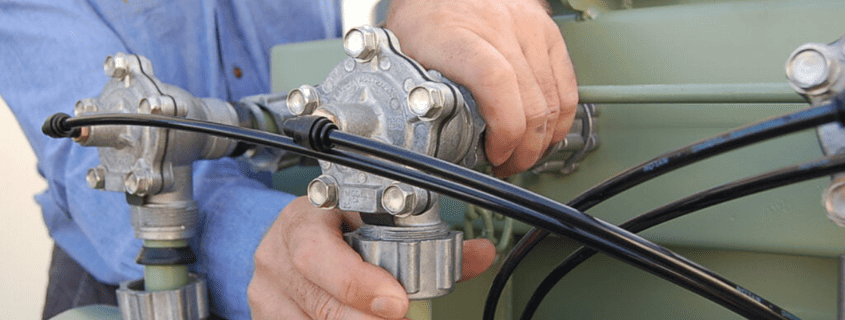
Diaphragm valve

Introduction to Dust Collector Troubleshooting

Operating and maintaining an equipment system as complex as an Industrial Dust Collector can be a challenge. Here at Baghouse.com we pride ourselves on being experts in our field, with decades of experience designing, installing, maintaining and servicing every kind of Dust Collect design available. We have prepared this short troubleshooting guide in order to help you solve some of the more commonly encountered issues involving Dust Collectors.

Table of Contents

  1. Blower (Fan) & Ductwork Issues
  2. Common Baghouse Issues (All Designs: Shaker, Reverse Air, & Pulse Jet)
  3. Baghouse Design Specific Problems
    1. Shaker
    2. Reverse-Air
    3. Plenum Pulse-Jet
    4. Pulse-Jet

Blower (Fan) & Ductwork Issues

Many Baghouse difficulties originate as problems with the main Blower, or Fan and the supply and exhaust Ductwork.

Problem: Insufficient Airflow Rate coming from the Blower, or Ductwork System

  • Is your Blower (System Fan) powering on and operating properly?
  • Action: Check electrical connections and turn on the Blower.

Addition Questions

  • Is the motor pulling the specified proper amount of Amps?
  • Action: Check wiring
  • Is the fan turning in the right direction?
  • Action: Make sure that motor leads are attached to the proper terminals.
  • Is there excessive vibration?
  • Action: Ensure that there is no excess build up of material on the fan blade, or Blower housing.

Are you getting the proper amount of Air Flow (Cubic Feet per Min) from the Blower?

  • Is the Fan Dampener Open?
  • Action: Close Dampener.
  • Is the air volume at fan rated capacity?
  • Action: See Below.
  • (If your Blower output is normal) Has the Ductwork System been inspected for obstructions, leaks or design flaws that increase static resistance?
  • Action: Redesign Ductwork System to have lower resistance.

Addition Questions

  • Are there elbows, or other directional changing Ductwork immediately preceding the Blower Inlet?
  • Action: Redesign Ductwork to remove any Elbows, or similar configurations near the Blower.
  • Is there an obstruction near the outlet of the Ductwork?
  • Action: Removed any obstruction and try again.

Problem: Excessive Airflow Rate

  • Is the Blower set to the proper speed?
  • Action: Check setting and adjust.
  • Is the Ductwork System oversized?
  • Action: Evaluate the Ductwork System and consider redesigning if needed.
  • Are there any access ports on the Ductwork that are open?
  • Action: Close all ports, and ensure they are sealed properly.

Problem: You have High Static Pressure and a low Airflow Rate

  • Are there any obstructions in the Ductwork System?
  • Action: See above
  • Is the Ductwork System to restrictive?
  • Action: See above

Common Baghouse (All Designs: Shaker, Reverse Air, & Pulse Jet) Issues

Many of these issues can be resolved with a simple maintenance procedure; others may require a qualified service technician to implement a solution a particular problem.

Problem: There is a higher than anticipated Pressure Drop in the Baghouse

  • Have all gauges and pressures sensors been checked for accuracy?
  • Action: Clean all pressure taps, check houses for leaks, for proper fluid level in Manometer, and diaphragm in gauge.
  • Is the Baghouse the undersized for the application?
  • Action: Consider upgrading to a larger unit.
  • Is the cleaning mechanism adjusted to the proper settings?

Addition Questions

  • Is the cleaning timer working properly?
  • Action: Reset the timer. Check wiring, and replace if needed.
  • Is the dust not able to be removed from the Filter Bags by the cleaning mechanism?
  • Action: Check for condensation on Bags. Dry clean bags, or replace them. Take dust samples and send them to the manufacturer for analysis.
  • Is there excessive reentrainment of dust on the Filter Bags?
  • Action: Empty Hopper continuously.

Problem: Dirty discharge at stack

  • Are the Bags leaking from either the clamps, or are from being too porous?
  • Action: Replace Bags, isolate leaking compartment or module. Allow sufficient filter cake to form. Check and tighten clamps. Change to a different Filter Bag; smooth out Bag before clamping.
  • Are the seals between the different compartments  (Dirty Air, and Clean Air Compartments) of the Baghouse leaking?
  • Action: Repair by caulking or welding seams.

Problem: Moisture in the Baghouse

  • Is the Baghouse temperature below the dew point?
  • Action: Raise gas temperature; insulate unit.

Additional Questions

  • Are there any cold spots where pipes or other components connect?
  • Action: Eliminate direct metal line through insulation.
  • Has the Baghouse been sufficiently preheated (Certain applications only)?
  • Action: Run system with hot air only before process gas is introduced.
  • Is the system purged properly after each shutdown?
  • Action: Run fan for an additional 10 min after processing is shut down.

Problem: Material is bridging in the Hopper, thus preventing proper operating of the Baghouse

  • Is there excess moisture in the Baghouse?
  • Action: (See previous solutions)
  • Does the Hopper retain too much material, or is it cleaned on a regular basis?
  • Action: Clean Hopper on a regular schedule.
  • Is the Hopper slope sufficient to allow for the collected material to fall?
  • Action: Redesign and replace.
  • Is the opening for the Screw Conveyor (Or similar device) of adequate size?
  • Action: Redesign and replace.

Problem: The Bags fail prematurely, or wear or faster than they should

  • Is the Baffle Plate worn out?
  • Action: Replace with a new Baffle Plate; Determine whether the Gas stream is striking the Baffle Plate correctly, if it is not, consult with the manufacturer, redesign and replace.
  • Is the dust load to high for the particular Baghouse, or Bags?
  • Action: Install a Primary Dust Collector (Pre-Filter) to reduce dust loads to the Baghouse.
  • Are the Bags being cleaned at the proper intervals?
  • Action: Clean less often.

Baghouse Design Specific Problems

The most common variations in Baghouse design regard the cleaning mechanism.  The three most common are Shaker, Reverse Air, & Pulse Jet. While the proceeding information applies to all Baghouse designs, the following covers specific design related problems.

Shaker Baghouse Type Specific Issues

Problem: Cleaning Mechanism Does Not Function Properly

  • Does Shaking action take place, as it should?
  • Action: Check pins, Keys, Bearings, Etc and repair if necessary.
  • Is the Shaking action strong enough?
  • Action: Increase Shaking rate.
  • Have the Filter Bags been checked to have proper tension?
  • Action: Tension Bags to proper rate.
  • Are any other Baghouse functions affected when Shaking process begins (Fan, or Isolation Dampener, etc)?
  • Action: Repair Isolation Damper, or stop Fan.
  • Are the different compartmental isolation dampener valves functioning properly?
  • Action: Check linkage, Valve Seals, and Air supply of the Pneumatic Operators.
  • Is the cleaning cycle set to the proper interval?
  • Action: Set to the shortest interval possible between compartments.
  • Is the Air to Cloth Ratio at least 3:1?
  • Action: Add Bags; Consider installing a larger unit.

Problem: Filter Bags fail prematurely

  • Is the shaking mechanism set too high?
  • Action: Slow down shaking mechanism.

Reverse Air Baghouse Type Specific Issues

Problem: Cleaning Mechanism Does Not Function Properly

  • Are the different compartmental Isolation Dampener valves functioning properly?
  • Action: Repair if necessary.
  • Do the Bags have the proper amount of tension?
  • Action: See above.
  • Is the Reverse Air Fan powering up/running properly?
  • Action: Run Fan and check differential pressure.
  • Does the Reverse Air Fan spin in the correct direction?
  • Action: See section:  Blower (Fan) & Ductwork Issues
  • Is the Air to Cloth Ratio at least 3:1?
  • Action: Consider acquiring a larger Baghouse.

Plenum Pulse Jet Baghouse Type Specific Issues

Problem: Cleaning Mechanism Does Not Function Properly

  • Is the air pressure at the Pulse Valves within the recommended levels and are all Solenoids and Diaphragms operating properly?
  • Action: Check for leaking solenoids and pulse valves; check compressed air source and check differential pressure.
  • Are the cleaning pulses at set to the correct duration (0.1 sec)?
  • Action: Reset to 0.1 sec.
  • Is cleaning interval at the lowest setting the will allow air manifold pressure to rebuild?
  • Action: Change setting, and check the differential pressure.
  • Do all poppet valves seal properly?
  • Action: Adjust and/or repair all valves and check differential pressure.
  • Is the Air to Cloth Ratio at least 4:1?
  • Action: Switch to pleated media; Consider installing a larger unit.

Pulse Jet Baghouse Type Specific Issues

Problem: Cleaning Mechanism Does Not Function Properly.

  • Is the manifold pressure within the manufacturer’s suggested range?
  • Action: Check for leaks at the solenoids and pulse valves; Check compressed air source and then check differential pressure.
  • Are the cleaning pulses at set to the correct duration (0.1 – .015 sec)?
  • Action: Set to 0.1 – 0.15 duration.
  • Is cleaning interval at the lowest setting the will allow air manifold pressure to rebuild?
  • Action: Change setting and check differential pressure.
  • Is the compressed air pressure at the proper level?
  • Action: Check for leaks; Increase pressure.
  • Is the Air to Cloth Ratio at least 6:1?
  • Action: Switch to pleated media; Consider installing a larger unit.


About the Author

| Dominick DalSanto is an Author & Environmental Technologies Expert, specializing in Dust Collection Systems. With nearly a decade of hands-on working experience in the industry, Dominick’s knowledge of the industry goes beyond a mere classroom education. He is currently serving as Online Marketing Director & Content Manager at Baghouse.com. His articles have been published not only on Baghouse.com , but also on other industry related blogs and sites. In his spare time, Dominick writes about travel and life abroad for various travel sites and blogs.

Fires

A few years ago the state of Maryland enacted legislation to require the installation of specialized emissions control technology to capture excess mercury emissions from power plants. And according to the latest published reports it appears that the initiative has been a success. Coal-burning power plants in Maryland are now required to install new pollution controls that reduce mercury emissions by 80 percent.

But appearently that is not enough to keep the air quality in the state safe enough for all. Why?

A serious health threat still exists because neighboring states have yet to crack down on the toxic pollutant, an environmental group’s report says. The neighboring states, particularly Pennsylvania, Ohio and West Virginia are among the worst in the nation for mercury emissions, ranking second, third and fourth highest, respectively, in the country. All are within Maryland’s “airshed,” where pollutants put into the air in one state are carried by prevailing winds into neighboring states.

Robert M. Summers, acting secretary of the environment, noted in a news release that 73 percent of the mercuy air pollution measured in Maryland is coming from outside the state’s borders.

He and others called on the Environmental Protection Agency to follow through with an air-quality standard it is set to propose in March that would curb mercury and other toxic air pollution from power plants.  The federal standard, if proposed as drafted, would reduce mercury emission by more than 90 percent, advocates say.

The report – and a recent press conference – are meant to put public pressure on EPA to go through with the regulation in the face of pushback from industry and its supporters in Congress, where legislation to block new EPA rules is said to be in the works.


About the Author

| Dominick DalSanto is an Author & Environmental Technologies Expert, specializing in Dust Collection Systems. With nearly a decade of hands-on working experience in the industry, Dominick’s knowledge of the industry goes beyond a mere classroom education. He is currently serving as Online Marketing Director & Content Manager at Baghouse.com. His articles have been published not only on Baghouse.com , but also on other industry related blogs and sites. In his spare time, Dominick writes about travel and life abroad for various travel sites and blogs.

Baghouse.com filter bags and pleated filters

Dominick DalSantoDirector of Operations | Dust Collection Specialist | Industrial Filtration Consultant Dominick DalSanto is an author and environmental technologies expert specializing in dust collection systems. He has nearly a decade of hands-on working experience in the industry. Dominick is the sales director and sales technical advisor for an industrial dust collection equipment manufacturer. Personally […]

industrial facility

By Gilda Martinez
Environmental Expert & Baghouse.com Staff Writer

Beingin, China, Sunday 10th of October 2010 –
32 people are killed in traffic accidents along roads that have become almost invisible due mainly to the heavy smog and fog in urban China’s overly polluted air. The largest contributor to that polluted air is by far fly ash, a residue generated by the combustion of coal, which is China’s single biggest source of solid industrial waste and, one of its gravest problems.

The purpose of this article is to draw attention to how much is being done in the development and implementation of Clean Coal technologies. With these emerging technologies it may be possible to prevent more situations like the one mention above from happening again elsewhere.  An examination of how the use of Coal as a fuel affects the environment, what the term Clean Coal technology really means, what Clean Coal techniques are being developed, and put into use today, and why it is so important for the health of both our planet, and the general population.

Why Is Coal So Highly Sought-After?

The use of coal is an integral part of almost every industry on Earth. For instance, 54% of the electricity generated in USA comes from burning Coal. Electric companies and businesses with power plants burn coal to make the steam that turns turbines and generates electricity. Not only The U.S but also China as it was mentioned before also produces a great amount of its electric power from coal, an even larger percentage than the US. A report states China meets 70% of its energy needs through this precious mineral, with electricity generation accounting for half of all coal consumption. The simple fact is that there isn’t a cheaper and sufficiently plentiful mineral that could replace this great power source.

Why Does it Cause Pollution?

Coal is the “dirtiest” of all the fossil fuels currently in use. Why is it so dangerous?  Coal is composed mainly out of carbons and hydrocarbons. When it is burned it releases large amounts of carbon dioxide CO2. This oft mentioned Greenhouse gas is one that while allowing sunlight to reach the Earth, also prevents some of the sun’s heat from radiating back into space, thus warming the planet. Additionally, when it is burned it releases fly ash (coal ash) a residue generated due to combustion.
According to a report dated on August 25th, 2008 by The Union of Concerned Scientists, a group of scientists that combine scientific research and citizen action to develop practical environmental solutions, a coal fire plant generates:

•    3,700,000 tons of carbon dioxide (CO2), the primary human cause of global warming, which is as much carbon dioxide as cutting down 161 million trees.
•    10,000 tons of sulfur dioxide (SO2), which causes acid rain that damages forests, lakes, and buildings, and forms small harmful airborne particles that can penetrate deep into lungs.
•    500 tons of small airborne particles, which can cause chronic bronchitis, aggravated asthma, and premature death, as well as haze obstructing visibility.
•    10,200 tons of nitrogen oxide NOx, as much as would be emitted by half a million late-model cars. NOx leads to formation of ozone smog, which inflames the lungs, burning through the lung tissue making people more susceptible to respiratory illness.
•    720 tons of carbon monoxide CO, which causes headaches, and places additional stress on people with heart disease.
•    220 tons of hydrocarbons, volatile organic compounds VOC, which form ozone.
•    170 pounds of mercury, where just 1/70th of a teaspoon deposited on a 25-acre lake can make the fish unsafe to eat.
•    225 pounds of arsenic, which will cause cancer in one out of 100 people who drink water containing 50 parts per billion.
•    114 pounds of lead, 4 pounds of cadmium, other toxic heavy metals, and trace amounts of uranium.

Due to all the contaminants coal burning comes along with, there is an increasing need for technology development in the Clean Coal field. From here an analysis of what technologies are being used the most to remove pollution from coal burning residues.

Carbon Capture & Storage

Among all the existing Clean Coal technologies, the one that is the most popular and efficient is Carbon Capture and Storage. It consists of a process that captures carbon dioxide CO2 emissions from industrial sources and stores them in geological formations miles deep inside in the earth.
CCS Carbon Capture and Storage is an integrated concept consisting of three distinct components: CO2 capture, transport and storage including measurement, monitoring and verification. All three components are currently found in industrial operation today, although mostly not for the purpose of CO2 storage.
Depending on the process or power station in question, three approaches to Carbon Capture exist- pre-, post- and oxy-fuel combustion:

•    Pre-combustion capture systems remove CO2 prior to combustion. This is accomplished via gasification. The gasification of a fossil fuel produces a “synthesis gas” syn-gas, which is primarily a mixture of carbon monoxide, methane and hydrogen. Before combustion, the syn-gas is reacted with steam to produce CO2 that is subsequently scrubbed from the gas stream, usually by a physical or chemical absorption process. The result is a hydrogen-rich fuel that can be used in a wide range of applications. Pre-combustion systems are not a mature market technology but are intended for deployment in conjunction with Integrated Gasification and Combined Cycle (IGCC) technology. The use of IGCC for coal-based electricity production is limited with only four coal-based IGCC demonstration plants in operation globally. Reliability, availability and cost of technology have hindered wider deployment of IGCC.
•    Post-combustion techniques are the standard practice for removing pollutants, such as sulfur, from the flue gas of coal-fired power stations. Flue gas typically contains up to 14% CO2, which must be separated- either through absorption chemical or physical, cryogenics and membrane technologies. For CO2 capture, chemical absorption with amines, such as Monoethanolamine MEA, is currently the process of choice. Once recovered, the CO2 is cooled, dried and compressed for transport. Post-combustion systems are posited as a carbon mitigation solution for the existing fleet of coal-fired power plants around the globe. However, retrofitting a capture system to a power station requires major technical modifications. These alterations are quite costly and are accompanied by substantial decreases in generating efficiency. For example, an MEA retrofit of an existing 500 MWe subcritical pulverized coal PC power plant cuts efficiency by 14.5 %. Net electrical output is diminished by over 40% to 294 MWe. Such a retrofit is expected to impose capital costs of USD 1600/kWe
•    Oxy-fuel combustion burns fossil fuels in 95% pure oxygen instead of air. This results in a flue gas with high CO2 concentrations greater than 80% that can be condensed and compressed for transport and storage. This method of CO2 capture is still in the demonstration phase.

Other Clean Coal Technologies

The Sulfur gas produced by burning coal can be partially removed with scrubbers or filters. In conventional coal plants, the most common form of sulfur dioxide control is through the use of scrubbers. To remove the SO2, the exhaust from a coal-fired power plant is passed through a mixture of lime or limestone and water, which absorbs the SO2 before the exhaust gas is released through the smokestack. Scrubbers can reduce sulfur emissions by up to 90 percent, but smaller particulates are less likely to be absorbed by the limestone and can pass out the smokestack into the atmosphere.  In addition, scrubbers require more energy to operate, thus increasing the amount of coal that must be burned to power their operation.

Other coal plants use “fluidized bed combustion” instead of a standard furnace. Fluidized bed technology was developed in an effort to find a combustion process that could limit emissions without the need for external emission controls such as scrubbers. A fluidized bed consists of small particles of ash, limestone and other non-flammable materials, which are suspended in an upward flow of hot air. Powderized coal and limestone are blown into the bed at high temperature to create a tumbling action, which spurs more effective chemical reactions and heat transfer. During this burning process, the limestone binds with sulfur released from the coal and prevents it from being released into the atmosphere.

Fluidized bed combustion plants generate lower sulfur emissions than standard coal plants, but they are also more complex and expensive to maintain. According to the Union of Concerned Scientists, sulfur emissions decreased by 33 percent between 1975 and 1990 through the use of scrubbers and fluidized bed combustors, as well as switching to low-sulfur coal.

Another technology used to clean coal is gasification which means to burn coal in oxygen to produce a cleaner gaseous fuel known as syngas mixture of hydrogen and carbon monoxide. This process reduces the emissions of Sulphur, nitrogen oxides and mercury, which results in a cleaner fuel. The resulting hydrogen gas can be used for electricity generation or as a transport fuel. The gasification process also facilitates capture of CO2 emissions from the combustion effluent (see discussion of carbon capture and storage below).

Integrated gasification combined cycle IGCC systems combine gasification with a heat recovery system that feeds a secondary steam-powered generator, thereby increasing the power generated from a given amount of coal. These systems are currently being employed in many new coal-fired power plants worldwide.

Why Clean Coal Technologies Are So Important

Discussion has shown how airborne pollution is affecting the planet to such a degree that scientists believe that there is a urgent need to take action, otherwise humankind will begin to suffer the consequences in short order if not now currently.

Government and environment advocates are doing their best to implement all the available strategies and to create new ones. Carbon Capture and Storage is being approved for use by many industries but, as with all that is new, this technology is very expensive and it consumes much more energy than others.

Therefore there is still a large demand for conventional Scrubbers and Filters for companies that cannot afford the latest to implement the latest technological advances.

We hope this article has provided a better understanding of this polluting mineral, the latest methods of reducing the environmental impact of coal, and raised awareness that the need for these environmentally friendly technologies is increasing every year.