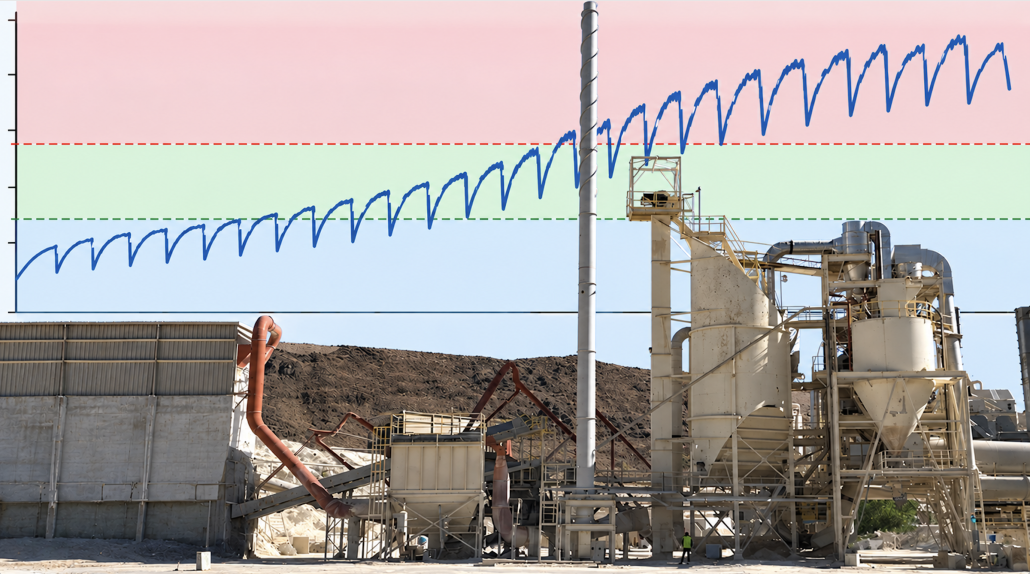

Los filtros obstruidos por largo tiempo con una gran capa de polvo tendrán un mayor nivel de fugas.
The dust cake is important because, in most surface-filtration dust collectors, it actually performs much of the filtration. As dust accumulates on a bag or cartridge, particles begin collecting on previously captured dust rather than directly on the filter fibers.
That may sound like something you would want to remove immediately, but a healthy dust cake is beneficial. Because it is more densely packed than the underlying filter media, it can help capture fine particles that might otherwise penetrate deeper into the filter.
The challenge is finding the right balance. If the dust cake becomes too thick, resistance increases and airflow through the filter decreases. But cleaning too aggressively can remove too much of the protective layer, allowing fine particles to penetrate the filter media and contribute to blinding.
The goal of filter cleaning, therefore, isn’t necessarily to make the filters perfectly clean. It’s to control the dust cake so you maintain both effective filtration and acceptable airflow.
▶ Watch the full answer below.
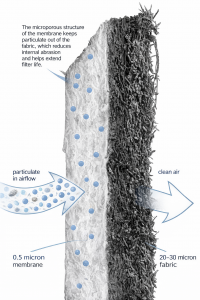
PTFE Membrane in Baghouse Filters
A PTFE membrane is a thin filtration layer laminated to the surface of a dust collector’s base filter media. Its extremely small pores allow it to capture fine particles at the surface instead of allowing them to penetrate deeply into the filter.
You can think of it almost like giving the filter a permanent, very fine dust cake. Instead of relying solely on the openings within the underlying felt or fabric, the membrane becomes the primary surface where particles are captured.
This distinction is important because a membrana PTFE is not the same thing as a filter made from PTFE felt. The membrane is a separate layer applied over another base material, such as polyester, aramid, or fiberglass.
▶ Watch the full answer below.
 Pleated baghouse filters are compact filter elements designed to replace conventional filter bags and cages while fitting into an existing baghouse configuration.
Although their pleated construction resembles a cartridge, they shouldn’t be confused with the much larger cartridges used in a cartridge dust collector. Pleated baghouse elements are designed with dimensions and mounting arrangements that allow them to fit into equipment originally designed for filter bags.
The major advantage is filter area. Folding the media into pleats allows considerably more filtration surface to fit into the same physical space. Depending on the application and filter design, a pleated conversion may double or even triple the available filter area without requiring major modifications to the collector. That can make pleated filters an attractive retrofit when an existing baghouse needs additional filtration capacity.
Read article: Pleated Filters Conversion: Cost-Benefit Analysis
▶ Watch the full answer below.

Filtro de poliéster
Polyester, aramid, and fiberglass are among the most commonly used baghouse filter materials, but each serves a different operating range and application.
Polyester is a common choice for lower-temperature applications because it offers a practical combination of performance and cost. Polypropylene and acrylic may be considered where moisture or chemical conditions make polyester less suitable.
For higher-temperature applications, aramid, commonly associated with the Nomex trade name, is frequently used. Fiberglass can handle still higher temperatures but requires different handling and support considerations because of its characteristics.
Specialty materials include P84, PPS, and PTFE felt. These are typically reserved for demanding applications involving combinations of elevated temperatures, chemicals, or harsh process conditions where conventional fabrics aren’t appropriate.
DOWNLOAD HERE OUR FREE INFOGRAPHIC FILTER MEDIA EXPLAINED.
▶ Watch the full answer below.
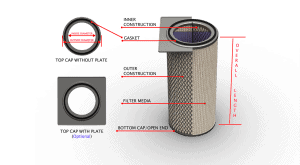 Cartridge filter media should be selected according to the same basic process conditions considered for baghouse filters: temperature, chemistry, particle characteristics, collection efficiency, and cost.
The physical characteristics of the dust can be especially important with cartridges. Very fine particulate, such as welding fume, may require media with higher efficiency at small particle sizes. Abrasive or sticky dust may require a different media construction so particles can release properly during pulse cleaning.
Once the process requirements are satisfied, you can compare the available options and determine which provides the most cost-effective performance.
▶ Watch the full answer below.
Cartridge collectors use several different types of filter media, con 80/20 cellulose-polyester, nanofiber media, and spunbond polyester among the common options.
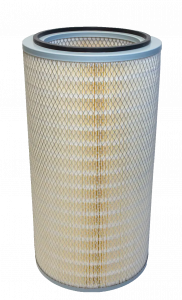 An 80/20 blend of cellulose and polyester is a widely used economical media. Nanofiber media builds on this basic construction by adding a fine surface layer that improves capture of smaller particles.
Spunbond polyester is stronger and more durable, making it useful for some abrasive or difficult dusts. Because it is thicker, however, it generally can’t be packed as tightly into the cartridge. Wider pleat spacing can actually be advantageous when dealing with sticky material or dust containing a mixture of fine and larger particles.
Cartridge media can also incorporate nanofiber layers, PTFE membranes, water- or oil-repellent treatments, and conductive properties depending on the application.
DOWNLOAD HERE OUR FREE INFOGRAPHIC FILTER MEDIA EXPLAINED.
▶ Watch the full answer below.
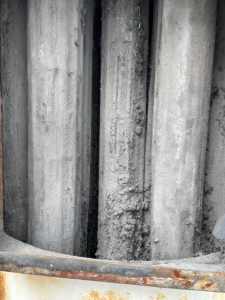 Even when filters aren’t damaged by an abnormal event, they eventually reach the end of their useful life as fine particles become embedded within the depth of the filter media.
During normal operation, much of the dust remains on the surface and is periodically removed by the cleaning system. Over time, however, fine particles can work their way deeper into the media and remain there.
This creates additional resistance to airflow. Differential pressure may remain high even after cleaning because removing the surface dust cake doesn’t remove particles embedded inside the filter. Increasing emissions may also occur even when there isn’t an obvious hole in the bag.
At that point, repeatedly cleaning the filters won’t restore them. They have reached the end of their useful service life and need to be replaced.
📖 Lee también: Top 4 Reasons Why Baghouse Filters Fail
▶ Watch the full answer below.
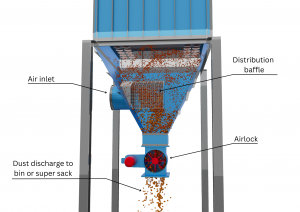
Dust collector hoppers are used to hold the collected dust temporarily before it is discharged through the airlock.
The hopper directs collected dust toward the discharge, while the airlock allows that material to leave the collector without creating a large air leak.
Although it’s easy to think of the hopper as a storage bin, its primary job in many baghouses is more like a funnel. Dust falling from the filters moves down the sloped walls toward the discharge at the bottom.
But if the bottom of a negative-pressure baghouse were simply left open, outside air would be pulled directly into the collector. That’s where the rotary airlock comes in. As its rotor turns, pockets carry collected material through the valve while the blades maintain a seal between the collector and the outside atmosphere.
📖 Lee también: Reasons Not To Store Dust In Your Dust Collector Hopper
▶ Watch the full answer below.
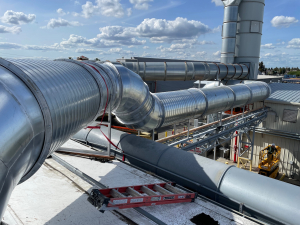
Ductwork determines how air and dust move from the pickup points to the collector, making it one of the most important parts of dust collection system design.
It’s easy to view ductwork as simply the piping that connects a machine to a baghouse. In reality, duct diameters, airflow, air velocity, branches, fittings, pressure losses, and pickup design all influence whether the system captures and transports dust effectively.
The pickup itself matters just as much. Some processes can be directly connected to ductwork, while others require a hood positioned above or around the dust source to capture airborne particulate.
When a plant has poor capture at one or more dust sources, the ductwork and pickup design should always be part of the investigation.
📖 Lee también: How to Size Dust Collection Ductwork for Proper Air Velocity
▶ Watch the full answer below.
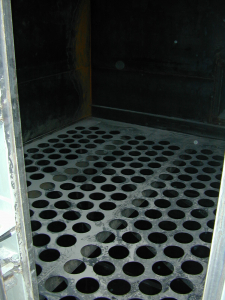
The sheet of metal where the filters are attached in a pulse jet baghouse is called a tubesheet.
The tubesheet is the plate where the filters are installed, and it separates the dirty-air side of the baghouse from the clean-air side.
In a typical pulse-jet baghouse, filter bags attach to openings in the tubesheet and extend into the dirty-air plenum below.
Dust-laden air remains on the dirty side while filtered air passes through the bags and enters the clean-air plenum above the tubesheet. Every filter needs to seal correctly at this boundary. If a filter isn’t seated properly, or if the tubesheet itself develops a problem, dust can potentially bypass the filtration process and enter the clean-air side.
Baghouse configurations vary, so access to the clean-air plenum may be through removable hatches, doors, or a larger walk-in enclosure. The basic function of the tubesheet remains the same.
▶ Watch the full answer below.
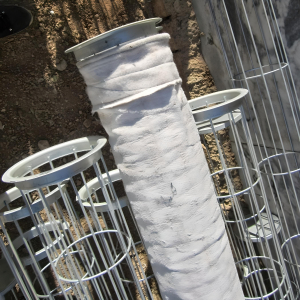
Cleaned filters need to be replaced more frequently, leading to more change-outs, downtime, and cleaning charges
Baghouse filter bags generally should not be washed because the felted filter media used in pulse-jet collectors is not designed to undergo conventional washing and reuse.
Modern baghouse fabrics are typically constructed from fibers formed into a felted structure, sometimes incorporating a woven support or scrim. Getting that material wet and mechanically washing it can alter or weaken its structure.
A washed filter may look reusable immediately afterward, but that doesn’t mean its original strength and filtration characteristics have been restored. The damage can show up later as premature deterioration or failure during operation and pulse cleaning.
From a maintenance perspective, saving money by washing bags can therefore become expensive if it results in additional filter failures, labor, unplanned shutdowns, or emissions problems.
Read article: Are My Filter Bags Washable?
▶ Watch the full answer below.
 The main difference is the temperature range the filter material can withstand without degrading, but temperature also influences cost, chemical compatibility, and available media options.
Polyester is commonly used for lower-temperature baghouse applications because it provides good overall performance at a relatively economical price.
As temperatures increase, different materials become necessary. Aramid is a common high-temperature option, while fiberglass can be used at still higher temperatures.
Specialty materials such as PPS, P84, and PTFE felt may be selected where temperature is combined with particularly demanding chemical conditions.
The important point is that the process temperature should be evaluated against the limitations of the specific filter media being considered.
📖 Lee también: ¿Puedo conseguir filtros ignífugos para colectores de polvo?
▶ Watch the full answer below.

Experto en colectores de polvo, redactor técnico y editor en Baghouse.com
Andy Biancotti está convencido de que el conocimiento es una de las mejores inversiones para una empresa. Como Editor y Gerente de Marketing en Baghouse.com, disfruta entrevistar a ingenieros, técnicos y clientes para capturar las lecciones aprendidas en proyectos reales de control de polvo y convertirlas en recursos prácticos que ayuden a otros profesionales. Con más de dos décadas de experiencia en mantenimiento industrial, operaciones y comunicación técnica, su objetivo es simple: ayudar a las personas para que puedan operar de forma más segura, inteligente y eficiente.