Polvo precapa
Precoat Powder for Dust Collector Filters
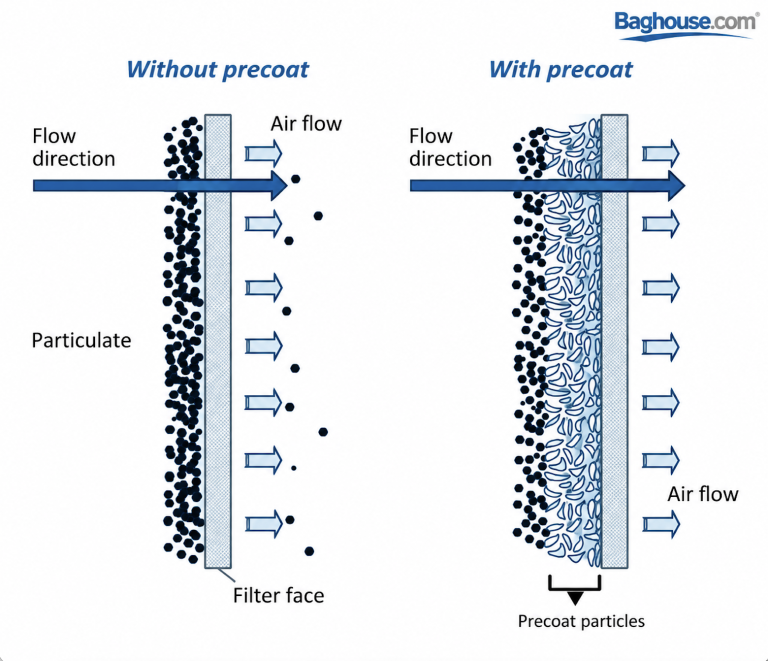
You can use precoat powder to create a protective, porous layer on new filter bags and cartridges before process dust reaches the filter media.
When you install new filters, the filter material is completely clean and porous. If new filters are exposed directly to the process gas before a protective dust layer forms, these small particles can become embedded in the fabric, restrict airflow, make the filters harder to clean, and ultimately shorten their filter life.
Applying the proper amount of precoat gives the filters a controlled initial layer before they are exposed to the process dust. In difficult applications, precoat can also be added during operation as a conditioning feed.
What Is Precoat Powder Made Of?
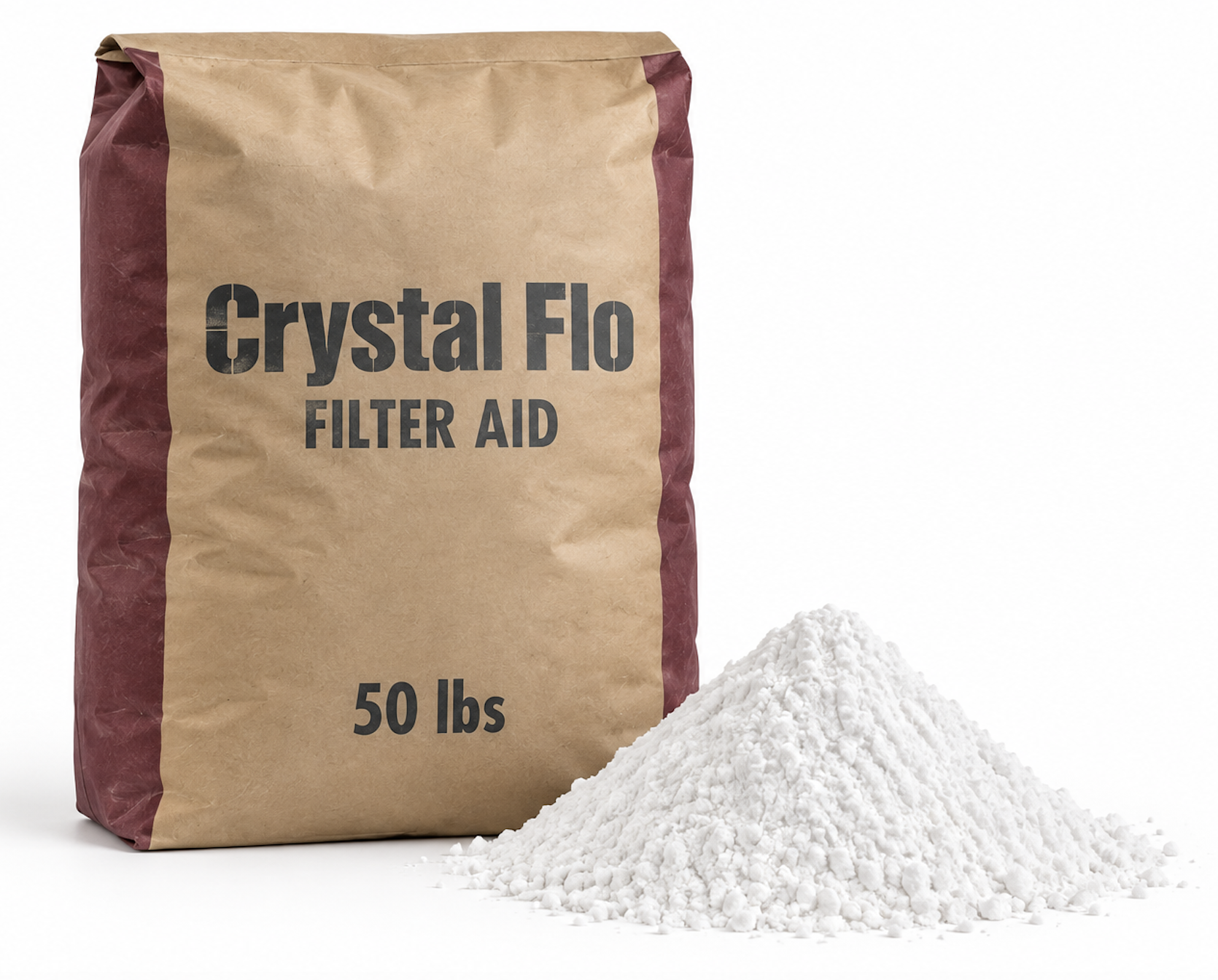
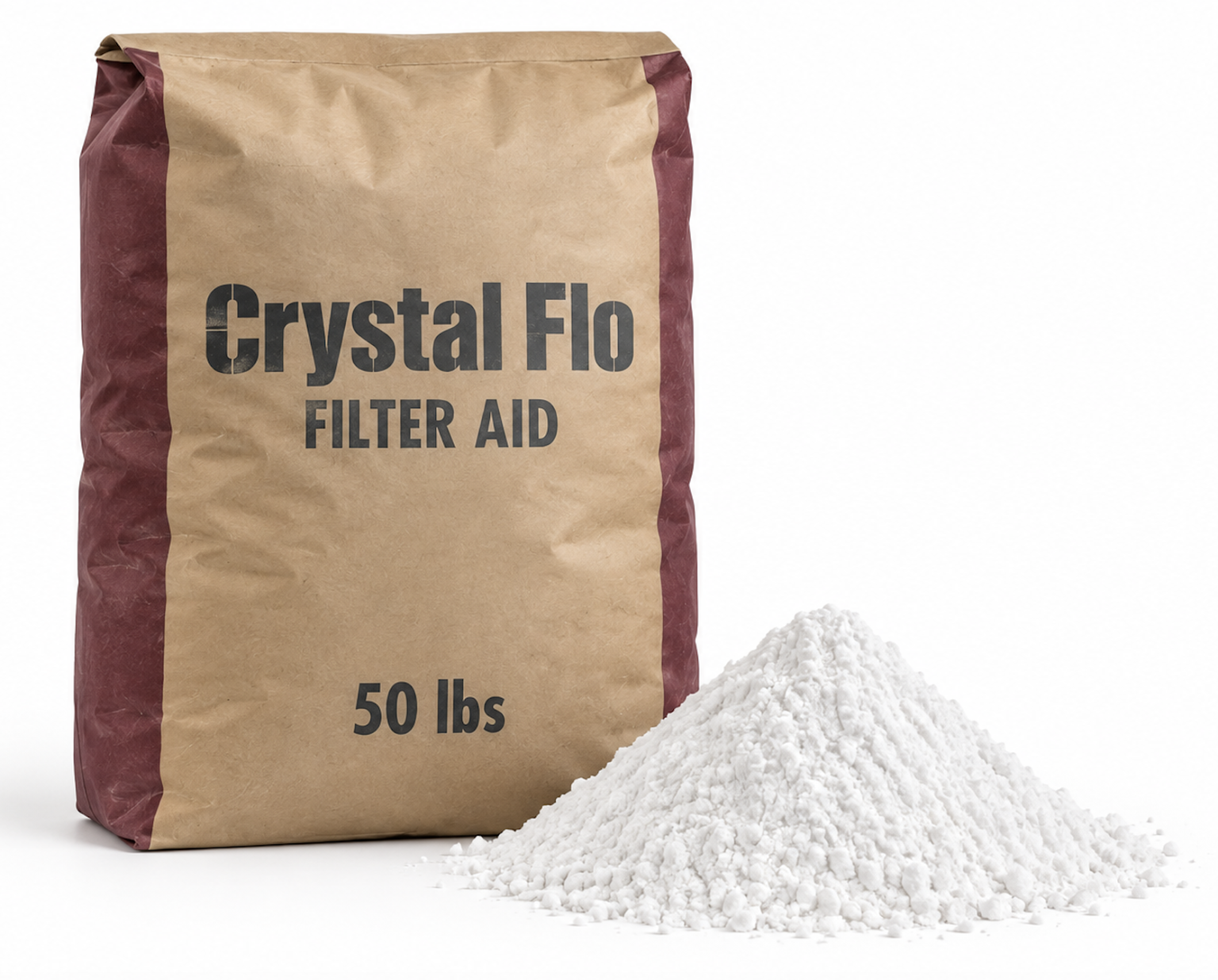
The standard precoat powder supplied by Baghouse.com is a white filter-aid powder, Food Codex Grade, and is composed of perlite, an amorphous alumina silicate. It has a typical pH of 7.0, median particle size of 41.8 microns, median pore size of 22.6 microns, and packaged density of approximately 8 lb/ft³.
For additional information, download below the safety data sheet and the technical data sheet.
What Are Some Benefits of Using Precoat Powder?
The following are some of the most significant benefits of using precoat filter aid in a baghouse:
- ⦿ Protects filter cloth from blinding and plugging
- ⦿ Increases airflow
- ⦿ Enhances fabric filter bag life and performance
- ⦿ Decreases differential pressure
- ⦿ Increases dust collection efficiencies
- ⦿ Inhibits damaging sparks
- ⦿ Absorbs damaging moisture, oils, and hydrocarbons
- ⦿ Lessens operating and maintenance costs
Other Precoat Formulations for Difficult Applications
Baghouse.com can also provide other conditioning-agent formulations for applications where a standard precoat may not be the best choice.
One option is Neutralite, a lightweight, inert aluminum-silica conditioning agent available for initial precoating or continuous conditioning. Neutralite can absorb moisture and hydrocarbons, help maintain a porous dustcake, reduce filter blinding, and improve airflow and filtration efficiency. It has been used in applications including asphalt, cement, foundries, aluminum smelting, steel, chemical processing, industrial boilers, power generation, and waste-to-energy.
For applications with hot sparks in the gas stream, Neutralite SR (Spark Retardant) is a specialized formulation designed to provide an additional protective barrier between sparks and the filter fabric.
If you’re unsure which precoat to use or how much your collector requires, contact Baghouse.com at info@baghouse.com or fill in the form below. We can review your filter dimensions, dust characteristics, process conditions, and application to help determine the appropriate product and quantity.
Frequently Asked Questions About Precoat Powder
When Should I Precoat New Dust Collector Filters?
We generally recommend considering precoat when installing new filter bags or cartridges in applications where the process dust has a history of penetrating, sticking to, or blinding the filter media. The important part is to apply the precoat before normal process dust is allowed to establish the first layer on the filters.
Precoat can be particularly helpful when dealing with fine dust, difficult-to-clean particulate, moisture or hydrocarbons in the gas stream, and applications that have experienced premature filter blinding. For some applications, a one-time initial precoat is enough. Others benefit from a controlled conditioning feed during operation.
How Much Precoat Powder Do I Need?
The standard calculation is based on the total filter cloth area:
Precoat Required (lb) = Total Filter Cloth Area (ft²) × 0.042 lb/ft²
The manufacturer’s calculation first determines the circumference and surface area of each filter bag, multiplies that by the total number of bags, and then applies 0.042 lb of precoat per square foot of filter area.
Calculate the required quantity for your filter dimensions and quantity using the PRECOATING POWDER CALCULATOR.
How Do I Apply Precoat Powder?
APPLICATION INSTRUCTIONS
The use of perlite filter aid for the specific application is carried out by following these consecutive steps:
- Remove dust from baghouse hoppers and turn off dust removal equipment.
- Deactivate the bag cleaning cycle to avoid precoat removal.
- Operate the system at approximately 50% of design airflow to the baghouse to achieve an airflow velocity of approximately 10.1 m/s.
- Add precoat at a rate of 0.136 kg per min per 1000 ACFM (0.3 lbs per min per 1000 ACFM) of reduced gas flow to the baghouse.
- For baghouses operating under suction, precoat can be injected through ports or inspection doors in ducts or hoppers.
- For positive pressure baghouses, precoat should be injected into the duct at the suction side of the positive pressure system fan.
- Isolate each compartment and inspect filter bags for adequate precoat cake (approx. 1 mm or 1/26″ thickness) and check inside of hoppers to be sure there is not a large amount of precoat dropout.
- Once filter bag precoating with precoat is complete, increase the air volume for normal design flow levels to the baghouse, and turn on the hopper dust removal equipment. However, do not reactivate the filter bag cleaning cycle until a minimum differential pressure of 7.6-10.2 cm (or 3″- 4″) static pressure water gauge is measured across the bags. This ensures that a seasoned cake of precoat has been achieved on the filter bags prior to activation of the initial cleaning cycle.
Can Precoat Powder Be Used During Normal Operation?
Yes. In applications where difficult process conditions continue after startup, a precoat or conditioning agent can be introduced periodically or continuously rather than being used only when filters are new. This can be useful when the process stream contains moisture, oils, hydrocarbons, or particulate that tends to create a dense, difficult-to-clean dustcake.
The appropriate feed rate depends on the conditioning agent and application. For example, Neutralite instructions recommend a continuing conditioning feed equal to 10% of the initial Neutralite control layer per day. For that reason, conditioning-feed rates should be based on the specific product being used rather than applying one universal dosage to every precoat material.
How Long Does Precoating Take?
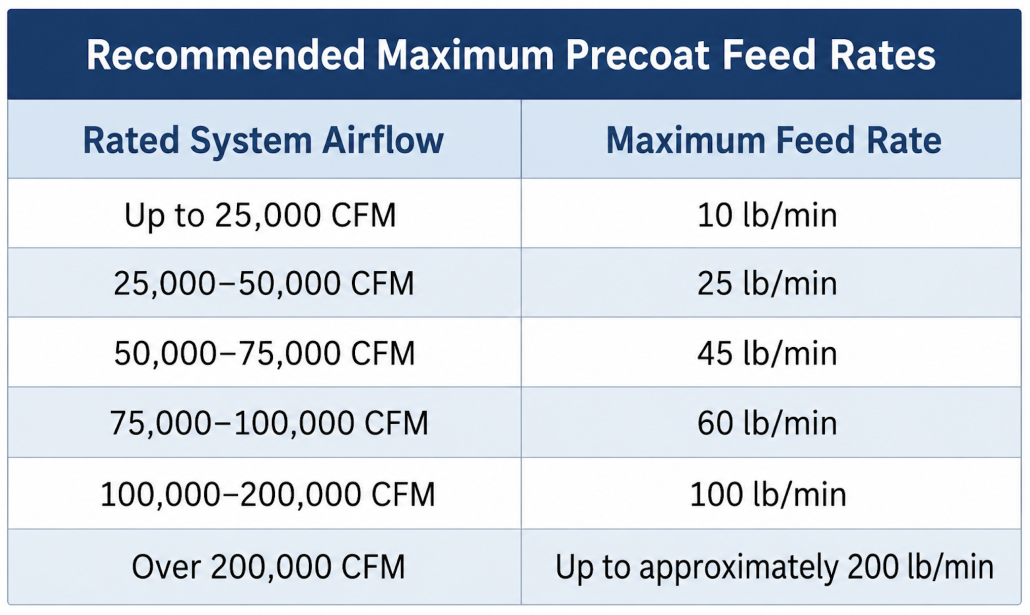
The time required depends heavily on the collector size, total amount of precoat required, system airflow, and allowable powder feed rate. A smaller cartridge collector may be completed relatively quickly, while a large baghouse requiring several hundred pounds of material can take considerably longer.
The objective of the precoat should be fed gradually and distributed through the airflow so that it establishes an even layer across the filters.
Shipping Note
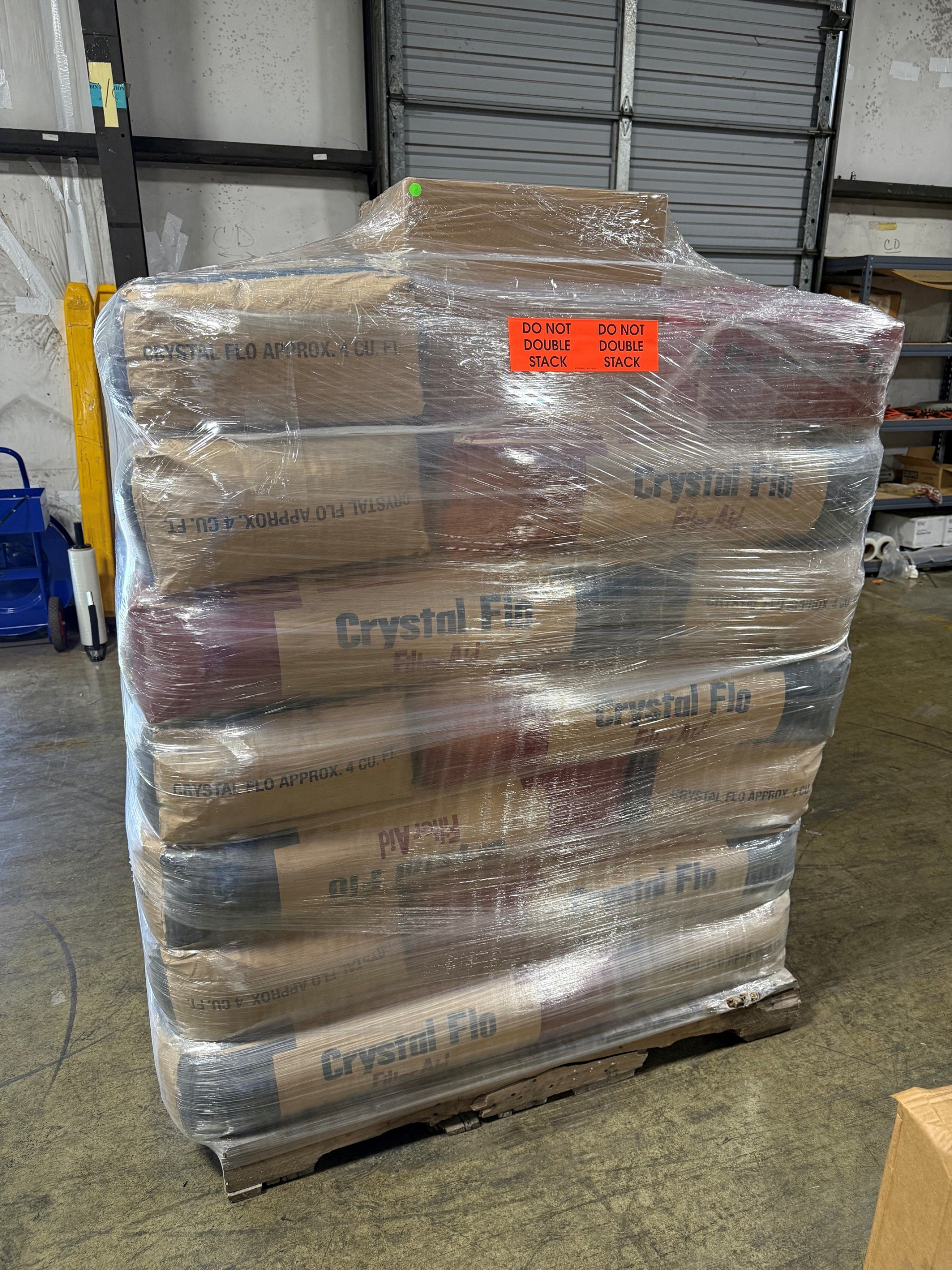
Standard precoat powder is supplied in 50-lb bags. Standard lead time is typically 1–2 weeks.
For orders of up to 3 bags, you can purchase precoat powder directly through our website. Orders of more than 3 bags typically need to ship by LTL freight instead of standard UPS Ground, so shipping costs will vary depending on your location and order size.
For more than 3 bags, shipments outside the continental U.S. or Canada, or rush-delivery requirements, contact Baghouse.com for a custom shipping quote.
Get Special Pricing on Bigger Orders
Contáctenos
Dirección: 3172 N. Rainbow Blvd. Unit #5105 (Zip: 89108)
Las Vegas, Nevada, Estados Unidos
Teléfono: (702) 848-3990
DESCUBRE NUESTRAS SOLUCIONES
Acerca de Baghouse.com
Baghouse.com es un fabricante líder en sistemas y equipos de colección de polvo tipo baghouse, con más de 40 años de experiencia sirviendo a una amplia variedad industrias.