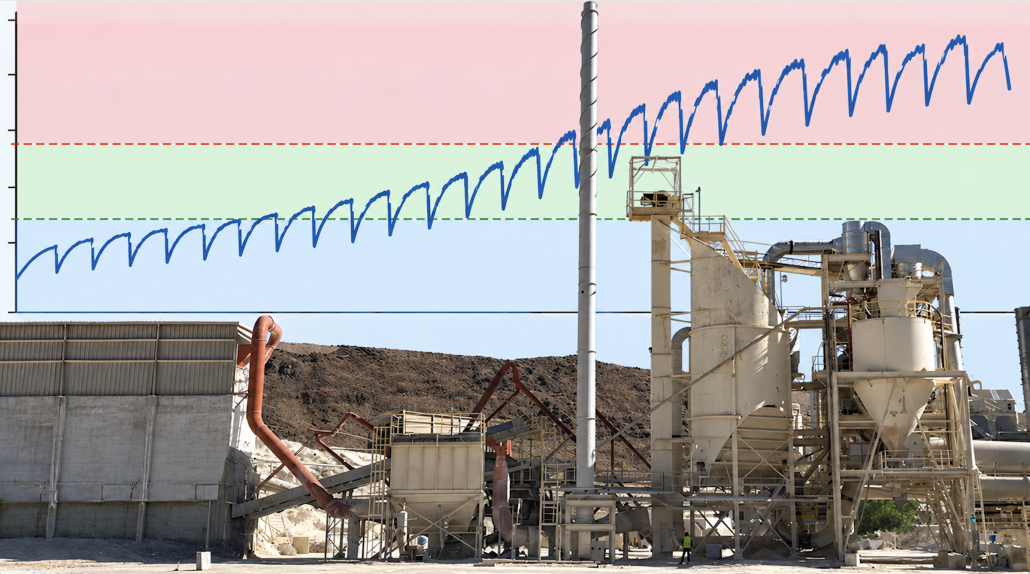
One of the most common baghouse operation practices that we find when we send a dust collector technical advisor out to various facilities is that many plants unwisely use the hopper on their dust collector for storage of the collected dust. Sometimes this is done unwittingly, as maintenance staff simply overlook emptying the hopper on a regular basis. Other times, this is more or less included (unwisely), in the design by neglecting to install a discharge system, such as a screw conveyor or slide gate mechanism.
“Your dust collector is NOT designed to store collected material for extended periods of time.”
However, whether this course of action is planned or not, using your dust collector hopper for storage of any collected material for an extended period of time can cause a myriad of problems. Among the various problems that can arise are damage to dust collector bags, increased emissions, increased pressure drop (i.e., increased system airflow resistance), and clogging and damage to dust discharge systems (conveyor systems, slide gates, etc.).
Read related article: ¿Cuál es el mejor método de descarga para la tolva del colector de polvo?
In addition, in some instances involving compounds that may be considered hazardous, storing collected materials in the hopper can lead to extensive fines and prosecution from governmental regulators such as OSHA or the EPA.

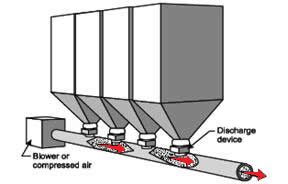
Ensure your dust collection system regularly discharges into a dust conveyor system, such as a screw conveyor.
While the situation with manufacturer discussed above did not involve storing material in the dust collector, it does demonstrate that the EPA, OSHA (and other safety organizations) do not take kindly to the storing of chemicals and compounds in inappropriate ways. Your dust collector is NOT designed to store collected material for extended periods of time.
As already mentioned, using your hopper to store dust will lead to a host of problems that adversely affect not only the efficiency of your dust collection system, but your entire plant. These problems drastically increase if the collected dust contains hazardous materials (lead, mercury, etc.), is an explosion hazard (food products, metal powders, fertilizer, etc.), or is corrosive to machinery. In these instances, it is imperative that proper dust transportation, storage, and disposal methods are implemented. These include the use of continuous hopper cleaning (such as timed or sensor-actuated slide gates, pneumatic locks, etc.). It is also vital to regularly check these systems, especially those components most prone to wear and failure, such as slide gates, seals, etc.

Director of Operations | Dust Collection Specialist | Industrial Filtration Consultant
Dominick DalSanto is an author and environmental technologies expert specializing in dust collection systems. He has nearly a decade of hands-on working experience in the industry. Dominick is the sales director and sales technical advisor for an industrial dust collection equipment manufacturer. Personally took the lead on key projects each year from sales engineer to field advisor to project manager to business relations. Born in San Bernardino County, California, and raised in Chicago, he currently resides in Buenos Aires, Argentina.