If your facility handles combustible dust, a Dust Hazard Analysis, or DHA, is one of the most important steps you can take to improve safety and reduce risk. In dust collection applications, this matters especially because dust collectors, ductwork, process equipment, and even surrounding building areas can all become part of a fire, flash fire, or explosion scenario.
A DHA is a structured process used to identify where combustible dust hazards exist, how severe they may be, and what safeguards are needed to protect people, equipment, and property. It looks beyond the simple question of whether dust is present and focuses instead on how that dust behaves in your actual facility, under your real operating conditions, and what must be done to reduce risk.
What Does a DHA Involve?
One of the most important points to understand is that a DHA its more than just a lab test. Dust testing is often the first step, and it can determine whether a dust sample is combustible and, if it is, provide values such as Kst and Pmax. Those results are important, but they do not by themselves complete a Dust Hazard Analysis.
The full DHA is a broader process specified in NFPA 652 to evaluate and mitigate dust hazards in a facility. That process includes testing the dust, evaluating the facility for fire and explosion risks, performing a risk analysis, developing a mitigation plan, and implementing the safeguards needed to bring the facility into compliance.
What are the Kst and Pmax values?
Kst is a measure of how fast a combustible dust explosion can build pressure. It helps show the violence or severity of a dust deflagration.
Pmax is the maximum pressure that a dust explosion can generate if it occurs under test conditions.
Why a DHA Is Important?
A DHA helps facilities move from reacting to incidents after they happen to identifying and addressing hazards before they become disasters.
For dust collection systems, this is especially important because collectors often sit at the center of dust-handling operations. If combustible dust is present, it can also become part of a hazardous event if dust accumulates, becomes dispersed, or finds an ignition source.
A well-executed DHA helps facilities:
- ✔️ Identify combustible dust fire and explosion hazards
- ✔️ Determine where dust clouds or dangerous accumulations may occur
- ✔️ Evaluate ignition sources and existing safeguards
- ✔️ Identify what additional protection may be required
- ✔️ Support safer dust collection system design, operation, and maintenance
- ✔️ Improve regulatory readiness and documentation
What the Full DHA Process Includes
Dust Testing
The first step is determining whether the dust is combustible. Kst and Pmax values help define how severe the hazard may be and support decisions about system protection.
Facility Evaluation
A facility evaluation includes looking at dust collectors, ductwork, processing equipment, transfer points, storage areas, housekeeping practices, and building compartments.
Risk Analysis and Mitigation Planning
After identifying the hazards, the next step is to perform a risk analysis and create a plan to mitigate those risks in line with NFPA requirements. This is where the DHA becomes a practical roadmap for improving safety.
Risk Mitigation Implementation
The final step is to include explosion vents, isolation valves, housekeeping procedures, ignition source controls, revised operating practices, and other safeguards needed to bring the facility into compliance and reduce risk.
What Types of Hazards a DHA Can Identify
A major benefit of a DHA is that it does not assume every part of the plant presents the same level of risk. Some areas may be relatively safe, while others may require additional testing or immediate mitigation.
A DHA may determine that an area or process is:
⚠️ Not a Hazard
In some cases, the review shows no credible fire, flash fire, or explosion hazard. If so, no further action may be needed for that area.
⚠️ Potentially Hazardous but Requiring More Information
Sometimes the available information is not enough to reach a final conclusion. Additional testing or processing data may be needed.
⚠️ A Fire Hazard
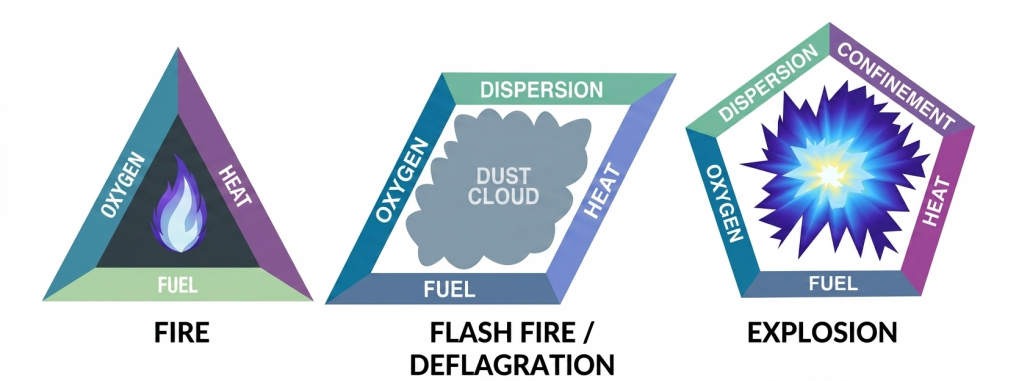
A fire hazard exists when combustible material could ignite and sustain a fire, even if explosion conditions are not present.
⚠️ A Flash Fire Hazard
A flash fire can occur when combustible dust, gas, or vapor ignites suddenly and burns rapidly, creating a major personnel hazard.
⚠️ An Explosion Hazard
This is one of the most serious outcomes identified in a DHA. If combustible particulate solids become suspended in air and ignite, the result can be a devastating dust explosion.
Why Dust Collection Systems Deserve Special Attention
Dust collection systems handle concentrated dust streams and connect multiple parts of the process through airflow and ducting.
A DHA can help answer critical questions such as:
- ⁉️ Is the dust being collected combustible?
- ⁉️ Could the collector contain or disperse an explosive dust cloud?
- ⁉️ Are there credible ignition sources in the system?
- ⁉️ Are current safeguards adequate?
- ⁉️ Does the system need explosion venting, isolation, or other protection?
- ⁉️ Are housekeeping and maintenance practices supporting safe operation?
In an industrial facility, that review may include:
- ✔️ Dust collectors and baghouses
- ✔️ Cartridge collectors
- ✔️ Cyclones and separators
- ductwork
- ✔️ Process equipment
- ✔️ Transfer points and conveyors
- ✔️ Storage areas
- ✔️ Production rooms and building compartments
- ✔️ Housekeeping practices
- ✔️ Emergency response procedures
For facilities operating baghouses, cartridge collectors, and similar systems, the DHA connects the dust itself, the collector design, and the operating conditions into one risk picture.
Common Materials That May Require a DHA
Combustible dust hazards exist in more industries than many people realize. They are not limited to only a few specialized applications.
Materials that may require a DHA include dust from:
- ✔️ Wood

Materials that are prone to dust explosions
- ✔️ Grain
- ✔️ Sugar
- ✔️ Flour
- ✔️ Paper
- ✔️ Pardboard
- ✔️ Coal
- ✔️ Plastics
- ✔️ Rubber
- ✔️ Pharmaceuticals
- ✔️ Textiles
- ✔️ Aluminum
- ✔️ Magnesium
- ✔️ Zinc
- ✔️ Fine iron or steel dust
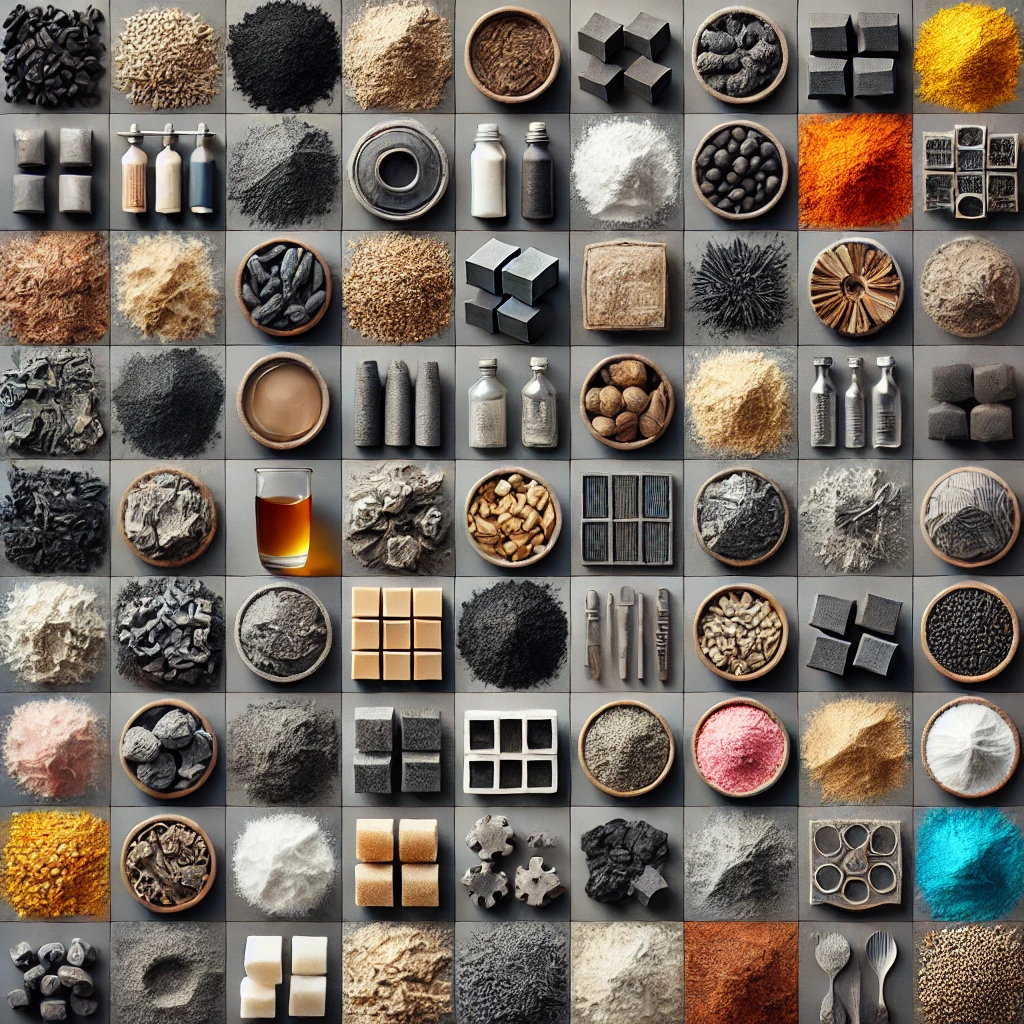
If a material can become a combustible particulate solid under operating conditions, it should be evaluated carefully.
When Should a Dust Hazard Analysis Be Performed?
A DHA should be completed whenever combustible dust hazards need to be evaluated and revisited when conditions change. A DHA is typically needed:
- ✔️ When a new facility or process is introduced
- ✔️ When new equipment is installed
- ✔️ When a dust collection system is expanded or modified
- ✔️ After a dust-related fire, explosion, or near-miss
- ✔️ During periodic review cycles, typically every five years
Regular review matters because equipment, materials, and production demands can all change over time, which can change the hazard profile as well.
What Happens After the DHA
Once the DHA is complete, the next step is acting on the findings. Depending on the process and facility, that may include:
- ✅ Improving dust collection system performance
- ✅ Upgrading housekeeping procedures
- ✅ Controlling or eliminating ignition sources
- ✅ Adding explosion protection measures
- ✅ Improving ventilation
- ✅ Revising emergency response procedures
- ✅ Training employees on combustible dust awareness
- ✅ Strengthening documentation and compliance practices
Who Should Lead a DHA?
A DHA should be led by a qualified person with expertise in combustible dust hazards. At the same time, the process works best when it involves people who understand how the facility actually operates on a daily basis.
A strong DHA is usually a cross-functional effort. Engineering understands the equipment, operations understands production realities, maintenance understands failure points, and EHS provides the safety and compliance perspective.
How Baghouse.com Can Help
A Dust Hazard Analysis is one of the most valuable tools available for facilities handling combustible dust. We can support facilities at different stages of the DHA, including a site visit and formal report.