What Are the Different Types of Dust Collector Filter Media, and How Do You Choose the Right One?

Originally published: January 4, 2012

Last updated: October 15, 2026

While all filters might look similar on the outside, the materials used to manufacture them can make a big difference in filtration efficiency, filter life, and overall baghouse performance.

So, how do you know which filter material is right for your application? The answer depends on what you’re collecting, the conditions inside your dust collector, and how the filters are cleaned.

What Are the Most Common Types of Dust Collector Filter Media?

Industrial baghouse filters are manufactured using different fibers, each with its own strengths and limitations.

Here are some of the most commonly used materials: 

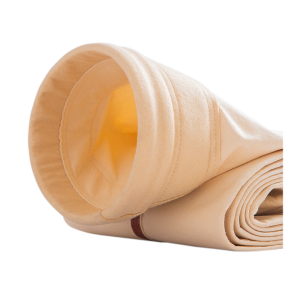
  • Polyester is by far the most widely used fabric as it has good overall qualities to resist acids, alkalis, and abrasion, is inexpensive and has a good temperature range.

    Filtro de poliéster

    ⦿ Polyester: One of the most widely used filter materials. It’s economical and works well in many dry, moderate-temperature applications. However, exposure to high temperatures combined with moisture can cause the fibers to deteriorate through hydrolysis.
  • ⦿ Aramid (Nomex®): Commonly used in higher-temperature applications. It offers good heat resistance but can be vulnerable to acidic environments and hydrolysis.
  • ⦿  Fiberglass: Suitable for high-temperature applications, although its resistance to abrasion and flexing must be considered.
  • PPS filter media is valued for its balance of thermal stability, chemical resistance, and non-flammability.

    El medio filtrante de PPS es muy valorado por su equilibrio entre estabilidad térmica, resistencia química y carácter no inflamable.

    ⦿  PPS (Ryton®): Offers excellent resistance to many acids and alkalis and performs well in applications involving moisture and elevated temperatures.
  • ⦿  PTFE (Teflon®): Provides excellent chemical resistance and can withstand high temperatures, making it useful in demanding applications.
  • ⦿  Polypropylene: Offers good chemical resistance but is limited to relatively low operating temperatures and can be damaged by oxidizing agents.
  • ⦿  Acrylic: Often considered for applications involving moisture and moderate temperatures.
  • ⦿  Polyimide (P84®): Used in higher-temperature filtration applications and in specialized filter media designed to capture fine particles.

Each material has its own temperature limits and chemical compatibility requirements.

Download our Filter Fabrics Explained resource for free.

What's the Difference Between Woven and Felt Filter Media?

Besides choosing the fiber material, you also need to consider how the filter fabric is constructed.

  • ⦿ Woven fabrics are manufactured by interlacing yarns. They’re commonly associated with reverse-air and certain shaker-style baghouses, where flexibility helps release the accumulated dust cake.
  • ⦿ Needled felt fabrics are made by mechanically interlocking fibers into a dense filtration material. They’re widely used in pulse-jet baghouses because their construction works well with compressed-air cleaning.

The type of cleaning system is therefore an important factor when selecting replacement filter bags.

What About Filter Treatments and PTFE Membranes?

Certain dusts are particularly fine, sticky, abrasive, or difficult to remove during cleaning. In these situations, specialized filter treatments can improve performance.

Common options include:

  • ⦿ Singeing and glazing: Smooth the filter surface to help accumulated dust release more easily.

  • ⦿ Oil- and water-repellent treatments: Help reduce moisture and oil-related dust adhesion.

  • ⦿ PTFE membranes: Provide a fine filtration surface that can improve particle capture and dust cake release in suitable applications.

  • ⦿ Silicone treatments: Can improve resistance to abrasive dust.

  • ⦿ Static-dissipating media: Help dissipate accumulated static electricity when properly integrated into a grounded system.

These treatments aren’t necessary for every application, but they can make a significant difference when dealing with challenging dust characteristics.

How Do You Choose the Right Filter Material?

Before selecting a filter, there are several important questions to answer:

  1. What’s the operating temperature? Consider both normal temperatures and occasional temperature spikes.

  2. How does your baghouse clean its filters? Pulse-jet, shaker, and reverse-air systems have different media requirements.

  3. Is moisture present? Heat and moisture can damage certain filter materials.

  4. Are there chemicals in the gas stream? Acids, alkalis, and oxidizing agents can affect filter life.

  5. What are the dust characteristics? Particle size, abrasiveness, stickiness, and fibrous content all influence filter performance.

Understanding these conditions helps narrow down the options and avoid premature filter failures.

En Baghouse.com, we help facilities identify the right filter bags and media for their specific applications. Not sure which filter material you need?

¡Comparte este artículo!

Artículos Relacionados

¡Solicita un presupuesto ya mismo!