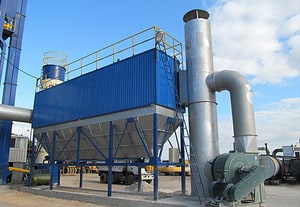
New large top-load pulse jet baghouse installed by Baghouse.com
Los colectores tipo baghouse are among the most versatile filtration systems used in industrial applications for pollution control. They use fabric filter bags to capture dust particles as contaminated air passes through the filter media, allowing cleaner air to exit the collector.
One of their biggest advantages is flexibility. Los baghouses can handle a wide range of dust types, temperatures, and operating conditions by using different filter fabrics and cleaning systems.
Common filter materials include polyester, aramid, fiberglass, PPS, and PTFE. The right choice depends on the application, particularly the operating temperature, moisture content, and chemical characteristics of the gas stream.
Baghouses can also use different cleaning methods, including mechanical shaking, reverse-air cleaning, and pulse-jet cleaning.
- Advantages: High filtration efficiency, versatile filter media options, durable construction, and suitability for many large industrial applications.
- Limitations: Require regular maintenance, periodic filter replacement, and careful media selection when moisture, sticky dust, or aggressive chemicals are present.
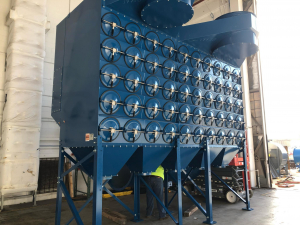 Cartridge dust collectors operate on a similar principle to baghouses, but instead of long fabric bags, they use pleated filter cartridges. The pleated design provides a large amount of filtration surface area in a relatively compact space. This makes cartridge collectors particularly useful for applications involving fine, dry dust where space is limited.
Many cartridge collectors use automatic pulse-jet cleaning systems to remove accumulated dust from the filter surface.
You’ll commonly find these systems in metalworking, powder coating, pharmaceutical manufacturing, and other applications that generate fine particulate.
- Advantages: Compact design, high filtration efficiency, easy filter replacement, and automatic cleaning capabilities.
- Limitations: Pleated cartridges can be more susceptible to plugging or damage in applications involving sticky dust, high moisture, or certain abrasive materials. Their temperature capabilities also depend on the filter media and construction.

Baghouse.com instaló un nuevo ciclón y un colector de cartuchos
Cyclone collectors don’t use fabric filters to separate dust from the air… They rely on centrifugal forces. As dusty air enters the cyclone, it spins rapidly inside the collector. Heavier particles move toward the outer wall and fall into a collection hopper, while the air exits through the top.
Because cyclones have no filter bags or cartridges to replace, they are relatively simple to maintain. They’re especially effective at removing larger, heavier particles and are frequently used as pre-cleaners before baghouses or cartridge collectors.
- Advantages: Simple construction, relatively low maintenance, ability to handle high temperatures, and effective separation of larger particles.
- Limitations: Less efficient at capturing fine particulate, can create significant pressure drop, and may struggle with sticky materials. Cyclones generally aren’t suitable as the only filtration stage when very low particulate emissions are required.

Director of Operations | Dust Collection Specialist | Industrial Filtration Consultant
Dominick DalSanto is an author and environmental technologies expert specializing in dust collection systems. He has nearly a decade of hands-on working experience in the industry. Dominick is the sales director and sales technical advisor for an industrial dust collection equipment manufacturer. Personally took the lead on key projects each year from sales engineer to field advisor to project manager to business relations. Born in San Bernardino County, California, and raised in Chicago, he currently resides in Buenos Aires, Argentina.