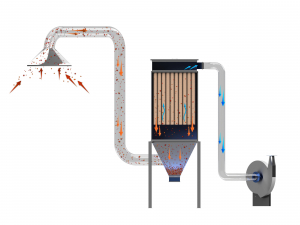
Diagrama que muestra un sistema de colección de polvo completo, desde la tomada del aire sucio, los filtros y el ventilador
Una campana es la interfaz entre el proceso y el sistema de control de polvo. Ubicada al final de un ramal de ductos, su función es capturar el polvo suspendido, humos o material particulado generado por una máquina o proceso industrial y dirigirlo hacia el sistema de ductos.
Su trabajo parece sencillo: capturar el polvo antes de que escape. Sin embargo, en la práctica, el diseño de campanas es uno de los aspectos más incomprendidos de la ventilación industrial.
Las normas de la industria suelen buscar eficiencias de captación superiores al 90%; sin embargo, muchas plantas operan con campanas que apenas capturan un pequeño poecentaje del polvo que generan.
La diferencia normalmente depende de tres factores:
- ⦿ Diseño de la campana
- ⦿ Ubicación de la campana
- ⦿ Manejo del flujo de aire
Leé nuestro artículo: Cómo controlar las fuentes secundarias de polvo


 Campana de borde recto
 Campana de borde recto
La campana de borde recto no es más que un ducto con el extremo abierto. Es económica y fácil de fabricar, razón por la cual es tan común en la industria. Sin embargo, también es el diseño menos eficiente. El aire entra desde todas las direcciones, generando turbulencia y reduciendo la capacidad de captación.
 Campana con brida
 Campana con brida
Agregar una brida alrededor de la abertura de la campana mejora inmediatamente su desempeño. La brida evita que el aire entre por la parte posterior de la campana y concentra la succión hacia la fuente de generación del polvo. Esta sencilla modificación suele mejorar la captación mientras reduce el flujo de aire necesario.
 Campana cónica de transición
 Campana cónica de transición
Una campana de transición cónica pasa gradualmente de una abertura más grande a la conexión con el ducto. Este cambio gradual permite que el aire fluya de manera más uniforme, reduciendo la turbulencia y las pérdidas de energía. El resultado es un mejor desempeño con menores costos de operación.
Campana cónica
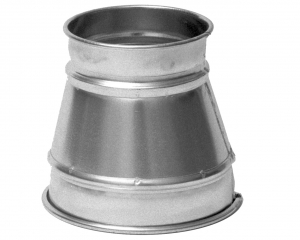
Las campanas cónicas siguen el mismo principio, pero con una geometría de transición aún más uniforme.
Al reducir la turbulencia también disminuyen las pérdidas de presión, mejorando la eficiencia del flujo de aire.
Boca acampanada
Entre las campanas de captación externas, la campana tipo bell-mouth suele considerarse la más eficiente. Su entrada curva y de transición suave minimiza la turbulencia y maximiza la eficiencia del flujo de aire.
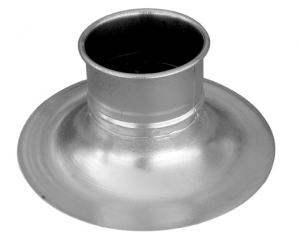
Aunque su fabricación tiene un costo mayor, la reducción en el caudal requerido y el menor consumo de energía del ventilador suelen compensar esa inversión a lo largo de la vida útil del sistema.

Las campanas bien diseñadas deben minimizar la turbulencia, mantener un flujo de aire uniforme e incluir compuertas de aire para
evitar el retroceso hacia el sistema.
El tipo de polvo que se va a captar también influye directamente en el diseño de la campana. No todos los materiales se comportan igual. Los humos de soldadura son muy diferentes a las virutas de madera. El polvo de cemento se comporta de manera distinta al polvo de granos. El polvo generado durante el esmerilado de metales no se mueve igual que el polvo del papel.
Basta recorrer distintas plantas de manufactura para darse cuenta de que cada proceso presenta desafíos completamente diferentes.
Aplicaciones en la industria de la madera
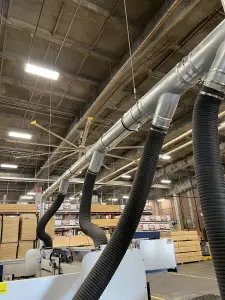
Manguera flexible conectada a maquinaria
En las plantas de carpintería, el polvo suele ir acompañado de virutas y astillas de mayor tamaño que salen despedidas de sierras, routers, cepillos y lijadoras a gran velocidad. Estas partículas no simplemente flotan hasta la campana. Continúan desplazándose en la misma dirección en la que fueron expulsadas.
Esto significa que no basta con colocar una campana cerca del equipo esperando que capture todo el material. Debe ubicarse exactamente donde las partículas salen disparadas. Una campana bien diseñada intercepta la trayectoria de las virutas y del polvo antes de que tengan oportunidad de dispersarse por toda la planta.
Por esta razón, muchos fabricantes de maquinaria incorporan las campanas de captación directamente en el diseño de sus equipos. Ellos conocen exactamente dónde se genera el material y hacia dónde se desplaza.
Aplicaciones de esmerilado
Las operaciones de esmerilado presentan un desafío completamente distinto. Cualquiera que haya trabajado junto a una rueda de esmeril sabe que las chispas y el polvo no ascienden lentamente en el aire. Son proyectados a gran velocidad y, en la mayoría de los casos, siguen una trayectoria bastante predecible alejándose de la rueda.
Hemos encontrado instalaciones que invirtieron en grandes sistemas de control de polvo, pero colocaron la campana del lado equivocado del proceso de esmerilado. Técnicamente existía suficiente flujo de aire, pero las partículas eran lanzadas en dirección opuesta mucho más rápido de lo que la campana podía capturarlas.
Peor aún, una campana mal ubicada puede provocar que las partículas impacten contra ella y reboten nuevamente hacia el área de trabajo, generando problemas tanto de limpieza como de exposición para los trabajadores. Los diseños exitosos de campanas para esmerilado aprovechan la trayectoria natural de las partículas, en lugar de intentar luchar contra ella.
Aplicaciones para el manejo de materiales a granel
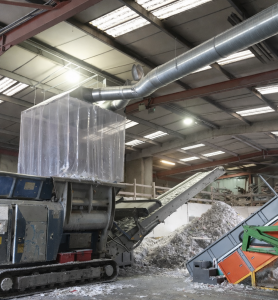
Agregar tiras adicionales de cortina de PVC a la campana de captación del sistema de extracción de polvo de la trituradora cumple dos propósitos; en primer lugar, ayuda a contener cualquier partícula de polvo en suspensión dentro de este recinto y, en segundo lugar, permite la carga manual de la tolva de la trituradora.
Los sistemas para el manejo de materiales a granel presentan sus propios desafíos. Ya sea que se trate de granos, cemento, minerales, fertilizantes, pellets de plástico u otros materiales secos, los puntos de transferencia son conocidos por generar grandes nubes de polvo. Cada vez que el material cae de una banda transportadora a otra, entra a un elevador de cangilones o se descarga en una tolva, el aire es desplazado y arrastra consigo partículas de polvo.
En este tipo de aplicaciones, colocar simplemente una campana sobre el punto de transferencia rara vez es suficiente. Los diseños más eficientes suelen combinar la campana con cerramientos parciales que contienen la nube de polvo antes de que tenga oportunidad de dispersarse por toda la instalación. Al mantener el polvo confinado en un espacio más reducido, la campana puede capturarlo con mucha mayor eficiencia y utilizando un menor flujo de aire que un diseño completamente abierto.
Este enfoque no solo mejora la eficiencia de captación, sino que también puede reducir la potencia requerida del ventilador y disminuir los costos de operación.
Aplicaciones de soldadura
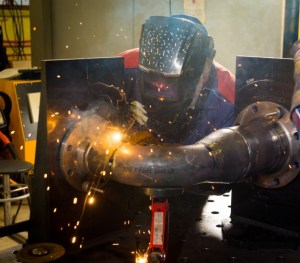
La captación en la fuente cobra una importancia aún mayor cuando se trabaja con humos de soldadura.
A diferencia de las partículas de polvo más pesadas, los humos de soldadura están formados por partículas extremadamente finas que ascienden naturalmente debido al calor generado por el arco de soldadura. Por ello, capturarlos directamente en el punto donde se generan resulta fundamental.
Cuanto más cerca esté ubicada la campana de la soldadura, más fácil será capturar la columna de humos antes de que se disperse por el área de trabajo. De hecho, acercar la campana apenas unos centímetros puede aumentar considerablemente la eficiencia de captación y, al mismo tiempo, reducir el flujo de aire necesario.
Por esta razón, tanto los soldadores con experiencia como los especialistas en sistemas de control de polvo suelen decir que la ubicación de la campana es más importante que el tamaño del ventilador. Una campana correctamente posicionada con un flujo de aire moderado normalmente ofrecerá mejores resultados que una campana mal ubicada conectada a un colector mucho más grande.

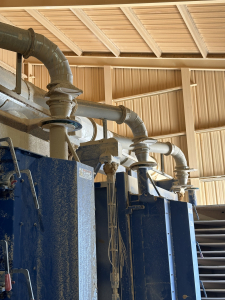
Con el paso del tiempo, el personal de mantenimiento realiza modificaciones y la distribución del flujo de aire cambia.
Incluso una campana perfectamente diseñada puede dejar de funcionar correctamente si el sistema pierde su balance. Esto ocurre con mucha frecuencia en instalaciones que cuentan con múltiples puntos de captación, siendo las plantas de carpintería uno de los mejores ejemplos.
Un taller puede tener decenas de máquinas conectadas a un mismo sistema de control de polvo. Conforme pasa el tiempo, los operadores abren y cierran las compuertas de cada equipo, el personal realiza ajustes y el flujo de aire deja de distribuirse de manera uniforme. Como resultado, algunas campanas reciben demasiado flujo de aire mientras que otras reciben muy poco, provocando un control de polvo inconsistente en toda la planta.
Una estrategia muy efectiva consiste en utilizar dos juegos de compuertas:
- ⦿ Una compuerta de balance ubicada cerca de la conexión con el ducto principal, que permanece fija una vez ajustada.
- ⦿ Una compuerta de operación ubicada junto a la máquina, que el operador utiliza durante el trabajo diario.
De esta manera, los equipos pueden encenderse o apagarse sin alterar el balance general del sistema.

Experto en colectores de polvo, redactor técnico y editor en Baghouse.com
Andy Biancotti está convencido de que el conocimiento es una de las mejores inversiones para una empresa. Como Editor y Gerente de Marketing en Baghouse.com, disfruta entrevistar a ingenieros, técnicos y clientes para capturar las lecciones aprendidas en proyectos reales de control de polvo y convertirlas en recursos prácticos que ayuden a otros profesionales. Con más de dos décadas de experiencia en mantenimiento industrial, operaciones y comunicación técnica, su objetivo es simple: ayudar a las personas para que puedan operar de forma más segura, inteligente y eficiente.