A baghouse may use filter media capable of collecting more than 99% of particulate matter, yet the facility can still experience excessive emissions or high worker exposure if dust is not captured properly at the source, airflow is inadequate, ductwork is poorly designed, or the system is not maintained correctly. The EPA notes that fabric filters are generally capable of collection efficiencies greater than 99%, but actual performance depends on much more than the theoretical efficiency of the filter media. (US EPA)
En las Baghouse.com +40 years of experience working in the field, we have learned that dust collection systems support air quality compliance when the entire system works together, from the pickup point all the way to the stack. That is why it is called a SYSTEM. Some of our customers are very punctual with their filter changeouts, but they are a little more lax with anomalies in other areas of the system.
What Role Does a Baghouse Play in Air Quality Compliance?
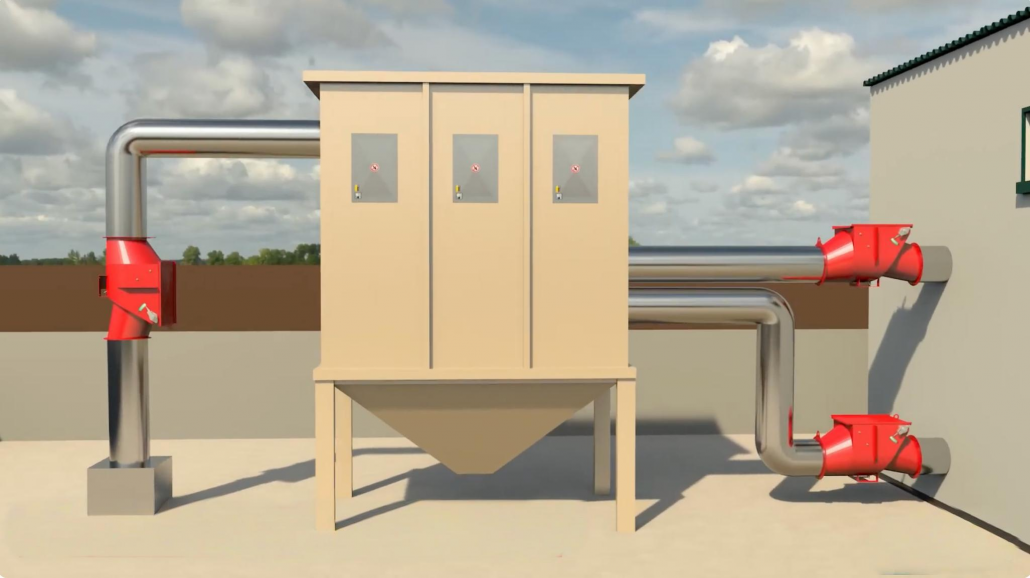
A baghouse removes particulate matter from an industrial airstream. Dust-laden air enters the collector and passes through fabric filter bags. Particles are captured on the filter surface, while filtered air continues through the system. As a dust cake develops, it can actually contribute to filtration of fine particles. The filters are then periodically cleaned, and the removed material falls into the hopper for discharge.
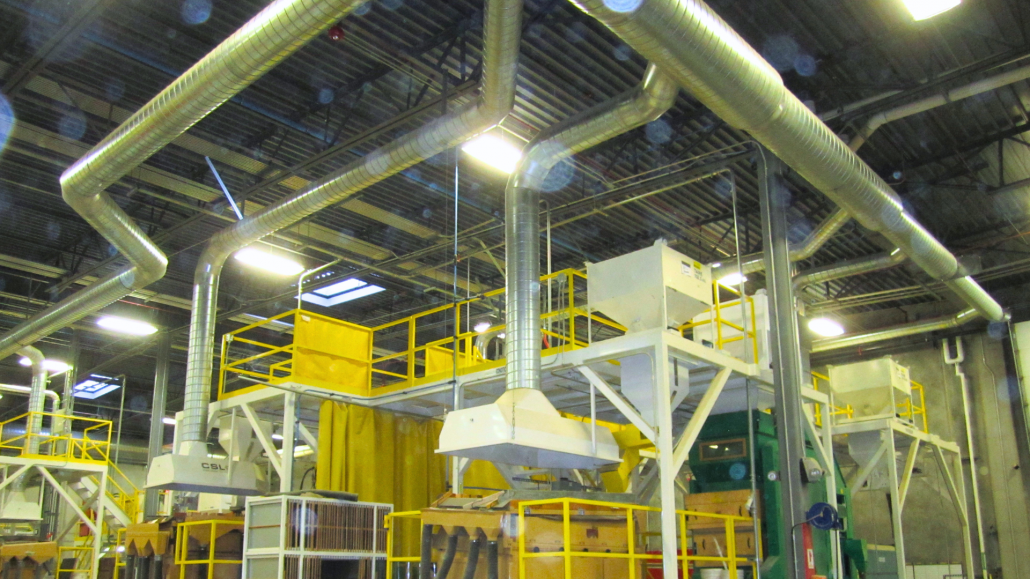
The baghouse is only one component of a larger particulate emissions control system. The hoods must capture the dust, the ductwork must transport it, the fan must provide the required airflow, the filter media must be appropriate for the dust and process conditions, the cleaning system must maintain a manageable pressure drop, and the hopper must continuously remove collected material. Finally, the system must be monitored well enough for operators to recognize when something has changed.
“You have to look at the entire air path of airflow. Are we capturing the dust where it’s generated? Are we moving the correct amount of air? Is the collector sized correctly? And can we verify that it continues operating the way it was designed?”
Suppose a filter manufacturer states that its media provides 99% or greater filtration efficiency. That information refers to the media under specified conditions, but it does not tell you that 99% of the dust generated by your process is being controlled.
Not so long ago, one of our technicians performed an inspection on a company having a grinding operation in Bethlehem, Pennsylvania, United States. The filters were performing flawlessly, but the hoods were only capturing part of the dust cloud; the remaining material never reached those filters.
There is another side to the problem. The collector may receive the proper airflow but still experience emissions because of a torn filter, poor tubesheet seal, damaged gasket, unsuitable filter media, or process conditions that have damaged the filters.
How Does Proper System Design Improve Emissions Control?
Engineers need to understand where the particulate is generated, how much airflow is required to capture it, what minimum and maximum conveying velocity is necessary to keep the material moving through the ducts, and how much resistance the complete system creates.
Once the air reaches the collector, factors such as required CFM, relación aire-tela, filter media, temperature, moisture, particle characteristics and maintenance accessibility all influence performance.
Filter media selection is especially important. Temperature, chemical exposure, abrasiveness and moisture can all affect how a filter performs and how long it lasts. Choosing the wrong media may result in premature failure, excessive differential pressure or blinding.
Be mindful that the most efficient filter on paper is not necessarily the best filter for a particular process. That’s why it is important to get recommendations from a dust collection expert, and not just a sales rep that only sells filters without real-world experience.
How Can Dust Collection Improve Air Quality Inside the Plant?
Environmental compliance often focuses on what leaves the stack, but maintenance and EHS personnel also need to consider what happens before the dust reaches the collector.
Effective source capture is particularly important when the dust presents an occupational exposure hazard. For example, OSHA’s general-industry respirable crystalline silica standard establishes a permissible exposure limit of 50 µg/m³ as an eight-hour time-weighted average and requires feasible engineering and work-practice controls to reduce employee exposure. OSHA specifically identifies local exhaust ventilation as one type of engineering control. (OSHA)
This highlights an important distinction: stack emissions and worker exposure are related, but they are not the same compliance issue.
What Should Facilities Monitor to Know Whether Their Baghouse Is Working?
Differential pressure.As dust accumulates on the filters, resistance to airflow increases. Cleaning removes part of that accumulated material and helps control pressure drop. A sudden or unusual change in differential pressure can therefore provide an early indication that something has changed inside the collector.
Particulate outlet concentration. Depending on the application and regulatory requirements, this can be monitored with systems such as continuous emissions monitoring or bag-leak detection. Other useful operating indicators include differential pressure, inlet temperature, exhaust gas flow, cleaning-system operation and fan current. (US EPA)
Keep good records. A differential-pressure reading written down once tells you what happened at one moment in time. A trend recorded over months tells you how the system is changing.
“Differential pressure is usually one of the first things we ask about when troubleshooting a collector. What really helps is knowing what normal looks like for your system and watching the trend. When airflow, pressure drop, emissions or cleaning behavior starts changing, that trend can tell you about a problem before it becomes a compliance issue.”
What About Air Quality Compliance in the United States and Canada?
In the United States, requirements can depend on the pollutant, process, industry, location and facility permit. EPA requirements under the Clean Air Act can include particulate and hazardous-air-pollutant controls, while OSHA requirements address employee exposure to specific airborne contaminants.
In Canada, air-quality management involves federal, provincial and territorial requirements, and the applicable rules can depend on the industry and jurisdiction. Canada’s Air Quality Management System combines Canadian Ambient Air Quality Standards with industrial emission requirements and air-zone management. (Canada)
For example, Ontario regulates contaminants released by industrial and commercial facilities under Ontario Regulation 419/05. Facilities may need to meet a general air standard or, where applicable, follow another approved compliance approach such as a site-specific or sector-based technical standard. (Ontario)
Is Your Dust Collection System Performing the Way It Should?
Matt summarizes it this way: “Compliance isn’t something you design into the collector once and then forget about. You design the system correctly, establish how it should operate, monitor the right variables and maintain it so that five or ten years from now it’s still doing what you expect it to do.”
If you’re unsure whether your current system is providing the airflow, filtration and monitoring your facility needs, Baghouse.com can help. Our team works with facilities throughout the United States and Canada.
1. Do baghouse dust collection systems guarantee air quality compliance?
No. A properly designed and maintained baghouse can be an important part of a facility’s compliance strategy, but compliance depends on the applicable regulations, permits, pollutant, process and actual system performance.
2. How efficient are industrial baghouses?
Fabric filters are generally capable of particulate collection efficiencies greater than 99%, according to the EPA. Actual performance depends on filter media, dust characteristics, system design, operating conditions and maintenance. (US EPA)
3. Is 99% filter efficiency enough to prove compliance?
No. Filter efficiency describes filtration performance under specified conditions. Compliance may depend on actual emissions, worker exposure, capture efficiency, operating parameters and permit requirements. Dust that escapes the hood or leaks through a damaged filter cannot be controlled simply by specifying high-efficiency media.
4. What is the most important baghouse parameter to monitor?
Differential pressure is one of the most useful day-to-day operating measurements, particularly when it is trended over time. However, it should be evaluated together with airflow, temperature, cleaning-system operation and, where applicable, particulate or bag-leak monitoring. The EPA identifies several of these variables as indicators of fabric-filter performance. (US EPA)
5. Can a dust collector help reduce worker exposure?
Yes. Properly designed source capture and local exhaust ventilation can remove particulate before it spreads into occupied areas. The specific engineering controls required depend on the contaminant and applicable occupational health requirements. OSHA, for example, requires engineering and work-practice controls for respirable crystalline silica exposures where applicable. (OSHA)
6. Are dust collection regulations the same in the United States and Canada?
No. In the United States, federal EPA and OSHA requirements may apply alongside state and local requirements and facility-specific permits. In Canada, requirements can involve federal, provincial and territorial frameworks. Facilities should identify the specific requirements applicable to their location, industry and contaminants.
7. How can I tell if my existing baghouse is still performing as designed?
Start by reviewing differential-pressure trends, actual airflow at the pickup points, filter condition, cleaning-system operation, fan performance, hopper discharge and visible or monitored emissions. If the system has been modified or production has changed significantly, a complete system audit can help establish its current performance.
Experto en colectores de polvo, redactor técnico y editor en Baghouse.com
Andy Biancotti está convencido de que el conocimiento es una de las mejores inversiones para una empresa. Como Editor y Gerente de Marketing en Baghouse.com, disfruta entrevistar a ingenieros, técnicos y clientes para capturar las lecciones aprendidas en proyectos reales de control de polvo y convertirlas en recursos prácticos que ayuden a otros profesionales. Con más de dos décadas de experiencia en mantenimiento industrial, operaciones y comunicación técnica, su objetivo es simple: ayudar a las personas para que puedan operar de forma más segura, inteligente y eficiente.


 En las Baghouse.com +40 years of experience working in the field, we have learned that dust collection systems support air quality compliance when the entire system works together, from the pickup point all the way to the stack. That is why it is called a SYSTEM. Some of our customers are very punctual with their filter changeouts, but they are a little more lax with anomalies in other areas of the system.
 A baghouse removes particulate matter from an industrial airstream. Dust-laden air enters the collector and passes through fabric filter bags. Particles are captured on the filter surface, while filtered air continues through the system. As a dust cake develops, it can actually contribute to filtration of fine particles. The filters are then periodically cleaned, and the removed material falls into the hopper for discharge.