Scott: “Before I got started in the dust collection industry, I worked in a number of fields related to dust collection—construction, maintenance, areas like that.
I’ve also done a number of things regarding sales, helping customers in terms of customer service, roles like that as well. Not only related to the dust collection industry, but a few other related fields as well.”
Today, as Aftermarket Division Manager, that varied background comes in handy.
▶ Mira su respuesta completa a continuación.
— What do you enjoy most about your job?
Scott: “One of the things I really enjoy about this job is the challenge of it. Through many of our customers, they have a variety of different systems, different problems that they have or that they encounter, and I really like to be able to get down into the nitty-gritty of what’s going on with their system. Again, to be able to help them diagnose their problems, to be able to offer them a real solution.”
That troubleshooting process also creates an opportunity to teach.
“One thing I like about this job as well is that we do try to educate our customers to the best of our ability to avoid future problems and to properly run their dust collection systems.”
▶ Mira su respuesta completa a continuación.
— Any funny or memorable experiences from your first dust collection jobs?
Scott: “I didn’t realize how backed up or plugged up a system could be.”
Scott remembers one of his first system audits at a facility manufacturing pallets and MDF products.
“The dust would just spew out of there like crazy. We did that for a number of collectors, and again, it was a very hot, a very windy day, and just all the sawdust and all the dust just stuck to us like crazy.”
Perhaps the most interesting part was that the plant didn’t necessarily consider the situation particularly unusual.
“The people at the plant didn’t think things were that bad… Not being able to see so clearly that everything is so plugged up, how do you see that this is working well?”
▶ Mira su respuesta completa a continuación.
— What advice would you give plant managers and maintenance teams when ordering replacement filters and parts?
Scott: “So many times, with so many layers of plant bureaucracy as to how companies are set up today, sometimes the small decisions that are made every day don’t get transferred to those who make the purchases for the plant.
Sometimes people might occasionally use the incorrect fabric for their type of application and start having problems. Instead of just assuming that we’ll provide you with whatever you want, which we can do, we want to help diagnose and understand a little bit better your system.”
When specifications aren’t available, photographs, measurements, drawings, and equipment records become extremely valuable. Even small dimensional differences matter.
“We want to make sure that, again, we don’t repeat simple mistakes from the past by giving you bags that might be just a little bit wider than really necessary. Cages that might be just a touch longer or a touch shorter than what the baghouse was originally designed for.”
▶ Mira su respuesta completa a continuación.
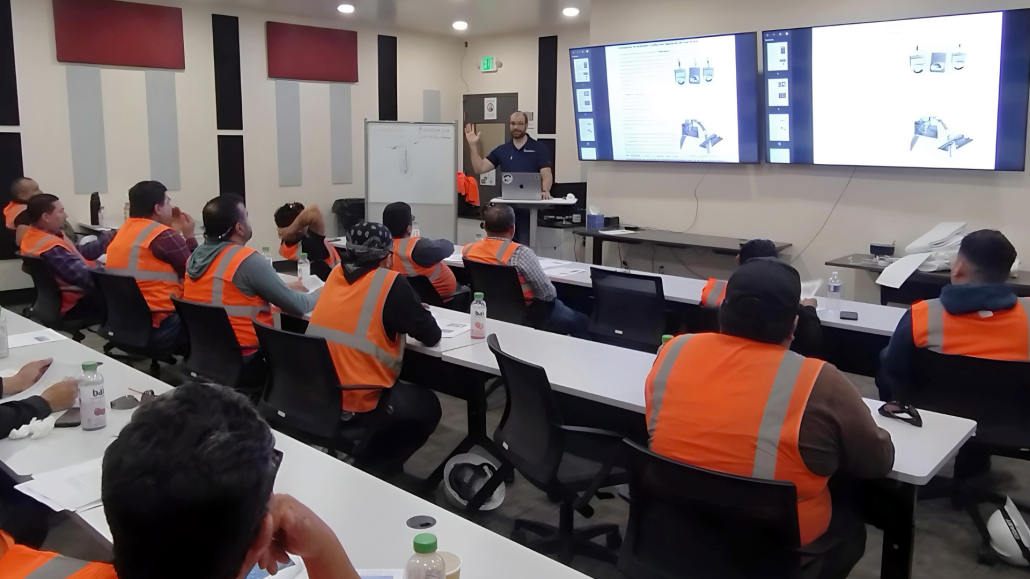
— Why is training so valuable after a dust collection system audit?
Scott: “The audits provide some of the problems that we found, how we can fix them, but the training really educates the customer as to how to prevent those problems from occurring.
It’s something that we found to be really helpful to avoid simple problems that create huge headaches down the line, not just for the dust collection system but for other things.”
▶ Mira su respuesta completa a continuación.
— What makes Baghouse.com different from other aftermarket suppliers?
Scott: “I think today it’s easy to find people or other companies that are interested only in some sort of transactional sale. With us, we want to make sure that we really help you as the customer. We’re not interested in just a one-time sale, a one-off thing.”
Baghouse.com has more than 40 years of dust collection experience, including designing complete systems as well as supporting the filters, cages, controls, and other components those systems require throughout their operating life.
“With the audits that we do, we are interested in understanding the problems that you’re facing and be able to fix them. With the training courses that we offer, we are really interested in helping our customers be educated.”
▶ Mira su respuesta completa a continuación.
— Any final advice for companies looking for a dust collection partner?
Scott: “If I had to just give some final words to any of our customers, it would probably be to think of us as your one-stop shop.”
That relationship can begin during the earliest stages of a project, with engineers helping design the system. It continues as the equipment is manufactured and installed, as modifications are made, and long after commissioning when the plant needs replacement filters, cages, electronic components, controls, or troubleshooting assistance.
“We’re not just going to sell you a piece of equipment and not help you out afterward.
When everything has been done and completed, we’re the people that you’re going to be able to call for any type of issues that you’re having, but also to be able to provide your complete bag set, your complete cage set that you need for that collector, any other types of electronic parts, controls, things like that.”
▶ Mira su respuesta completa a continuación.


 That’s where Scott Omann, Aftermarket Division Manager at Baghouse.com, comes in to help customers. With seven years at Baghouse.com and a background that includes construction, maintenance, customer service, sales, and technical training, Scott works with customers to get beyond simply identifying what they need and understand why they need it.