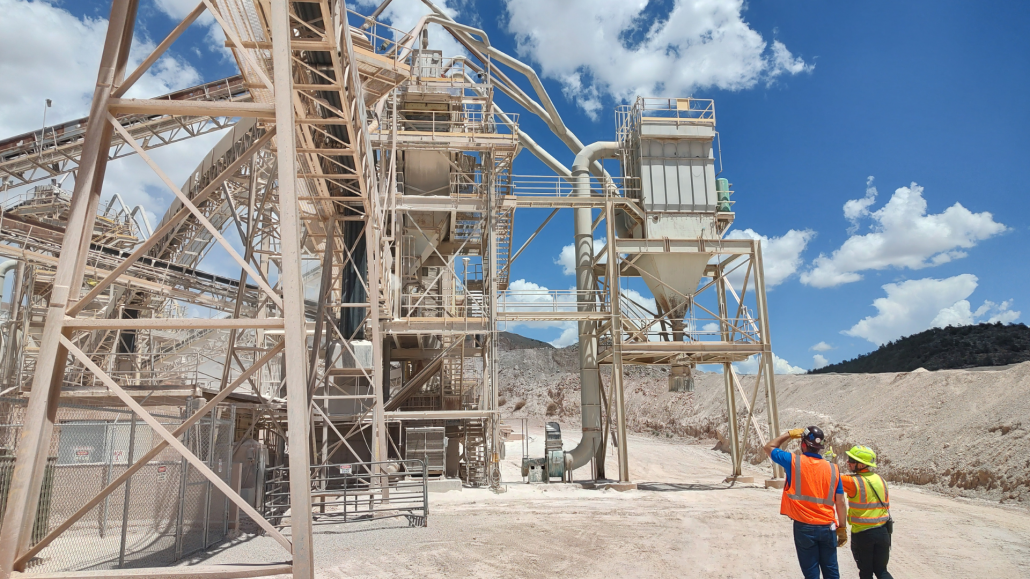
Los pulse-jet son el tipo de colector de polvo más utilizado en la industria moderna debido a su versatilidad y su capacidad de limpieza potente. Son adecuados para diferentes tipos de polvo y condiciones de operación.
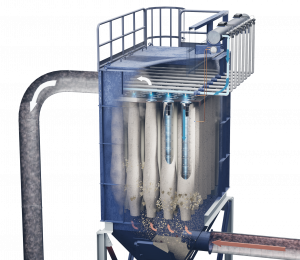
En un sistema pulse-jet, el aire cargado de polvo entra al colector y pasa a través de filtros de tela sostenidos por jaulas. Las partículas se capturan en la superficie exterior del filtro, formando una torta de polvo que ayuda a la filtración.
La limpieza ocurre cuando se inyectan ráfagas cortas de aire comprimido a alta velocidad a través de tubos de soplado ubicados por encima de los filtros. Estos pulsos de alta energía expanden rápidamente los filtros, desprendiendo la torta de polvo y permitiendo que caiga a la tolva.
Ventajas de los sistemas pulse-jet
Los colectores pulse-jet ofrecen varios beneficios clave:
✔️ Acción de limpieza potente que elimina depósitos de polvo difíciles de desprender
✔️ Capacidad para manejar tipos de polvo difíciles, incluidos materiales pegajosos o que se aglomeran
✔️ Operación continua durante la limpieza, lo que significa que la filtración no necesita detenerse
✔️ Diseño compacto con alta capacidad de filtración
La superficie lisa de los filtros pulse-jet las hace particularmente efectivas al filtrar:
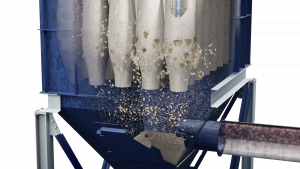
✔️ Polvo pegajoso
✔️ Polvo mezclado con virutas, tiras o fibras
✔️ Material particulado que se aglomera o forma grumos
Debido a esta capacidad de limpieza agresiva, los colectores de polvo pulse-jet suelen utilizarse en industrias exigentes como cemento, metales, procesamiento químico, minerales y generación de energía..
Funcionamiento del colector de polvo de aire reverso
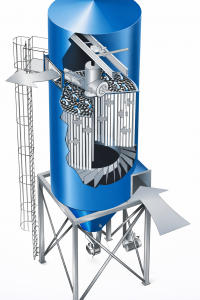
Colector de polvo reverse air rotatorio de baja/media presión
En un colector de polvo de aire reverso, la limpieza se realiza utilizando un ventilador que dirige el flujo de aire en la dirección opuesta a la de la filtración.
Un brazo de limpieza giratorio se mueve a través de los compartimientos del filtro y dirige el flujo de aire inverso hacia cada filtro de forma secuencial. Este flujo de aire inverso colapsa suavemente la manga, haciendo que la torta de polvo se desprenda y caiga a la tolva.
Una ventaja importante de este sistema es que el colector puede permanecer funcionando durante la limpieza. A diferencia de los colectores compartimentalizados que deben aislar secciones durante la limpieza, la limpieza reverse air puede realizarse mientras la filtración continúa.
Otro beneficio es que los colectores reverse air no requieren aire comprimido, ya que dependen de ventiladores para generar el flujo de aire de limpieza.
Sistemas de limpieza de media presión
Los colectores de polvo de media presión representan un enfoque híbrido de limpieza.
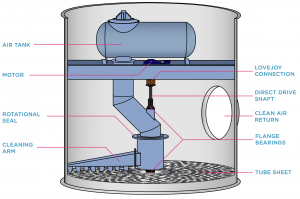
Reverse air rotatorio de baja/media presión
En lugar de un ventilador simple, estos colectores utilizan un soplador de desplazamiento positivo (PD) o un compresor para producir pulsos de aire de presión moderada que limpian los filtros. Un brazo giratorio distribuye los pulsos de aire entre las mangas para asegurar una limpieza uniforme.
Un sensor de proximidad monitorea la posición del brazo, asegurando que el mecanismo de limpieza se alinee correctamente con cada filtro antes de que se libere el pulso de aire.
Debido a que se utilizan pulsos de aire comprimido, se desprende más polvo de la superficie del filtro en comparación con un sistema de aire reverso estándar. Sin embargo, la energía de limpieza sigue siendo por lo general menor que la de los pulsos de alta presión utilizados en los colectores pulse-jet.

Experto en colectores de polvo, redactor técnico y editor en Baghouse.com
Andy Biancotti está convencido de que el conocimiento es una de las mejores inversiones para una empresa. Como Editor y Gerente de Marketing en Baghouse.com, disfruta entrevistar a ingenieros, técnicos y clientes para capturar las lecciones aprendidas en proyectos reales de control de polvo y convertirlas en recursos prácticos que ayuden a otros profesionales. Con más de dos décadas de experiencia en mantenimiento industrial, operaciones y comunicación técnica, su objetivo es simple: ayudar a las personas para que puedan operar de forma más segura, inteligente y eficiente.