

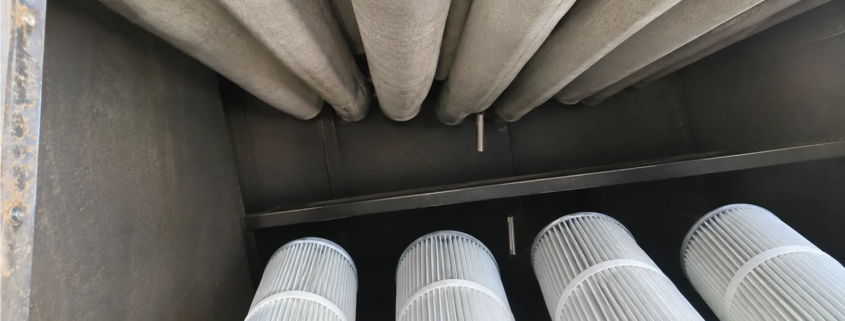
Want to find out more about pleated filters?
How much can converting to pleated dust collector filters potentially save?
Take a look at a sample cost benefit analysis for one of our customers to find out.
AHORRE DINERO AL CONVERTIR SU SISTEMA A FILTROS PLEGADOS
Los filtros plisados o plegados representan una de las innovaciones más avanzadas en tecnología de colectores de polvo. Con una serie de ventajas sobre los sistemas tradicionales de bolsas y jaulas, los filtros plegados merecen la atención de todos los operadores de colectores de polvo. En muchos casos, es posible adaptar antiguos colectores de polvo tipo Pulse Jet para utilizar filtros plegados.
Convertir un sistema que antes usaba bolsas y jaulas tradicionales ofrece múltiples beneficios:

Improve Operation – Increase Capacity, Decrease Emissions, Decrease Electricity Usage, Combine Multiple Systems

Usa menos aire comprimido para limpiar los filtros.

Mayor durabilidad – Los filtros plegados duran más que las bolsas.

Reduce la cantidad total de filtros en la unidad.

Easier Installation – Faster Changeout, Less System Downtime, Lower Labor Costs

Reduce la abrasión en los filtros y disminuye la carga de polvo

Reduce Inventory – Consolidate Several Different Filters Into One Style

Want to see how much you could save by converting to pleated dust collector filters?
Just give us a call at (702) 848-3990 o envíanos un correo electrónico, y uno de nuestros ingenieros especializados en colectores de polvo estará encantado de ayudarte a determinar si tu colector de polvo es un candidato para esta conversión.
Muchos clientes de Baghouse.com han aprovechado esta nueva tecnología y han obtenido beneficios significativos al hacerlo. Si es viable para tu sistema, te invitamos a considerar los costos de convertir tu colector de polvo para usar filtros plisados y evaluar si los beneficios valen la pena. A menudo, nuestros clientes descubren que los beneficios superan con creces los costos iniciales.
We invite you to take a look at a real cost-benefit analysis that we performed for one of our customers. It highlights how even in just 3 – 6 years, it is possible to reap impressive benefits with pleated dust collector filters.
Pleated Dust Collector Filter Conversion – Cost-Benefit Analysis
NOTE: This report has been modified from its original form to withhold any sensitive information.
For a full PDF version, please click here: Pleated Dust Collector Filter Conversion Cost Benefit Analysis – PDF Download
Resumen
Este informe detalla cómo NOMBRE REDACTADO pudo obtener ahorros significativos en la operación y el mantenimiento de sus sistemas de recolección de polvo al cambiar de la tecnología actual de bolsas y jaulas de filtros a filtros plisados en sus colectores de polvo tipo pulse jet.
Principalmente, NOMBRE REDACTADO se benefició en dos áreas clave: la reducción en las compras de filtros de reemplazo en cada ciclo de mantenimiento y la disminución en el número total de horas-hombre necesarias para reemplazar los filtros en cada uno de los colectores principales. Además, se mejoró el funcionamiento de las diversas unidades y la capacidad de todo el sistema aumentó para satisfacer la demanda de mayor producción en la planta.
In total, NAME WITHHELD would begin to see returns on this investment within 3 – 6 months. Furthermore, savings will only continue to increase over time as maintenance costs decrease and filter life, performance and capacity increase.
Introduction
¿Qué es un filtro plisado para colectores de polvo?
Los elementos de filtro plisado son la tecnología más reciente y avanzada disponible en el mercado actualmente para recolección de polvo. Un gran número de industrias están migrando a la tecnología de filtros plisados, dejando atrás las bolsas y jaulas. Los filtros plisados son esencialmente bolsas de filtro con múltiples pliegues de tela que ocupan un área más compacta que una bolsa tradicional. Además, estos filtros combinan la bolsa y la jaula en una sola pieza, eliminando la necesidad de jaulas separadas.
What are The Advantages of Pleated Elements Vs. Standard Filter Bags and Cages?
The main advantage of pleated elements carry over traditional bags and cages is that they offer on average 2 – 3 times the filter cloth area of a standard bag at half the average length of a standard bag and cage. Example: you have a standard 6.25” diameter x 10’ long pulse jet bag (a very common size). If cut open and laid flat the bag would have approximately 16.4 sq/ft of filter area. A pleated element of the same diameter and only 2 meters long (approx. 78-3/4”) would have approximately 44.3‘ sq/ft of filter area. Thus, a pleated filter with the same diameter but about half the length has 270% more filter area than a standard filter bag!
Esto tiene un impacto formidable en la operación y el mantenimiento de los sistemas de recolección de polvo. Considera solo algunas de las siguientes ventajas:
Improve Operation – Increase Capacity, Decrease Emissions, Decrease Electricity, Combine Multiple Systems
Los elementos plisados mejoran considerablemente la operación de los colectores tipo baghouse. Los elementos plisados pueden aumentar la capacidad de un baghouse hasta un 200%, lo que permite combinar varios sistemas de recolección de polvo en una sola unidad grande (más económico en muchos casos). Además, la producción puede aumentar sin necesidad de incurrir en grandes gastos de capital en un nuevo colector, evitando obstáculos en la producción. Otra opción es usar menos filtros para mejorar el rendimiento y reducir el consumo energético al operar el ventilador del sistema a una configuración más baja. Además, los filtros plisados tienen, en promedio, menores emisiones que las bolsas tradicionales, una necesidad cada vez mayor debido a las estrictas regulaciones ambientales federales y estatales recientemente implementadas.
Menor uso de aire comprimido para limpiar los filtros
With more filter area the elements also load dust better and are easier to clean. This equals less cleaning cycles, which uses less expensive compressed air to run the baghouse. Reductions of 30% – 50% in compressed air use are common when converting to pleated elements.


Mayor durabilidad – Los filtros plegados duran más que las bolsas.
Since the pleated filters are cleaned less they experience less wear and tear during operation. Pleated elements commonly last from 25% – 75% longer than filter bags in the same application, sometimes as much as 2 to 3 times as long! This means you replace your filters less often than traditional filter bags.
Reducción en el número total de filtros
Gracias a la mayor área de filtración, se necesitan menos filtros plisados para realizar el mismo trabajo que las bolsas. A menudo, las bolsas pueden ser reemplazadas por filtros plisados en una proporción de 2:1 (dos bolsas por cada filtro plisado). Esto significa menos filtros que reemplazar. Sin embargo, esto no siempre es posible, ya que la velocidad intersticial (velocidad del aire entre los filtros) y la velocidad del aire ascendente (salida de aire de los filtros) aumentarán al reducir la cantidad de filtros. Una velocidad intersticial alta puede provocar que el polvo expulsado no pueda caer debido a las altas velocidades de aire que lo sujeta a los filtros.
Instalación más sencilla: menos tiempo, menos interrupciones y menos mano de obra
Reemplazar los filtros de los colectores de polvo es un proceso costoso para muchas instalaciones. A menudo se necesita buscar contratistas externos debido a la cantidad de mano de obra requerida. Además, el cambio de filtros provoca interrupciones del sistema y tiempos de inactividad, lo que genera costos elevados por la pérdida de producción y mantenimiento.
Una de las mayores ventajas de los filtros plisados es lo fácil que resulta reemplazarlos en comparación con las bolsas y jaulas tradicionales. Con las bolsas y jaulas tradicionales, se requiere un gran esfuerzo para retirar el conjunto jaula-bolsa del colector y reinstalarlo dentro del agujero de la placa de tubos. Con los elementos plisados, todo este proceso se elimina. A diferencia del complicado ensamblaje de bolsas y jaulas, el filtro de una sola pieza es fácil de manipular y toma aproximadamente un 50% menos de tiempo para cambiar en comparación con una bolsa tradicional. Adicionalmente, si el número total de filtros se ha reducido, habrá menos filtros que reemplazar.
Reduce la abrasión en los filtros y disminuye la carga de polvo
En muchas aplicaciones con compuestos abrasivos (arena, polvo metálico, sílice, asfalto, cemento, etc.), el aire cargado de polvo entrante desgasta las partes inferiores de los filtros. Al cambiar a filtros plisados, se ayuda a prevenir la abrasión en los filtros. Los elementos plisados son más cortos que las bolsas que reemplazan, lo que significa que se encuentran más arriba en el colector de polvo, fuera del alcance del aire a alta velocidad cargado de polvo abrasivo.
Además de alejar los filtros del aire abrasivo entrante, los filtros plisados crean una cámara de impacto más grande debajo de los filtros, lo que reduce la velocidad del aire y permite que las partículas más grandes caigan antes de entrar en contacto con los filtros. Esto reduce la cantidad de polvo que alcanza los filtros (menor carga de polvo), lo que a su vez lleva a: una menor caída de presión, menos ciclos de limpieza, menos emisiones y una vida útil más larga de los filtros.
Reduce Inventory – Consolidate Several Different Filters Into One Style
Los filtros plisados también pueden reemplazar varios tipos de bolsas de filtro con un solo elemento plisado que se puede usar en diferentes colectores. Por ejemplo, imagina cuatro colectores que utilizan bolsas de filtro de 5.75” de diámetro, pero cada uno tiene una longitud diferente. Esto significa que la planta debe tener en inventario de cuatro tipos diferentes de bolsas, además de manejar precios distintos para cada una.
Excepciones para su uso
Los elementos de filtro plisados no pueden utilizarse en todas las aplicaciones de recolección de polvo. Son sensibles a: altas temperaturas, ciertos gases corrosivos y aplicaciones que requieren materiales de construcción especiales, lo que puede hacer que los filtros plisados resulten mucho más costosos que la tecnología de bolsas tradicional.
Además, la reducción en el número total de filtros en un colector que usa filtros plisados aumenta las velocidades intersticiales y de salida. Estas deben mantenerse por debajo de ciertos límites para que el sistema funcione correctamente.
La buena noticia es que, para aplicaciones como las encontradas en NOMBRE REDACTADO, estos problemas no fueron relevantes. Con temperaturas relativamente bajas en todo el proceso y sin polvos difíciles de recolectar ni gases corrosivos, los filtros plisados se pudieron implementar de una manera sencilla en estas aplicaciones.


Pleated Dust Collector Filter: Cost – Benefit Analysis
I recommend the plant to look to convert to pleated filters in two stages. The first involves all “low temperature” baghouse units. These are the main systems in the plant and are vital to running the production line.
Converting to pleated elements on these would be relatively simple and the elements would not be much more expensive than the current filter bag and cage setup currently in place. The second would be the three “high temperature” kettle units. These would require a little bit more engineering to get the right filter element. Further, the high cost of high temperature elements would place the return on investment for these units further out into the future.
For the this report we will only analyze the low temp units:
| PLANT DUST COLLECTORS | VALUE |
|---|---|
| Pleated elements needed to replace low temp filters | $639 |
| High temp filters & cages | $432 |
| Pleated elements needed to replace high temp filters | $216 |
| Low temp filters & cages | $1,277 |
| # Costo estimado por filtro plisado (baja temperatura) | $65 |
| # Costo promedio por filtro y jaula | $50 |
| # Costo de mano de obra por hora (estimado) | $30 |
| # Costo estimado por filtro plisado (alta temperatura) | $125 |
| # Costo del aire comprimido | $0.14467 por cada 1,000 pies cúbicos |
| OPERATING COSTS | BAGS AND CAGES | PLEATED DUST COLLECTOR FILTERS |
|---|---|---|
| Reemplazo de filtros nuevas | Cada 2 años - 1,277 x $50 = $63,850 | Cada 3 años - 639 x $65 = $41,535 |
| Mano de obra para recambio | 4 bolsas por hora hombre x 1,277 = 319.25 horas hombre = $9,577.50 | 8 bolsas por hora hombre x 639 = 79.875 horas hombre = $2,396.25 |
| Costo total durante 6 años | $191,550.00 + $28,732.50 | $83,070.00 + $4,792.50 |
| Total: $220,282.50 | Total: $87,862.50 |
| PLANT DUST COLLECTORS | VALUE |
|---|---|
| Reducción de Uso de Aire Comprimido | Entre un 30% y un 100% de reducción |
| Inventario | 200 filtros plisados disponibles en contraste a 770 bolsas y jaulas |
| Capacidad del Sistema | Si se reemplazan a una relación de 1:2, la capacidad podría aumentar en un 15%. Los ahorros adicionales podrían obtenerse al expandir la capacidad de ciertas unidades y consolidar otros sistemas en menos unidades. |
| Emisiones | Junto con las reparaciones del sistema, se podrían lograr reducciones de emisiones de PM 2.5 en un 10% o más. |
Conclusion: Converting low temperature dust collectors to pleated filters will save NAME WITHHELD $132,420.00 within six years.
By converting to pleated filter elements, NAME WITHHELD potentially could see a cost savings of an estimated $132,420.00 every 6 years. These estimates do not include the potential savings from decreased compressed air use, less system downtime due to less frequent changeouts, reduced energy costs associated with operating the baghouses, or the benefits of increasing production levels and lower emissions. When these are included the benefits could potentially reach $1 million or more.
El tiempo estimado para recuperar la inversión inicial al convertir a filtros plegados sería prácticamente inmediato, ya que el costo de reemplazar los filtros y las jaulas probablemente sea mayor que el costo de los filtros plegados.

Estudio de caso muestra el potencial de ahorros al convertir un sistema a filtros plegados
As we have clearly seen from the above case study, switching to pleated dust collector filters from traditional bag filters means huge savings! If you would like to see if your dust collector or a series of dust collectors could benefit from converting to pleated filters, Baghouse.com would be happy to assist you. Please give us a call at (702) 848-3990 or email us at info@baghouse.com.
Want to find out more about pleated filters?

Director of Operations | Dust Collection Specialist | Industrial Filtration Consultant
Dominick DalSanto is an author and environmental technologies expert specializing in dust collection systems. He has nearly a decade of hands-on working experience in the industry. Dominick is the sales director and sales technical advisor for an industrial dust collection equipment manufacturer. Personally took the lead on key projects each year from sales engineer to field advisor to project manager to business relations. Born in San Bernardino County, California, and raised in Chicago, he currently resides in Buenos Aires, Argentina.
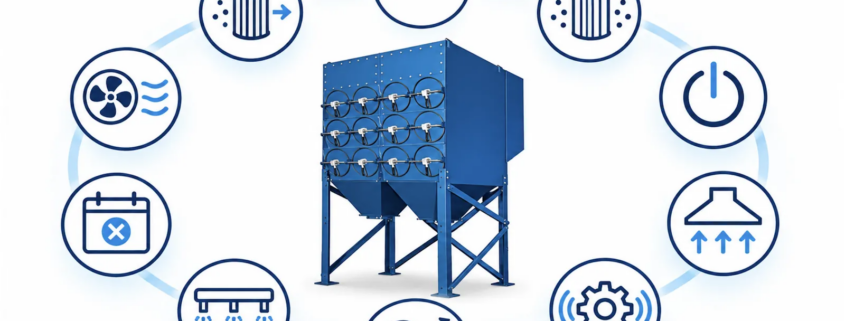


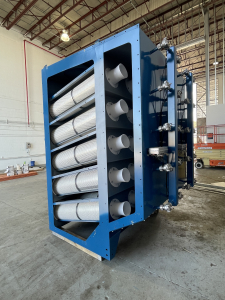 What to check:
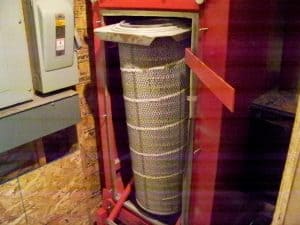 If your
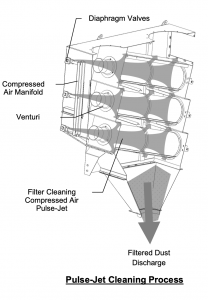 During a cleaning cycle, a short burst of compressed air dislodges accumulated dust from the filter surface. When this system stops working correctly, differential pressure may rise and cartridge life can decrease significantly.

 Effective troubleshooting starts with understanding how the complete system is operating.