Case Study Asphalt Industry

When one asphalt plant began experiencing a mix of serious challenges (abrasive dust damaging equipment, fine particles posing health risks, and high temperatures creating cleaning and safety issues) they turned to Baghouse.com for a solution. What followed was a carefully engineered response that tackled each problem head-on and also boosted overall efficiency and compliance. Here’s how we helped them get their dust collection under control and their plant back on track.

Antecedentes

Baghouse.com collaborated with an asphalt plant facing some of the following challenges: 

  1. Coarse particles cause wear and tear on dust collection equipment and filter bags. 
  2. Fine asphalt dust presenting health risks and demanding specialized filtration methods due to varying material compositions. 
  3. Elevated temperatures creating difficulties such as dust adherence, cleaning, and the risk of fire and explosion.

En las últimas 4 décadas, Baghouse.com has helped many asphalt plants across North America design their systems, maintain, troubleshoot, and upgrade their systems. We have learned many good tips we would like to share with you in a series of three articles:

New large top-load pulse jet baghouse installed by Baghouse.com equipped to handle high temperatures, preventing issues such as dust sticking, enhancing cleaning efficiency, and minimizing fire and explosion risks.
New large top-load pulse jet baghouse installed by Baghouse.com


Alcance del proyecto

Baghouse.com implemented a comprehensive solution featuring a large top-load pulse jet baghouse. 

Key components included:

  1. Specialized filter media designed for abrasion and temperature resistance, ensuring effective dust collection and prolonged filter life.
  2. Equipment and filter bags designed to withstand the abrasive nature of particles, minimizing maintenance costs.
  3. Systems equipped to handle high temperatures, preventing issues such as dust sticking, enhancing cleaning efficiency, and minimizing fire and explosion risks.

Outcome

Implementation of effective dust collection not only ensured workplace safety but also controlled emissions harmful to health and the environment, like volatile organic compounds, particulate matter, and carbon monoxide.

Additionally, closed belt systems on aggregate conveyor belts and efficient dust filtering systems contributed to reduced dust emissions. 

Conclusión

By combining high-quality filter media, abrasion-resistant systems, and temperature-resilient filtration, the client’s asphalt plant achieved increased efficiency, reduced maintenance costs, and ensured compliance with environmental and safety standards. This case study demonstrates the importance of specialized dust collection strategies in the asphalt industry to mitigate health risks, environmental impact, and operational challenges.

Would you like to know how a thorough technical inspection by Baghouse.com could improve the efficiency of your operations? Talk now with one of our baghouse experts for more information!

Case Study Gypsum

Antecedentes

A major gypsum manufacturer in Houston sought the expertise of Baghouse.com to address some challenges in their processing facility. Gypsum powder, a crucial material in construction, undergoes crushing, grinding, and other processes during its production.

Gypsum dust accumulation on top of dust collector.
Gypsum powder leaks can negatively affect your operations


Alcance del proyecto

Gypsum manufacturing, especially in drywall production, contributed to environmental concerns due to particulate emissions and energy-intensive processes.

Baghouse.com provided and installed a new baghouse system equipped with a fan and optimized ductwork. The goal was to efficiently capture and control dust emissions throughout the 5 gypsum processing stages (crushing, screening, grinding, calcination, storage and transportation).

The design incorporated a closed circulation system with negative pressure, ensuring that the air path remained enclosed. To address the increase in air volume due to water content in raw materials and evaporation during grinding, a regulated air volume system was integrated. 

 
Baghouse.com provided and installed a new baghouse system equipped with a fan and optimized ductwork.
New baghouse system equipped with a fan and optimized ductwork.


Outcome

The implementation of a new baghouse system reduced particulate emissions during the grinding and processing stages, and greatly reduced energy costs.


Conclusión

Baghouse.com‘s tailored solution optimized dust collection for our client in Houston. This case study showcases the effectiveness of advanced dust collection strategies in mitigating environmental impact and enhancing the sustainability of manufacturing processes in the gypsum industry.

Would you like to know how a thorough technical inspection by Baghouse.com could improve the efficiency of your operations? Talk now with one of our baghouse experts for more information!

Chemical industrial operations

Antecedentes

Teknor Apex, a leading player in the chemical manufacturing industry, faced challenges associated with airborne dust and chemical fumes, posing risks to air quality, worker health, and plant safety. Baghouse.com collaborated with them to address these challenges through the implementation of an advanced dust collection system.

To prevent the dispersion of chemical fumes and dust, hoods and extraction arms were incorporated into their machinery to capture contaminants at their origin, minimizing their spread within the plant.
New dust collection system with safety components integrated into the system, such as an explosion isolation valve, explosion vents, and an explosion-rated rotary valve to enhance plant safety.


Alcance del proyecto

Everyday processes such as mixing, conveying, and blending generated hazardous airborne dust, creating potential fire and explosion hazards. Additionally, compliance standards for worker exposure limits, environmental regulations, and combustible dust standards demanded a comprehensive solution.

Understanding the unique dust issues related to chemical processes, we designed a system with high-efficiency primary and secondary cartridge filters. To prevent the dispersion of chemical fumes and dust, hoods and extraction arms were incorporated into their machinery to capture contaminants at their origin, minimizing their spread within the plant.

Considering the combustible nature of their dusts, cumplir completamente con la NFPA, safety components were integrated into the system, such as an explosion isolation valve, paneles de venteo de explosión, and an explosion-rated rotary valve to enhance plant safety.

Outcome

The source capture strategy not only enhanced efficiency but also minimized energy consumption, resulting in operational cost savings. NFPA-compliant safety measures provided Teknor Apex with robust protection against fire and explosion hazards, ensuring a safer working environment.

New dust collection system with safety components integrated into the system, such as an explosion isolation valve, explosion vents, and an explosion-rated rotary valve to enhance plant safety.


Conclusión

Baghouse.com‘s expertise in dust collection systems played a pivotal role in transforming Teknor Apex’s thermoplastics manufacturing facility. By addressing airborne dust hazards at their source and incorporating advanced safety features, the implemented system not only met compliance requirements but contributed to their overall operational efficiency.

Would you like to know how a thorough technical inspection and a system report by Baghouse.com could improve the efficiency of your operations? Talk now with one of our baghouse experts for more information!

Woodworking industrial operations

Antecedentes

Gibson Guitars, a renowned name in the music industry, faced a critical need to upgrade the dust collection systems in their Bozeman, Montana, and Nashville, Tennessee manufacturing plants. The existing systems were outdated, with operational inefficiencies and lacked compliance with combustible dust safety regulations outlined by NFPA.

Gibson guitar old baghouse, side view with holes on top
The existing baghouse was an outdated plenum pulse dust collector. It has massive holes on the roof that had been covered with a tarp.


Scope of Work - Nashville, TN Plant

Gibson guitar dust collector - old fan and baghouse that was replaced
The existing outdated plenum pulse dust collector, fan and ductwork was replaced with a modern pulse jet baghouse from Baghouse.com along with new ductwork, combustible dust protection and a new system fan.

Having recently come under new management, Gibson Guitars embarked on a multiyear project to upgrade its dust collection systems at both its Nashville, Tennessee and Bozeman, Montana plants. The goal was to increase efficiency, reduce downtime, and improve the safety and environmental aspects of their systems. 

First, Baghouse.com was contacted and asked to conduct a thorough audit of the existing dust collection systems at the Gibson USA plant  in Nashville TN, in particular an outdated plenum pulse envelope baghouse that was in desperate need of replacement. The unit had suffered from years of neglect and was in poor physical condition, with large holes on the roof and sides of the unit.  Additionally, the system had only partial protection against combustible dust hazards, which the plant wanted to address. 

Taking into account their unique needs, we designed a complete dust collection system to meet the current production needs as well as providing for future growth. This included the installation of a new pulse jet style baghouse, a larger system fan, upgraded ductwork, and the integration of NFPA-required combustible dust safety equipment. To ensure compliance with NFPA regulationspaneles de venteo de explosión and an explosion isolation valve were strategically installed. Additionally, explosion-rated equipment, such as rotary valves, replaced non-compliant elements in the discharge system.

Gibson pulse jet baghouse from Baghouse.com after installation
New pulse jet style baghouse installed at Gibson USA in Nashville, TN by Baghouse.com


Scope of Work at Bozeman, MT plant

Existing baghouse at Gibson Guitars in Bozeman, Montana that was replaced.
Existing baghouse at Gibson Guitars in Bozeman, Montana that was too small for the increased production needs of the company.

The situation at the Bozeman, Montana plant was somewhat different. This plant, which produces all of Gibson’s acoustic guitars, had an existing system that worked well, but that was far too small to account for increased production projections. The expansion of the facility was to take place in two stages: First, a new building was to be built while the existing building and production machines were to keep running. Once the new building was up, the layout of production machines would be completely reworked between the two buildings. Additionally, Gibson asked that the new system be designed and installed in such a way so as to not disrupt existing production and that the changeover be done with little to no downtime. The new system would also need to be able to transition into its expanded role once the facility expansion project was completed in several years.

With these challenging requirements, Baghouse.com set about engineering, supplying, and installing a new dust collection system that: (1) would provide for the current production needs, (2) be capable of nearly 3x capacity when the plant expansion was completed, (3) could be installed without disrupting production, and (4) meet or exceed existing best practice for combustible dust applications.

The solution proved to be a much larger multiple compartment pulse jet baghouse capable of handling 75,000 CFM+. The module (i.e. multiple compartment) style was used to provide additional redundancy and minimize downtime when conducting maintenance. Additionally, the system was outfitted with several protection devices to resolve combustible dust hazards such as high speed abort gates, spark detectionNFPA compliant rotary airlocks and explosion venting.

Importantly, during the design stage we proposed locating the new collector and fan adjacent to the existing baghouse so that it could be installed and brought online without decommissioning the existing system. When the switchover was to take place, we were able to simply extend the existing main trunk of the ductwork over to the new collector and connect the new return air ducting into the building through an enlarged wall penetration.

Eventually, once the new plant layout has been completed, a new, larger interior ductwork system will be installed and reconnected to utilize the full capacity of the new baghouse. 

Thew system provides sufficient performance for the existing plant layout and stands ready to handle the estimated 3x increase in demand that will be needed once the plant’s expansion project is completed. 

Conclusión

The upgraded dust collection systems led to improved operational efficiency, reducing downtime caused by maintenance issues and gained long-term reliability, reducing the need for frequent repairs and replacements.

Baghouse.com‘s expertise in dust collection systems proved instrumental in providing Gibson Guitars with a reliable, compliant, and efficient solution. These projects not only addressed immediate challenges but also positioned these woodworking facilities to handle the demand placed on them by Gibson’s sustained growth. Additionally, Baghouse.com’s ability to offer complete turnkey solutions allowed for the development of a comprehensive plan covering the collector, system fan, ductwork, combustible dust safety and installation processes so as to minimize production downtime during the changeovers.

We feel privileged to have been able to work with such a great company and to be part of their legacy as they continue to evolve to meet the needs of the 21st century musician.


Would you like to know how a thorough technical inspection and a system report by Baghouse.com could improve the efficiency of your operations? 

Talk now with one of our baghouse experts for more information!

AeroDust

Antecedentes

An aerospace manufacturing client approached Baghouse.com looking for assistance in aligning with Dust Hazard Analysis (DHA) recommendations, which had identified non-compliance with NFPA for combustible dust hazards. 


Alcance del proyecto


Dust Hazard Analysis (DHA) Compliance

  1. Baghouse.com conducted a thorough assessment of the existing dust collectors and equipment and compared the findings to NFPA for combustible dust hazards.
  2. La DHA report highlighted critical gaps that needed urgent attention to ensure compliance and mitigate the risk of combustible dust incidents.

System Consolidation and Upgrade

Rusted and outdated baghouse unit

One of the many small old baghouses that were replaced
by one bigger, more efficient unit

In response to the DHA findingsBaghouse.com proposed consolidating pickups from several older baghouses into a single, more efficient unit.

The baghouse underwent a major refurbishment, including the installation of new cartridge filters, pulse valves, solenoids, and updated hardware to meet industry standards.

NFPA-Compliant Safety Measures

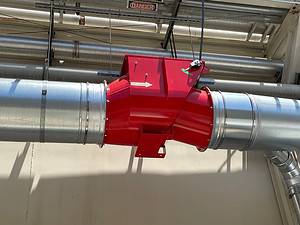
Explosion isolation valve installed to meet safety requirements

Heavy gauge ductwork was strategically installed between the baghouse and the explosion isolation valve to meet the safety requirements outlined by NFPA.

To enhance safety measures, Baghouse.com incorporated NFPA-compliant explosion vents and an explosion isolation valve.

Heavy gauge ductwork was strategically installed between the baghouse and the válvula de aislamiento contra explosión Vigiflap. to meet the safety requirements outlined by NFPA. 

Specialized Equipment Installation

 
The installation of explosion-rated vents aimed to minimize the risk of dust-related incidents and ensure the safety of the environment.

Nuevas válvulas de alivio para explosiones

A crucial aspect of the upgrade involved replacing the non-compliant flex hose discharge with an explosion-rated rotary valve.
The installation of explosion-rated components aimed to minimize the risk of dust-related incidents and ensure the safety of the environment.


Outcome

This aerospace manufacturing facility achieved full compliance with NFPA guidelines for combustible dust hazards thanks to Baghouse.com tailored approach.

Conclusión

Baghouse.com expertise in dust collection systems and commitment to safety provided a seamless transition for this client. By addressing DHA recommendations and implementing NFPA-compliant upgrades, the project not only met regulatory requirements but also significantly improved the safety and efficiency of the dust collection processes.


Would you like to hear how a technical inspection and a system report by Baghouse.com could improve your operations? 

Talk now with one of our baghouse experts for more information.

MiningDust

Antecedentes


Baghouse.com personnel performing an inspection that involved a meticulous examination of baghouses, collectors, fans, airlocks, conveyors, ductwork, pickups, and auxiliary equipment.

Baghouse.com personnel performing an inspection that involved a meticulous examination of baghouses, collectors, fans, airlocks, conveyors, ductwork, pickups, and auxiliary equipment.

Baghouse.com partnered with a large mining company to improve their dust collection systems across multiple facilities across the US. We conducted system inspections and provide personalized training sessions for the maintenance, operations, and engineering teams.

Alcance del proyecto


System Inspection:

  1. Baghouse.com started the project with an in-depth review of the existing dust collection systems at various mining facilities.
  2. The inspection involved a meticulous examination of baghouses, collectors, fans, airlocks, conveyors, ductwork, pickups, and auxiliary equipment.
  3. Various parameters, including airflow, velocity, and pressure readings, were measured for a comprehensive evaluation.

Training Classes:

  1. Following the inspection, Baghouse.com conducted half-day training classes tailored to the specific needs of maintenance, operations, and engineering staff.
  2. The training aimed to empower the teams with the knowledge and skills necessary to operate and maintain the dust collection systems efficiently.
  3. Key topics covered included best practices in system maintenance, identifying performance issues, and optimizing equipment for prolonged life.
Baghouse.com experts conducted a half-day training class tailored to the specific needs of maintenance, operations, and engineering staff.
Employees from different areas benefiting from the in-depth analysis of their systems and the most efficient maintenance routine


Outcome

The mining company gained a clear understanding of the existing issues and opportunities for improvement within their dust collection systems.
The training sessions equipped the teams with practical knowledge, fostering a proactive approach to system maintenance and operation.
Baghouse.com implemented follow-up improvement projects based on the inspection report, ensuring sustained efficiency and compliance with industry health and safety standards.


Conclusión

Baghouse.com collaboration with the mining company exemplifies the significance of dust collection system inspections and training in the mining industry. By addressing existing challenges and empowering teams with relevant knowledge, the project not only optimized their performance but also laid the foundation for sustained operational excellence.


Would you like to hear how an inspection and training could have a positive impact on your operations? 


Talk now with one of our baghouse experts for more information.