One of the most common questions engineers and plant managers ask about dust collection systems is simple: What is the smallest particle size a baghouse dust collector can capture?
People often want to know if systems are rated for particles in millimeters, microns, or even nanometers, and whether there is a measurement system that quantifies this capability. The short answer is that dust collectors are not rated for a specific particle size, but they can still capture extremely fine particles very effectively when properly designed and operated.
Let’s break down why.
The Real Filtration Mechanism
In pulse-jet baghouses, filtration does not primarily happen within the filter fibers themselves. Instead, the system relies on something called a filter cake.
A simple way to visualize this is with a fish net. Imagine throwing a net into the water. The first fish caught are the larger ones, which begin blocking the openings in the mesh. As more fish accumulate, smaller fish are stopped by the larger ones already trapped.
Dust collectors work in a similar way.
When new filters are installed, some of the smallest particles can pass between the fibers of the fabric. But as the system runs, larger particles begin to accumulate on the surface of the filter bags. This layer of dust forms the filter cake, which becomes the true filtration barrier.
The small white particles in this image represent the dust cake, a layer of fine dust that helps intercept the new incoming dust and makes it easier to be cleaned and reused again
Once this cake forms, the collector can capture very fine dust particles—typically down to below 2 microns with very high efficiency.
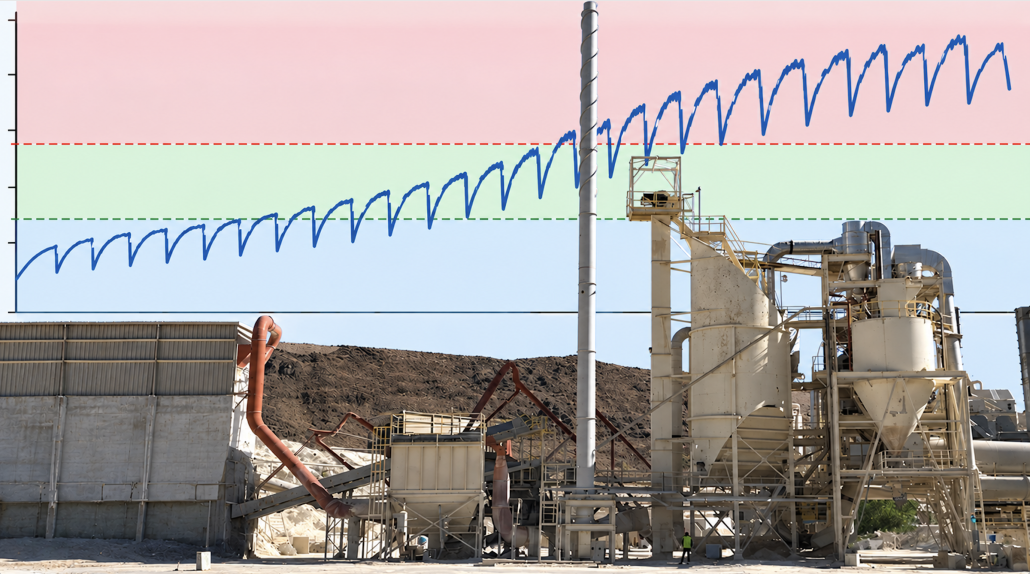
The pulse-jet cleaning system periodically removes some of the dust cake to prevent excessive pressure buildup while leaving enough material on the surface to maintain effective filtration.
With proper filter cake development and good maintenance practices, only a very small percentage of sub-2-micron particles should pass through the system.
How Filter Media Is Tested
Filter fabrics used in baghouses are extensively tested by manufacturers in laboratory conditions. Several industry organizations establish testing procedures, including:
✅ ETS testing standards used by environmental laboratories
These tests typically require that 40% to 70% of the test dust consist of particles smaller than PM2.5 (particles smaller than 2.5 microns).
For example, testing data for aramid filter media shows impressive performance even with extremely fine dust:
✔️ Test dust contained 40% particles smaller than PM2.5
✔️ The plain aramid fabric captured 99.99905% of the dust
Even with that level of efficiency, measurable emissions can still occur when very large volumes of air are moving through the system. In the test example, emissions measured 7.95 grains per dry standard cubic foot (gr/dscf)—a strong performance considering the large proportion of fine particles.
PTFE Membrane: Capturing Even Smaller Particles
When PTFE membrane is added to the filter media, collection efficiency increases even further.
In testing performed by LMS laboratories, aramid with PTFE membrane was challenged with potassium chloride (KCl) dust containing particles as small as 0.3 microns. The filter captured 99.98% of those particles.
In many cases, emissions from PTFE membrane filters are so low that standard test equipment cannot detect measurable emissions.
For this reason, the United States Environmental Protection Agency considers PTFE membrane filters a MACT-level technology (Maximum Achievable Control Technology) for particulate pollution control.
Why Dust Collection Filters Aren’t “Rated” by Particle Size
Unlike liquid filtration systems, dust collector filters are not rated for specific particle sizes.
Collection efficiency depends on several variables:
✔️ Dust loading (how much dust is hitting the filters)
✔️ Particle size distribution
✔️ Air-to-cloth ratio
✔️ Operating conditions
✔️ Cleaning system performance
✔️ Filter media type
Because of these factors, manufacturers do not assign a fixed particle-size rating. Instead, performance is verified through standardized laboratory testing.
From those test results, engineers can calculate emissions for a specific process and express them in grains per dry standard cubic foot (gr/dscf)—the common North American measurement used in environmental permitting.
When MERV Ratings Apply
There is one partial exception to the “no rating” rule.
Certain pleated or HEPA-style filters are evaluated using the MERV rating system established by ASHRAE.
However, this rating system was originally designed for HVAC air filtration, not industrial dust collectors. It provides a general comparison rather than a precise prediction of emissions.
Typical MERV ranges for dust collector cartridges include:
✔️ MERV 10–12 – Spunbond polyester filters
✔️ MERV 15 – Nano-fiber media over cellulose or spunbond base
✔️ MERV 16 – PTFE membrane filters
While useful as a quick reference, MERV ratings do not account for factors like dust loading or air-to-cloth ratio.
Three Performance Levels for Baghouse Filter Media
In practical terms, dust collection performance can be viewed in three filter media categories.
Grade 1 – Standard Media
Plain polyester, acrylic, polypropylene, or aramid filter bags, along with standard spunbond polyester pleated filters. These provide reliable performance and are suitable for most industrial dust collection applications.
Grade 2 – Microfiber Media
Microfelt or microdenier polyester and aramid fabrics. These specialty fabrics typically cost 15% to 35% more than standard media but offer:
✔️ Improved collection efficiency
✔️ Lower pressure drop over time
✔️ Longer operating life in some applications
They are commonly marketed under names like microfelt, microdenier, or Hydrolox.
Grade 3 – PTFE Membrane Filters
PTFE membrane applied over polyester, acrylic, polypropylene, or aramid base media. These filters provide the highest level of particulate control available in baghouse filtration. When used in a properly designed system, they can capture extremely fine dust and meet strict environmental standards.
In fact, they are widely recognized as best-available technology for particulate control.
Cartridge Collectors Use Similar Media Categories
Cartridge dust collectors follow a similar media structure:
80/20 cellulose/polyester blend
Grade 1
✔️ Plain spunbond polyester
✔️ 80/20 cellulose/polyester blend
Grade 2
✔️ Nano-fiber media over spunbond polyester or 80/20 media
Grade 3
✔️ PTFE membrane over polyester, aramid, or PPS
Each step increases filtration efficiency and improves performance in challenging dust applications.
The Real Secret for Effective Filtration: Proper System Design
Ultimately, the smallest particle a dust collector can capture depends less on a fixed “rating” and more on system design and operation.
Factors such as proper air-to-cloth ratio, correct filter media selection, adequate cleaning systems, and good maintenance practices determine how effectively fine particles are removed.
With the right combination of these elements, modern pulse-jet baghouses can capture an extremely high percentage of particles well below 2 microns—and even into the sub-micron range.
For facilities dealing with extremely fine materials—such as perlite, stucco, or other lightweight powders—working with experienced dust collection engineers is the best way to ensure optimal performance and compliance.
Scott Omann specializes in replacement filters, filter cages, valves, ductwork components, and aftermarket parts for industrial dust collection systems. In addition, Scott has participated in numerous on-site dust collection inspections, system audits, and maintenance training programs throughout the United States. His combination of technical product knowledge and field experience provides customers with practical guidance for keeping their dust collection systems operating at peak performance.


 In pulse-jet baghouses, filtration does not primarily happen within the filter fibers themselves. Instead, the system relies on something called a filter cake.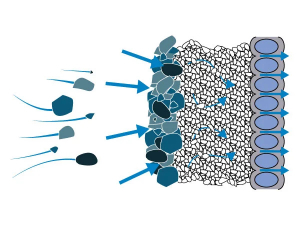
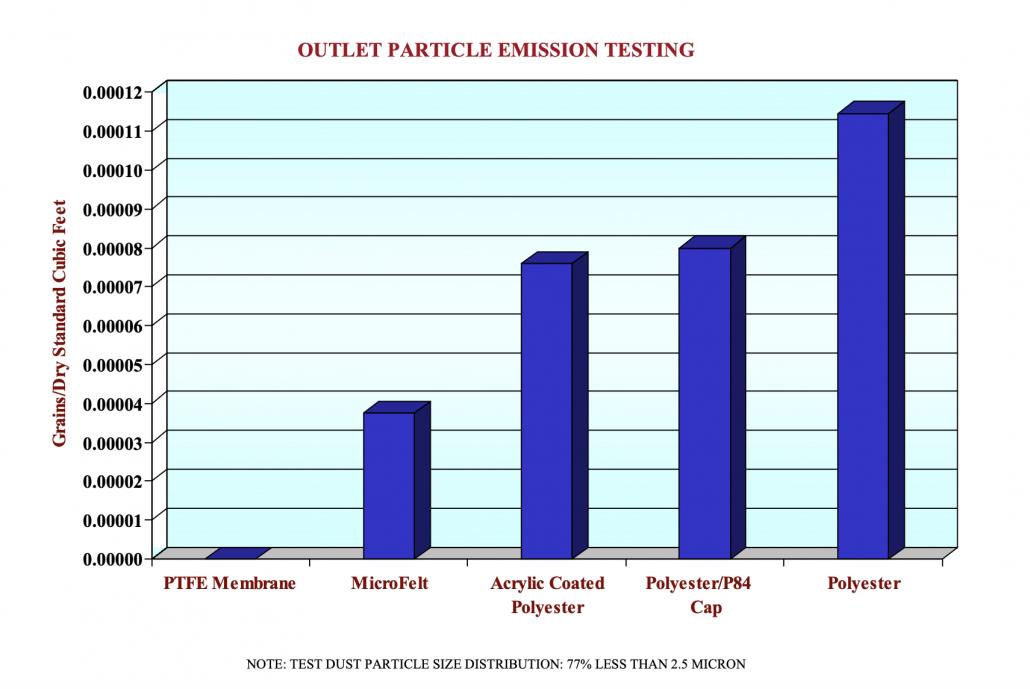
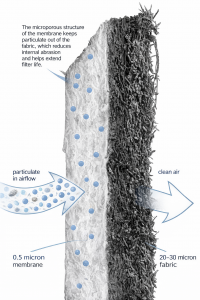 When PTFE membrane is added to the filter media, collection efficiency increases even further.