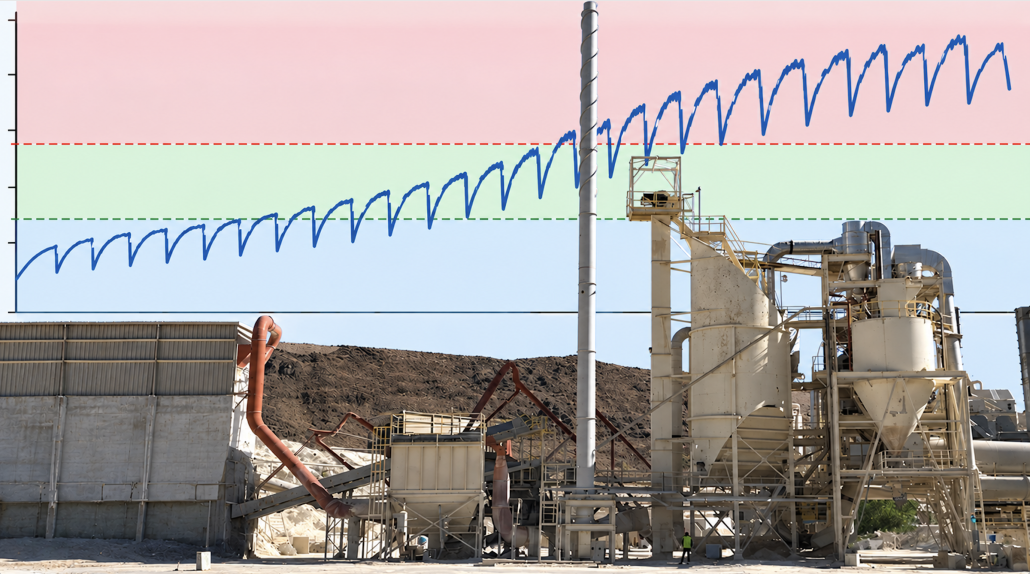
A good industrial dust collection system RFQ should clearly define the process, required airflow, dust characteristics, pickup points, ductwork, temperature, available space, material discharge, combustible dust requirements, controls, installation scope, and project goals. The more clearly these requirements are defined, the easier it becomes for suppliers to propose comparable systems and for your team to evaluate the true value of each quote.
An RFQ does not need to contain a finished dust collection system design. In fact, many facilities begin the quoting process without knowing exactly what collector, fan, duct size, or filter media they need.
What the RFQ does need to do is give qualified suppliers enough information to understand the application, identify what still needs to be engineered, and clearly define who is responsible for each part of the project.
Start With the Process and What You Are Trying to Accomplish
Often, we receive an RFQ that begins with something like: “We need a 20,000 CFM baghouse. Please quote.” That may be enough to start a conversation, but it is usually not enough to obtain a meaningful project quote. Beware of sales reps that give you a quote for a dust collector out of a catalog without knowing exactly what you need.
A good dust collection system provider would ask you…Why 20,000 CFM? Where does that air need to be collected? How many pickup points operate simultaneously? What material is being collected? What temperature will enter the collector? Who is supplying the ductwork, fan, controls, discharge equipment, structural support, installation, and commissioning?
A dust collector is only one component of a larger dust collection system. Your RFQ should therefore describe the process and the problem you are trying to solve, rather than simply requesting a particular piece of equipment.
This was one of the main subjects we covered in our webinar, Cómo planificar, presupuestar y ejecutar proyectos exitosos de colección de polvo., where Dominick Dal Santo, Matt Coughlin, y Scott Omann walked through developing an RFQ, system layouts, comparing proposals, and planning critical spare parts.
▶️ Watch the complete webinar below.
What Information Should You Include in a Dust Collection RFQ?
You don’t necessarily need every answer before contacting a dust collection supplier. But the following information provides an excellent starting point.

A qualified supplier can help determine missing engineering information, but the RFQ should make it clear which items still need to be determined.
▶️ Watch the complete explanation on how to develop your dust collection scope and RFQ as an end user.
1. What Process Is Producing the Dust?
Start by explaining the application.
Por ejemplo:
- ⦿ Limestone crushing and conveying
- ⦿ Laser cutting
- ⦿ Aluminum grinding
- ⦿ Cement transfer
- ⦿ Agricultura
- ⦿ Welding
- ⦿ Woodworking
- ⦿ Powder mixing
- ⦿ Bag dumping
- ⦿ Sandblasting
Describe what the equipment does, what material is processed, how many hours per day it operates, and whether production is continuous or intermittent. Photos, process drawings, equipment layouts, and short videos can be extremely useful.
The supplier needs to understand where the dust comes from before deciding how to collect it.
2. What Dust Are You Collecting?
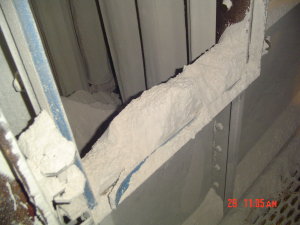
Algunos tipos de polvos finos o materiales pegajosos tienden a obstruir los filtros mucho más rápido que el polvo seco y fluido.
At minimum, identify the material being collected. When available, provide information about particle characteristics, moisture, abrasiveness, bulk density, chemical properties, temperature, and whether the material is sticky or hygroscopic.
These factors can affect collector selection, filter media, air-to-cloth ratio, duct velocity, inlet design, hopper geometry, discharge equipment, and construction materials.
For an existing system, sending a used filter sample or dust sample can sometimes provide valuable additional information.
Download here the free infographic: Select the correct filter media
3. How Much Airflow Does the System Need?
Ideally, the project should identify the required airflow at each pickup point and which pickup points operate simultaneously.
Por ejemplo:
Pickup Point | Required Airflow | Simultaneous? |
Crusher | 4,500 CFM | Sí |
Transfer Point 1 | 2,000 CFM | Sí |
Transfer Point 2 | 2,000 CFM | Sí |
Bagging Station | 1,500 CFM | Intermittent |
Those values help the designer determine total system airflow and begin laying out the duct network.
If you don’t know the required airflow, state that clearly and ask the supplier to include hood and airflow calculations in its engineering scope.
How Do You Size a Collector for a New Application?
Collector sizing generally begins by determining the required CFM. From there, the required filter area can be estimated using an appropriate air-to-cloth ratio, followed by selection of the collector configuration based on the dust and process conditions.
Calculate the required filter area
▶️ Watch: How to Size a Collector for a New Application
4. Should the RFQ Include Hoods and Pickup-Point Design?
A system can have an excellent dust collector and still perform poorly if the dust isn’t captured at its source.
Specify whether the owner will provide the hood design, or the dust collection supplier is responsible for designing the capture points. If the supplier is responsible, provide equipment drawings, photographs, dimensions, process information, and information about operator access or other restrictions.
5. Who Is Responsible for the Ductwork?
Your RFQ should explicitly state whether the project involves existing ductwork, new ductwork, or a combination of both.
For existing systems, provide drawings when available, but don’t automatically assume old drawings represent the system as it exists today. Plants frequently modify ductwork over the years. For new systems, define who will perform the layout and engineering.
A professional design package (like the one offered by the team at Baghouse.com) may include a CFM summary, duct sizes, system static-pressure calculations, routing, and CAD drawings.
▶️ Watch: How to Get Help Laying Out Your Ductwork, Hoods, and Fans
6. What Should Be Specified Regarding the Fan?
The RFQ should define (or require the supplier to calculate) the required airflow at the total system static pressure. That pressure includes resistance from the hoods, ductwork, fittings, collector, filters, and other system components.
Specify requirements such as:
- ⦿ Required CFM
- ⦿ Calculated system static pressure
- ⦿ Fan arrangement
- ⦿ Motor voltage
- ⦿ Motor efficiency requirements
- ⦿ VFD requirements
- ⦿ Outdoor or indoor location
- ⦿ Temperature
- ⦿ Material or abrasion requirements
- ⦿ Noise requirements, if applicable
This allows the fan to be evaluated at its actual operating point rather than simply by nominal horsepower or fan size.
7. What Temperature Will the Collector See?
Include both the normal operating temperature and the expected maximum temperature. Also describe unusual conditions such as startup, shutdown, process upsets, or temperature spikes.
Temperature can influence filter media, seals, insulation, collector construction, corrosion potential, and other components.
▶️ Watch: What Is the Maximum Temperature That Filter Bags Can Sustain?
8. What Should the RFQ Say About Combustible Dust?
If the material may be combustible, this needs to be identified before the collector is designed and quoted.
Provide available dust testing data, including relevant Kst and Pmax values, along with any completed Dust Hazard Analysis (DHA) or other process-safety information.
Depending on the application and applicable requirements, the system may require equipment such as explosion venting, flameless venting, explosion isolation, spark detection, extinguishing, abort gates, fire protection, or other safeguards.
Do not leave combustible dust protection as a vague line item saying: “Include explosion protection as required.” Instead, establish who is responsible for determining the required protection strategy and which equipment is included in each proposal.
▶️ Watch: How Can We Equip Dust Collectors That Handle Explosive Dust?
9. How Will Collected Material Be Discharged?

The material is often discharged from the collector directly into some kind of container placed directly under the airlock. This may be a steel drum, bin hopper or bulk bag (super sack) as shown in this image.
The RFQ should describe what happens after the dust reaches the hopper.
Options may include:
- ⦿ Drums
- ⦿ Rotary airlocks
- ⦿ Transportadores de tornillo.
- ⦿ Double-dump valves
- ⦿ Pneumatic conveying
- ⦿ Bulk bags
- ⦿ Existing process equipment
Also specify whether the discharge equipment operates continuously or intermittently and where the material ultimately needs to go.
10. What Controls and Monitoring Should Be Included?
Controls are another area where two quotes that initially look similar can contain very different scopes.
Define requirements for:
- ⦿ Pulse-jet cleaning controller
- ⦿ Differential-pressure monitoring
- ⦿ Fan starter
- ⦿ VFD
- ⦿ PLC interface
- ⦿ Remote start/stop
- ⦿ High differential-pressure alarms
- ⦿ Hopper-level monitoring
- ⦿ Broken-bag or particulate monitoring
- ⦿ Temperature monitoring
- ⦿ Remote/cloud monitoring
- ⦿ Existing plant control-system integration
For some applications, emissions monitoring may also be required by the facility’s air permit or may provide valuable maintenance information.
▶️ Watch: Why Do You Need Continuous Dust Emissions Monitoring?
11. What Installation Scope Should the RFQ Define?
Clearly define whether you want equipment only, equipment plus engineering, equipment and installation, or a turnkey dust collection system.
If installation is included, establish responsibility for items such as equipment setting, ductwork installation, structural steel, electrical work, compressed-air piping, crane and rigging, demolition, roof penetrations, insulation, controls integration, startup, balancing, commissioning, and training.
Real-world procurement specifications often go much further than simply naming collector capacity. For example, recent industrial dust-collector solicitations have explicitly defined equipment capacity, electrical and compressed-air utilities, environmental conditions, testing, documentation, warranties, installation and final acceptance. (govtribe.com)
12. What Drawings and Documentation Should You Request?
Depending on the project, request items such as:
- ⦿ General arrangement drawings
- ⦿ Equipment data sheets
- ⦿ Ductwork drawings
- ⦿ Fan performance information
- ⦿ Electrical schematics
- ⦿ Control diagrams
- ⦿ Filter specifications
- ⦿ Replacement-parts lists
- ⦿ Operation and maintenance manuals
- ⦿ Startup procedures
- ⦿ Recommended maintenance schedules
- ⦿ Warranty documentation
Industrial dust-collector specifications can explicitly require operation, maintenance and repair manuals containing mechanical and electrical schematics, wiring diagrams and recommended consumable spare-parts lists.
Define the required submittals in the RFQ so suppliers include them in their scope and schedule.
13. Should Commissioning and Performance Verification Be Included?
For a complete system, we strongly recommend defining how performance will be verified after installation.
Depending on the project, commissioning may include measurements of: Airflow at pickup points, duct velocity, system static pressure, collector differential pressure, fan operation, cleaning-system performance, system balance, controls and alarms.
Establishing these values also gives the maintenance team something extremely valuable: a baseline. Six months or five years later, you can compare current operation against the conditions documented when the system was commissioned.
14. What Spare Parts Should Be Included in the RFQ?
Ask each supplier to provide a recommended critical spare-parts list and identify normal lead times.
Spare parts are easy to overlook during a capital project because the immediate objective is getting the system installed. But the first time a diaphragm valve, solenoid, differential-pressure instrument, rotary-airlock component, or filter fails, the maintenance team will care a lot about what is sitting on the shelf.
▶️ Watch: How to Manage Your Critical Spare Parts and Avoid Downtime.
How Should You Compare Dust Collection System Quotes?
Don’t compare dust collection proposals based only on the price. Two quotes for what appears to be the same project may actually represent completely different systems.
Suppose:
- Vendor A: $185,000
Vendor B: $230,000
Vendor A appears $45,000 cheaper. But then you discover Vendor B includes engineered ductwork, a larger filter area, appropriate filter media, a VFD, explosion isolation, commissioning, controls integration, startup assistance, drawings, and critical spare parts.
Vendor A excluded several of those items. You aren’t comparing $185,000 versus $230,000 anymore. You’re comparing two different scopes.
Create a Bid Comparison Matrix
Before selecting a supplier, put the major requirements side by side.
Requirement | Vendor A | Vendor B | Vendor C |
Required CFM | ✓ | ✓ | ✓ |
Fan at calculated SP | ✓ | ✓ | ✓ |
Ductwork engineering | Excluded | Included | Included |
Ductwork fabrication | Excluded | Included | Optional |
Correct filter media | ? | ✓ | ✓ |
Protección contra explosiones | Partial | Included | Optional |
Controls / VFD | Basic | Included | Included |
Installation | Excluded | Included | Included |
Commissioning | Excluded | Included | Optional |
Critical spares | Not listed | Included | Optional |
el entrenamiento | No | Included | Included |
Planning a Dust Collection Project? Download Our Free RFQ Checklist below.
📄 Resource: Download our Bid Comparison Matrix sheet for free to include all the RFQs you received.
▶️ Watch: How Knowing Your System Leads to Better Quotes and Not Just the Lowest Price
What Are the Most Common Dust Collection RFQ Mistakes?
Leaving important decisions undefined and assuming every supplier will interpret the project the same way.
Other common problems include requesting a collector before determining required airflow, providing total CFM without individual pickup requirements, relying on outdated drawings, failing to identify combustible dust, omitting installation responsibilities, failing to specify discharge equipment, ignoring controls and monitoring, and comparing proposals solely on purchase price.
Writing such a restrictive specification that qualified suppliers cannot improve the design.
Define your performance requirements, site limitations, safety requirements, interfaces, deliverables, and project objectives clearly. But unless there is a specific reason for a particular design, allow experienced suppliers to recommend the best technical solution.
A Better RFQ Produces a Better Dust Collection Project
Clearly defining the process, airflow, pickup points, dust characteristics, system layout, safety requirements, utilities, controls, installation responsibilities, commissioning, documentation, and project objectives allows qualified suppliers to develop proposals around the same requirements.
Baghouse.com has been working for more than 40 years with plant managers, engineers, project managers, and maintenance teams to develop dust collection project scopes and provide complete equipment and installation packages. We can assist you too.
Frequently Asked Questions About a Request For a Quote (RFQ)
1. What information does a dust collector supplier need to provide a quote?
A supplier typically needs information about the process, dust characteristics, required airflow, pickup points, operating temperature, ductwork, available space, material discharge, utilities, combustible dust characteristics, controls, installation scope, and project schedule. If some information is unknown, the RFQ should identify what the supplier is expected to determine.
2. What if I don't know the CFM required for my dust collection system?
You can still request a proposal. Provide information about the process, equipment, dust-generation points, operating conditions, and which pickup points operate simultaneously. The RFQ can then specify that the dust collection supplier is responsible for determining the required airflow and documenting the design basis.
3. Should ductwork be included in a dust collector RFQ?
The RFQ should at least define who is responsible for the ductwork. If the supplier is responsible, specify whether the scope includes system layout, airflow calculations, duct sizing, static-pressure calculations, fabrication, installation, and balancing.
4. Should installation and commissioning be included in the RFQ?
If these services are required, they should be clearly identified. Installation scope can include equipment setting, ductwork, structural work, controls coordination, compressed air, startup, and other site work. Commissioning should define how airflow, duct velocity, differential pressure, fan performance, controls, and other critical operating parameters will be verified.
5. How should I compare quotes from different dust collector suppliers?
Compare the technical scope before comparing price. Review airflow, filter area and media, fan selection, ductwork, controls, combustible dust protection, installation, commissioning, documentation, spare parts, exclusions, warranty, and support. Two proposals with different scopes should not be treated as equivalent simply because both include a dust collector.
6. What combustible dust information should be included in an RFQ?
Identify whether the dust is known or suspected to be combustible and provide available test data, including relevant Kst and Pmax values, along with any existing Dust Hazard Analysis. The RFQ should also clearly establish responsibility for determining and supplying the required fire and explosion protection.
7. What spare parts should be included with a new dust collector?
Ask the supplier for a recommended critical spare-parts list based on the equipment supplied. Depending on the system, this may include filters, diaphragm kits, solenoids, valves, differential-pressure instruments, sensors, rotary-airlock components, and other items that could cause significant downtime if unavailable.

Director of Operations | Dust Collection Specialist | Industrial Filtration Consultant
Dominick DalSanto is an author and environmental technologies expert specializing in dust collection systems. He has nearly a decade of hands-on working experience in the industry. Dominick is the sales director and sales technical advisor for an industrial dust collection equipment manufacturer. Personally took the lead on key projects each year from sales engineer to field advisor to project manager to business relations. Born in San Bernardino County, California, and raised in Chicago, he currently resides in Buenos Aires, Argentina.