
8 Reasons Your Maintenance Team Can Benefit From a Baghouse PM Program

Your in-house maintenance team probably knows your plant better than anyone. They know which equipment causes trouble, which processes are critical to production, and which problems need attention first.
But maintaining an industrial dust collection system requires specialized knowledge, and baghouse maintenance is rarely the only responsibility competing for your maintenance team’s time.
A professional preventive maintenance program doesn’t have to replace your in-house team. In many facilities, the better approach is to supplement your plant’s maintenance personnel with dust collection specialists who can periodically inspect the entire system, identify developing problems, document its condition, and help your team prioritize repairs before those problems become emergencies.
So, what does a professional baghouse preventive maintenance program provide that routine in-house maintenance may not?
Why Isn't In-House Baghouse Maintenance Always Enough?
In-house maintenance can work very well for routine tasks such as checking differential pressure, inspecting compressed-air systems, emptying dust containers, responding to alarms, and replacing individual components. The challenge is usually time and specialization.
Your maintenance personnel may be responsible for dozens or hundreds of pieces of equipment. When production equipment goes down, the dust collector may understandably move down the priority list as long as the fan is running and the plant doesn’t see an obvious emissions problem.
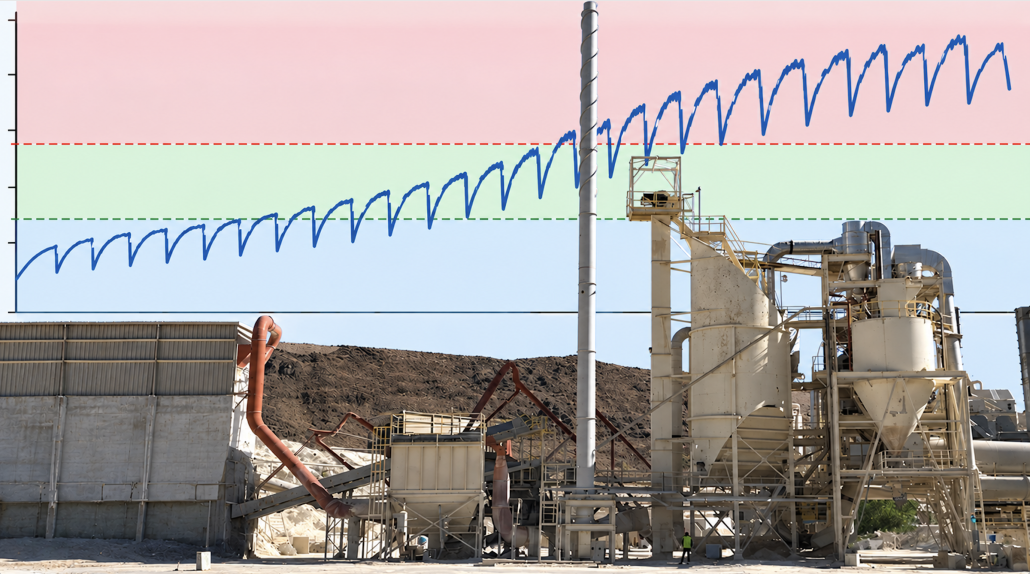
Unfortunately, a dust collection system can continue operating while its performance gradually deteriorates. Maybe the airflow decreases. Without noticing it, ducts can accumulate material and get clogged. Or maybe the differential pressure starts trending upwards, signaling filter blinding.
None of those problems necessarily causes an immediate shutdown. But several small problems occurring together can eventually become a much larger one. That’s where scheduled preventive maintenance becomes valuable.
What Does a Good Baghouse Preventive Maintenance Program Do?
A preventive maintenance program changes the approach from responding to failures to looking for the conditions that cause them.
At Baghouse.com, that means looking beyond the filter bags themselves. A dust collector operates as part of a system, and problems elsewhere can directly affect collector performance.
Here are eight practical benefits of adding a Baghouse.com PM program to your plant’s maintenance strategy:
1. Get Another Set of Experienced Eyes on Your Dust Collection System

That experience is particularly valuable when a problem isn’t obvious. For example, high differential pressure doesn’t automatically mean the filters need replacement. Poor pickup doesn’t automatically mean you need a larger fan. Premature filter failure doesn’t automatically mean you purchased bad filters. The actual cause may be somewhere else in the system.
A professional inspection can help separate the symptom from the root cause before the plant spends money fixing the wrong thing.
2. Find Problems Before They Become Emergency Repairs
Most plants would rather schedule a repair than have the baghouse schedule it for them. Preventive maintenance allows the plant to find these issues while there’s still time to plan.
3. Reduce the Burden on an Already Busy Maintenance Department
Your maintenance personnel may be responsible for production equipment, motors, bearings, conveyors, electrical systems, compressed air, facilities, and dozens of other priorities. Even a highly capable maintenance department may simply not have enough time to perform a detailed dust collection inspection.
Specialized knowledge can also be an issue. Bringing in experienced technicians can help overcome both limited personnel availability and gaps in baghouse-specific experience. Training can then be used to strengthen the plant team’s ability to handle routine maintenance between visits.
4. Improve Safety During Specialized Maintenance
Depending on the collector and the work being performed, maintenance may involve elevated work areas, confined spaces, dirty-air plenums, internal components, compressed-air systems, heavy filters, rotating equipment, and accumulated process dust.
Using technicians familiar with industrial dust collectors can reduce the need for plant personnel who rarely perform these tasks to undertake unfamiliar work.
5. Get More Than a "Looks Good" Inspection
A professional PM visit should leave the plant with actionable information. That means documenting the condition of the equipment, identifying deficiencies, recording work performed, and making recommendations for problems that should be addressed.
Documentation also creates something extremely useful: history. If differential pressure has changed significantly since the previous inspection, that’s worth investigating. If the same group of filter bags repeatedly fails, that’s a pattern. If a component that was previously noted as worn has continued deteriorating, the plant can make a more informed decision about when to replace it.
Over time, maintenance stops being based solely on memory and starts being based on the actual condition and history of the equipment.
6. Make Compliance Problems Easier to Address and Document
When a dust collector supports an emissions-controlled process, poor performance can become an environmental compliance issue.
Preventive maintenance can help identify conditions that could eventually contribute to an emissions problem before the plant reaches that point. A damaged filter, malfunctioning cleaning system, air leak, or dust discharge problem is much easier to address during a planned maintenance window than after an emissions excursion.
7. Have a Comprehensive Dust Collection System Evaluation
When performance problems arise, the inspection should consider the complete air path:
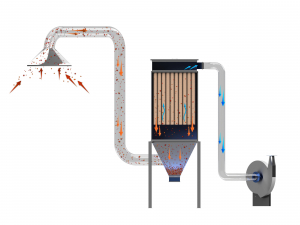
Pickup point → ductwork → collector → filters → fan → exhaust
That system-level approach is particularly important in older facilities where production equipment and ductwork may have been modified repeatedly over the years.
8. Reduce the Risk of Unplanned Production Downtime
Consider what happens when a critical dust collector unexpectedly needs a complete filter change. The plant now has to obtain filters, schedule labor, arrange access equipment, shut down the process, remove the old filters, inspect the collector, install the replacements, and restart the system.
If declining filter condition had been identified earlier, much of that work could have been planned around production.
Preventive maintenance can’t eliminate every unexpected failure. Industrial equipment will always have surprises. But it can reduce the number of surprises caused by problems that were developing for months without being recognized.
Should You Replace Your In-House Maintenance Team With a PM Program?
No. Your in-house team is essential because they’re there every day. They can watch differential pressure, listen for abnormal noises, respond to alarms, observe visible dust, check compressed air, and recognize changes in the process.
Un Baghouse.com preventive maintenance program adds something different: specialized dust collection experience, periodic in-depth inspections, system-level troubleshooting, documentation, and another set of experienced eyes on the equipment.
Your maintenance personnel handle the day-to-day health of the system. Periodic professional inspections help verify that nothing important is being overlooked and give your team a clearer picture of what needs attention next.
In-House Maintenance or a Baghouse.com PM Program? Use Both.
A strong dust collector maintenance strategy combines the plant knowledge of your in-house maintenance team with the specialized experience of technicians who work specifically with industrial dust collection equipment.
Working together makes it easier to identify developing problems, understand why they’re occurring, prioritize repairs, document equipment condition, and schedule maintenance before a manageable issue becomes an emergency.
If you’re not sure about the current condition of your dust collection system, Baghouse.com can inspect your equipment, identify maintenance priorities, troubleshoot performance problems, and help develop a preventive maintenance program based on your plant and equipment.

Director of Operations | Dust Collection Specialist | Industrial Filtration Consultant
Dominick DalSanto is an author and environmental technologies expert specializing in dust collection systems. He has nearly a decade of hands-on working experience in the industry. Dominick is the sales director and sales technical advisor for an industrial dust collection equipment manufacturer. Personally took the lead on key projects each year from sales engineer to field advisor to project manager to business relations. Born in San Bernardino County, California, and raised in Chicago, he currently resides in Buenos Aires, Argentina.