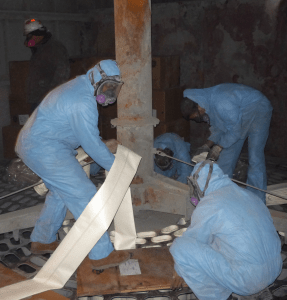

Baghouse filter change

Routine maintenance is critical to ensure your dust collection system operates efficiently.

An essential first step in establishing an effective maintenance plan is the creation of a dust collector maintenance checklist. This checklist, tailored to your specific system, helps facility managers and maintenance staff perform periodic inspections as needed. In this article, we’ll explore the importance of a dust collector maintenance checklist, why you need one, and what to include in it.

¿Por qué necesitas una lista de verificación de mantenimiento?

Maintenance Checklist Image

Your maintenance checklist should cover the entire system.

Baghouse system designs such as shaker, reverse-air, plenum-pulse-jet, and pulse-jet each require a checklist specific to their design. Regular inspections should be scheduled at various intervals, including daily, weekly, monthly, quarterly, semi-annually, or annually. By adhering to this routine, your dust collection system will continue to operate efficiently for years.

Descuidar el mantenimiento regular del colector de polvo puede resultar en un rendimiento lento del sistema, lo que lleva a reparaciones costosas tanto para el colector de polvo como para los equipos afectados por la acumulación de polvo. Las reparaciones causan interrupciones y pérdidas de la producción. Además, un sistema que no funcione correctamente puede presentar riesgos para la salud de todos los que se encuentren en las cercanías, incluidos los trabajadores, gerentes, propietarios y visitantes.

Signs That Your Dust Collector Needs Maintenance

Dirty filter bag

Your DP gage can indicate when filters are blinded and require changing.

General indicators that a dust collector requires maintenance include:

All of these problems are easily preventable with regular maintenance.

What Your Checklist Should Include

Below is a list of dust collector maintenance items and when to check them, depending on the system’s design:

Daily Checklist

  • ✅ Check differential pressure.
  • ✅ Observe exhaust stack (or check emissions monitoring system).
  • ✅ Operate damper valves.
  • ✅ Confirm that dust is being removed from system via dust discharge system.
  • ✅ Confirm cleaning system is operating correctly and set to the correct cleaning sequence.
  • ✅ Check compressed-air lines, including line filters and dryers.
  • ✅ Verify accuracy of temperature-indicating equipment.


Monthly Checklist

  • ✅ Inspect fans for corrosion and material buildup.
  • ✅ Check drive belts for wear and tension.

  • ✅ Inspect and lubricate appropriate items.

  • ✅ Spot check for bag leaks.
  • ✅ Check hoses and clamps.

  • ✅ Check accuracy of indicating equipment.
  • ✅ Inspect housing for corrosion.
  • ✅ Walk through system, listening for proper operation.
  • ✅ Check for unusual occurrences in process.
  • ✅ Observe control panel indicators.
  • ✅ Check compressed-air pressure.
  • ✅ Check differential pressure-indicating equipment for plugged lines.
  • ✅ Blow out any dust from differential pressure lines and verify gauges are in good condition and not fouled.


Quarterly Checklist

  • ✅ Inspect baffle plate for wear.
  • ✅ Inspect bags thoroughly.
  • ✅ Check duct for dust buildup.
  • ✅ Observe damper valves for proper seating.
  • ✅ Check gaskets on doors.
  • ✅ Inspect paint, insulation, etc.
  • ✅ Check screw conveyor for wear or abrasion.
  • ✅ Check that valves are opening and closing properly in bag-cleaning sequence.


Annual Checklist

  • ✅ Check fan belts.

  • ✅ Check welds.

  • ✅ Inspect hopper for wear (see full list in Appendix)
  • ✅ Evaluate filter performance (DP, emissions, failed bags, etc.) and schedule filter changeout as needed.
  • ✅ Ensure the plant has one full set of filters on hand for emergencies. IF possible/necessary, also stock one full set of cages or a small number of spare cages for maintenance use.

A well-structured plan that includes a dust collector maintenance checklist benefits operators significantly. It ensures that routine maintenance is systematically scheduled and performed, leading to efficient, long-lasting dust collection systems and lower cost of ownership overall. By following the checklist at specific intervals and marking off completed tasks, you can help preserve your dust collector’s efficiency and longevity and avoid major surprises.


Para obtener más capacitación e información relacionada con colectores de polvo, visita también nuestra página de Capacitación sobre Colectores de Polvo haciendo click aquí.


Filter bag cages and venturis might not always steal the spotlight, but they are the heroes behind efficient and reliable dust collection systems. Neglecting the importance of these components can lead to a cascade of operational and compliance issues in your facility. At Baghouse.com, we understand the critical role played by filter bags, cages, and venturis in maintaining a top-notch dust collection system working perfectly. Let’s delve into why investing in quality components like these is a smart decision for your industrial operations.

The Role of Filter Cages

Filter cages might seem quite simple components, but they are essential for the proper functioning of your dust collection system. When filter bags don’t fit snugly onto the cages or when cages are not replaced when needed, it can compromise the entire system. Neglected filter bag cages are often the root cause of many operational problems in industrial settings.

Cage Types

The purpose of a baghouse cage is to provide support for filter bags to stay open during the dust collection cycle.


Common Cage Styles

Common baghouse cage styles include rolled top (top load baghouses) and split collar (bottom load baghouses). Options include galvanized steel, stainless steel, or epoxy coated. Cages can also have integral or drop-in venturi for improved bag cleaning.

One key feature is the precise fit between the filter bags and the cage, ensuring proper adhesion and a long service life. Quality filter cages are built to withstand ciclos de limpieza, los cambios de bolsas, materiales abrasivos, altas temperaturas y muchas otras condiciones ambientales a las que puedan enfrentarse.

Additionally, filter cages should withstand the pressure exerted by the filter bag during the particulate collection cycle. They are also engineered to provide uniform support along the entire length of the filter cloth.

Regardless of design, each cage should adhere consistently to its specifications. This includes maintaining the correct diameter, total length, and other tolerances. The technologies we employ at Baghouse.com ensure your cages are made to spec, ensuring a proper fit between the filter bag and the cages and resulting in optimal cleaning performance. Our dust collector cages can be made to fit existing collectors from any baghouse manufacturers such as Astek, Gencor, Flexkleen, Mikropul, Wheelabrator, etc. We can also manufacture uncommon and specialized cage designs as required.

Why Do You Need A Venturi?

In some pulse jet collectors the venturi, or diffuser, is included in the original baghouse design. Its function is to accelerate compressed air at the center of the cage, optimizing the cleaning of bag filters. Venturis are made in a variety of materials, including aluminum, carbon steel, galvanized, and stainless steel.

Venturi Design

The venturi design changes the distribution of the cleaning pressure in the vicinity of the filter bag mouth, effectively reducing the energy consumption as well as reducing the dust emission concentration of the baghouse.


Why Choose Baghouse.com for Your Filter Cages and Venturis?

With millions of our cages installed and years of experience in the field, we confidently offer products that meet high standards of quality and performance. Our dedicated team efficiently manages projects from contract to design, construction, and delivery, anywhere in the world.

Investing in quality filter bag cages and venturi may not be the most exciting aspect of your dust collection system, but it’s undoubtedly one of the most critical. It ensures the longevity and effectiveness of your filtration system while reducing maintenance costs and noise in your facility. At Baghouse.com, we are committed to helping you achieve optimal filtration performance. Contact us today to find the perfect solution for your specific application. Your satisfaction and the efficiency of your operations are our top priorities.

Habla ya con uno de nuestros expertos

Para obtener más capacitación e información relacionada con colectores de polvo, visita también nuestra página de Capacitación sobre Colectores de Polvo haciendo click aquí.

Fume Sources

Dust and fume collection systems are indispensable in various industries, such as processes involving exhaust fumes from welding, sanding, grinding, spraying. Does your plant have any of these processes? If so, you must be interested in ensuring not only cleaner, safer workplaces but also compliance with environmental regulations. Among these systems, there’s one lesser-known hero: the ambient air collection system. In this article, we’ll explore how these systems function and their advantages.

Understanding Ambient Air Collection

At its core, an ambient air collection system is a type of dust and fume collection system. It operates by efficiently removing airborne particles from the atmosphere, making it an ideal choice for certain fabricating environments.

Cartridge collectors are commonly recommended for ambient systems due to their efficiency and compact design. These collectors use densely pleated filter cartridges with a high surface area, capable of handling substantial airflow. They excel at capturing even very fine fumes, up to MERV* 16, ensuring clean air. 

*MERV stands for “Minimum Efficiency Reporting Value.” It is a standardized measurement rating used to evaluate the efficiency of air filters in removing particles from the air as it passes through them. The MERV rating typically ranges from 1 to 16, with higher values indicating greater filtration efficiency. A higher MERV rating means the filter can capture smaller particles, including dust, fine fumes and other airborne contaminants.

The Difference: Ambient vs. Source-Capture

Ambient collection stands in contrast to source-capture systems, which rely on localized collection points like weld arms or fume hoods. Instead of capturing pollutants at specific spots, an ambient system continually exchanges all the air in a building or designated area.

Ambient systems offer several advantages over localized approaches:

  • Efficiency: Ambient systems are efficient, requiring less ductwork and power compared to localized systems with multiple capture points.
  • Cleaner Air: By removing dirty air from the entire workspace and returning it as clean, filtered air, ambient systems maintain overall air quality, even managing fugitive dust or fumes from portable sources.

    Modular Ambient Systems

    In variable production environments, a modular ambient dust collection system can be a smart choice. This approach involves using multiple smaller collectors instead of one large central system. It’s particularly beneficial for facilities with fluctuating production levels or plans for expansion.

    The experts at Baghouse.com can assist you in determining whether a modular or central ambient system is the right fit for your facility, considering factors like your current and future space usage and budget.

    Exploring Optional Functions in Fume Extraction Systems

    When considering fume extraction systems, you’ll encounter various optional features that can enhance their performance. These include:

    • Automatic Start-Stop Functionality: The automatic start-stop feature ensures that the fume extraction system operates precisely when needed. It activates as soon as the welding gun initiates an arc and includes a brief delay of usually 3 to 10 seconds after welding ceases. This thoughtful design not only conserves energy by preventing unnecessary blower operation but also contributes to lower maintenance costs and a quieter shop environment. Read more about Welding Safety Precautions.
    • Power Adjustment Capability: The power adjustment feature allows you to fine-tune the static pressure of your fume extraction system, aligning it with the specific parameters of your welding machine. Lowering the power not only reduces noise but also minimizes energy consumption. Additionally, it proves valuable in addressing rare occurrences like weld porosity or gas turbulence during welding. These events, while infrequent, are efficiently managed with this feature, ensuring your system’s readiness even when equipped with high-performance fume extraction equipment and welding guns.
    • Automatic Cleaning Functionality: Automatic cleaning is a smart feature that enables the system to self-clean the filter when a certain level of dust accumulates. This process can be based on a timer or triggered by monitoring the actual static pressure against the preset power of the unit. Importantly, this self-cleaning process occurs seamlessly while the welder continues to work.
    • Shunt Alarms: Shunt alarms provide clear signals, often through lights or gauges, indicating the need to replace the filter. This feature can be integrated into a fume extraction system equipped with automatic cleaning or used with systems featuring replaceable filters, ensuring you stay aware of filter maintenance requirements.

    How Baghouse.com Can Assist You

    En Baghouse.com, we specialize in dust and fume collection systems tailored to your unique needs. Whether you’re considering an ambient air system or another solution, our experts can guide you through the entire process. From system design to installation and maintenance, we’re here to ensure your workplace remains clean, safe, and compliant.


    Habla ya con uno de nuestros expertos

    Para obtener más capacitación e información relacionada con colectores de polvo, visita también nuestra página de Capacitación sobre Colectores de Polvo haciendo click aquí.