In virtually every industry in the US, where air quality and worker well-being are crucial to the success of any business, industrial dust collection systems play an important role. These systems ensure smooth operations and employee safety. But, choosing the right components while staying on budget can be a complex puzzle. Let’s simplify this process, finding the sweet spot between wise investments and smart savings, all while building powerful and sustainable industrial dust collection systems.
5 factores importantes al cotizar tu sistema de colección de polvo.
1. Dust Properties: The Foundation for Filters and Collectors
Before diving into budget details, remember that dust properties set the stage. Understanding these properties guides filter media and collector choices, ensuring top-notch functionality.
Think About These Dust Properties:
Size: Are the dust particles small or large?
Density: Is the dust light, like wood dust, or heavy, like fine steel dust?
Chemistry: Does the dust have abrasive or corrosive qualities?
Space limits define your collector’s size. These systems come in various heights, widths, and depths. Measuring the space and considering top-loading designs, which need overhead clearance for maintenance, are essential. It is also worth considering if you have an existing concrete pad, or if one must be poured to support the weight of your collector and fan. Watch the video: Intro Guide to Sizing and Design Your Baghouse.
Specific emissions regulations might apply based on your application. Emission limits differ by state and are expressed as efficiency percentages for cartridge collectors or emission limits (like lbs/hr or gr/dscf) for baghouses. These limits may impact the filter media required for your system, as well as the need for after-filters or additional equipemnt. Read more about regulatory requirements and compliance.
4. Volume: Sizing for Efficiency
Accurate airflow measurement is crucial for effective dust collection. Wrong volumes can disrupt production, air quality, and increase energy costs.
Airflow is measured in cubic feet per minute (CFM), showing how much air moves per minute from a space.
The three most common baghouse styles are pulse jet, reverse air, and shaker style. Each has its advantages and disadvantages. The right choice depends on factors like space, maintenance needs, and filtration requirements.
Pulse Jet: Bags cleaned while operating, low maintenance, flexible sizing.
Reverse Air: Gentle cleaning, divided sections, custom bag design.
Choosing design features that simplify maintenance is a smart long-term investment. Things to look for:
On-demand filter cleaning for efficiency and durability (not all control panels offer this option)
Modular design for expansion and accessibility
Quick access filter covers
Standard filter sizes for cost-effective replacements
Combustible Dust Safety Equipment
Safety is top priority, especially with combustible dust, and there are specific equipment requirements for systems handling combustible dust. To ensure your system is safe and compliant, take the following steps:
Each dust collection application is unique, needing a comprehensive approach. Partnering with an experienced dust collection design and engineering companies like Baghouse.com, ensures efficient and effective systems designed for your facility.
In conclusion, budgeting for industrial dust collection systems goes beyond finances. It’s an investment in health, safety, and efficiency. By considering dust properties, space, emissions, volume, and air-to-cloth ratio, while prioritizing maintenance and safety, you can build a system that’s cost-effective and high-performing. Remember, a well-designed system not only saves money but also ensures a cleaner, safer, and more productive work environment.
Para obtener más capacitación e información relacionada con colectores de polvo, visita también nuestra página de Capacitación sobre Colectores de Polvohaciendo click aquí.
Experto en colectores de polvo, redactor técnico y editor en Baghouse.com
Andy Biancotti está convencido de que el conocimiento es una de las mejores inversiones para una empresa. Como Editor y Gerente de Marketing en Baghouse.com, disfruta entrevistar a ingenieros, técnicos y clientes para capturar las lecciones aprendidas en proyectos reales de control de polvo y convertirlas en recursos prácticos que ayuden a otros profesionales. Con más de dos décadas de experiencia en mantenimiento industrial, operaciones y comunicación técnica, su objetivo es simple: ayudar a las personas para que puedan operar de forma más segura, inteligente y eficiente.
https://baghouse.com/wp-content/uploads/2023/09/Dust-Collector-Budget.jpg6841010Andy Biancottihttps://baghouse.com/wp-content/uploads/2025/10/BH-Logo-Alt-01-300x70.pngAndy Biancotti2023-09-14 20:29:312026-06-19 17:35:41Budgeting for Dust Collection Systems
Industrial dust collection systems are a crucial tool in ensuring workplace safety, sustainability, and environmental compliance. These systems are not just equipment needed for your processes and facilities to produce effectively; they are state-of-the-art safety measures. However, to maintain their effectiveness they require modern validation and certification methods. Regular assessments are essential, especially when process conditions change.
The Consequences of Non-compliance
Extraction systems that handle explosive dust are made up of numerous vital components. These components must work in harmony to provide the expected safety. When a system malfunctions or doesn’t perform as intended, it can lead to a host of issues:
Production Impacts: Malfunctioning extraction can disrupt the production process, resulting in downtime and decreased productivity.
Health Concerns: Operators exposed to dust due to inadequate extraction can face significant short and long-term health problems, leading to absenteeism, reduced workforce efficiency, reduced worker morale and productivity, and sickness and injury among your team. One example is silicosis, a lung disease caused by long-term exposure to fine silica dust.
Increasing Costs: Neglected preventive maintenance, monitoring, and operational tasks result in unplanned costs for repair and replacement of worn and broken equipment.
Safety Risks: Failure to ensure your equipment is up to date increases the risk of dust explosions, which can have catastrophic consequences, endangering lives and property.
Compliance and Inspections
For all ATEX equipment (equipment used in explosive atmospheres), regular inspections are mandatory. The specific intervals and requirements vary based on the manufacturer and notified bodies responsible for type approval. Compliance checks must include the following…
Explosion Isolation System Inspection Requirements:
A clear description of the intended use of the explosion isolation system.
Operational requirements.
Installation requirements.
General arrangement plans.
Commissioning requirements.
Maintenance guidelines.
Periodic Inspections
Regular inspections are crucial to ensure that the explosion isolation system maintains its capability and reacts as originally designed in case of an explosion. Procedures after an explosion are also a vital part of compliance.
- Puntos de inspección
Specific inspection points are listed in user manuals, and in most cases, only authorized engineers can perform these inspections. Even when end users are allowed to inspect, it’s strongly recommended to engage knowledgeable companies like Baghouse.com for an annual inspection. Book Now Your Baghouse System Audit.
Inspectors can identify issues beyond the checkpoints. For instance, they can uncover dust deposits on valve seats, which, if not cleared, can render safety components ineffective in the event of an explosion. Safety is contingent on the entire system functioning correctly, not just individual components.
- Documentación de la inspección
A documented inspection or maintenance, conducted by an authorized company, is the formal way to prove compliance with OSHA and NFPA standards. Documentation is essential in case of accidents or incidents to demonstrate that regular maintenance occurred. When individuals without adequate training or authorization conduct inspections, they bear full responsibility for any faults. Conversely, following instructions and maintaining proper documentation shifts responsibility away from the end user.
We can assist by providing annual safety inspections for Dust Collection Systems in various industrial applications. These inspections include a comprehensive functional test of the entire system and a summary of recommendations based on our on-site survey for each dust collector.
Training for Safety
Regular training for key personnel is crucial. This includes not only personnel directly involved with the equipment but also those responsible for emergency procedures, such as Building Management System (BMS) operators. Having an accessible emergency checklist is vital for quick, effective responses during alarms, ensuring everyone knows what to do in critical situations. Read more about our capacitación para personal de mantenimiento y seguridad.
In conclusion, compliance with safety and environmental regulations is non-negotiable in industrial dust collection systems. Regular inspections, documentation, and expert assistance are your best allies in maintaining a safe, compliant, and efficient dust collection operation. Our experts are ready to help you evaluate, diagnose, and improve the safety and efficiency of your dust collection system, ensuring a secure and sustainable workspace for all.
If you have any questions or need assistance with your dust collection system compliance, feel free to reach out to us. Your safety and peace of mind are our top priorities!
Para obtener más capacitación e información relacionada con colectores de polvo, visita también nuestra página de Capacitación sobre Colectores de Polvohaciendo click aquí.
President | Dust Collection Engineer | Industrial Air Pollution Control Specialist
Matt Coughlin is an author, engineer, and dust collection expert specializing in industrial filtration systems, air pollution control, and process ventilation. With more than two decades of experience in the dust collection industry, Matt has helped design, troubleshoot, and optimize hundreds of dust collection systems across a wide range of industries, including cement, mining, food processing, woodworking, metals, power generation, chemical manufacturing, and bulk material handling. Born and raised in Southern California, Matt continues to work closely with industrial facilities around the world, helping companies improve their dust collection performance through engineering expertise, practical solutions, and long-term technical support.
https://baghouse.com/wp-content/uploads/2023/09/Audit.jpg538910Matt Coughlinhttps://baghouse.com/wp-content/uploads/2025/10/BH-Logo-Alt-01-300x70.pngMatt Coughlin2023-09-12 23:08:492026-06-19 17:25:17Dust Collection System Compliance – Ensure Your System Will Pass an Audit
You’ve invested in high-efficiency equipment and tools for your industry, but is your dust extraction system working at peak efficiency or is there waste in your system – wasted time, efficiency, or cost? In this article, we’ll explore the most common mistakes when designing dust extraction and collection systems and how to avoid them. A well-designed system not only ensures a clean and safe workspace but also maximizes the lifespan of your equipment.
Mistake #1: Incorrect Duct Diameters
Mistake: Using duct diameters that are either too small or excessively large can lead to problems. Undersize diameter ducts can quickly become clogged, or wear prematurely due to excess dust velocity. Oversize ducts reduce airflow velocity, which may lead to dust settling and clogging up your system.
Solution: Calculate the appropriate duct diameter based on your system’s needs to maintain optimal performance. You should know the minimum carrying velocity of your dust type, and pick a duct size to match the required air flow (CFM) for your dust. If you need assistance sizing your system, please watch this video Watch the video: Intro Guide to Sizing and Design Your Baghouse.
Start by understanding the required velocity for your dust and the CFM – then pick a duct diameter to match.
Mistake #2: Using Straight Tees
Mistake: Installing equal (straight) tees can lead to clogs, especially when dealing with soft and fine dust particles. These sharp corners cause turbulent flow, resulting in static pressure loss, and areas of low flow where dust will pile up and clog your system.
The tee joint on the right is very inefficient; the 45-degree union fitting on the right is a much better design.
Solution: Opt for reducing tees, Y-pieces, or lateral tees to ensure smoother airflow and prevent clogging.
Mistake #3: Using Short Radius Elbows
Mistake: Using short radius elbows can disrupt airflow and greatly increase static pressure drop, similar to the tee joints mentioned above.
This sharp elbow will result in a large static pressure drop.
Solution: Use larger radius elbows (1.5D is standard) to maintain smooth airflow throughout your system and ensure you have adequate static pressure at your pickups.
Mistake #4: Accumulating Fittings Near Equipment
Mistake: Placing elements like dampers, bends, tees, and reducers too close to equipment can hinder proper airflow and reduce system efficiency. Remember, velocity is key in keeping dust airborne – disruptions in airflow slow down the dust, and your system must expend energy to speed it back up after a sharp elbow, etc. If that elbow is right next to your pickup, there is insufficient “runway” to gain sufficient velocity and laminar airflow – resulting in uneven or reduced suction at your pickups!
Solution: Maintain a minimum distance of 2.5 times the nominal duct diameter between airflow-disrupting elements and your pickups to ensure the system operates efficiently (even better is to remove or reduce these elements altogether!)
Mistake #5: Overuse of Flexible Ducting/Hoses
Mistake: Flex hose is very convenient and easy to install, and is often used to connect the last few feet of ductwork to your pickups. However, they are extremely “expensive” in terms of static pressure loss. Excessive use of flex hose can create unnecessary airflow resistance (up to 3X that of a standard duct), significantly reducing system efficiency.
Standard flex hose
Solution: Limit the use of flexible hoses to the absolute minimum required.
Mistake #6: Using Incorrect Duct Materials:
Mistake: Choosing the wrong material for your duct system (like plastic pipes instead of steel) can be dangerous and lead to explosion risks, very early wear and failure, and other issues.
Rolled lip, clamp-together steel duct is standard for dust collection systems.
Solución: Prioritize safety by using metal duct with smooth inner walls to minimize resistance and ensure unhindered airflow. When in doubt, contact an expert to size and select ductwork for your dust collection system.
Mistake #7: Excessively Long Duct Runs
Mistake: Designing excessively long duct runs results in large static pressure drops across the system, meaning that the suction your fan generates isn’t available where it’s needed at the pickups. It’s all being lost in resistance across the long duct segments.
Solution: Install shorter main ducts with lateral discharge branches to individual machines for improved airflow and better static pressure where you need it.
Mistake #8: Incorrect Use of Gates and Dampers:
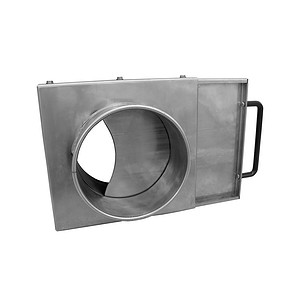
Manual cut-off gates are useful, but should be used in alignment with your system design.
Mistake: Incorrectly using cut-offs (also referred to as blast gates or dampers) in your system can lead to system imbalances (too much/too little air flow and velocity where you needed) and dust accumulation and blockages, as well as incorrect static pressure at your pickups.
Solution: If you plan to use manual gates to control flow (to turn specific equipment on/off, for example) ensure that is taken into account in the system design. Modifying your dust collection system then periodically “balancing” it to correct issues, although commonly practiced, is very inefficient and will result in sub-optimal efficiency. Generally blast gates should be fully open or fully closed. If balancing is required, contact an expert to help you with your system.
Para obtener más capacitación e información relacionada con colectores de polvo, visita también nuestra página de Capacitación sobre Colectores de Polvohaciendo click aquí.
Experto en colectores de polvo, redactor técnico y editor en Baghouse.com
Andy Biancotti está convencido de que el conocimiento es una de las mejores inversiones para una empresa. Como Editor y Gerente de Marketing en Baghouse.com, disfruta entrevistar a ingenieros, técnicos y clientes para capturar las lecciones aprendidas en proyectos reales de control de polvo y convertirlas en recursos prácticos que ayuden a otros profesionales. Con más de dos décadas de experiencia en mantenimiento industrial, operaciones y comunicación técnica, su objetivo es simple: ayudar a las personas para que puedan operar de forma más segura, inteligente y eficiente.
https://baghouse.com/wp-content/uploads/2023/09/DuctLayout.png441812Andy Biancottihttps://baghouse.com/wp-content/uploads/2025/10/BH-Logo-Alt-01-300x70.pngAndy Biancotti2023-09-12 17:34:062026-06-19 17:25:15Top 8 Mistakes to Avoid When Designing a Dust Collection System
Regardless of your industry, business size, or region, keeping the air clean and your workers safe is a top priority. This is where dust collection systems come into play. They not only protect your employees from harmful carcinogens and health issues, but they keep your equipment running smoothly and your business compliant and out of the crosshairs of regulatory agencies. With those priorities in mind, it’s important to note that selecting the right parts for your dust collector is more than just looking at the price tag. Let’s dive into the art of making smart decisions – knowing where to invest and where to save when it comes to dust collector components.
Don’t Skimp on Filtration Efficiency
Before we get into the nitty-gritty of costs, remember that filter performance is the most crucial element of your dust collection system. Filters are like the guards at the gate of safety, health, and compliance, and their job should never be compromised. When it comes to dust collector filters, it’s about finding the right one for your application.It’s like cooking a good meal – you need the right ingredients. Once you find the right one, you have to make sure to replace them before they fail and damage your system. Read more: How often should filters be changed?
It is very common for users to look for deals on filters – for example, replacing a high-efficiency nano cartridge filter with a cheaper 80/20 cartridge filter to save on cost. However, in this case the 80/20 cartridge offers roughly half of the filter area of a nano filter of the same size, meaning your system can now handle half of the air flow it was designed for! And the efficiency of the cheaper filter is much less – MERV 11 vs. MERV 15, so there is a good chance that you will be emitting much more dust than expected. Finally, the 80/20 filters will wear out significantly faster than the better filters. So it worth paying more for a better filter with longer life, better efficiency and better performance throughout your system? You bet! The total cost will be lower in the long run (see farther down).
Being Eco-Friendly Matters
Your duty is not only to your workers but also to the environment. In a world of strict rules, your choices should match the limits set for different types of dust. Some dust is just annoying, while others can be harmful. Sometimes, the law requires you to use extra-efficient filters, especially for hazardous dust. Knowing these rules helps you pick the right filter. Learn more about these regulations.
More Than Money: Considering Dust Particles
Look beyond the cost and consider the characteristics of your dust. Is it fine or coarse? Is it combustible? Is it sticky? These things really matter when choosing the right filter. Some may think that obtaining the right filter is very expensive and may look for cheaper alternatives. Check here why this is a dangerous decision: Why Are My Baghouse Filters So Expensive?
The Real Costs: Total Cost of Ownership (TCO)
As any good supply chain professional knows, the up-front price tag doesn’t tell the whole story. There’s more to cost than just buying the item. TCO is a fancy way to say, “How much does this really cost over time?” It includes energy use, how often you change filters and cages, and other hidden expenses. E.g.: Using electricity costs money. Filters need air to flow through them, and that takes energy. But there are smart ways to save energy, like using special fans that don’t waste electricity.
Money-Saving Options
One item that perfectly illustrates the difference between short-term cost and long-term savings is the use of VFD (variable frequency drive) fan controllers. A VFD allows the user to run their dust collector fan at a lower or higher rate to manage performance. Rather than simply flipping a switch and running your fan at full speed (think 40kW per hour), the fan motor will run at a lower rate, saving significant energy costs in the long run. Generally, upgrading your fan controller to include a VFD will cost several thousand dollars, but this cost is easily recouped after a year of running your system more efficiently.
Next Steps: Being a Smart Chooser
Remember, this is more than just a dust collector. It’s about keeping your workers safe, your equipment in shape, and your business running well. So, when you’re thinking about where to spend and where to save, remember that the journey to a better dust collection system goes way beyond just buying stuff. It’s about being smart, safe, and forward-thinking.
Take a deeper dive into our dust collection blog for more helpful articles and insights. Let’s make your dust collection system the best it can be!
Para obtener más capacitación e información relacionada con colectores de polvo, visita también nuestra página de Capacitación sobre Colectores de Polvohaciendo click aquí.
President | Dust Collection Engineer | Industrial Air Pollution Control Specialist
Matt Coughlin is an author, engineer, and dust collection expert specializing in industrial filtration systems, air pollution control, and process ventilation. With more than two decades of experience in the dust collection industry, Matt has helped design, troubleshoot, and optimize hundreds of dust collection systems across a wide range of industries, including cement, mining, food processing, woodworking, metals, power generation, chemical manufacturing, and bulk material handling. Born and raised in Southern California, Matt continues to work closely with industrial facilities around the world, helping companies improve their dust collection performance through engineering expertise, practical solutions, and long-term technical support.
https://baghouse.com/wp-content/uploads/2023/09/Iceberg.png378624Matt Coughlinhttps://baghouse.com/wp-content/uploads/2025/10/BH-Logo-Alt-01-300x70.pngMatt Coughlin2023-09-05 13:48:472026-06-19 17:25:05Where to Spend and Where to Save on Dust Collector Components





 A clear description of the intended use of the explosion isolation system.


 Baghouse.com