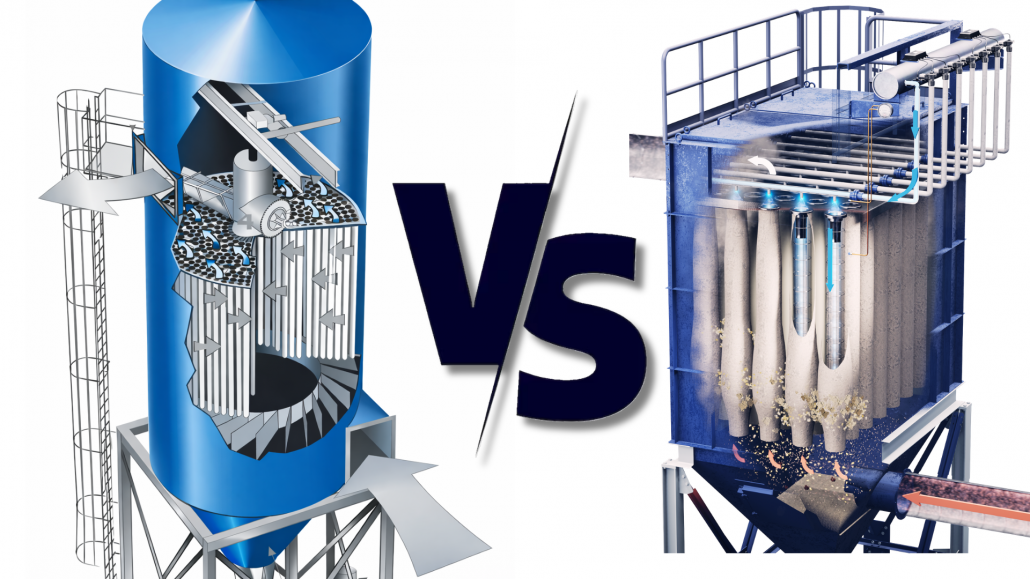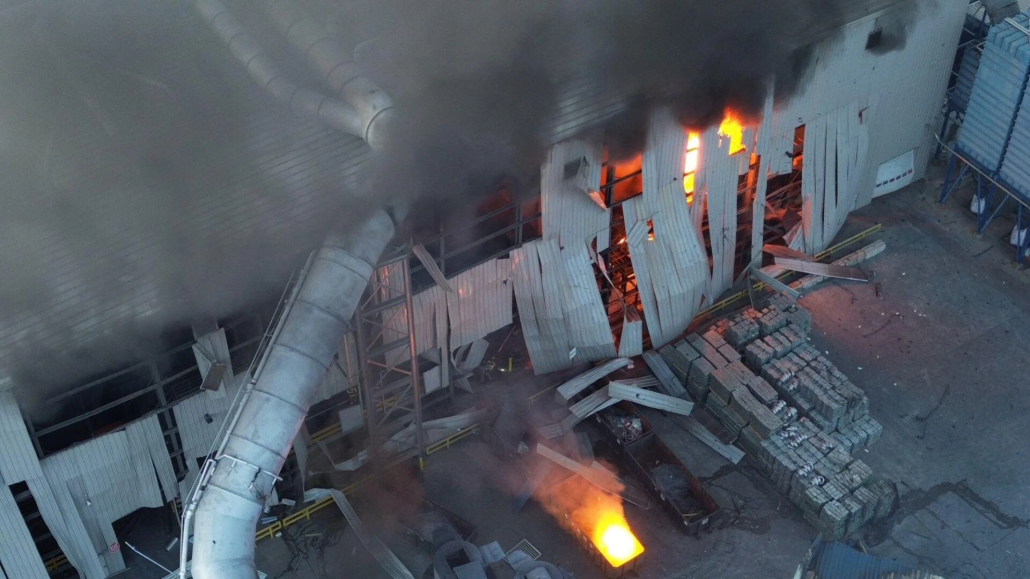
Maybe your application involves utility boilers, independent power generation, waste-to-energy, or industrial process heating. The performance of the dust collector is inseparable from the performance of the combustion system itself.
Understanding how combustion processes interact with dust collection equipment is essential to maintaining reliability, minimizing corrosion and filter damage, and avoiding costly unplanned outages.
How Combustion Process Design Affects Dust Collector Performance
No two combustors behave the same way… each design introduces distinct system characteristics, fuel chemistry, and operating variables that directly influence the particulate matter entering the dust collection system.
Pulverized coal (PC) boilers is an industrial or utility boiler that generates thermal energy by burning pulverized coal (also known as powdered coal or coal dust since it is as fine as face powder in cosmetic makeup) that is blown into the firebox.Their high combustion temperatures produce very fine fly ash with a narrow particle size distribution. That fine ash can be challenging to filter and places high demands on filter media permeability and cleaning effectiveness.
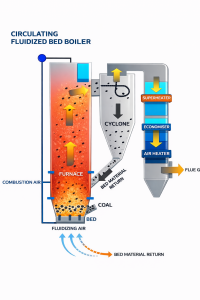
Circulating fluidized bed boiler system
Fluidized bed combustors (FBCs) are a developing technology for coal combustion to achieve lower emission of pollutants. By using this technology, up to 95% of pollutants can be absorbed before being emitted to the atmosphere. These are favored by independent power producers because of their fuel flexibility. They can burn low-grade fuels, biomass, and waste materials, but they generate significantly higher ash volumes. The resulting dust loading to the baghouse is often much heavier and more abrasive, requiring robust mechanical design and conservative air-to-cloth ratios.
Stoker boilers occupy another category altogether. They tend to produce larger particulate and are more prone to unburned hydrocarbons due to lower combustion efficiency. These hydrocarbons can complicate filtration by contributing to sticky dust conditions and filter blinding.
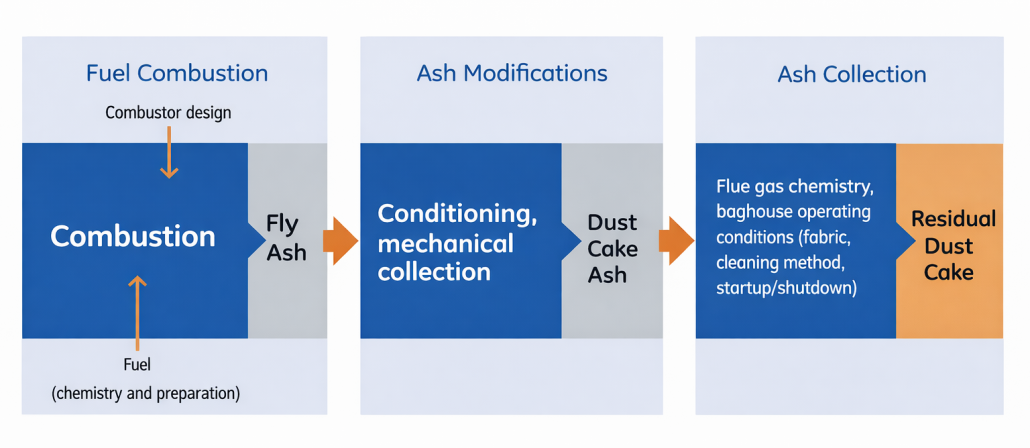
Across all combustion systems, fly ash characteristics are influenced by fuel chemistry, combustion temperature, upstream mechanical collection, flue gas conditioning, and the design and operation of the baghouse itself. Each of these variables must be evaluated together.
Temperature, Moisture, and Dew Point
Gas stream components that remain above their dew point are generally not harmful to baghouse operation. Problems begin when temperature drops suddenly or moisture levels rise enough to cross the dew point threshold.
When this occurs, condensation forms on internal surfaces and filter media. The result can be rapid corrosion, heavy filter buildup, and deposits that are extremely difficult to remove through normal cleaning. These conditions often lead to increased pressure drop, poor hopper evacuation, and visible stack plumes.
This risk is especially pronounced in combustion systems that cycle frequently, operate at partial load, or experience off-peak conditions. Acidic gases become more prevalent under these operating modes, increasing the likelihood of chemical attack on both filter media and carbon steel components.
Acidic Conditions and “Acid Attack” Failures
An acid attack occurs when flue gas temperatures pass through the acid dew point due to operational excursions, combustion chemistry changes, or upstream equipment malfunctions.
Acid attack can:
- ✔️ Corrode structural steel and ductwork
- ✔️ Chemically degrade filter fibers
- ✔️ Blind filter media
- ✔️ Interfere with hopper discharge
- ✔️ Create visible plume issues at the stack
Cyclic boiler systems are particularly vulnerable. For these applications, startup and shutdown procedures must be carefully engineered and rigorously followed. Many facilities benefit from dual cleaning strategies—automatic cleaning for peak loads and manual or modified cleaning approaches for low-load operation.
Because operating conditions can vary so widely, filter media selection often requires chemical resistance beyond standard designs. Protective finishes, specialized fibers, or alternative media constructions may be necessary—but only after actual operating conditions are measured and compared against original design assumptions.
Advanced Filtration Technologies for Combustion Applications
Newer dry filtration technologies, like pleated filter elements, provide two to three times more effective filtering area than traditional bags, allowing higher airflow capacity within the same housing footprint.
High-efficiency filter media can also increase allowable air-to-cloth ratios while maintaining acceptable pressure drop. Microporous ePTFE membrane technologies, provide extremely high filtration efficiency along with a slick, nonstick surface that resists dust adhesion. These surfaces reduce the risk of system upset conditions and can lower overall energy consumption by stabilizing pressure drop.
Baghouse Overloading
Baghouse overload conditions emerge from cumulative process changes over time.
Peak load boilers can push systems beyond their original design parameters, increasing resistance across the filters and disrupting combustion draft. Switching to lower-BTU fuels increases ash generation and grain loading. Multi-pollutant control strategies—such as powdered activated carbon (PAC) injection for mercury control, SCR or SNCR systems, and catalyst erosion—add even more particulate burden to the collector.
In all of these cases, the baghouse must be flexible enough to handle fluctuating loads without sacrificing filtration efficiency or airflow stability.
Blinding or Bleed-Through of Filter Media
Heavy grain loading alone is enough to strain a baghouse, but changes in particle size distribution can be just as damaging. Fuel changes often produce finer ash, increasing the risk of filter blinding or bleed-through.
Mechanical precollectors—cyclones, multiclones, dropout boxes, or de-energized ESPs—can reduce overall dust loading, but they also remove larger particles and leave behind finer, denser ash. That fine material forms less permeable dust cakes, increases airflow resistance, and can drive particulate deep into the filter media.
In these cases, cleaning system modifications may be required. Precoating is often an effective strategy, particularly during startup with new filter bags. A precoat layer creates an artificial dust cake that protects the media from fine ash penetration and helps stabilize filtration performance.
Fuel and Flue Gas Neutralization
Environmental regulations and evolving fuel strategies have led many combustion systems to incorporate dry or semi-dry acid gas scrubbers upstream of the baghouse. These systems inject lime, sodium bicarbonate, or magnesium oxide slurries to neutralize acid gases and convert them into solid particulate.
The resulting dust is dense, moisture-laden, and reagent-rich. Once deposited on filters, it can be extremely difficult to remove using conventional cleaning methods. Cleaning cycles must be carefully reviewed to ensure sufficient energy is delivered to the bags.
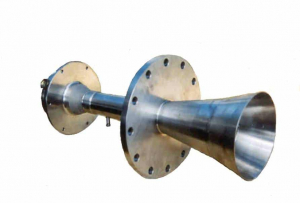
The sound waves generated by acoustic horns create
vibrations that effectively break apart and dislodge material
deposits from surfaces.
For collectors capable of off-line cleaning—such as reverse-air baghouses or pulse-jet systems—acoustic cleaning technologies like sonic horns can intensify cleaning without damaging the filter media. Acoustic horns are also effective when mounted on scrubber sidewalls, where low-frequency energy helps prevent buildup on vessel walls and nozzles.
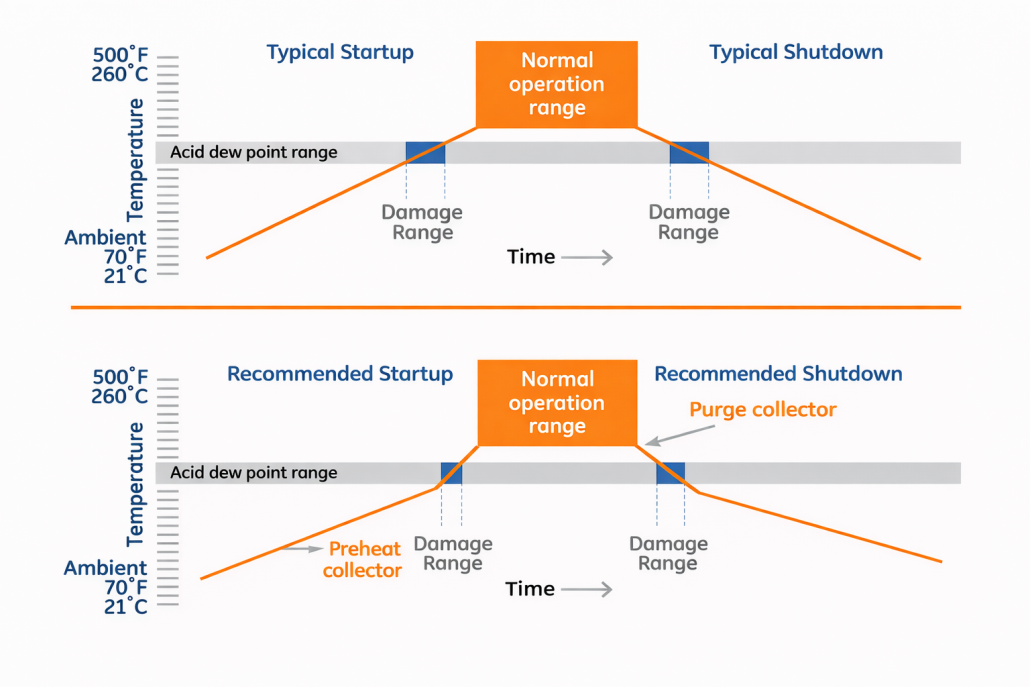
Startup and Shutdown: Where Many Failures Begin
Intermittent combustion systems filtering hot flue gases are routinely exposed to dew point excursions during startup and shutdown. A common mistake is monitoring only outlet stack temperature while ignoring the temperature of the steel components inside the collector.
Rapid heating causes mechanical stress, while cold steel surfaces promote condensation. When moisture combines with sulfur oxides, low-grade acids form inside the collector, weakening filter fibers and corroding metal surfaces.
Proper startup requires preheating the baghouse above the acid dew point before introducing process gases. Shutdown procedures must include immediate purging with clean gases to prevent corrosive compounds from condensing as the system cools. In severe cases, neutral desiccant materials can be applied to filters as a protective barrier.
Fabric selection plays a critical role here. Woven fiberglass fabrics require chemically resistant finishes, while high-temperature synthetic media designed for chemically active gas streams can significantly extend service life.