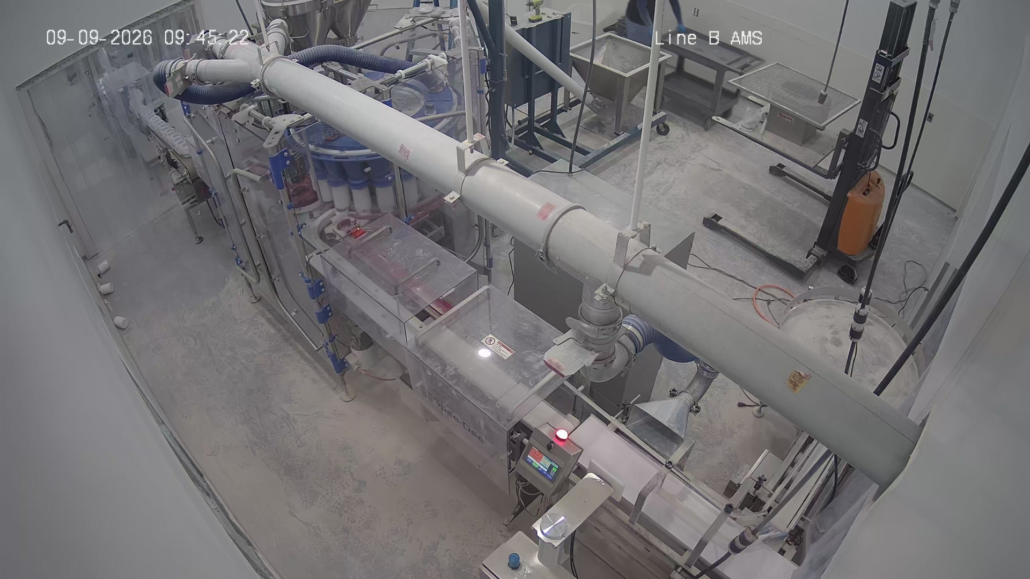

One of the most common complaints we hear is, “The dust collector is running, but it isn’t pulling enough air.” When airflow drops, dust starts escaping from hoods, workstations, or production equipment. The immediate assumption is often that the cartridges are plugged. That’s certainly possible, but it isn’t the only explanation.

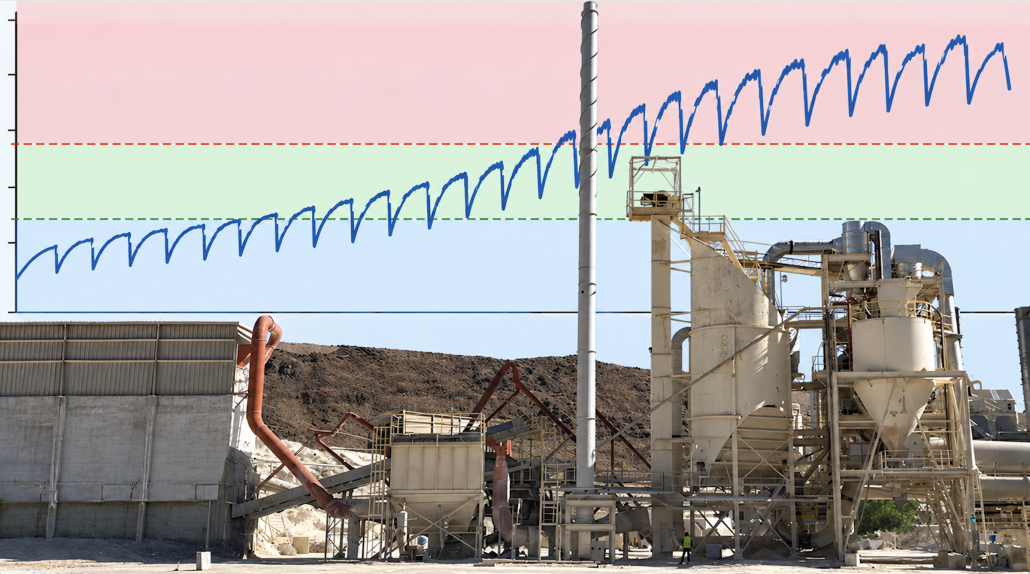
Monitorear regularmente la presión diferencial nos dará información sobre cómo está operando nuestro sistema.
What to check:
- ⦿ Differential pressure: Compare the current pressure drop across the filters with the collector’s normal operating range. A high reading may indicate excessive filter loading or ineffective pulse cleaning.
- ⦿ Ductwork: Look for accumulated dust, blockages, damaged duct sections, and air leaks.
- ⦿ Fan performance: Verify that the fan is operating at the intended speed and that the motor, belts, and drive components are functioning properly.
- ⦿ Dampers: Confirm that manual or automatic dampers are in their intended positions.
- ⦿ VFD settings: If the system uses a variable frequency drive, verify that its operating speed and control settings match the application.
Our technicians generally recommend checking the entire airflow path before deciding that the filters need replacement. A collector can have relatively clean filters and still deliver inadequate suction if something else is restricting airflow.
Dust appearing on the clean-air side of a cartridge collector is a warning sign that shouldn’t be ignored. Depending on the system, you might notice visible emissions from the exhaust, dust accumulation in the clean-air plenum, or an alarm from a particulate monitoring device.
The problem is often related to damaged filters or an improper seal.
 What to check:
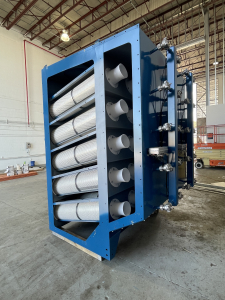
- ⦿ Start by verifying that the installed cartridges are the correct size and configuration for the collector. Even a high-quality replacement filter can leak if its dimensions or sealing arrangement don’t match the equipment.
- ⦿ Inspect the cartuchos for tears, holes, damaged end caps, and other visible defects. Pay particular attention to gaskets, mounting surfaces, access doors, and cartridge retention mechanisms.
- ⦿ A gasket that’s compressed unevenly or a cartridge that hasn’t been fully seated can allow dust to bypass the filter media.
- ⦿ If the collector has a particulate monitor or broken-filter detector, review its readings and confirm that the instrument is functioning correctly.
- ⦿ For difficult-to-locate leaks, our technicians may recommend an appropriate leak detection test. The goal is to identify the actual leakage path instead of replacing otherwise serviceable cartridges.
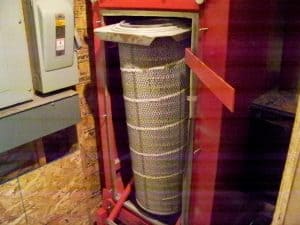 If your cartridge filters used to last a year but now need replacement every few months, something has changed. Sometimes the explanation is straightforward: production increased, a new machine was connected, or the facility started processing a different material.
What to check:
- ⦿ Dust loading: Has the amount of dust entering the collector increased? A system originally designed for a particular process may struggle after production capacity expands.
- ⦿ Filter media: Is the cartridge material appropriate for the dust being collected? Fine, sticky, oily, or moisture-sensitive dust can require special consideration when selecting filter media and surface treatments.
- ⦿ Pulse cleaning: Are all the valves firing correctly? Is the compressed air supply adequate? Are the cleaning intervals appropriate?
- ⦿ Airflow distribution: Uneven airflow can cause certain cartridges to accumulate more dust than others.
Our technicians also look at the collector’s air-to-cloth ratio, which compares airflow with the available filtration area. If the system is moving too much air through too little effective filter media, cleaning performance and cartridge life may suffer.
Keep in mind that filter media changes alone cannot solve every difficult dust application. Sticky or hygroscopic dust may require changes to process conditions, moisture control, or collector design.
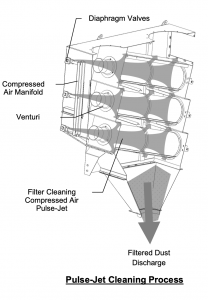 During a cleaning cycle, a short burst of compressed air dislodges accumulated dust from the filter surface. When this system stops working correctly, differential pressure may rise and cartridge life can decrease significantly.
What to check:
- ⦿ Compressed air supply: Verify that the system has the pressure and air volume required by the collector manufacturer.
- ⦿ Solenoid valves: Confirm that the electrical control signals are reaching the valves and that the valves are functioning correctly.
- ⦿ Diaphragm valves: Inspect for damaged diaphragms, sticking components, or other failures that prevent proper pulse delivery.
- ⦿ Pulse controller: Review the cleaning sequence, pulse duration, and timing settings.
- ⦿ Compressed air leaks: Inspect the pulse header, fittings, and associated piping for leaks.
One issue our technicians frequently emphasize is compressed air quality. Moisture and contamination in the air supply can damage pulse components and interfere with filter cleaning.
Also, more frequent pulsing isn’t automatically better. Excessive cleaning wastes compressed air and may increase filter wear without improving performance.
Have you ever noticed that one workstation has excellent suction while another barely captures any dust? That’s often an airflow balancing problem.
A dust collection system is designed to distribute a specific amount of air to each pickup point. When that balance changes, some branches may receive too much airflow while others receive too little.

Maintaining the minimum conveying velocity in the dust collection system prevents dust drop out and build up inside the ductwork
What to check:
- ⦿ Inspect the ductwork for restrictions, leaks, and accumulated material.
- ⦿ Check the fan’s operating condition and verify that dampers are positioned correctly.
- ⦿ Look for modifications to the system. Adding a new machine, relocating equipment, or changing ductwork can alter airflow distribution throughout the network. Uneven cartridge loading may also provide clues about airflow distribution within the collector itself.
When the problem isn’t obvious, technicians can measure airflow and static pressure at different locations to identify where the system is underperforming. Our experience has shown that airflow adjustments need to account for capture requirements, duct conveying velocities, and the system’s overall operating conditions.

Baghouse.com personnel performing an inspection that involved a meticulous examination of baghouses, collectors, fans, airlocks, conveyors, ductwork, pickups, and auxiliary equipment.
Effective troubleshooting starts with understanding how the complete system is operating.
Instead of treating every problem as a reason to replace filters, establish a baseline for differential pressure, airflow, compressed air pressure, fan performance, and cleaning operation. Keep records of changes and use those trends to recognize developing problems.
A structured preventive maintenance program can help catch many of these issues before they lead to equipment damage, excessive filter consumption, or unplanned shutdowns.

Experto en colectores de polvo, redactor técnico y editor en Baghouse.com
Andy Biancotti está convencido de que el conocimiento es una de las mejores inversiones para una empresa. Como Editor y Gerente de Marketing en Baghouse.com, disfruta entrevistar a ingenieros, técnicos y clientes para capturar las lecciones aprendidas en proyectos reales de control de polvo y convertirlas en recursos prácticos que ayuden a otros profesionales. Con más de dos décadas de experiencia en mantenimiento industrial, operaciones y comunicación técnica, su objetivo es simple: ayudar a las personas para que puedan operar de forma más segura, inteligente y eficiente.