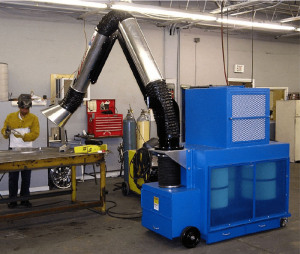
 Los sistemas portátiles suelen ser la mejor opción cuando la flexibilidad es más importante que la capacidad. Un colector de polvo portátil es una unidad autónoma que se coloca cerca de la fuente de polvo, lo que significa que requiere poco o ningún ducto fijo y permite una instalación mucho más rápida. Estas unidades normalmente incluyen un motor, un ventilador, un sistema de filtración y un recipiente para recolectar el polvo, todo integrado en una unidad móvil que puede colocarse donde sea necesario.
Si analizamos los diferentes tipos de colectores portátiles, generalmente podemos clasificarlos en tres grupos:
- Colectores de una etapa: Son las unidades más económicas, donde el ventilador se encarga tanto del movimiento del aire como del transporte del polvo. Son adecuados para aplicaciones más ligeras.
- Colectores de dos etapas: Incorporan una etapa de separación antes del ventilador, lo que prolonga la vida útil del motor y mejora la eficiencia.
- Separadores ciclónicos: Utilizan la fuerza centrífuga para separar las partículas antes de la filtración, aumentando significativamente la vida útil de los filtros.
Este enfoque funciona bien cuando:
- ⦿ Solo tienes una máquina o un operador trabajando a la vez.
- ⦿ Las herramientas son móviles o se reubican con frecuencia.
- ⦿ Las fuentes de polvo están muy separadas entre sí.
- ⦿ Trabajas en un taller pequeño.
- ⦿ Necesitas una solución temporal o fácil de trasladar.
- ⦿ El proceso genera humo o polvo en volúmenes moderados, en lugar de una carga pesada y continua.
Los sistemas portátiles suelen ser atractivos porque son sencillos de instalar y más fáciles de justificar cuando el presupuesto es limitado. En muchos talleres también son una excelente opción para herramientas manuales o estaciones temporales donde un sistema fijo con ductos no sería práctico.
También existe una ventaja técnica que vale la pena mencionar. Debido a que los equipos portátiles normalmente utilizan recorridos de ductos muy cortos, evitan gran parte de la pérdida de presión estática asociada con una red extensa de ductos. En la aplicación adecuada, esto puede hacerlos muy eficientes para captar el polvo directamente en la fuente. En instalaciones pequeñas, una buena unidad portátil equipada con el filtro de cartucho adecuado puede ofrecer excelentes resultados sin el costo de instalar un sistema central completo.
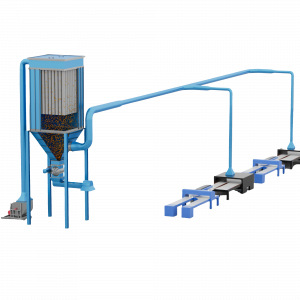 Un sistema central tiene más sentido cuando el control de polvo forma parte del proceso de producción todos los días y no simplemente como un accesorio móvil. En esta configuración, varias máquinas están conectadas a un solo colector mediante una red fija de ductos, y todo el polvo capturado se descarga en un único punto.
El corazón de cualquier sistema central normalmente se encuentra en un cuarto mecánico dedicado o fuera del área principal de producción. En esa ubicación se instala la unidad principal de captación, que generalmente está compuesta por:
- ⦿ Un motor de alta potencia (normalmente de 5 HP o más para aplicaciones industriales).
- ⦿ Un recipiente o tolva principal para la recolección del polvo.
- ⦿ Un sistema de filtración (generalmente con una superficie filtrante mucho mayor que la de las unidades portátiles).
- ⦿ Un sistema de ductos equipado con compuertas (blast gates) para controlar el flujo de aire hacia las diferentes zonas.
Un sistema central suele ser la mejor opción cuando:
- ⦿ Varias máquinas fijas generan polvo de manera regular.
- ⦿ Es posible que varios puntos de captación operen al mismo tiempo durante un turno.
- ⦿ El espacio en el piso de producción es demasiado valioso como para ocuparlo con colectores portátiles.
- ⦿ El ruido dentro de la planta se ha convertido en un problema.
- ⦿ Los operadores necesitan un sistema que siempre esté listo para funcionar.
- ⦿ Deseas un manejo del polvo más limpio y organizado.
- ⦿ El polvo peligroso, los alérgenos o el polvo combustible hacen preferible instalar el sistema en el exterior.
Una de las mayores ventajas prácticas es la consistencia. Un sistema central siempre está conectado, siempre está en posición y, por lo general, cuenta con controles automáticos de limpieza. En muchos casos, esto se traduce en una mayor vida útil de los filtros tipo manga industriales, ya que el sistema está diseñado para limpiarse automáticamente a medida que aumenta la presión diferencial.
Los sistemas centrales modernos han evolucionado considerablemente respecto a las generaciones anteriores. Hoy en día, suelen incorporar características como:
- ⦿ Variadores de frecuencia (VFD) que ajustan la velocidad del motor según la demanda.
- ⦿ Mecanismos automáticos de limpieza de filtros.
- ⦿ Controladores inteligentes que supervisan el desempeño del sistema.
- ⦿ Sistemas de venteo o supresión de explosiones para polvos combustibles.
- ⦿ Sistemas de retorno de aire que recirculan el aire filtrado para reducir los costos de calefacción y aire acondicionado.
También simplifican las labores de limpieza. En lugar de tener varios recipientes, bolsas o pequeños colectores distribuidos por el taller, un solo sistema principal maneja toda la corriente de polvo desde un único punto.


Seguridad y cumplimiento normativo
La seguridad puede ser el factor decisivo. Si el polvo es combustible o peligroso, deja de ser únicamente un tema operativo y pasa a convertirse en un asunto de cumplimiento normativo y gestión de riesgos.

Un sistema de colección de polvo correctamente diseñado, operado y mantenido es la mejor defensa contra los riesgos del polvo combustible en tu planta.
Un sistema central que maneja polvo combustible puede requerir:
- ⦿ Venteo contra explosiones.
- ⦿ Válvulas de aislamiento contra explosiones
- ⦿ Sistemas de detección de chispas⦿ Sistemas de detección de chispas.
- ⦿ Sistemas de supresión o extinción de incendios.
- ⦿ Instalación del colector en el exterior.
- ⦿ Realizar un Análisis de Riesgo de Polvo (DHA) antes de adquirir el equipo.
En estos casos, el costo y la complejidad del diseño aumentan, pero también aumenta la importancia de hacer las cosas correctamente. Una instalación de un sistema central debe cumplir con la normativa, con un sistema diseñado específicamente para adaptarse al riesgo del polvo, las condiciones del proceso y la distribución de la planta.
Espacio e instalación



Experto en colectores de polvo, redactor técnico y editor en Baghouse.com
Andy Biancotti está convencido de que el conocimiento es una de las mejores inversiones para una empresa. Como Editor y Gerente de Marketing en Baghouse.com, disfruta entrevistar a ingenieros, técnicos y clientes para capturar las lecciones aprendidas en proyectos reales de control de polvo y convertirlas en recursos prácticos que ayuden a otros profesionales. Con más de dos décadas de experiencia en mantenimiento industrial, operaciones y comunicación técnica, su objetivo es simple: ayudar a las personas para que puedan operar de forma más segura, inteligente y eficiente.